Sewage Treatment Compared to Wastewater Treatment A Practical Guide
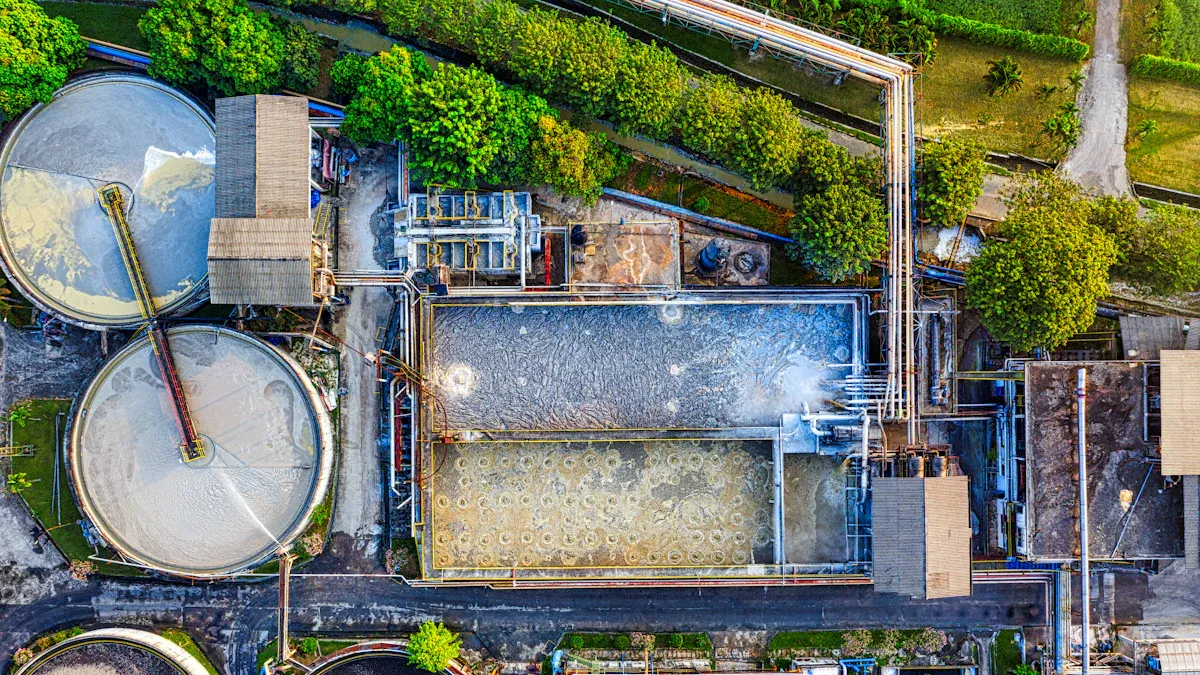
You need to know the difference between sewage treatment and wastewater treatment to protect health and the environment. Many countries treat only part of their sewage or wastewater:
- About 52% of sewage is treated worldwide.
- Nearly 80% of wastewater returns to nature untreated.
The table below shows how each system fits different needs:
| Aspect | Sewage Treatment | Wastewater Treatment |
|---|---|---|
| Source | Domestic and municipal wastewater | Industrial discharges and manufacturing processes |
| Main pollutants | Organic matter, pathogens, nutrients | Heavy metals, toxic chemicals, oils |
| Goal | Public health and environmental safety | Pollution control and regulatory compliance |
Key Takeaways
- Understand the difference: Sewage treatment focuses on household waste, while wastewater treatment includes industrial and agricultural sources.
- Choose the right system: Consider factors like water source, contaminants, and local regulations to select the best treatment method for your needs.
- Regular maintenance is key: Check your treatment system annually to ensure it operates effectively and protects public health.
Sewage Treatment vs. Wastewater Treatment: Definitions
Sewage Treatment Explained
You often hear about sewage treatment when people talk about cleaning water from homes and cities. Environmental agencies define sewage treatment as a process that removes contaminants from sewage. This process creates water that you can safely release into the environment or reuse. The main goal is to stop water pollution from untreated sewage.
Sewage treatment uses several steps to clean the water. You can see these steps below:
- Primary Treatment: This step removes solids. Heavy sludge settles at the bottom, while lighter substances float to the top.
- Secondary Treatment: Here, bacteria break down and remove leftover organic material. These bacteria need oxygen to do their job.
- Tertiary Treatment: This final step gives extra cleaning. It disinfects the water and removes nutrients, making sure the water meets safety standards before release.
You find sewage treatment plants in most cities and towns. These plants protect public health and keep rivers, lakes, and oceans cleaner.
Wastewater Treatment Explained
Wastewater treatment covers a wider range of water sources than sewage treatment. You see wastewater coming from factories, farms, and power plants, not just homes. The goal of wastewater treatment is to remove harmful substances so the water does not damage the environment or break the law.
Many industries create wastewater during their daily work. Here are some main sources:
- Pulp & Paper Production: This industry uses lots of water and creates wastewater during the paper-making process.
- Mining: Mining activities produce large amounts of wastewater that need cleaning before release.
- Power Generation: Coal-fired power plants make wastewater as a byproduct, which must be treated.
- Food and Beverage Production: These factories create wastewater full of organic matter and solids.
- Pharmaceutical Manufacturing: This industry uses many chemicals and water, leading to complex wastewater.
Wastewater treatment plants use special methods to remove heavy metals, chemicals, and other dangerous materials. You often see these plants near factories or industrial areas.
Types of Water Treated
You may wonder what kinds of water these treatment plants handle. The table below shows the main types:
| Type of Water | Description |
|---|---|
| Black Water | Contains human waste, water, and toilet paper, originating from toilets. |
| Gray Water | Comes from sinks, showers, dishwashers, and washing machines, containing soaps and detergents. |
Both sewage treatment and wastewater treatment plants deal with many contaminants. Some of the most common include:
- Organic matter
- Nutrients like ammonia, nitrogen, and phosphorus
- Heavy metals such as arsenic and chromium
- Pathogens
- Turbidity and suspended solids
Tip: Knowing the type of water and its contaminants helps you choose the right treatment system for your needs.
How Sewage Treatment Works
Key Steps in Sewage Treatment
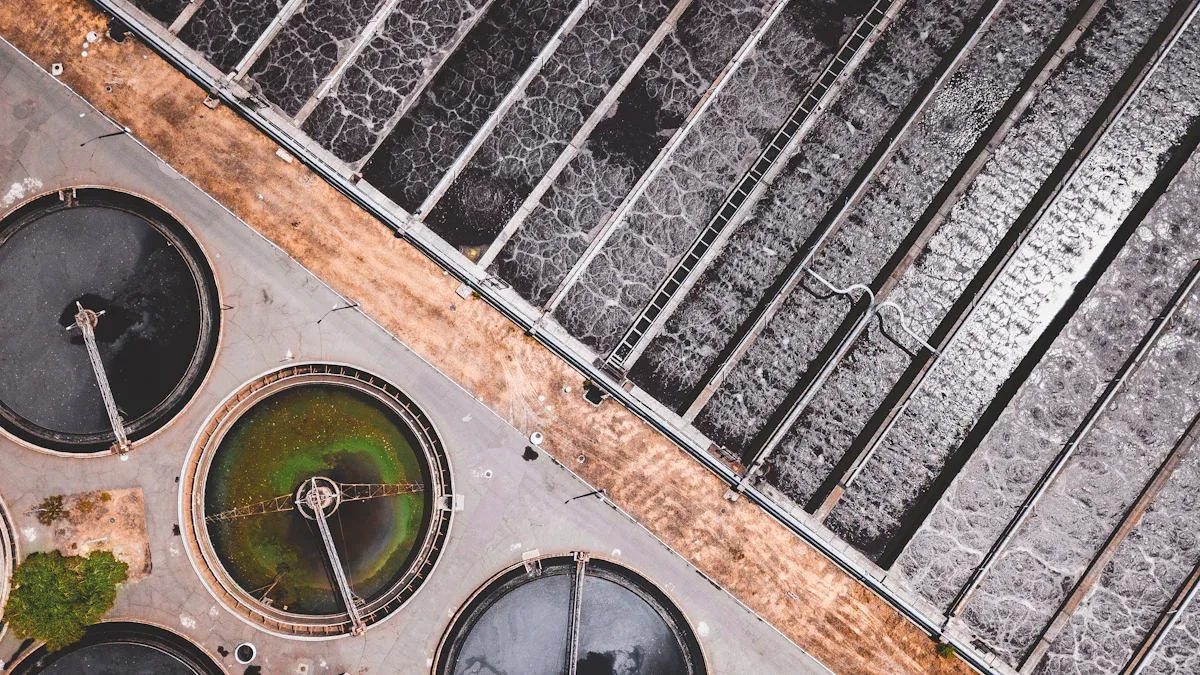
You can break down sewage treatment into three main steps. Each step removes different types of pollution from the water. The table below shows what happens at each stage:
| Treatment Stage | Description |
|---|---|
| Primary Treatment | Settles solids and removes oils from sewage. |
| Secondary Treatment | Uses microorganisms to break down dissolved and suspended organic matter. |
| Tertiary Treatment | Cleans water further with advanced filtration and disinfection before discharge. |
Each step plays a key role in making water safer. In primary treatment, you remove about half of the suspended solids and a quarter of the biological oxygen demand. Secondary treatment uses helpful bacteria to digest leftover materials. This step cuts down pollutants in the water. Tertiary treatment acts as a final polish. It removes tiny pollutants and kills germs before the water leaves the plant.
Tip: You improve water quality at every stage, making it safer for people and the environment.
Main Components of Sewage Treatment
You find several important parts in a sewage treatment system. Each part helps the process run smoothly:
- Preliminary treatment removes large objects and debris to protect equipment.
- Bar screens catch sticks, rags, and trash before they cause problems.
- Grit removal tanks take out sand and gravel, which can damage pumps.
- Equalization basins balance the flow of water, making treatment more effective.
- Primary sedimentation tanks let heavy solids settle and lighter materials float for easy removal.
You see that each component has a special job. Together, they help you clean water and protect your community.
How Wastewater Treatment Works
Key Steps in Wastewater Treatment
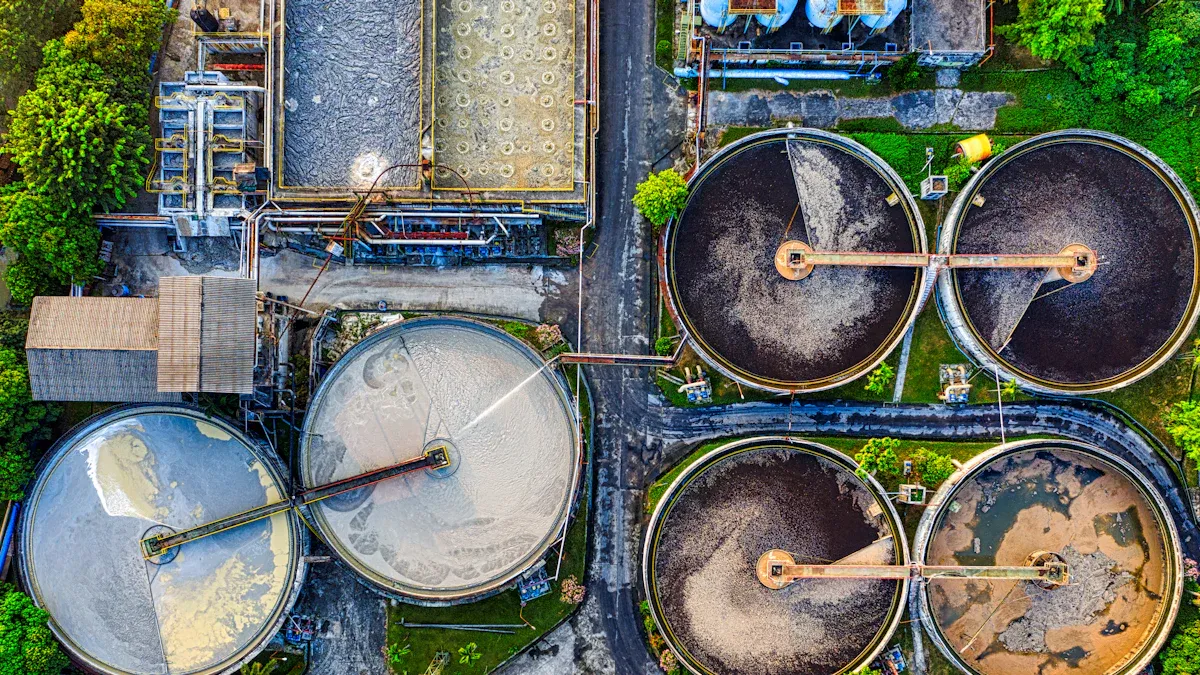
You can follow three main steps to treat wastewater. Each step removes different types of pollution and makes the water safer for the environment.
- Primary Treatment: You let solids settle in a basin. This step removes large particles and sedimentable substances from the water.
- Secondary Treatment: You use helpful microorganisms to break down organic matter. These tiny organisms eat the pollutants and clean the water further.
- Tertiary Treatment: You add extra cleaning to remove substances that remain after the first two steps. This step protects sensitive ecosystems and helps meet strict water quality standards.
You can see how each step works in the table below:
| Treatment Step | Description | Efficiency Evidence |
|---|---|---|
| Primary Treatment | Removes sedimentable substances through settling. | Removes a high percentage of microplastics in many treatment plants. |
| Secondary Treatment | Uses biology to remove organic substances. | Cuts down both sedimentable and non-sedimentable organic pollutants. |
| Tertiary Treatment | Further breakdown and removal of remaining substances. | Some plants reach up to 97% removal of pollutants at this stage. |
Note: In the textile industry, you can see successful removal of synthetic dyes and improved water clarity after these steps.
Main Components of Wastewater Treatment
You find several important parts in a typical wastewater treatment system. Each part has a special job:
- Wastewater Source: This is where the water comes from, such as factories or homes.
- Collection and Storage: Pipes and tanks gather and hold the wastewater before treatment.
- Pretreatment Components: Screens and filters remove large debris and protect equipment.
- Final Treatment and Dispersal Components: These parts finish cleaning the water and release it safely.
Different places use different setups. Municipal systems focus on removing organic matter and nutrients from household water. Industrial systems use special processes to handle chemicals, dyes, or other tough pollutants. You may see a mix of physical, chemical, and biological steps, depending on what needs cleaning.
Tip: Knowing the source and type of pollution helps you choose the right treatment process.
Comparing Sewage Treatment and Wastewater Treatment
Treatment Methods Compared
You see clear differences in how sewage treatment and wastewater treatment work. Sewage treatment focuses on cleaning water from homes and cities. Wastewater treatment covers a wider range, including water from factories and farms. The table below helps you compare the main aspects:
| Aspect | Sewage Treatment | Wastewater Treatment |
|---|---|---|
| Definition | A part of the broader wastewater process | Encompasses all types of water treatment |
| Components | Focuses on human waste | Includes chemicals, food particles, etc. |
| Treatment Methods | Involves anaerobic digestion of sludge | Various methods for cleaning all water types |
| Types of Water Treated | Primarily black water | Black and gray water |
You notice that sewage treatment uses steps like settling, biological breakdown, and advanced filtration. Wastewater treatment uses extra methods to remove chemicals, heavy metals, and other tough pollutants. You need to choose the right method based on the source and type of water.
Tip: If you treat water from homes, you use simpler methods. For industrial water, you need advanced processes.
Performance and Effectiveness
You want to know how well these systems work. Experts use several metrics to measure performance. These include energy use, how much pollution gets removed, and water quality after treatment. The table below lists common metrics:
| Metric Type | Description |
|---|---|
| Energy Benchmark | Average energy use intensity, expressed as kWh per Million Gallons (MG). |
| Flow-Based Benchmark | Measures energy performance per volume of water treated. |
| Load-Based Benchmark | Efficiency of treatment processes, expressed as kWh/lb-BOD removed. |
| Chemical Oxygen Demand | Amount of oxygen needed to oxidize organic material in water. |
| Biochemical Oxygen Demand | Oxygen consumption by microorganisms to degrade organic pollutants. |
| Dissolved Oxygen | Essential for aerobic microorganisms; monitored in real-time. |
| Ammonia and Nitrogen | Monitored to prevent eutrophication and algal blooms. |
| Heavy Metals | Monitoring for toxic substances in industrial wastewater. |
| Conductivity | Measures water's ability to conduct electricity, related to dissolved salts. |
| Turbidity | Assesses effectiveness of sedimentation or filtration processes. |
| pH | Maintains chemical balance and protects treatment equipment. |
| Temperature | Influences microbial activity and oxygen solubility. |
You see that sewage treatment focuses on removing organic matter and nutrients. Wastewater treatment must handle a wider range of contaminants, including heavy metals and chemicals. Studies show that about 79% of sewage collected at centralized plants was safely treated in 2020. Coastal cities could boost their water supply by 27% if they use treated wastewater.
- Chemical Oxygen Demand (COD)
- Biochemical Oxygen Demand (BOD)
- Dissolved Oxygen (DO)
- Ammonia and Nitrogen
- Heavy Metals & Toxic Compounds
- Conductivity and Salinity
- Turbidity and Suspended Solids
- pH and Temperature
You need to monitor these metrics to make sure your system works well and protects the environment.
Maintenance and Monitoring
You must keep your treatment system running smoothly. Sewage treatment systems focus on organic matter, pathogens, and nutrients. Wastewater treatment systems need to monitor a broader range of toxic and complex contaminants. The table below shows the main differences:
| Aspect | Sewage Treatment | Wastewater Treatment |
|---|---|---|
| Focus | Organic matter, pathogens, nutrients | Broader range of toxic and complex contaminants |
| Pollutants Addressed | Domestic wastewater | Industrial wastewater with heavy metals and hazardous compounds |
You need regular checks to make sure your system removes pollutants. You monitor things like nitrogen, phosphorus, ammonia, and heavy metals. High levels of nitrogen (8 g/person/day), phosphorus (1.0 g/person/day), and ammonia-N (4.5 g/person/day) can harm water sources if not removed.
Note: Good monitoring helps you catch problems early and keeps your system working well.
Environmental Impact
You want to protect the environment when you treat water. Both sewage treatment and wastewater treatment can affect air, soil, and water. The table below lists common impacts:
| Aspect of Impact | Description |
|---|---|
| Odors | Unpleasant smells emitted from treatment plants. |
| Vector Attraction | Attraction of pests and vectors due to untreated sewage. |
| Sludge Transportation | Environmental concerns related to the movement of sludge. |
| Sanitary Risks | Health risks posed to nearby populations. |
| Air Contamination | Pollution of air due to emissions from treatment processes. |
| Soil and Subsoil Contamination | Potential contamination of soil and groundwater. |
| Surface Water Pollution | Pollution of nearby water bodies if treatment is inadequate. |
| Groundwater Contamination | Risks of groundwater being contaminated by effluents. |
| Devaluation of Nearby Areas | Decrease in property values due to proximity to treatment plants. |
| Inconvenience to Nearby Population | Disruption and inconvenience caused to local residents. |
You see that sewage treatment plants can change the health of rivers and lakes. If you do not remove nutrients, you may cause water pollution and algal blooms. Recent research shows a move toward decentralized wastewater treatment systems. These new systems help cities manage water better and reduce harm to the environment.
- Sewage treatment plants can affect the biotic status of receiving waters.
- Basic treatment processes may lead to water pollution, especially if nutrient removal is not included.
Tip: You help the environment by choosing advanced treatment methods and monitoring your system closely.
Choosing the Right Treatment System
Factors to Consider
You need to look at several factors before you choose a treatment system. Each factor helps you decide what works best for your situation. The table below shows the main things you should check:
| Factor | What It Means |
|---|---|
| Process applicability | Does the system fit your needs? |
| Flow rate and variation | Can it handle how much water you use and changes in flow? |
| Influent characteristics | What is in your water? |
| Toxic or hard-to-treat stuff | Are there chemicals or metals that make treatment harder? |
| Space and area availability | Do you have enough room for the system? |
| Energy and resource needs | How much power and supplies does it use? |
| Maintenance and staff | How often do you need to check it, and who will do it? |
| Environmental rules | Does it meet local laws and limits? |
| Cost and complexity | Is it affordable and easy to run? |
Tip: You should also think about changing regulations and the need for compact systems if you have limited space.
Suitability for Homes, Businesses, and Industry
You see that not every system fits every place. Here are some points to help you match the right system:
- Homes and small communities often use septic or sewer systems. These handle mostly organic waste and need simple care.
- Businesses may need more advanced systems if they produce grease, chemicals, or large amounts of water.
- Factories and industries must use special treatment for tough pollutants like metals or solvents. These systems protect the environment and public health.
- Cities need large plants that can handle changing flows and many types of waste.
Note: Industrial wastewater needs strict controls and new technology because it can harm people and nature more than household sewage.
Cost and Practicality
You want a system that fits your budget and works well over time. The table below compares common options:
| System Type | Installation Cost | Maintenance Cost | Long-term Expenses |
|---|---|---|---|
| Septic System | $5,000 to $15,000+ | Low, mostly pumping and checks | Cost-effective for rural areas |
| Sewer System | One-time connection fee | Monthly or yearly fees | Costs add up over time |
You may face challenges like changing water quality, limited space, or new rules. You need to balance what you spend at the start with what you pay to keep the system running. Compact and modular systems can help if you do not have much room.
Callout: Always check local rules and plan for future needs before you choose a system.
You now know sewage treatment handles household waste, while wastewater treatment covers more sources. Choose your system based on your needs.
- Check if you can maintain the system.
- Think about environmental effects.
- Plan for your property’s future.
Smart choices protect your health and the environment.
FAQ
What is the main difference between sewage and wastewater treatment?
You treat sewage from homes and cities. Wastewater treatment handles water from homes, factories, and farms. Wastewater treatment removes more types of pollutants.
Can you use treated wastewater for irrigation?
Yes! You can use properly treated wastewater for irrigation. It helps save fresh water and supports sustainable farming.
How often should you maintain a home sewage treatment system?
You should check your system every year. Regular maintenance keeps it working well and protects your health.
See Also
Exploring Semi-Welded Plate Heat Exchangers for 2025 Industry
Comparative Analysis of EHEDG and 3A SSI Hygienic Standards
Best Precoating Options for Filtration Systems in 2025