7 Rubber Vulcanization Challenges PBQD Can Fix
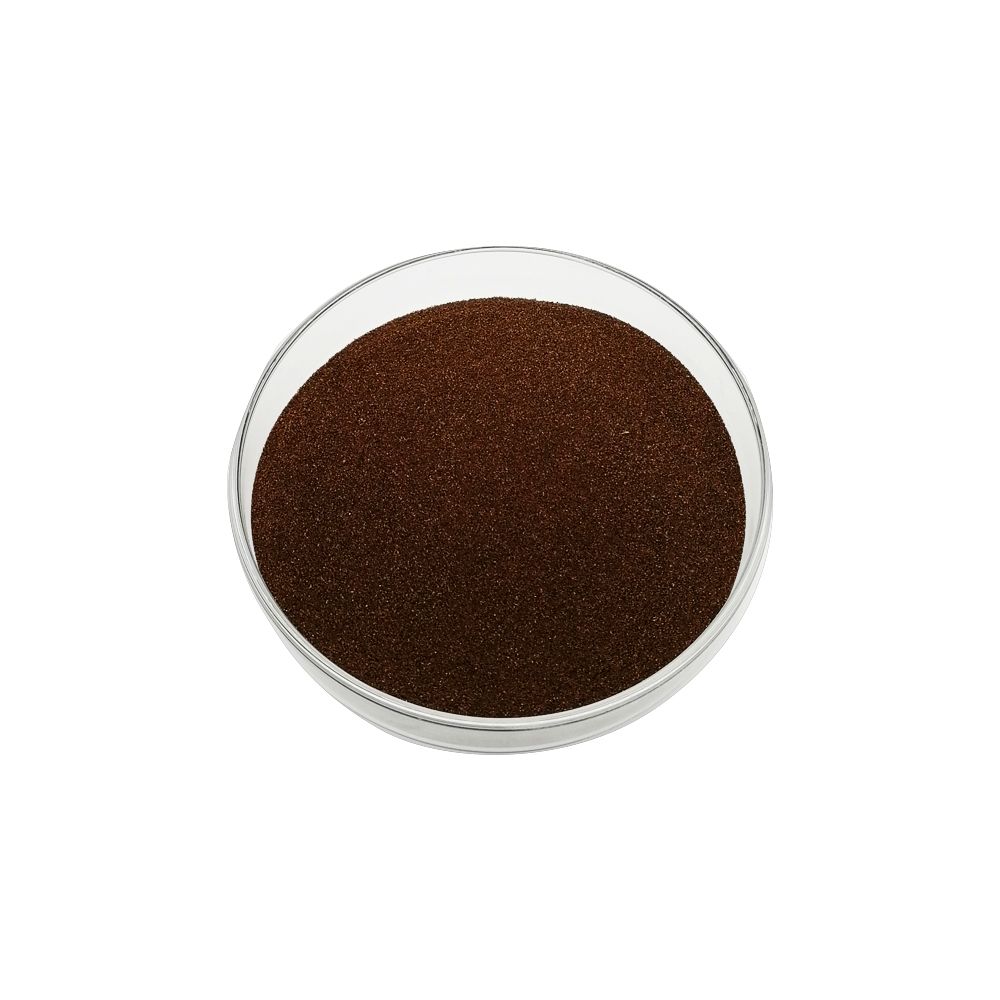
Are you dealing with rubber parts that blister, delaminate, or fail too soon? Vulcanization requires precise control—any imbalance creates defects, and even the smallest differences of 1% in curing agent dispersion can lead to inconsistent cross-linking. PBQD (p-Benzoquinone Dioxime, ≥99% purity) solves multiple failure points at once. This article explains seven specific vulcanization challenges and how PBQD fixes them, ensuring uniform performance across every batch.
Key Takeaways
- PBQD creates strong chemical bonds between rubber and metal, eliminating the need for separate adhesives and preventing part failure.
- PBQD reduces porosity and under-cure by forming stable carbon-carbon bonds, leading to stronger, more durable parts.
- PBQD ensures consistent batch quality and improves heat resistance, making it ideal for demanding applications.
Solving Common Vulcanization Defects
1. Poor Adhesion and Bonding
The Challenge: Rubber separating from metal inserts, fabric reinforcement, or cords (commonly called degumming), leading to premature part failure.
You know the frustration. You mold a rubber part around a metal insert, and it looks perfect coming out of the press. Then, weeks later, the rubber peels away from the metal. The part fails in service. Customers complain. You eat the cost of rework or replacement. This separation—called degumming—ranks among the most common defects in rubber manufacturing. It appears in engine mounts, conveyor belts, hose couplings, and any part that bonds rubber to a rigid substrate. When the bond fails, the entire component becomes useless.
Common Causes: Incompatible cure systems, surface contamination, lack of active bonding sites on substrates, or inadequate adhesive systems.
Several factors cause this failure. Your cure system might not create enough reactive sites at the interface. The metal surface could carry oils, rust, or release agents that block adhesion. Your adhesive dip might not wet the substrate properly. Or the rubber compound itself lacks the chemical groups needed to form strong bonds. Each cause requires a different fix, which makes troubleshooting frustrating. You might adjust one variable, only to discover the real problem lies elsewhere.
The PBQD Fix: PBQD acts as a direct adhesion promoter by reacting with both the rubber matrix and metal surfaces, forming chemical bridges that eliminate the need for separate adhesive dips. Its unique mechanism ties up free radicals at the interface, creating durable metal-rubber bonds.
PBQD changes this picture. Its molecular structure contains two oxime groups that react with both the rubber polymer and the metal surface. This dual reactivity creates chemical bridges—actual covalent bonds—between the two materials. You no longer rely solely on mechanical interlocking or separate adhesive layers. The PBQD molecule becomes part of the bond itself. It also captures free radicals at the interface, preventing them from interfering with the curing reaction. The result is a durable, chemical-level bond that resists separation under stress, heat, and vibration.
Practical Tip: For maximum bonding strength in high-stress applications like engine mounts, combine PBQD with a resorcinol donor system. Ensure metal surfaces are properly cleaned before vulcanization.
For demanding applications, pair PBQD with a resorcinol donor system. This combination creates an even denser network of bonding sites at the interface. You will see measurable improvements in peel strength and fatigue resistance. Before vulcanization, clean all metal surfaces thoroughly. Remove oils, rust, and mold release residue. PBQD cannot bond to a contaminated surface—no adhesion promoter can. A simple solvent wipe or abrasive cleaning makes the difference between a bond that lasts and one that fails.
2. Porosity and Bubbles
The Challenge: Visible gas pockets, blisters, or spongy texture inside cured rubber parts, compromising structural integrity and appearance.
You cut open a cured rubber part and find holes. Sometimes you see them on the surface—small blisters or pockmarks. Other times, the interior looks like a sponge. Either way, the part fails. Porosity weakens the structure. It creates stress concentration points where cracks start. It ruins the appearance of the finished product. In seals and gaskets, porosity creates leak paths. In load-bearing components, it reduces strength dramatically. You cannot ship these parts, so you scrap them and start over.
Common Causes: Trapped moisture in fillers, volatile byproducts from curing reactions, insufficient mold pressure, or improper venting.
The causes of porosity are well documented. Trapped air during mixing and molding expands when heated, creating bubbles. Moisture in fillers or the rubber itself vaporizes under vulcanization temperatures. Low mold pressure prevents gases from escaping. Incomplete vulcanization leaves the compound unstable, so it releases gases when you open the mold. Even your choice of curing agents matters—some peroxide systems decompose and release gas as a byproduct. Each of these factors can create the same visible defect, which makes diagnosis tricky.
The PBQD Fix: PBQD's chemical structure promotes a smoother, more complete cross-linking reaction, significantly reducing volatile side products that cause gas entrapment. It also helps mitigate the effects of minor moisture contamination.
PBQD addresses porosity at the chemical level. Its curing mechanism produces fewer volatile byproducts than traditional sulfur or peroxide systems. The cross-linking reaction proceeds more completely and more uniformly, leaving less unreacted material that could decompose later. This means fewer gas-forming reactions inside the mold. PBQD also tolerates minor moisture fluctuations better than conventional systems. You gain a safety margin that protects you when your raw materials vary slightly from batch to batch.
Practical Tip: Pre-dry all fillers and maintain adequate mold pressure. PBQD provides an extra margin of safety against porosity even when moisture levels fluctuate.
You still need good manufacturing practices. Pre-dry all fillers before mixing—calcium carbonate and other mineral fillers absorb moisture from the air. Maintain proper mold pressure so any remaining gases can escape through vents. Check your venting channels regularly; blocked vents trap gas inside the cavity. PBQD does not eliminate the need for these steps, but it gives you more room for error. When your moisture levels fluctuate by a fraction of a percent, you can still produce sound parts.
3. Insufficient Vulcanization (Under-Cure)
The Challenge: Parts that remain soft, tacky, or exhibit poor mechanical strength, failing to meet performance specifications.
You demold a part and it feels wrong. Too soft. Slightly tacky on the surface. When you test it, the tensile strength falls below specification. The part does not meet your quality standards. Under-cured rubber lacks the cross-link density needed for proper mechanical properties. It deforms under load. It wears quickly. It fails in service. You cannot ship it, so you scrap it. If the problem persists, you lose production time and money.
Common Causes: Incorrect accelerator levels, low curing temperatures, or cure systems too slow for production cycle requirements.
Under-cure happens for several reasons. Your accelerator levels might be too low for the cure system you selected. Your curing temperature might fall below the activation threshold. Your cure system might simply be too slow for your production cycle—you cannot wait long enough for full cure without slowing down the entire line. Thick articles present an additional challenge. The surface cures faster than the core, so you either under-cure the center or over-cure the outside trying to compensate.
The PBQD Fix: Functions as a high-temperature vulcanizing agent that ensures a dense cross-link network even when traditional sulfur/accelerator systems fall short. It reacts with peroxy-free radicals to complete the curing process effectively.
PBQD works differently from sulfur-based systems. It reacts with peroxy-free radicals to complete the cross-linking process, even at high temperatures where sulfur systems struggle. This mechanism creates a dense, uniform cross-link network throughout the part. You achieve a higher state of cure without extending your cycle time. For thick articles, PBQD penetrates and reacts uniformly, so the core reaches the same cure state as the surface. You eliminate the trade-off between under-curing the center and over-curing the outside.
Practical Tip: Partially replace sulfur with PBQD to increase the state of cure without extending cure time. This is particularly effective in thick articles where traditional systems struggle to achieve full cure.
Try replacing a portion of your sulfur with PBQD. You will see a higher state of cure in the same cycle time. This approach works especially well for thick parts—large bushings, solid tires, heavy rollers. These parts traditionally require long cure times to achieve full cure in the center. With PBQD, you achieve that cure faster, which means higher throughput and lower energy costs per part.
4. Deformation and Poor Shape Retention
The Challenge: Parts that warp, sink, or lose dimensional accuracy after demolding, leading to high rejection rates.
You demold a part and it looks correct. Then, over the next few hours, it changes shape. A flat surface develops a curve. A cylindrical bushing becomes oval. Sink marks appear where the material pulled away from the mold surface. These parts fail dimensional inspection, and you reject them. Deformation after demolding ranks among the most frustrating defects because the part looked fine initially. The problem reveals itself later, after you have invested time and energy in production.
Common Causes: Uneven cross-link density between surface and core, reversion from over-curing, or high compression set.
Deformation traces back to uneven internal stress. When the cross-link density differs between the surface and the core, the part releases that stress after demolding. The material moves to relieve the imbalance, and the shape changes. Over-curing causes reversion—the sulfur bonds break down and the network collapses. High compression set means the part cannot recover its original shape after being compressed. Each mechanism produces the same visible result: a part that does not hold its intended geometry.
The PBQD Fix: Creates a more uniform and stable cross-link network that resists thermal reversion, helping parts maintain shape under stress and elevated temperatures. The carbon-carbon bonds formed are inherently more stable than sulfur bonds.
PBQD forms carbon-carbon cross-links instead of sulfur-sulfur bonds. These carbon-carbon bonds are inherently stronger and more thermally stable. They resist reversion even when the part experiences prolonged heat exposure. The cross-link network forms more uniformly throughout the part, reducing the internal stress that causes warping. Your parts maintain their shape after demolding and under service conditions. They also resist compression set better, so they return to their original dimensions after being compressed.
Practical Tip: For thick articles, PBQD ensures the core cures at the same rate as the surface, preventing internal stress, sink marks, and post-demolding deformation.
For thick articles, PBQD provides uniform curing from surface to core. You eliminate the differential that creates internal stress. No more sink marks on the surface. No more warping after demolding. Your parts come out of the mold dimensionally accurate and stay that way. This consistency reduces your rejection rate and improves your yield.
Improving Long-Term Performance and Consistency

5. Reversion and Loss of Properties
The Challenge: Degradation of tensile strength, elasticity, and other physical properties when rubber is exposed to prolonged heat or over-curing.
You have seen it happen. A rubber part performs well for months. Then, without warning, it softens. The tensile strength drops. The elasticity fades. The part loses its ability to bounce back. This process is called reversion. It occurs when the crosslinked rubber network weakens under excessive heat or prolonged over-curing. The mechanical properties you designed into the part simply disappear. Your product fails in service, and you cannot explain why.
Common Causes: Breaking of sulfur-sulfur bonds in conventional cure systems at elevated temperatures, leading to network collapse.
The root cause lies in the chemistry of your cure system. Conventional sulfur-based systems create sulfur-sulfur bonds between polymer chains. These bonds work well at normal temperatures. But they have a weakness. When exposed to sustained heat, those sulfur-sulfur bonds break. The crosslink network collapses. The rubber loses its structure. This breakdown happens faster in thick articles because the interior retains heat longer. The center of a large part can stay hot for hours after demolding, accelerating the damage.
The PBQD Fix: Forms thermally stable carbon-carbon cross-links that resist reversion, maintaining physical properties even under sustained heat exposure. This makes PBQD particularly valuable for thick articles where internal heat buildup is unavoidable.
PBQD creates a different type of bond. Instead of sulfur-sulfur linkages, it forms carbon-carbon cross-links. These bonds are inherently stronger and more stable at high temperatures. They resist the thermal breakdown that destroys sulfur-based networks. Your parts maintain their tensile strength, elasticity, and dimensional stability even under prolonged heat exposure. This stability matters most for thick articles. The internal heat buildup that destroys conventional systems simply does not affect PBQD-cured rubber the same way.
The performance metrics you track will show the difference. Mechanical resilience stays consistent. Fatigue resistance improves. Thermal stability increases. Longevity under dynamic load extends significantly. These improvements translate directly to longer service life and fewer field failures.
Different applications demand different performance standards. The table below shows what various industries expect from their rubber components:
| Application Domain | Long-Term Performance Metrics | Relevant Standards |
|---|---|---|
| Automotive Tires | Cycles to crack initiation/propagation; heat build-up; crosslink density change; tensile/elongation degradation | ASTM D430, D4482 |
| Medical Seals | Peel strength uniformity; seal integrity after aging; microbial barrier effectiveness | ISO 11607-1/2, ASTM F88, F1980, F2096 |
| Aerospace Isolators | Dynamic stiffness vs. frequency/temperature; damping coefficient; multiaxial fatigue life; environmental degradation | ISO/IEC 17025, adapted ASTM |
| General Durability | Compression set; ozone resistance; mechanical resilience; thermal stability; longevity under dynamic load | ASTM D395, D1149; ISO 815, 1431 |
Practical Tip: Ideal for tires, conveyor belts, and other thick rubber products where internal heat generation during service can cause conventional cure systems to fail.
Choose PBQD for tires, conveyor belts, and other thick rubber products. These parts generate internal heat during service. The flexing and compression of the rubber create thermal energy that accumulates inside. Conventional sulfur systems cannot withstand this sustained heat. They revert and fail. PBQD handles the challenge. The carbon-carbon bonds hold firm, maintaining the crosslink network and preserving mechanical properties. You extend the service life of your products and reduce warranty claims.
6. Poor Heat and Aging Resistance
The Challenge: Rubber parts that crack, harden, or lose flexibility over time, especially in high-temperature applications.
You install a rubber seal in an engine compartment. Six months later, it has cracked. You check a rubber roller in an industrial machine. It has hardened and lost its flexibility. These failures happen because the rubber degrades over time. Heat accelerates the process. The polymer chains break down. The crosslinks weaken. The material loses its elastic properties. Your parts fail prematurely, and your customers lose confidence in your products.
Common Causes: Oxidative degradation and the presence of weak, unstable cross-links that break down under thermal stress.
Oxygen attacks rubber. This process, called oxidative degradation, breaks the polymer chains and destroys the crosslink network. Heat speeds up the reaction. Every 10°C increase in temperature roughly doubles the rate of oxidation. Weak crosslinks make the problem worse. Sulfur bonds, already vulnerable to heat, also provide easy targets for oxygen attack. The combination of heat and oxygen creates a destructive cycle. The rubber hardens, cracks, and loses its ability to flex.
The PBQD Fix: The stable cross-links created by PBQD resist oxidative attack, significantly extending service life in demanding environments. PBQD is particularly effective in EPDM formulations, enhancing heat resistance beyond what conventional systems achieve.
PBQD changes the vulnerability equation. The carbon-carbon crosslinks it creates resist oxidative attack. Oxygen cannot break these bonds as easily as it breaks sulfur linkages. The polymer network stays intact longer. Your parts maintain their flexibility and mechanical properties for extended periods. PBQD works especially well in EPDM formulations. EPDM already offers good heat resistance. Adding PBQD pushes that resistance even further. You achieve performance levels that conventional cure systems cannot reach.
Practical Tip: Combine PBQD with antioxidants for synergistic protection in demanding applications like engine mounts, industrial rollers, and electrical encapsulation.
Pair PBQD with antioxidants for maximum protection. The two work together. PBQD creates stable crosslinks that resist oxidation. Antioxidants scavenge free radicals before they can attack the polymer. This combination provides layered defense against thermal and oxidative degradation. Use it in demanding applications like engine mounts, industrial rollers, and electrical encapsulation. These parts face constant heat exposure and mechanical stress. They need the extra protection that PBQD and antioxidants provide together.
7. Inconsistent Batch-to-Batch Quality
The Challenge: Fluctuations in hardness, cure rate, and final properties between production runs, causing customer complaints and increased scrap.
You run the same formula twice. The first batch meets every specification. The second batch fails. Hardness varies. Cure rate changes. Final properties drift outside acceptable ranges. Your customers notice the inconsistency. They complain about parts that do not perform the same way. You scrap the bad batches and lose money. The problem repeats itself, and you cannot pinpoint the cause.
Common Causes: Variability in raw materials, inaccurate weighing, or cure systems overly sensitive to minor formulation changes.
Several factors create batch-to-batch variability. Your raw materials might differ between shipments. Zinc oxide purity varies. Sulfur grades change. Accelerator byproducts appear at different levels. Each variation shifts the cure kinetics. Your cure system amplifies these differences. A small change in one ingredient produces a large change in the final product. You adjust the formula constantly, trying to compensate. The adjustments create their own inconsistencies.
The table below shows how raw material variability affects your cure:
| Cause of Variability | Mechanism | Measurement/Diagnostic |
|---|---|---|
| Zinc oxide purity/particle size | ZnO acts as activator; impurities (Pb, Cd, Fe, Cu) or wrong particle size alter formation of zinc-accelerator complexes, changing cure kinetics | Rheometer curve (ASTM D2084) – shifts in ML, ts2, t90, MH |
| Sulfur grade/insoluble fraction | Insoluble/soluble ratio, ash, acidity affect dispersion and dissolution during mixing, shifting crosslink density | Rheometer curve (ASTM D2084) – deviation from accepted window |
| Accelerator purity/byproducts | Residual MBT or other synthesis byproducts affect scorch safety and cure rate at ppm levels | Rheometer curve (ASTM D2084) – scorch time and cure rate variation |
All three causes converge on the same diagnostic. The oscillating disc rheometer curve under ASTM D2084 reports ML, ts2, t90, and MH. When purity variation shifts vulcanization kinetics, this curve moves outside your compound's accepted window. The batch gets rejected even when you followed the formula exactly.
The PBQD Fix: Offers a more predictable and robust curing mechanism that is less sensitive to variations in other compound ingredients. With purity ≥99% and consistent particle size ≤10 μm, PBQD delivers reliable, repeatable performance.
PBQD reduces this sensitivity. Its curing mechanism depends less on the activators and accelerators that cause variability. You gain a more predictable process. The cure rate stays consistent even when your other ingredients vary slightly. PBQD itself meets strict specifications. Purity reaches ≥99%. Particle size stays ≤10 μm. These tight tolerances mean you get the same performance from every batch of PBQD you receive. Your process becomes more robust and more repeatable.
Practical Tip: Standardize formulations with PBQD to reduce constant adjustments to accelerator levels. Its consistent quality specifications ensure tighter process control and fewer batch rejections.
Standardize your formulations around PBQD. You will reduce the need for constant adjustments to accelerator levels. The cure system becomes more forgiving of minor variations in other ingredients. Your rheometer curves stay within the accepted window more often. Batch rejections decrease. Your customers receive consistent products every time. You build trust and reduce scrap costs. The investment in PBQD pays for itself through improved process control and fewer rejected batches.
PBQD solves seven challenges: adhesion failure, porosity, under-cure, deformation, reversion, poor aging resistance, and batch inconsistency. This additive improves your entire vulcanization process. You gain lower scrap rates, less rework, higher throughput, and longer-lasting products. Ready to eliminate defects? Contact us today for a sample of high-purity PBQD (≥99%).
FAQ
How quickly can I see results after switching to PBQD?
You will notice improvements in your very next production run. Cure times stay the same or shorten. Differences of 1 percent in curing agent dispersion no longer cause defects. Your rheometer curves stabilize immediately.
Does PBQD require new equipment or major process changes?
No. PBQD works with your existing mixers, molds, and presses. You simply adjust your formulation. Differences of 1 percent in accelerator levels become less critical. Your operators need minimal retraining.
Can PBQD replace all sulfur in my compound?
You can replace most sulfur, but keep a small amount for optimal processing safety. Differences of 1 percent in sulfur content affect scorch time less with PBQD present. Test your specific compound to find the ideal ratio.
See Also
Seven Unexpected Methods to Troubleshoot Sulfur Recovery Catalyst
Guidelines for Selecting Pressure Vessel Materials Under ASME Section VIII
Best Practices for Safe Nitric Acid Storage and Handling
Professional Tips for Welding Pass Partition Plates This Year