Rotary Press Machine Care A Complete Guide
An excellent rotary press machine is an investment in productivity and quality. Protecting that investment requires a structured preventive maintenance program. This program is the key to extending the operational life of the equipment. Following a consistent maintenance schedule ensures maximum uptime and enhances operator safety. It also significantly improves the return on investment by minimizing unexpected failures and costly repairs.
Foundational Maintenance Schedules for Your Rotary Press Machine
A consistent schedule is the backbone of any effective maintenance strategy. Dividing tasks into daily, weekly, and monthly intervals ensures that critical systems receive the right level of attention at the right time. This structured approach prevents small issues from escalating into major failures. It also provides a clear framework for operators and technicians.
Tracking Success with Key Performance Indicators (KPIs) A maintenance program's effectiveness can be measured. Tracking specific KPIs provides valuable data on equipment reliability and the efficiency of maintenance efforts. Key metrics include:
- Mean Time Between Failures (MTBF): This measures the average operational time between breakdowns. A higher MTBF indicates greater equipment reliability.
- Emergency Maintenance Percentage (EMP): This calculates the portion of maintenance hours spent on unplanned, emergency repairs. A lower EMP signifies a successful preventive program.
- Preventive Maintenance (PM) Compliance: This tracks the percentage of scheduled maintenance tasks completed on time. High compliance is essential for preventing failures.
Daily Checks: The Non-Negotiables for Uptime
Daily checks are quick, visual inspections performed before or during a shift. Their purpose is to identify and correct immediate issues that could compromise safety, quality, or production. Operators are the first line of defense and must be trained to spot common failure points.
Common problems discovered during daily checks include:
- Positioning Stop Issues: The machine may fail to reach its top dead center. This often results from an improperly adjusted rotating cam or wear on the brake film.
- Emergency Stop Malfunctions: The E-stop button might not engage or reset. Causes range from disconnected lines and faulty switches to insufficient air pressure.
- Motorized Slider Adjustment Failures: The slider may not adjust correctly. This can stem from a tripped thermal relay, an un-reset overload device, or incorrect balancer pressure.
- Main Motor Operation Problems: The main motor might fail to start. This is typically due to a disconnected circuit, a tripped relay, or a faulty activation button.
- Counter Malfunctions: The press counter may not work. This is often caused by an incorrectly set selector switch or a faulty rotary cam switch.
- Barometric Light Issues: The air pressure indicator light might not illuminate. This can be due to a burned-out bulb, low air pressure, or a damaged pressure switch.
Weekly Tasks: Proactive System Verification
Weekly tasks move beyond simple checks to proactive system verification and cleaning. These actions prevent the gradual buildup of material and ensure that key systems remain calibrated. Documenting these tasks is crucial for consistency and process improvement.
Developing and adhering to Standard Operating Procedures (SOPs) is a best practice for weekly maintenance. Effective SOPs should:
- Detail every process, including adjustments for feed rate and compression force.
- Provide clear operator guidelines for troubleshooting and preventive checks.
- Undergo regular updates to incorporate new techniques and operator feedback.
- Integrate procedures for any technological upgrades made to the equipment.
Key weekly tasks include:
- Thorough Cleaning: Technicians should clean the feeder, die table, and all punch components to prevent cross-contamination and ensure smooth operation.
- Sensor Verification: Operators must verify the alignment of all critical sensors. They should recalibrate any sensors that have drifted to maintain accurate machine control and safety interlocks.
Monthly Inspections: In-Depth System Health Checks
Monthly inspections are more thorough and focus on the underlying health of the rotary press machine. These checks are designed to identify wear and tear on major components before they lead to significant downtime. This is a critical step in forecasting future maintenance needs and managing part inventory.
During a monthly inspection, technicians should perform a detailed examination of core mechanical systems.
- Inspect the main gearbox for any signs of distress, such as unusual noises, vibrations, or leaks.
- Check the main motor for overheating, excessive vibration, or audible signs of bearing wear.
- Examine all drive belts and chains for proper tension, cracks, and signs of stretching or damage.
- Test the functionality of all lubrication points to ensure they are dispensing grease or oil correctly.
Annual Maintenance: A Comprehensive Overhaul
The annual overhaul is the most intensive and critical phase of a maintenance program. It involves a complete, top-to-bottom inspection and servicing of the entire rotary press machine. This planned event goes far beyond routine checks. It aims to restore the equipment to its optimal condition, replace worn components, and prevent catastrophic failures. A successful overhaul requires meticulous planning, skilled technicians, and a commitment to safety.
Safety Protocol: Lock-Out, Tag-Out (LOTO) Before any annual maintenance begins, technicians must implement strict Lock-Out, Tag-Out (LOTO) procedures. This is the primary safety protocol. It ensures all energy sources are isolated and the machine cannot be started accidentally. Any safety mechanism, such as a light curtain, that fails a functional test requires the machine to be locked out immediately until a full inspection and repair are completed. This protects employees and prevents unplanned downtime.
A thorough annual service should follow a detailed checklist to ensure no system is overlooked. Technicians methodically work through each area of the machine.
- Structural and Mechanical Inspection: Technicians visually inspect the machine’s frame and cylinder for any cracks, chips, or other signs of stress. They check all nuts, bolts, and fasteners across the equipment, tightening them to the manufacturer's specifications. It is also essential to check the torque of the machine cylinder’s tie rods against the values listed in the operating manual.
- Electrical System Review: A deep dive into the electrical systems is crucial. This includes a thorough check of all electronic systems and controls for wear or damage. Technicians examine coils on valves and inspect control wiring for frays or loose connections. Proper wire management within cabinets prevents shorts and improves reliability.
- Fluid System Integrity: Technicians maintain proper oil levels in all reservoirs. A repeated drop in level indicates a leak that must be found and fixed. For hydraulic systems, they inspect oil temperature, filters, and the heat exchanger for proper function. Visual inspections can identify air or oil leaks in lines, valves, and fittings. A soap and water solution helps pinpoint air leaks, while a special dye can make oil leaks easier to find.
- Performance and Calibration Verification: The overhaul concludes with performance validation. Technicians perform cycle testing to verify the proper functioning of both mechanical and electrical systems together. They also check the press’s output force using a certified or calibrated load cell. This test ensures the machine meets its force specifications. Any deviation can signal larger underlying problems with the hydraulic or mechanical systems.
This comprehensive annual overhaul is an investment in the long-term viability of your equipment. It provides the data needed for capital planning and ensures the machine operates safely and efficiently for another year.
Lubrication System Maintenance: The Lifeblood of Your Press
A well-maintained lubrication system is the lifeblood of any high-performance press. It minimizes friction, reduces heat, and prevents premature wear on critical moving parts. Consistent attention to this system is a fundamental aspect of preventive care. It directly translates to extended component life and reliable machine operation. Technicians must treat lubrication maintenance as a top priority.
Inspecting Filters, Lines, and Injectors
Regular physical inspection is the first step in ensuring the lubrication system functions correctly. Technicians should methodically examine each component for signs of failure or degradation. A detailed check prevents minor issues from causing major system blockages.
- Filters: Technicians must inspect and replace lubrication filters according to the manufacturer's schedule. A clogged filter restricts flow and introduces contaminants into the system.
- Lines: Operators should trace all lubrication lines from the reservoir to the delivery points. They look for cracks, kinks, or leaks that could interrupt lubricant delivery.
- Injectors: Each lubrication point injector needs verification. A blocked or faulty injector will starve a critical component of oil or grease, leading to rapid wear.
Verifying Correct Lubricant Pressure and Flow
Proper pressure and flow ensure that lubricant reaches every necessary point in the correct amount. Visual checks and gauge readings provide essential data on system health.
Technicians should check the system's pressure gauge against the specifications in the machine manual. They must also visually confirm that lubricant is flowing through any sight glasses or flow indicators. Observing the system during a machine cycle provides the most accurate assessment of its performance under operational load.
A consistent drop in pressure often signals a leak or a failing pump. Conversely, an unusually high pressure reading may indicate a downstream blockage in a line or injector.
Selecting the Correct Lubricant Type
Using the correct lubricant is not optional; it is a critical machine requirement. Each rotary press machine is designed for a specific type and viscosity of oil or grease. Deviating from the manufacturer's recommendation can cause significant operational problems and damage. Using an improper lubricant type often leads to severe consequences.
- Increased friction and wear on the dies.
- Sticking problems, where tablet material adheres to punch or die surfaces.
- Uneven tablet weights.
- Reduced overall yield of the process.
Always consult the equipment manual and use only the specified lubricant to protect the investment and ensure optimal performance.
Air and Hydraulic System Integrity
The air and hydraulic systems are fundamental to the power and precision of a rotary press machine. Proper integrity in these systems ensures consistent force application, reliable safety functions, and overall operational efficiency. Technicians must give these pneumatic and hydraulic circuits regular attention to prevent performance degradation.
Maintaining Correct Air Pressure
Correct air pressure is essential for the proper function of several key components, including the clutch, brake, and counterbalance systems. Incorrect pressure can lead to significant operational issues.
Technicians should check the main air pressure gauge daily. They must adjust the regulator to match the pressure specified in the equipment manual.
- Pressure Too Low: Can cause clutch slippage, poor braking, and inadequate counterbalance support.
- Pressure Too High: Can lead to excessive wear on components and potential damage to seals and fittings.
Consistent pressure ensures the machine operates smoothly and predictably.
Managing Fluid in HOLP and Counterbalance Systems
Hydraulic systems, such as the Hydraulic Overload Protection (HOLP) and counterbalance, require precise fluid management. The HOLP system protects the machine and tooling from excessive force, while the counterbalance system offsets the weight of the slide assembly.
Operators should regularly monitor the fluid levels in these systems via the sight glasses on the reservoirs. They must maintain the fluid at the recommended level, adding the correct type of hydraulic oil when necessary. Using the wrong fluid can damage seals and compromise system performance.
Pro Tip: Check Fluid Condition Beyond just the level, technicians should also observe the fluid's condition. Cloudy or discolored fluid may indicate contamination with water or air, signaling a need for the fluid to be changed and the system to be inspected for leaks.
Inspecting for Performance-Degrading Leaks
Leaks are a primary enemy of both air and hydraulic system efficiency. An air leak wastes compressed air, forcing the compressor to run more often and increasing energy costs. A hydraulic leak creates a mess, poses a slip hazard, and can cause a loss of system pressure and force.
Technicians should perform regular inspections for leaks.
- Air Leaks: Listen for hissing sounds around fittings, valves, and hoses. A soap and water solution can be sprayed on suspected areas; bubbling will confirm a leak.
- Hydraulic Leaks: Visually inspect all hoses, fittings, and cylinders for drips or wetness. Pay close attention to connection points.
Promptly repairing any identified leak is crucial for maintaining system integrity and operational safety.
Mechanical Systems: Clutch, Brake, and Drive Train
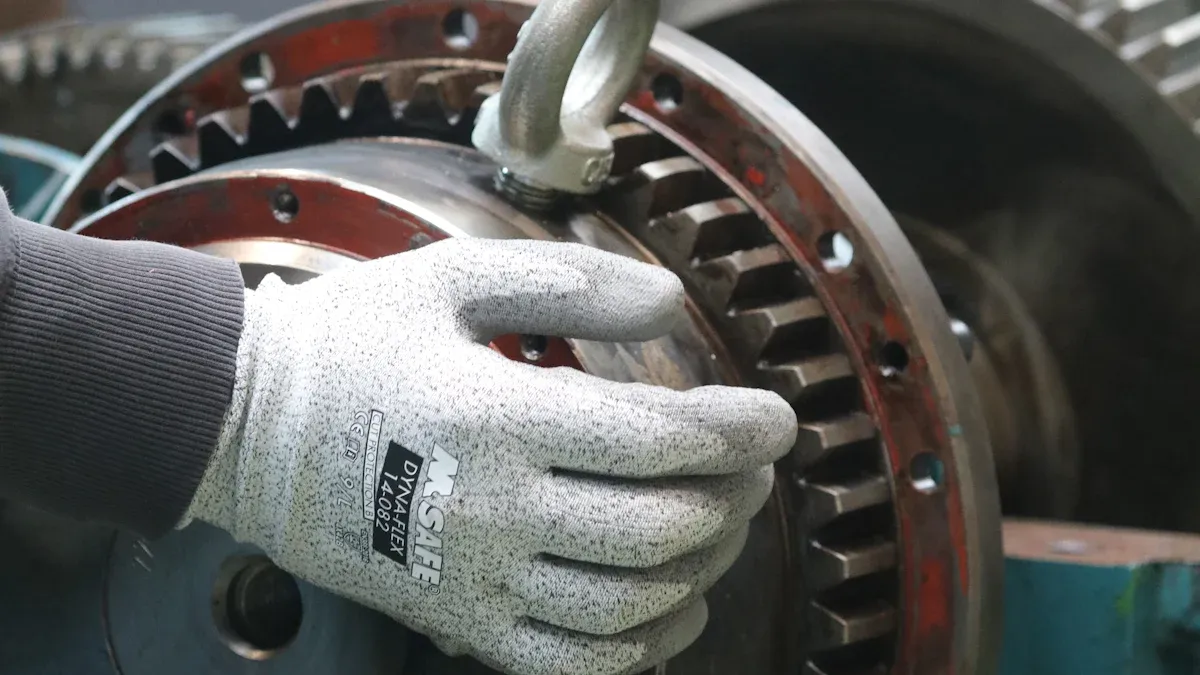
The mechanical systems are the heart of a rotary press machine, responsible for transmitting power and controlling motion. A well-maintained clutch, brake, and drive train ensures precise operation, operator safety, and consistent production output. Neglecting these core components can lead to poor performance and catastrophic failure. Technicians must give these systems dedicated attention during scheduled maintenance routines.
Inspecting Wet vs. Dry Clutch and Brake Systems
Clutch and brake systems come in two primary designs: wet or dry. Each requires a different inspection approach. Wet systems immerse the components in an oil bath for cooling and lubrication. Technicians must regularly check the oil level and condition. Dry systems use friction materials exposed to the air. They need frequent inspection for wear and the removal of accumulated dust, which can affect performance.
Pro Tip for Wet Systems: If the oil in a wet clutch/brake system appears milky or excessively dark, it signals contamination from water or metal particles. Technicians should drain and replace the fluid immediately and investigate the source of the contamination to prevent further damage.
Checking Drive Train Connection Points for Tightness
The constant motion and vibration of the press can cause critical fasteners in the drive train to loosen over time. This includes bolts on the main motor, gearbox, and other connection points. A loose connection can cause misalignment, leading to excessive stress and premature wear on gears, bearings, and shafts. Technicians should use a calibrated torque wrench to check and tighten all key fasteners to the manufacturer's recommended specifications during monthly and annual inspections.
Monitoring Components for Wear and Damage
Regularly monitoring drive train components for signs of wear is a critical preventive measure. Identifying degradation early allows for planned replacement before a part fails unexpectedly. Technicians should listen for unusual noises and perform visual inspections.
Common signs of wear include:
- Gears: Look for pitting, scoring, and chipped teeth. Increased noise, vibration, or excessive backlash are also clear indicators of wear that can affect operational precision.
- Belts: Inspect belts for any cracks, fraying, or glazing on the surface. Stretching is another concern, while noises like squealing or flapping often point to improper tension or material fatigue.
Electrical and Control System Reliability
The electrical and control systems act as the brain of the press, dictating every movement and ensuring operational safety. Maintaining the reliability of these systems is essential for consistent performance and preventing complex, hard-to-diagnose failures. Technicians must approach electrical maintenance with precision and care.
Keeping Electrical Cabinets Clean, Dry, and Secure
Electrical cabinets house sensitive components that are vulnerable to environmental factors. A clean and secure cabinet is the first line of defense against electrical faults. Technicians should regularly inspect these enclosures. They must ensure all doors are securely latched to prevent the entry of dust and moisture, which can cause short circuits or component overheating. Proper wire management inside the cabinet is also crucial. Tidy wiring prevents accidental disconnections and makes troubleshooting easier.
Performing Functional Tests of All Controls
Regular functional tests confirm that all operator controls and safety devices work as intended. This verification is critical for both operator safety and machine functionality. During scheduled maintenance, technicians should test every button, switch, and sensor. This includes a full test of the emergency stop circuit, light curtains, and two-hand controls. A simple checklist ensures no control is missed, confirming the machine will respond correctly to every command.
Evaluating the Benefits of Control System Upgrades
Modernizing the control system of an older rotary press machine can deliver a significant return on investment. Advanced systems, often featuring Siemens touch screens and displays, offer enhanced automation and real-time process monitoring. Upgrading provides numerous quantifiable benefits.
- Increased Efficiency: Automation reduces manual intervention, minimizes human error, and allows for faster tooling changeovers.
- Improved Quality: Precise control over compression forces and real-time weight adjustments lead to higher product consistency and less material waste.
- Enhanced Capabilities: AI-powered systems can enable predictive maintenance, forecasting equipment failures before they cause downtime.
- Greater Throughput: Optimized, continuous operation with minimal interruption directly increases production capacity and revenue.
These upgrades transform production processes, offering major advantages in efficiency, quality, and long-term cost-effectiveness.
Advanced Maintenance for Peak Performance and Quality
Beyond routine schedules, advanced maintenance techniques focus on the precision and strategic oversight of the equipment. These practices ensure the highest levels of performance, directly improving part quality and extending the life of expensive tooling. Mastering these areas transforms maintenance from a reactive task into a proactive strategy for operational excellence.
Understanding and Maintaining Slide Parallelism
Slide parallelism refers to the alignment between the bottom surface of the slide and the top surface of the bolster. Perfect parallelism ensures that forming force is distributed evenly across the entire die set. When the slide is not parallel, it can cause uneven part thickness, material thinning, and excessive, unbalanced wear on the tooling. Technicians must periodically check this alignment using precision measuring tools to prevent quality degradation and protect the die investment.
Adjusting Gibs to Improve Die Life and Part Quality
Gibs are the adjustable components that guide the slide's vertical movement, controlling its clearance and alignment. Proper gib adjustment is the primary method for correcting slide parallelism issues. Technicians must set the gibs according to manufacturer specifications to ensure the slide travels smoothly and precisely.
Pro Tip: Listen for Clues 👂 A loud "snap" at the bottom of the stroke often indicates excessive gib clearance. This sound is caused by the slide shifting upon force reversal, a clear sign that adjustment is needed to prevent damage.
Correctly adjusted gibs minimize slide movement, which reduces shock, extends die life, and improves overall part consistency.
Implementing a Preventive Maintenance Program (PMP)
A formal Preventive Maintenance Program (PMP) organizes all maintenance activities into a cohesive, documented strategy. A successful PMP is built on several core principles:
- Build a Consistent Schedule: Technicians should establish a routine schedule based on running hours or production counts. Planning maintenance minimizes operational interruptions.
- Stock Critical Parts: Proactively ordering and stocking common replacement parts avoids extended downtime while waiting for a delivery.
- Follow Manufacturer Guidelines: Adhering to the original manufacturer's maintenance recommendations is the best way to ensure optimal press operation.
- Keep Detailed Records: Documenting all maintenance work helps track equipment history, identify recurring problems, and support any warranty claims.
- Prioritize Daily Safety Checks: Operators must perform safety checks at the start of every shift. Testing the E-Stop and other safety devices is non-negotiable.
Ensuring staff have the correct training to perform these tasks is fundamental to the program's success.
Consistent, documented maintenance across all key systems is the most effective strategy to extend the life of a rotary press machine. Adhering to the principles in this guide delivers direct, measurable benefits for any operation. These advantages include:
- Reduced unplanned downtime
- Enhanced operational safety
- Improved part quality
Proactive care is not a cost. It is an investment that yields a significantly higher return on valuable equipment, ensuring peak performance for years to come.
FAQ
How often should operators check lubrication?
Operators must check lubrication levels daily. A consistent supply of the correct lubricant prevents friction and wear. This simple check is essential for protecting critical machine components and ensuring smooth, reliable operation.
What is the first step if the emergency stop fails?
Safety First! ⚠️ Technicians must immediately implement Lock-Out, Tag-Out (LOTO) procedures. The machine should be de-energized and secured. This action prevents accidental startup and ensures technician safety during inspection and repair of the faulty circuit.
Why is using the correct lubricant type important?
Using the wrong lubricant causes significant problems. It leads to increased friction, sticking issues, and uneven tablet weights. Adhering to manufacturer specifications protects the tooling and ensures consistent product quality and yield.
How do modern controls benefit tablet production?
Modern controls, like Siemens touch screens, offer a high degree of automation. They provide real-time monitoring for stable operation. This technology helps ensure the machine meets GMP requirements, making it an optimal choice for high-quality tablet production.
See Also
Top 5 Applications for Single-Stage Rotary Vane Vacuum Pump Systems
Nozzle Technology Insights for Gardening, Bioprinting, and Lubrication Professionals
Understanding Rotary Vane Vacuum Pumps: Functionality and Operational Principles Explained
Essential Industrial Vacuum Cleaners: Six Must-Have Models for Businesses
Future of Carton Production: Trending Folder Gluer Innovations for 2025