The Role of 321/321H Flanges in Heat Exchanger Efficiency
The global heat exchanger market is projected to reach USD 30.73 billion by 2032, highlighting the growing demand for efficient thermal management solutions in modern industry.
This expansion requires components that can withstand extreme conditions. Stainless Steel 321 / 321H Flanges are indispensable for these applications, offering superior high-temperature strength over options like Stainless Steel 316 Flanges. Their unique material properties provide the structural integrity and operational reliability necessary for peak performance. This directly enhances system efficiency and longevity in demanding industrial environments.
Key Takeaways
- 321/321H flanges are strong at high temperatures. They help heat exchangers work better and last longer.
- These flanges stop leaks and warping. They keep seals tight even when temperatures change a lot.
- 321/321H flanges fight rust and damage. This keeps fluids clean and prevents costly repairs.
- The 'H' in 321H means it has more carbon. This makes it even stronger for very hot jobs.
- Choosing 321/321H flanges saves money over time. They last longer and need fewer fixes.
Why High-Temperature Strength is Crucial for Heat Exchanger Performance
High-temperature operation is the cornerstone of efficient thermal processing, but it also introduces significant material challenges. In industrial heat exchangers, components face a relentless assault from extreme conditions. Engineers must design systems to counteract common causes of material failure to ensure reliability and safety.
- Thermal Fatigue: Constant temperature cycling causes materials to expand and contract, leading to stress accumulation, cracks, and warping.
- Mechanical Failure: Flow-induced vibration can cause tubes to wear against supports, leading to fatigue and potential ruptures.
- Tube Corrosion: High temperatures accelerate oxidation and other chemical reactions that degrade materials and reduce performance.
Stainless Steel 321/321H flanges are engineered specifically to combat these challenges. Their exceptional high-temperature strength provides the structural foundation needed for heat exchangers to operate at peak efficiency without compromising integrity.
Preventing Warping and Leaks Under Thermal Stress
The integrity of a flange connection is paramount for preventing leaks and maintaining system pressure. However, thermal expansion directly threatens this integrity. As temperatures rise, metal components expand, generating powerful axial forces along the piping and at the flange joints. This process can have severe consequences.
Thermal expansion can reduce the pretension force in bolts, compromising the clamping pressure on the gasket. In some cases, this effect is dramatic.
Studies show that plastic deformations from thermal stress can reduce the initial pre-tension force in bolts by as much as 30–41%, creating a significant risk for leaks.
SS 321/321H flanges excel in this environment due to their dimensional stability under thermal load. They resist the warping and distortion that other materials may exhibit. This resilience ensures that the gasket remains properly compressed and the seal stays tight, even during thermal cycling. Engineers verify this performance using advanced methods like Design By Analysis (DBA) and Finite Element Analysis (FEA), which simulate extreme temperature and pressure conditions to confirm the flange's ability to maintain its shape and prevent leaks.
Maximizing Thermal Transfer with Higher Operating Temperatures
The fundamental goal of a heat exchanger is to transfer thermal energy efficiently. According to the laws of thermodynamics, efficiency is maximized when the temperature difference between the hot and cold fluids is as large as possible. Power stations, for example, achieve higher efficiencies (around 42%) because their boilers operate at extreme temperatures and pressures.
This principle creates a clear engineering objective: run the system as hot as safely possible. The material strength of the flanges becomes the limiting factor. SS 321/321H flanges empower engineers to push these limits.
- Enabling Higher Temperatures: Most austenitic stainless steels can operate up to 870°C (1598°F). The robust nature of 321/321H allows heat exchangers to operate confidently within this high-temperature range.
- Boosting Efficiency: By facilitating higher operating temperatures on the hot side, these flanges help create the large temperature differential needed for maximum thermodynamic efficiency, turning more thermal energy into useful work.
While the thermal conductivity of the flange material contributes to the overall heat transfer coefficient, the ability to sustain higher process temperatures provides a far more significant boost to overall system efficiency.
Superior Creep and Stress Rupture Resistance
In high-temperature applications, materials are subjected to constant stress over long periods. This introduces the risk of two time-dependent failure modes: creep and stress rupture.
Creep is the tendency of a solid material to deform permanently under the influence of persistent mechanical stress. Stress rupture is the eventual fracture of the material resulting from this continuous strain over time.
This phenomenon is a critical design consideration for any component intended for long-term service at elevated temperatures. SS 321/321H flanges are specifically formulated to provide outstanding resistance to these failure modes. Compared to other common alloys like 304 and 304L, SS 321/321H demonstrates significantly higher creep and stress rupture properties, particularly at temperatures exceeding 1000°F (537°C).
Engineers often use the Larson-Miller parameter to compare the long-term, high-temperature capabilities of different alloys. In these comparisons, SS 321/321H consistently proves its value, ensuring that flanges maintain their structural integrity throughout the designed service life, preventing deformation and failure. This superior resistance makes them an ideal choice for critical applications in refineries, power plants, and chemical processing facilities.
The Critical Role of Corrosion Resistance in System Longevity
While high-temperature strength ensures a heat exchanger operates efficiently, corrosion resistance guarantees it operates for a long time. Corrosion is a relentless force in industrial environments, degrading materials, compromising structural integrity, and leading to costly failures. The financial impact is substantial, particularly in sectors that handle aggressive chemicals.
| Industry | Annual Corrosion-Related Costs |
|---|---|
| Chemical, Petrochemical, and Pharmaceutical | $1.7 billion |
Stainless Steel 321/321H flanges provide a powerful defense against this degradation. Their unique chemical composition is specifically engineered to resist corrosive attack, especially in the high-temperature conditions that make other steels vulnerable. This resistance is fundamental to extending the service life of a heat exchanger and ensuring its long-term reliability.
How Titanium Stabilization Prevents Intergranular Corrosion
A significant threat to standard austenitic stainless steels is a phenomenon known as sensitization. When these steels are exposed to temperatures between 800°F and 1500°F (427°C to 816°C), chromium atoms combine with carbon to form chromium carbides along the material's grain boundaries. This process depletes the surrounding areas of chromium, robbing the steel of its protective passive layer and making it highly susceptible to intergranular corrosion.
SS 321/321H flanges masterfully overcome this challenge through titanium stabilization. The alloy includes a small but critical amount of titanium, which has a stronger affinity for carbon than chromium does.
The Stabilization Mechanism
- Titanium preferentially combines with free carbon in the steel.
- This reaction forms stable titanium carbides (or carbonitrides).
- Because the carbon is locked away with titanium, it cannot bond with chromium.
- Chromium remains evenly distributed throughout the steel, preserving the protective oxide layer and preventing intergranular corrosion.
This stabilization makes SS 321/321H an exceptional choice for applications involving thermal cycling or prolonged operation within the sensitization temperature range.
Safeguarding Welds and Heat-Affected Zones
Welding is essential for fabricating heat exchangers, but the intense heat creates a vulnerable area known as the Heat-Affected Zone (HAZ). In this zone, the material's microstructure can change, potentially compromising its mechanical properties and corrosion resistance. The high heat of welding can trigger the formation of brittle intermetallic phases, such as chromium carbides and the Sigma phase, which reduce toughness and corrosion resistance.
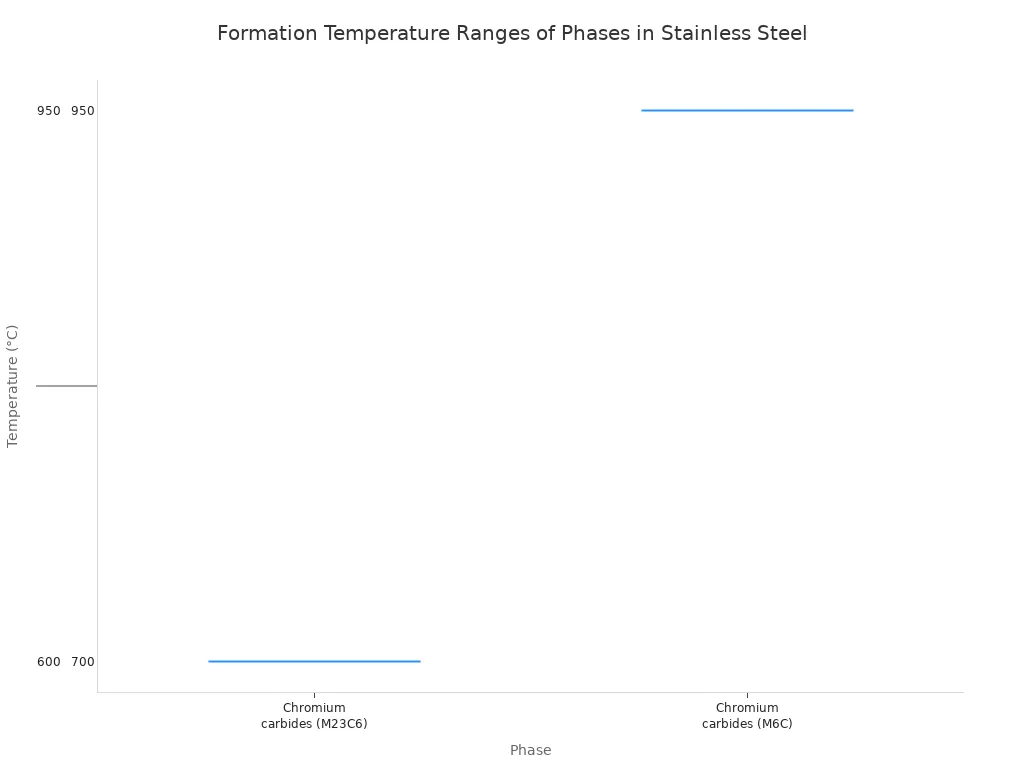
The titanium stabilization in 321/321H flanges provides inherent protection for the HAZ against sensitization. However, proper welding technique is still crucial to preserve the material's full integrity. Following best practices ensures that the weld joint and surrounding area retain their designed strength and corrosion resistance.
Welding Best Practices for SS 321/321H
- Control Heat Input: Use a low and consistent heat input to avoid overheating the material, which can degrade the titanium stabilizer.
- Select Proper Filler Metal: Use a filler wire that matches the base material, such as ER321, to ensure the weld deposit has similar properties.
- Use an Inert Shielding Gas: Employ pure argon or an argon-helium mixture to protect the molten weld pool from atmospheric contamination.
- Ensure Cleanliness: Thoroughly clean all surfaces before welding to remove any contaminants that could introduce defects into the weld.
Adhering to these guidelines helps engineers create strong, reliable welds that maintain the superior corrosion resistance of the 321/321H alloy.
Maintaining Process Fluid Purity and Preventing Contamination
In many industries, the purity of the process fluid is as important as the efficiency of the heat transfer. Any contamination can ruin product batches, poison expensive catalysts, or lead to non-compliance with strict regulatory standards.
Industries where fluid purity is paramount include:
- Pharmaceuticals: Preventing contamination is essential for producing safe and effective medications.
- Food & Beverage: Maintaining purity ensures product safety, quality, and compliance with health standards.
- Semiconductor Manufacturing: Ultra-pure gases and chemicals are required to fabricate sensitive electronic components without defects.
Corrosion poses a direct threat to fluid purity. When a flange corrodes, metallic ions and corrosion byproducts can leach into the process stream. This material degradation acts as a continuous source of contamination. Because SS 321/321H flanges are highly resistant to corrosion, they provide a stable and inert boundary for the process fluid. They do not degrade or release particles into the system, thereby safeguarding the purity and integrity of the final product. This makes them an indispensable component for high-purity applications where quality cannot be compromised.
The 321H Advantage: Higher Carbon for Enhanced Durability
While Grade 321 offers excellent performance, the "H" designation in 321H signifies a crucial enhancement for the most demanding high-temperature services. This grade provides a significant boost in durability and strength, making it the premier choice for applications where reliability is non-negotiable. The advantage stems directly from a carefully controlled increase in carbon content, which fundamentally improves the material's mechanical properties under extreme heat.
Unpacking the Benefits of Higher Carbon Content
The primary distinction of Grade 321H is its higher carbon composition. ASTM standards require a specific carbon range for this grade, setting it apart from its standard 321 counterpart.
| Grade | Carbon (C) Content |
|---|---|
| SS 321H | 0.04 – 0.10% |
This intentional increase in carbon, an interstitial element, delivers several key metallurgical benefits. It strengthens the steel's internal structure for superior high-temperature performance.
- Interstitial elements like carbon boost the material's overall yield and tensile strengths.
- The added carbon increases the stacking fault energy of the austenite phase, enhancing its stability.
- It also improves the mechanical stability of austenite, making the structure more robust under stress.
These enhancements make 321H flanges exceptionally resilient in severe operating conditions.
Superior Strength at Temperatures Above 1000°F (538°C)
The true value of the 321H grade becomes apparent at extreme temperatures. Above 1000°F (538°C), the higher carbon content provides a dramatic improvement in mechanical strength. This elevated strength directly translates to superior creep and stress rupture resistance. Components can withstand continuous high stress for longer periods without deforming or failing. For heat exchangers operating at the upper limits of their design, this added strength ensures the flanges maintain their structural integrity, preventing leaks and catastrophic failures.
Reducing Lifecycle Costs Through Minimized Downtime
Choosing 321H flanges is a strategic decision that lowers the total cost of ownership. Their enhanced durability means a longer service life and a reduced need for frequent inspections and replacements. This reliability is critical in industries where operational continuity is paramount.
The Bottom Line: By minimizing the risk of premature failure, 321H flanges reduce unplanned downtime. This leads to greater plant availability, consistent production output, and significant long-term cost savings. The initial investment in a higher-grade material pays dividends through enhanced operational efficiency and safety.
Practical Application of Stainless Steel 321 / 321H Flanges
Understanding the theoretical benefits of a material is one thing; applying it effectively is another. Stainless Steel 321 / 321H Flanges are chosen for specific, demanding roles where their unique properties provide a clear advantage over more common alloys. Engineers select these components based on direct comparisons, industry-specific needs, and critical design parameters.
A Direct Comparison: 321/321H vs. 304/304L Flanges
While derived from the common 304 grade, 321 stainless steel contains a key addition: titanium. This element stabilizes the alloy, preventing chromium carbide formation at high temperatures and giving it superior resistance to intergranular corrosion. This makes it a more robust choice for applications involving welding or thermal cycling between 800°F and 1850°F (427°C to 816°C).
The mechanical property advantages are clear:
| Alloy | Typical Tensile Strength (ksi) | Typical Endurance Limit (ksi) |
|---|---|---|
| 304L | 68 | 34 |
| 304 | 70 | 35 |
| 321 | 76 | 38 |
When to Choose Which?
Grade 304L is a suitable alternative when the main concern is post-weld corrosion resistance at lower temperatures. However, it is not recommended for service above 500°C due to its lower hot strength. For superior high-temperature performance, Stainless Steel 321 / 321H Flanges are the definitive choice.
Key Industries and Common Use Cases
The exceptional high-temperature strength and corrosion resistance of these flanges make them essential in several critical industries. Their reliability ensures safety and efficiency where other materials would fail.
- Petroleum Refining: They are installed in crude oil distillation units and other high-temperature pressure systems that demand excellent creep resistance.
- Aerospace: The material's strength-to-weight ratio and high-temperature resilience make it ideal for exhaust systems and other aerospace engineering equipment.
- Chemical Processing: Heat exchangers in chemical plants rely on these flanges to handle corrosive substances at elevated temperatures without contamination.
Design Considerations for Engineers and Technicians
Proper implementation is key to leveraging the full potential of these components. One critical design consideration is gasket selection, which ensures a leak-proof seal under extreme conditions.
For high-pressure and high-temperature services, engineers often specify Stainless Steel 321 Spiral Wound Gaskets. Their construction allows them to flex with temperature and pressure fluctuations, maintaining a tight seal. These gaskets resist deforming under high pressure, ensuring the integrity of the flange connection throughout the equipment's service life.
Selecting Stainless Steel 321 / 321H Flanges is a strategic engineering decision that directly boosts heat exchanger efficiency and reliability. These components provide unmatched high-temperature strength and corrosion resistance, ensuring long-term, cost-effective operation that aligns with rigorous ASME design codes. While research into higher-performance alloys continues, investing in proven Stainless Steel 321 / 321H Flanges guarantees the structural integrity and optimal performance essential for today's demanding industrial processes.
FAQ
What is the primary difference between SS 321 and 321H?
Grade 321H contains a higher carbon content (0.04–0.10%). This composition provides superior strength and creep resistance at temperatures above 1000°F (538°C). It enhances durability for the most demanding high-temperature services.
Why is titanium important in 321/321H flanges?
Titanium acts as a stabilizing element. It preferentially bonds with carbon, preventing the formation of chromium carbides. This process preserves the steel's protective layer, providing exceptional resistance to intergranular corrosion in high-temperature environments.
Are 321/321H flanges suitable for welded applications?
Yes, these flanges offer excellent weldability. Following proper procedures, such as using a matching filler metal and controlling heat input, preserves the material's integrity. This ensures the weld joint retains the alloy's designed strength and corrosion resistance.
What makes 321/321H a better choice than 304 for heat exchangers?
The titanium stabilization in 321/321H prevents intergranular corrosion, a weakness for Grade 304 in high-temperature service. It also provides superior creep strength, making it a more reliable choice for heat exchangers operating above 1000°F (538°C).
See Also
Simplifying AHRI 400/401 Heat Exchanger Assistance for Seamless Operations
Analyzing Shell and Plate Heat Exchanger Performance: A 2025 Comparison
Innovations in Heat Exchanger Manufacturing Boosting Overall Industrial Efficiency
Cutting-Edge Materials Transforming the Future of Heat Exchanger Supply Chains
Essential 2025 Guide: Semi-welded Plate Heat Exchangers for Industrial Use