Beyond Contamination The Full ROI of X-Ray Inspection
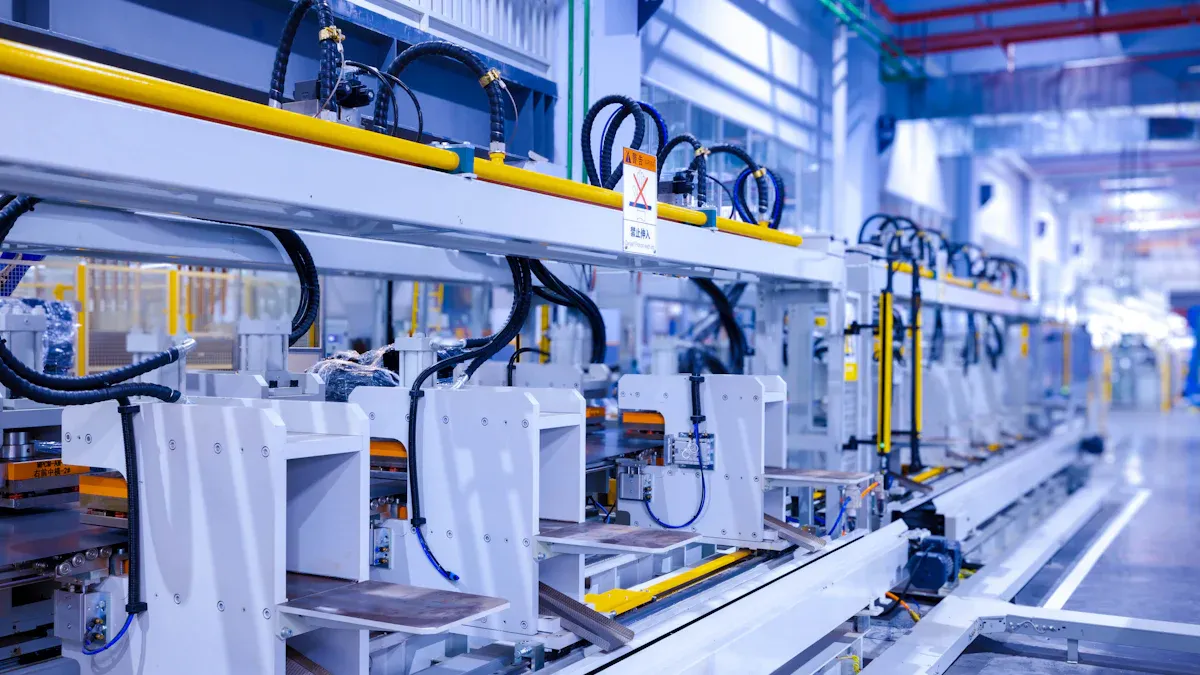
An x-ray inspection system's return on investment (ROI) extends far beyond simply finding contaminants; it's a powerful driver of profitability and operational excellence. Justifying this investment requires a comprehensive view, encompassing direct financial gains from enhanced quality control and reduced product giveaway. The true value also emerges from preventing catastrophic recall costs and securing contracts with major retailers. This analysis reveals the system as a strategic asset for growth and brand protection, moving beyond its initial cost.
Here's a look at the potential financial impact of contamination incidents, which an x ray metal detector food industry system helps prevent:
| Statistic | Value/Description |
|---|---|
| Estimated industry losses from 2018 romaine lettuce E. coli outbreak | $350 million |
| Average estimated expense of a food recall (direct costs) | $10 million |
| Indirect costs of food recalls | Legal proceedings, lost revenues, harm to reputation |
Note: These figures highlight the significant financial risks associated with food safety failures, underscoring the protective value of advanced inspection technology. The indirect costs, such as damage to brand reputation, often exceed the direct expenses of a recall.
The Financial Impact of Enhanced Quality Control
Enhanced quality control directly translates to higher profit margins and greater operational efficiency. An advanced x-ray inspection system moves beyond simple contamination checks to become a comprehensive quality assurance tool. It actively reduces waste and rework, driving tangible cost savings across the production line.
Reduce Product Giveaway with Mass Measurement
Product giveaway from overfilling represents a direct loss of profit. X-ray systems use mass measurement to ensure fill levels fall within precise parameters, rejecting non-compliant products for rework. This capability offers a significant advantage over traditional methods. While a standard checkweigher confirms weight, an x ray metal detector food industry system provides superior accuracy and detects other issues simultaneously.
| Feature | X-ray Mass Measurement | Traditional Checkweigher |
|---|---|---|
| Technology | Determines mass using X-ray imaging. | Weighs products using load cells. |
| Capabilities | Detects overfills, underfills, and foreign contaminants. | Primarily detects overfills and underfills. |
| Accuracy | High accuracy, even with complex packaging. | Can be affected by product presentation. |
Verify Product Integrity and Seal Inspection
A product's shelf life and safety depend on its packaging integrity. X-ray systems inspect for seal defects, such as trapped food particles or loose seams, that are invisible to the naked eye. A compromised seal leads directly to financial losses from spoilage and damage to brand reputation.
A packaging failure rate of just 2% can lead to tens of thousands of dollars in replacement costs, not including the indirect costs of lost sales and reputational harm. Hermetic seal verification prevents these expenses.
Eliminate Missing or Broken Components
Ensuring product completeness is crucial for customer satisfaction and brand loyalty. X-ray inspection systems perform quality checks by counting components inside sealed packages. This process guarantees that every item—from a prize in a cereal box to the correct number of cookies in a tray—is present. This capability helps manufacturers:
- Ensure product integrity and consistency.
- Reduce customer complaints and returns.
- Strengthen brand loyalty and consumer trust.
By verifying completeness, companies avoid the costs associated with handling customer dissatisfaction and protect their market standing.
The X Ray Metal Detector Food Industry: Mitigating Financial Risks
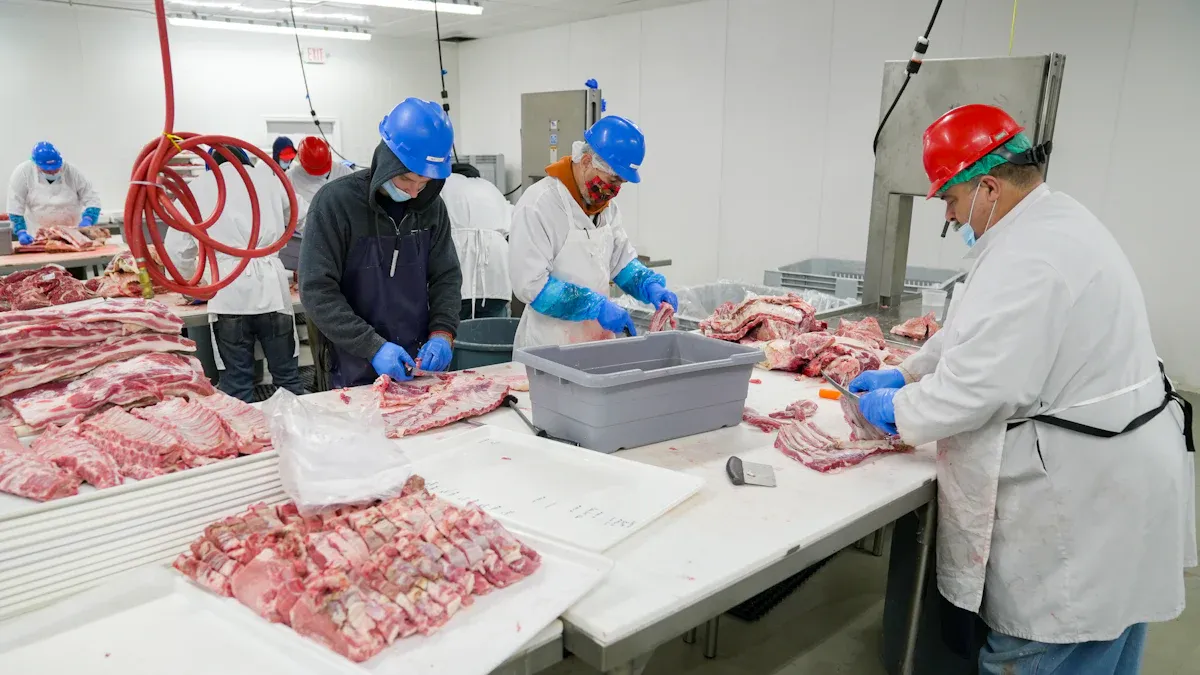
Beyond internal quality control, an x-ray inspection system is a critical tool for managing external financial risks. It safeguards a company’s market position and protects it from the catastrophic costs associated with product safety failures. Investing in an x ray metal detector food industry system is a proactive strategy for long-term financial stability.
Meet Retailer Mandates for Market Access
Gaining and maintaining access to major retail channels often depends on a manufacturer's food safety protocols. Many large retailers have stringent supplier requirements to protect their own brand reputation.
- Costco, for example, mandates x-ray inspection for all food products it stocks.
- Compliance standards like BRCGS Food Safety Issue 9 position x-ray technology as a valuable tool for fulfilling food safety plans.
An advanced x ray metal detector food industry system ensures companies can meet these mandates, especially for products with metalized packaging that can challenge traditional metal detectors.
Calculate the True Cost of a Product Recall
A product recall is one of the most financially damaging events a food manufacturer can face. According to studies by the Grocery Manufacturers Association (GMA) and the Food Marketing Institute (FMI), the average direct cost of a recall is $10 million. This figure covers expenses like product retrieval and disposal. However, the indirect costs are often far greater and include:
- Legal fees and regulatory penalties
- Logistics for distributing replacement products
- Marketing campaigns to rebuild consumer confidence
Protect Long-Term Brand Reputation and Trust
A company's reputation is its most valuable asset. A single recall can erode decades of consumer trust. Research shows that 56% of consumers would not purchase a product that was previously recalled. An x ray metal detector food industry system acts as a powerful brand guardian. It prevents contaminated or defective products from reaching the market, thereby avoiding costly lawsuits and protecting the customer loyalty that underpins long-term revenue and market share. This protection is essential for a company's financial health and reputation.
A Practical Guide to Calculating Your Full ROI
Calculating the full return on an x-ray inspection system requires a detailed financial analysis. This process moves beyond the initial purchase price. It involves quantifying all potential gains and understanding the complete lifetime costs. A thorough calculation provides a clear picture of the system's true financial value.
Identify Your Key Value Drivers
The first step in calculating ROI is to identify your key value drivers. These are the specific operational benefits that generate financial returns. The rising frequency of food contamination makes robust inspection a primary growth driver for manufacturers. Stringent regulations from bodies like the U.S. Food and Drug Administration (FDA) also compel industries to adopt high-precision systems to ensure compliance and avoid penalties.
Key value drivers for an x-ray system investment include:
- Scalability: The system’s capacity to adapt to future production volumes or new product lines.
- Regulatory Compliance: Its ability to meet current and future food safety standards.
- Innovation: The vendor's commitment to R&D for emerging technologies like AI-powered defect detection.
- Return on Investment (ROI): The total operational savings from waste reduction and safety improvements over the equipment’s lifespan.
Beyond these points, protecting brand reputation is a critical, quantifiable driver. A strong brand directly impacts revenue and profitability. The following table outlines how to measure the financial impact of brand health.
| Metric | How to Measure | Relevance to ROI |
|---|---|---|
| Customer Loyalty | Track customer retention rates (CRR) and lifetime value (CLV). | Loyal customers increase spending and choose the brand over competitors, directly boosting revenue. |
| Price Premium | Compare your product pricing against competitors with weaker brands. | A strong brand often allows for higher pricing, increasing profit margins without needing to grow sales volume. |
| Customer Acquisition Cost (CAC) | Monitor changes in CAC over time. | Strong brands reduce acquisition costs through organic referrals and direct traffic, improving marketing efficiency. |
| Brand Reputation | Monitor online reviews, referral rates, and customer satisfaction scores. | This provides a clear picture of consumer perception, which influences purchasing decisions and loyalty. |
Understand Total Cost of Ownership (TCO)
Total Cost of Ownership (TCO) represents the complete cost of the x-ray system over its entire lifecycle. It includes the initial purchase price plus all subsequent expenses. A comprehensive TCO analysis prevents unexpected costs and provides an accurate baseline for your ROI calculation.
Key components of TCO include:
- Acquisition and Setup Costs: This covers the initial hardware and software purchase, installation, system configuration, and initial operator training.
- Operating Costs: These are ongoing expenses like energy consumption, data storage, and any subscription fees for software or cloud services.
- Personnel Costs: This includes labor for operation, IT support for the system, and ongoing employee training to maintain proficiency.
- Maintenance and Service Costs: This category covers preventive maintenance contracts, software updates, patches, spare parts, and periodic safety audits.
- End-of-Life Costs: These are future expenses related to decommissioning the old system, migrating data, and responsible disposal.
Budgeting Tip: 📝 A good rule of thumb is to budget an additional 15%-30% of the equipment price for first-year costs like installation and training. Plan for an additional 5%-10% of the original price annually for service contracts and ongoing operations.
Putting It All Together: The ROI Formula
Once you have identified your value drivers (gains) and calculated the TCO (cost), you can determine your final ROI. The standard formula provides a clear percentage representing the return on your investment.
The formula is:
ROI (%) = (Net Benefit / Total Cost of Ownership) x 100
- Net Benefit is the sum of all financial gains from your value drivers (e.g., savings from reduced product giveaway, avoided recall costs, increased revenue from market access).
- Total Cost of Ownership is the complete lifecycle cost you calculated.
Let's consider a hypothetical example for a mid-sized processing plant with a TCO of $200,000 for its new x-ray system.
| Value Driver | Annual Savings |
|---|---|
| Reduced Product Giveaway | $75,000 |
| Reduced Condemned Product (80% reduction) | $90,000 |
| Labor Savings (automated checks) | $40,000 |
| Prevented Chargebacks (40% reduction) | $35,000 |
| Total Annual Net Benefit | $240,000 |
Using the formula:
ROI = ($240,000 / $200,000) x 100 = 120%
This 120% ROI indicates the plant would recoup its entire investment and generate an additional 20% profit within the first year. For most food manufacturers, the typical payback period for an x-ray system ranges from 12 to 36 months, with many achieving a full return in under 18 months.
A complete ROI analysis requires looking beyond simple contamination detection. An x-ray inspection system is a multi-faceted investment. It boosts profitability by reducing waste, protects brands by preventing recalls, and secures market access through compliance. Viewing ROI solely through contamination misses the most significant financial benefits impacting the bottom line.
Next Step: 🚀 A full ROI analysis for specific operations will unlock the system's true strategic value.
FAQ
How does an x-ray system differ from a metal detector?
An x-ray system detects a wider range of contaminants, including glass, stone, and bone. It also performs quality checks like mass measurement and component counting.
Are x-ray inspection systems safe for food products?
Yes. The radiation levels are extremely low and do not harm the food. 🥕 The process is safe and does not affect the food's taste, texture, or nutritional value.
What is the typical payback period for an x-ray system?
Most food manufacturers achieve a full return on investment within 12 to 36 months. Many companies see a payback in under 18 months through operational savings.
See Also
Leading Chinese Suppliers for Acquiring Top-Tier X-Ray Inspection Equipment
Essential Industrial Checkweighers: Three Must-Have Models for Food Production
Hygienic Design: Comparing EHEDG Guidelines with 3A SSI Standards Effectively
Ensuring Safety: Best Practices for Storing Nitric Acid Securely
Why Automatic UV Coaters Are Crucial for High-Volume Printing Operations