How does a roasted coffee sorter impact coffee flavor and consistency
A roasted coffee sorter removes defective beans that create unpleasant flavors. This machine selects only the best beans for roasting. Coffee roasters use it to improve cup quality. Drinkers experience consistent taste with every brew.
- High-quality beans lead to better flavor.
- Reliable sorting ensures uniform results.
Roasted Coffee Sorter and Its Role in Quality Control
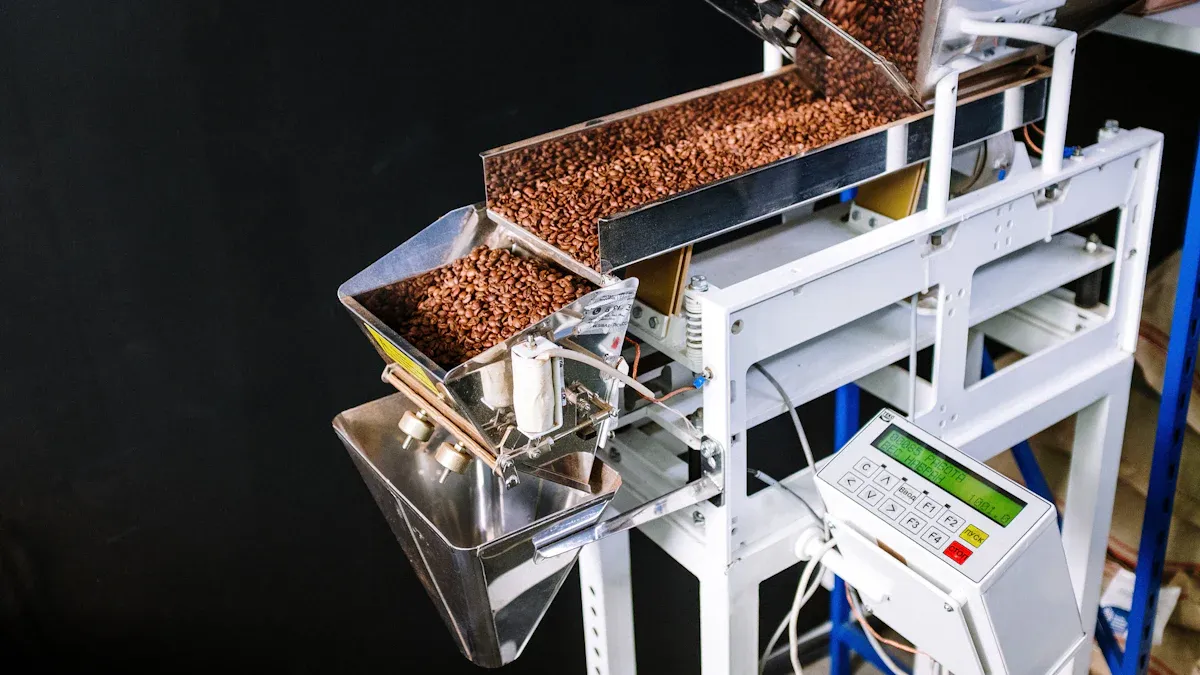
How Roasted Coffee Sorters Identify Defective Beans
Roasted coffee sorters play a vital role in quality control by using advanced technology to detect and remove defective beans. These machines rely on optical cameras and sensors to evaluate each bean’s color and shape. When a bean does not meet the required standards, the sorter uses pressurized air to separate it from the batch. Some models, such as those using hyperspectral imaging or deep learning, can even detect defects invisible to the human eye. This high level of precision ensures that only the best beans move forward in the production process.
Modern sorters achieve a sorting accuracy difference of only 3%–5% compared to manual methods, with AI-powered systems reaching up to 96% success in identifying insect-damaged beans.
Types of Defects Removed by Roasted Coffee Sorters
A roasted coffee sorter targets a range of defects that can compromise flavor and consistency. The table below highlights common defects and their impact:
| Defect Type | Description |
|---|---|
| Baked Coffee | Heated too long without first crack, resulting in flat flavor |
| Underdevelopment | Lacks caramelized sugars, often described as 'grassy' |
| Overdevelopment | Excessive roasting, leading to undesirable flavors |
| Quakers | Unripened beans, hard to spot before roasting |
| Scorching | Burnt patches from high charge temperature |
| Tipping | Burn marks on bean edges, usually during second crack |
These defects, if left unchecked, can introduce bitterness, sourness, or musty notes to the final cup.
The Sorting Process Explained
The roasted coffee sorting process involves several key steps:
- Sorting Green Coffee Beans: Workers or machines remove defects from raw beans, such as insect damage or discoloration.
- Sorting Roasted Coffee Beans: After roasting, the roasted coffee sorter eliminates beans with roasting defects, like over-roasting or cracks.
- Inspecting Packaged Coffee Products: The final inspection ensures that only safe, high-quality beans reach consumers.
By automating these steps, producers improve efficiency, reduce waste, and deliver a more consistent product.
Impact of Roasted Coffee Sorter on Flavor and Consistency
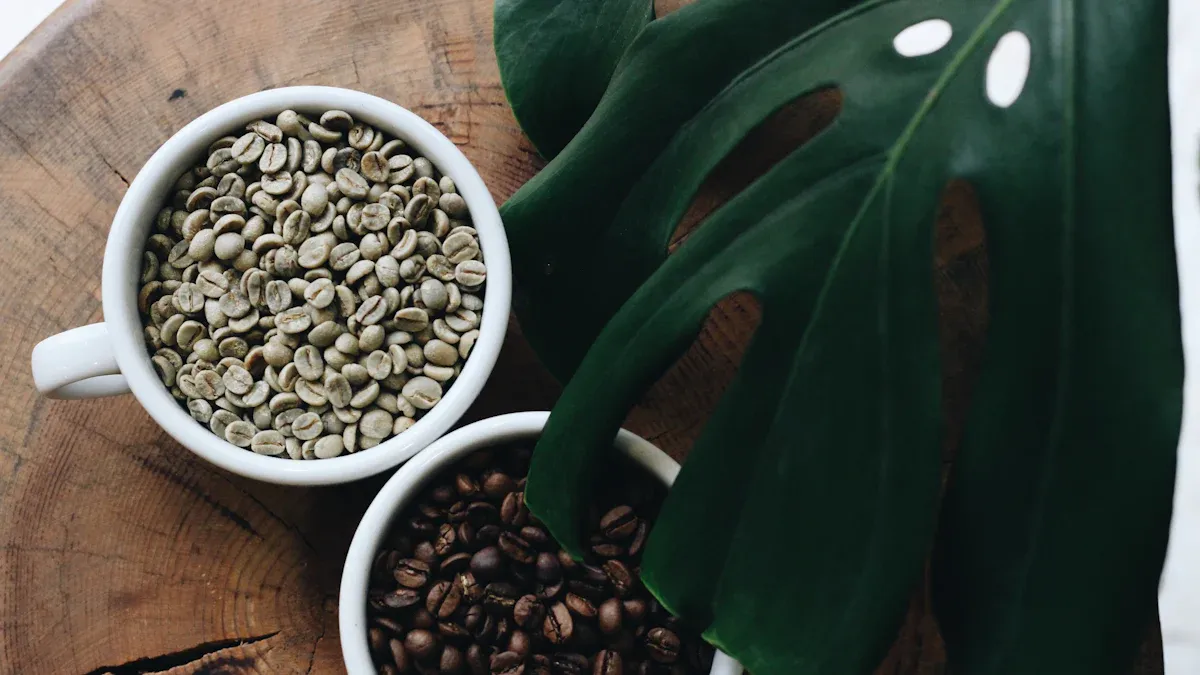
How Defective Beans Affect Coffee Taste
Defective beans introduce undesirable flavors that can overshadow the natural qualities of specialty coffee. These beans contain volatile compounds that contribute to off-flavors. The following table highlights some of the main chemical culprits found in defective beans:
| Compound Name | Type of Compound | Presence in Defective Beans |
|---|---|---|
| 1-methylpyrrole | Volatile Compound | Yes |
| 5-methyl-2-furfurylfuran | Volatile Compound | Yes |
| 2-methylfuran | Volatile Compound | Yes |
Even a small percentage of defective beans can lead to bitterness, sourness, or mustiness. These negative notes can significantly alter the overall taste profile of a coffee batch. Professional coffee graders use a process called cupping to evaluate the impact of defects.
The only reliable way to assess the inner quality of a coffee is to taste it. However, tasting alone is subjective, and can vary according to the recipe used to extract the coffee. To avoid subjective and divergent assessments, cupping, a standardized method, was introduced and is used worldwide.
Defect analysis remains a critical part of coffee grading. Trained graders inspect samples for both primary and secondary defects. Primary defects, such as full black or sour beans, have a major impact on flavor. Secondary defects, like partial black beans or slight insect damage, have a lesser effect. The grading system ensures that only high-quality beans reach specialty coffee status.
| Defect Type | Description |
|---|---|
| Primary Defects | Serious flaws that significantly impact flavor |
| Full black beans, full sour beans, fungus-damaged beans | |
| Secondary Defects | Minor issues with less impact |
| Partial black beans, broken beans, slight insect damage | |
| Grading Standards | Specialty Grade: 0 primary defects, max 5 secondary defects |
| Premium Grade: 0 primary defects, max 8 secondary defects | |
| Exchange Grade: Max 5 primary defects, max 15 secondary defects | |
| Below Standard Grade: More than 5 primary defects | |
| Off Grade: More than 15% defects by weight |
Achieving Batch Uniformity with Roasted Coffee Sorters
Uniformity in coffee beans is essential for achieving a consistent and high-quality roast. A roasted coffee sorter helps producers achieve this by removing beans that differ in size, density, or appearance. Grading beans based on size and density during dry milling ensures that they roast evenly. Beans of varying densities roast at different rates, leading to uneven roasting and a mix of flavors. Ensuring uniformity in size and density results in a more consistent roast and flavor profile.
- Uniform batches allow roasters to control the roasting process more precisely.
- Consistent roasting leads to predictable flavor outcomes in every brew.
- Consumers experience the intended taste profile, whether they prefer light, medium, or dark roasts.
Professional coffee tasters rely on standardized cupping methods to compare coffees, detect defects, and assess their qualities. This process ensures that the benefits of uniformity translate directly to the cup.
Benefits for Roasters and Coffee Consumers
A roasted coffee sorter offers significant advantages for both coffee roasters and consumers. The following table summarizes key benefits for roasters:
| Benefit | Description |
|---|---|
| Sorting Capacity | 250kg of roasted coffee per hour, enhancing operational efficiency. |
| Quality Improvement | Customers report cup scores improving by two to three points. |
| Time and Cost Savings | Quick sorting of defective beans saves time and money for roasters. |
Roasters can refine sorting profiles for optimal quality control. Quick identification of defective beans ensures higher quality standards. The advancement in color sorter machines means that roasters can now access more precise equipment, which significantly enhances their ability to maintain quality while managing high volumes of coffee.
Return on investment (ROI) also plays a crucial role. Roasters calculate ROI using the formula:
ROI (%) = [(Projected Earnings – Total Cost of Ownership) ÷ Total Cost of Ownership] × 100.
For example, a used 12kg roaster with a total investment of $28,000 can generate $60,000 in annual profit over five years. After deducting the initial investment and maintenance costs, the ROI exceeds 400%, demonstrating significant value recovery.
For consumers, the impact is clear:
- Roast level influences sensory attributes such as bitterness, sourness, and fruity notes, which are crucial for consumer preferences.
- Dark roast coffee exhibits higher intensities of bitterness, burnt, smoky, and cocoa flavors.
- Light roast coffee is characterized by more sour, citrusy, and fruity notes.
- Brewing temperature also affects flavor perception, with varying sweetness and sourness levels depending on the temperature.
A roasted coffee sorter ensures that every cup delivers the intended flavor and consistency, meeting the expectations of both roasters and coffee lovers.
Roasted coffee sorters play a vital role in delivering flavorful, consistent coffee. Studies show that sorting and precise roasting conditions directly impact aroma and bioactive compounds.
- These machines protect coffee quality by removing defects.
- Investing in advanced sorting technology ensures every cup meets high standards.
FAQ
How often should a roaster clean the roasted coffee sorter?
Roasters should clean the sorter after each use. Regular cleaning prevents residue buildup and maintains sorting accuracy.
Can a roasted coffee sorter handle all bean varieties?
Yes. Most modern sorters adjust settings for different bean sizes and densities. They work with Arabica, Robusta, and specialty varieties.
Does using a roasted coffee sorter increase production costs?
Initial investment may rise, but long-term savings from reduced waste and improved quality often offset costs.
See Also
The Importance of Capsule Sorters in Eliminating Defects
A Comprehensive Guide to Choosing Tablet Sampling Machines
Why Automatic UV Coating Machines Are Crucial for Fast Printing