What is a RO water dispenser? Can I drink RO water every day?
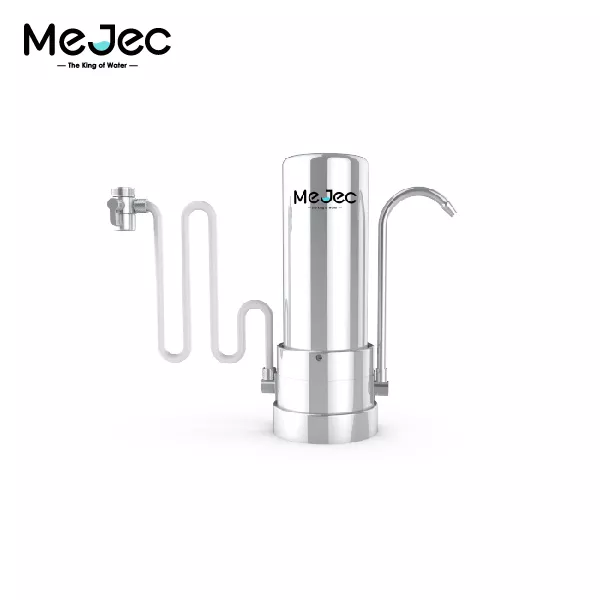
A RO water dispenser is a device that filters water using a process called reverse osmosis. This system removes impurities, making the water clean and fresh. Many people wonder if it is safe to drink RO water every day. Health experts have raised concerns about the low mineral content in RO water.
Scientists have issued warnings about reverse osmosis water, stating that it can cause more harm to the body than contaminants found in tap water. They emphasize that consuming RO water can lead to serious health issues due to its low mineral content, which can result in deficiencies and various health complaints.
Most health guidelines recommend balancing RO water with other sources of minerals for daily hydration.
Key Takeaways
RO water dispensers filter water using reverse osmosis, removing impurities for clean drinking water.
Daily consumption of RO water is safe if you balance your mineral intake through diet or supplements.
Regular maintenance of your RO water dispenser is crucial for ensuring safe and fresh water.
Consider using mineral drops or filters to add essential minerals back into RO water for better health.
Choose a RO water dispenser that fits your needs, focusing on features like multi-stage filtration and space efficiency.
RO water dispenser basics
What is a RO water dispenser?
A RO water dispenser is a device that gives you clean drinking water by removing impurities through a process called reverse osmosis. This system connects to a water source and uses several filters to make sure the water is safe and tastes good. Many people use a RO water dispenser at home, in offices, or in small spaces where clean water is important.
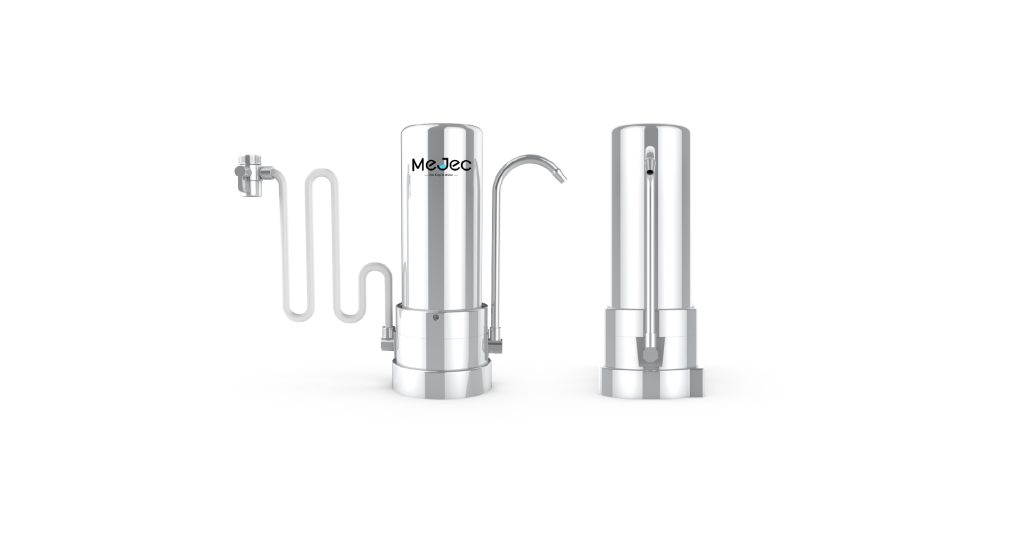
The Mejec Ultimate Desktop RO Water Filter is a great example of a modern, space-saving, point-of-use RO water dispenser. It sits on your countertop and does not need any installation. You can start using it right away by connecting it to a water source. This makes it easy for anyone to enjoy purified water without hassle.
A typical RO water dispenser has several main parts:
Water supply connector brings water from your tap to the system.
Pressure regulator protects the filters from high water pressure.
Sediment pre-filter removes sand and dirt.
Carbon filters take out chlorine and chloramine, which can harm the main filter.
Auto shut-off valve saves water by stopping the flow when the tank is full.
Reverse osmosis membrane removes most dissolved solids and germs.
These parts work together to give you water that is clean and safe to drink.
How does reverse osmosis work?
Reverse osmosis is a special way to clean water. The system uses a semi-permeable membrane. This membrane lets only water molecules pass through. It blocks things like dissolved salts, heavy metals, and microbes. When water is pushed through the membrane, almost all the unwanted substances stay behind.
Here is a simple table showing what the membrane blocks:
Contaminant Type | How It Is Blocked |
|---|---|
Dissolved Salts | Stopped by size and electrical charge |
Heavy Metals | Blocked because they are too large |
Microbes | Cannot pass through the tiny pores |
This process makes sure the water you get from a RO water dispenser is pure and free from most harmful substances.
Types and features of RO water dispensers
RO water dispensers come in different types to fit various needs:
Countertop models, like the Mejec Ultimate Desktop RO Water Filter, take up little space and do not need plumbing work. They are portable and easy to maintain.
Under-sink systems hide under your kitchen sink. They need installation but can handle larger amounts of water.
Freestanding units are bigger and can serve many people at once, making them good for offices or public spaces.
Each type has its own advantages. Countertop models are easy to move and set up. Under-sink systems provide a steady flow of water and are out of sight. Freestanding units offer high capacity.
Modern RO water dispensers have many useful features:
Multi-stage filtration, which uses several filters to remove different types of contaminants.
Instant hot and cold water options, so you can enjoy your drink at the temperature you like.
Eco-friendly designs that save water and energy.
User-friendly controls and displays for easy operation.
Tip: When choosing a RO water dispenser, look for one with a multi-stage filtration system and a design that fits your space and lifestyle.
A RO water dispenser can make it easy to get clean, great-tasting water every day, whether you are at home, at work, or on the go.
Daily RO water consumption

Is RO water safe to drink every day?
Many people choose RO water for its purity. Drinking water from a RO water dispenser every day is common in homes and offices. Most health experts agree that RO water is safe for daily use if you pay attention to your overall mineral intake. The main concern is that RO water has very low levels of minerals like calcium and magnesium. These minerals are important for your body.
The National Academy of Medicine and other experts suggest these daily fluid intakes:
About 13 cups of fluids for men
About 9 cups of fluids for women
Some experts recommend 15.5 cups (3.7 liters) for men and 11.5 cups (2.7 liters) for women
You can meet these needs with water from a RO water dispenser, but you should also make sure you get enough minerals from food or other drinks.
Note: If you use RO water as your main drinking water, consider eating a balanced diet with plenty of fruits, vegetables, and dairy products to help replace lost minerals.
Health effects and expert opinions
Research shows that drinking RO water every day may have some risks. RO water removes almost all minerals, which can lead to health problems if you do not get enough minerals from other sources. Studies have linked long-term use of low-mineral water to issues like cardiovascular disease, weaker bones, and even problems with the nervous system. In animal studies, rats that drank purified water showed changes in their metabolism, which could increase health risks.
Nutritionists and medical experts warn that children are especially at risk. Kids who drink only low-mineral water may have weaker bones and slower growth. This happens because their bodies need minerals like calcium and magnesium to build strong bones. Adults can also face problems if they do not get enough minerals over time.
Tip: Talk to your doctor or a nutritionist if you have concerns about your mineral intake, especially if you use RO water as your main source of drinking water.
RO water dispenser safety tips
Safe use of a RO water dispenser helps protect your health and your device. Here are some important safety tips:
Regularly inspect your dispenser. Check for damaged cords or loose plugs every month. Clean dust from circuits and check for loose wires every three months.
Prevent fire hazards. Always check water levels to avoid dry-burning. Make sure the dispenser has good airflow to keep it cool.
Protect children and seniors. Use child locks to prevent burns from hot water. Teach children about hot water safety. Provide stability aids for older adults.
Keep your water clean. Store water barrels in a safe place. Clean the dispenser often to stop germs and dirt from building up.
Remember: Good maintenance and safe habits help you enjoy pure water every day.
RO water dispenser benefits
Removal of contaminants
A RO water dispenser removes many harmful substances from drinking water. The system uses a special membrane and several filters. These filters trap metals, chemicals, and germs. The following table shows how well the system removes common contaminants:
Contaminant | Removal Rate |
|---|---|
Lead | 97% |
Mercury | 96% |
Copper | 98% |
Cadmium | 96% |
Arsenic | 94% |
Spores | 99.9% |
Sulfate | 98% |
Nitrate | 80% |
Fluoride | 97% |
Detergent | 97% |
Insecticides | 97% |
PCBs | 97% |
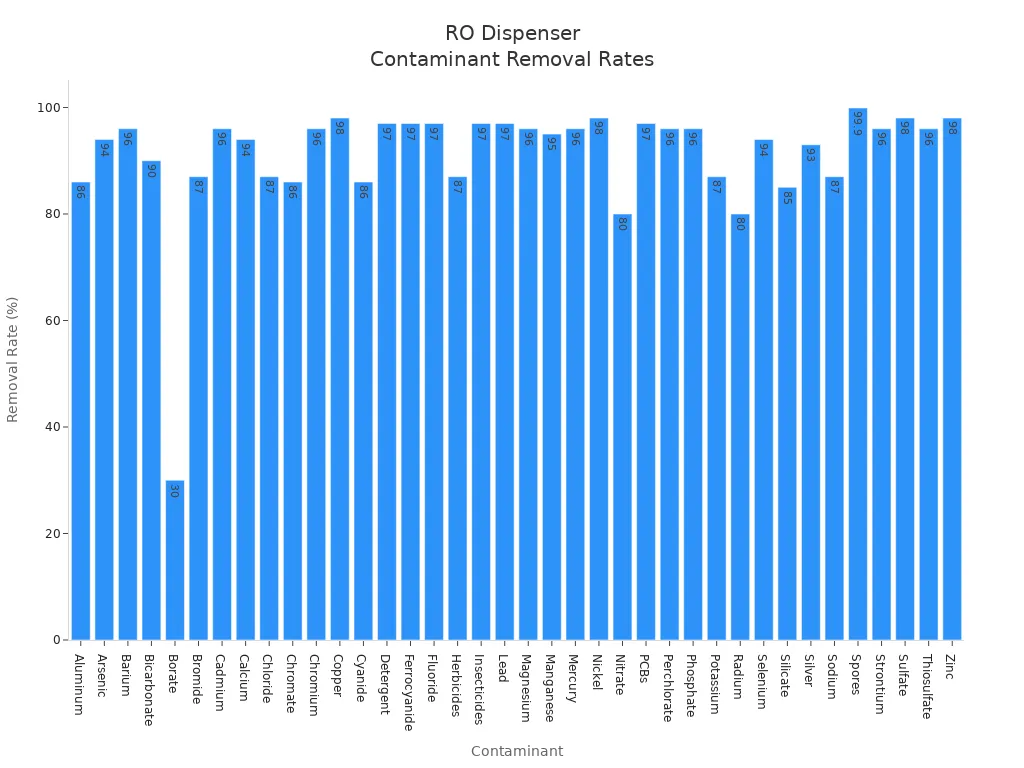
These high removal rates help protect your health. Clean water supports better hydration and reduces the risk of illness.
Improved taste and convenience
Many people notice a difference in taste when they switch to purified water. RO water offers a consistent flavor. It removes chlorine and other chemicals that cause unpleasant tastes. Consumer tests show that:
Most participants prefer RO water over tap or bottled water.
RO water gives a reliable taste every time.
Bottled water taste can change depending on the brand and source.
RO water dispensers make it easy to enjoy fresh water at home or work. You do not need to buy bottled water or worry about tap water quality.
Eco-friendly and cost-effective hydration
Using a RO water dispenser helps reduce plastic waste. You do not need single-use bottles. The system also saves money. The following table shows average yearly savings:
Household Size | Annual Savings |
|---|---|
Single Person | $354 |
Family of Four | $1,416 |
Choosing a RO water dispenser supports the environment and your budget. You get clean water without extra costs or waste.
Potential concerns with RO water
Mineral loss and nutritional impact
Reverse osmosis removes many minerals from water. These minerals play important roles in the body. The table below shows which minerals are lost and why they matter:
Mineral | Nutritional Significance |
|---|---|
Calcium | Essential for bone and teeth development; maintains water taste and hardness. |
Magnesium | Key role in food to energy conversion; supports weight management. |
Potassium | Balances body fluid; supports complex internal organs. |
Phosphorous | Aids in bone and teeth formation. |
Sodium | Adds an alkaline taste; balances water and mineral levels in the body. |
Zinc | Boosts the immune system; helps in blood function. |
When you drink RO water every day, you may not get enough of these minerals. Health experts warn that long-term use of demineralized water can cause problems. Some risks include:
Electrolyte imbalances, which affect how cells and muscles work.
Mineral leaching from bones and tissues.
Higher risk of hypertension and heart disease.
Warnings from organizations like the World Health Organization about low mineral intake.
Recent studies link low-mineral water to higher fracture rates in children, increased risk of neurodegenerative diseases, and pregnancy complications. Children may face more fractures due to low calcium. Adults may see higher risks of certain diseases if they lack magnesium. Pregnant women may experience more disorders when drinking demineralized water.
Tip: Eating a balanced diet and considering mineral supplements can help offset these risks if RO water is your main source of hydration.
Environmental considerations
Reverse osmosis filtration uses water to clean water. This process creates waste. For every gallon of purified water, RO systems can reject three to five gallons as waste. Some systems waste up to four gallons for every gallon produced.
RO systems can waste up to four gallons for every gallon of purified water.
Point-of-use systems may generate five gallons or more of reject water for each gallon treated.
On average, three gallons are rejected for every gallon purified.
This water waste can strain local supplies, especially in areas with limited resources. Choosing eco-friendly RO dispensers and using water wisely helps reduce environmental impact.
🌱 Consider using RO systems with efficient designs to minimize water waste and support sustainability.
Tips for safe use
Maintenance and filter replacement
Proper maintenance keeps your water clean and your device working well. The Mejec Ultimate Desktop RO Water Filter offers a zero-installation and user-friendly design, making upkeep simple. Follow these best practices:
Change sediment, carbon, and polishing filters every 6-12 months.
Replace the reverse osmosis membrane every 2-3 years or when water taste or pressure drops.
Sanitize the system once a year to prevent bacteria growth.
Check storage tank pressure regularly. Keep it between 6-8 psi for steady water flow.
Inspect tubing and fittings for leaks or wear.
Schedule professional maintenance if needed.
Regular filter changes and cleaning help ensure safe, fresh water every day.
Adding minerals to RO water
RO water often lacks minerals like calcium and magnesium. Remineralizing your water supports health and taste. Several methods can help:
Use mineral drops to add nutrients such as calcium, magnesium, and potassium.
Install mineral filters designed for RO systems.
Add a pinch of sea salt or Himalayan salt for trace minerals.
Method | Effectiveness | Pros | Cons |
|---|---|---|---|
Liquid Mineral Drops | Adds a broad spectrum of minerals. | Customizable, portable. | Expensive, taste varies. |
Mineral Filters | Efficient for full-spectrum remineralization. | Low maintenance, full-spectrum minerals. | Requires installation, frequent replacement for large families. |
Mineral-Rich Salts | Raises mineral content but may affect taste. | Low cost, easy to use. | Poor taste, limited minerals. |
Choose a method that fits your needs and preferences. Remineralization helps maintain proper hydration and nutrition.
Monitoring water quality
Testing your water ensures it stays safe and healthy. Several devices and kits are available:
Portable pocket pH meters measure acidity.
Combo meters check multiple factors like pH and conductivity.
Chemical test kits detect contaminants such as chlorine and copper.
The Varify Complete Water Test Kit checks for 17 common contaminants and includes 100 strips for repeated testing.
Device Type | Description |
|---|---|
Portable pocket pH meters | Measures pH levels, compact for on-the-go use. |
Single parameter portable photometers | Measures substances like chlorine, phosphorus, hardness, copper. |
Myron L’s Hand-Held Digital Testers | Reliable and accurate measurements of water quality. |
Varify Complete Water Test Kit | Comprehensive home kit, easy to use, tests for 17 contaminants. |
Test your water every other month if you use surface water. Quarterly testing is best for well water. Regular checks help you catch problems early and keep your RO water dispenser working at its best.
RO water dispensers offer clean, great-tasting water by removing up to 99% of contaminants. Daily use is generally safe, but users should balance mineral intake through diet or remineralization. Modern systems, like Mejec’s Ultimate Desktop RO Water Filter, provide easy setup and reliable performance. When choosing a dispenser, consider:
Water quality and contaminants in your area
Space and installation needs
Certifications for contaminant reduction (see table below)
Maintenance and cost savings
Certification | Description |
|---|---|
NSF/ANSI 53 | Reduces harmful contaminants known to cause health effects |
NSF/ANSI 58 | Certifies effectiveness in contaminant reduction for RO systems |
A high-quality RO dispenser ensures safe hydration and supports long-term health.
FAQ
Can I use RO water for cooking?
Yes, you can use RO water for cooking. It removes contaminants and improves taste. Many people prefer RO water for soups, coffee, and tea because it helps food and drinks taste better.
How often should I replace filters in my RO water dispenser?
Most filters need replacement every 6 to 12 months. The reverse osmosis membrane usually lasts 2 to 3 years. Always check your user manual for specific recommendations.
Does RO water taste different from tap water?
RO water tastes cleaner and fresher. It removes chlorine and other chemicals that cause unpleasant flavors. Many people notice a smoother taste compared to tap water.
Is RO water safe for children and seniors?
RO water is safe for most people. Children and seniors should get enough minerals from food or supplements. Consult a healthcare professional if you have concerns about mineral intake.