Reactive Liquid Rubbers: From HTPB to CTPB, What You Need to Know
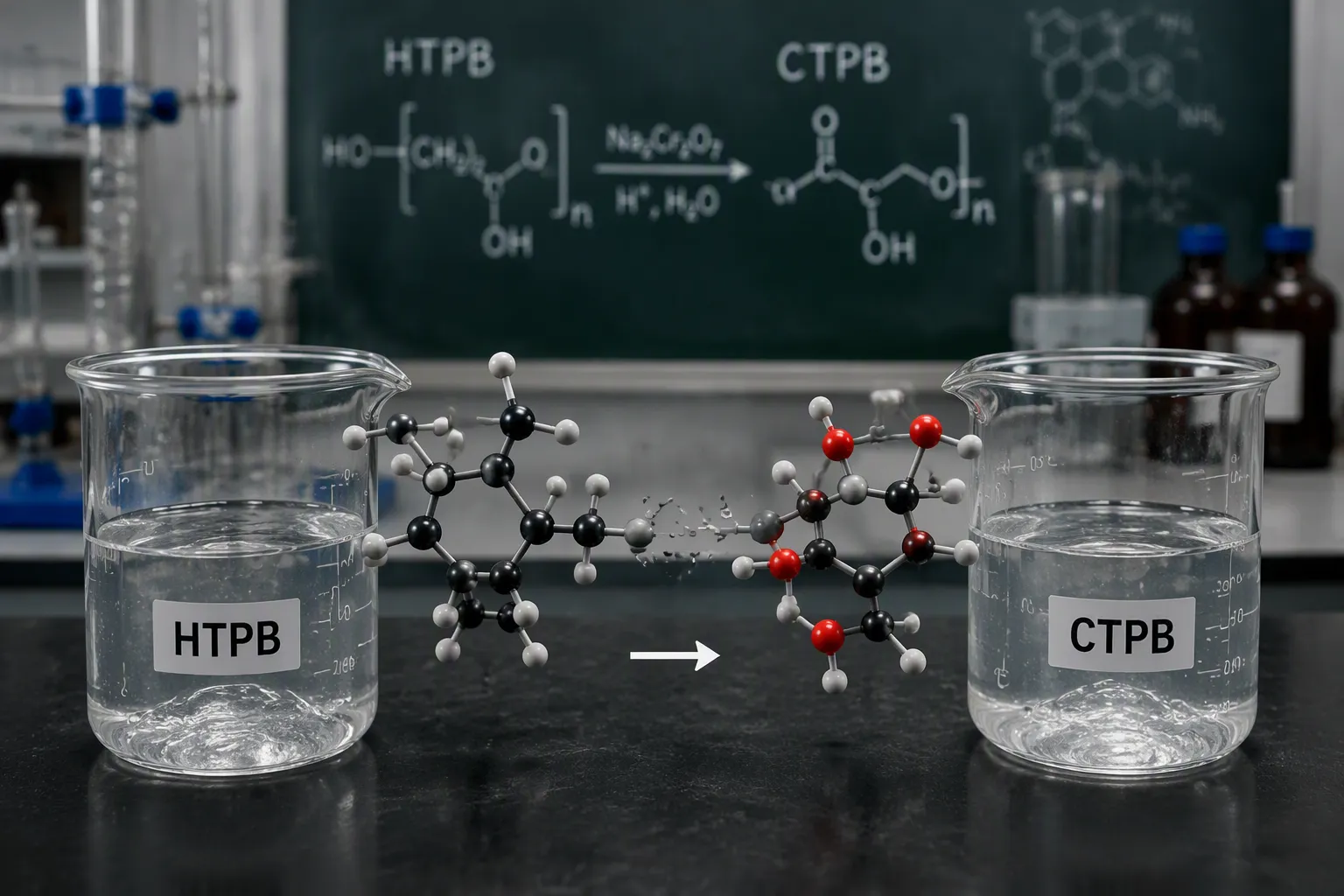
Reactive liquid rubbers are low-molecular-weight polymers with chemically reactive end groups. They improve toughness, flexibility, and adhesion in adhesives, coatings, and composites. Key types include HTPB, CTBN, and CTPB, each with distinct functional groups. Reactive Liquid Rubbers HTPB holds 32.4% of the global market, which reaches USD 417.9 million in 2026. These materials can increase fracture energy by 3–5 times in epoxy systems.
Key Takeaways
- HTPB bonds with polyurethane; CTBN and CTPB toughen epoxy. Choose based on your curing system.
- Nitrile rubbers like CTBN, ATBN, and HTBN resist oil and chemicals well. Use them in harsh conditions.
- ATBN cures with epoxy at room temperature. It is perfect for ambient-cure adhesives and coatings.
Understanding Reactive Liquid Rubbers HTPB and Other Key Types
Five primary reactive liquid rubbers dominate the market: Reactive Liquid Rubbers HTPB, CTBN, ATBN, HTBN, and CTPB. Each polymer carries distinct terminal functional groups and backbone structures. These differences determine reactivity, compatibility, and final material properties.
HTPB: Hydroxyl-Terminated Polybutadiene
HTPB features hydroxyl (-OH) end groups on a pure polybutadiene backbone. Reactive Liquid Rubbers HTPB reacts with isocyanates to form polyurethane networks. Applications include solid rocket propellant binders, adhesives, sealants, potting compounds, and cast elastomers.
CTBN: Carboxyl-Terminated Butadiene Acrylonitrile
CTBN carries carboxyl (-COOH) groups on a butadiene-acrylonitrile copolymer backbone. Typical molecular weights range from 3,000 to 5,000 g/mol with carboxyl content around 2.4%.
| CTBN Grade | Mn (g/mol) | Carboxyl Content (%) |
|---|---|---|
| Low Nitrile | ~3,800 | 2.47 |
| Medium Nitrile | ~16,000 | 2.37 |
| High Nitrile | ~3,000 | 2.40 |
CTBN improves epoxy toughness through microphase separation. Adding 15 phr raises fracture toughness from 0.65 to 1.09 MPa·m^(1/2).
ATBN: Amine-Terminated Butadiene Acrylonitrile
ATBN uses amine (-NH₂) end groups on a butadiene-acrylonitrile backbone. The amine equivalent weight ranges from 900 to 1,500 g/eq. These groups react directly with epoxy without catalysts. ATBN offers better room-temperature reactivity than CTBN.
HTBN: Hydroxyl-Terminated Butadiene Acrylonitrile
HTBN combines hydroxyl end groups with acrylonitrile content for oil resistance.
| Grade | Hydroxyl Value (mmol/g) | ACN Content (%) |
|---|---|---|
| A | 0.55–0.75 | 7.0–13.0 |
| B | 0.55–0.75 | 13.0–17.0 |
| C | ≥0.40 | 18.0–22.0 |
| D | 0.55–0.75 | 3.0–7.0 |
CTPB: Carboxyl-Terminated Polybutadiene
CTPB carries carboxyl groups on a pure polybutadiene backbone. Acid numbers range from 40 to 60 mg KOH/g. Viscosity at 30°C spans 5,000 to 50,000 mPa·s.
Comparing Key Properties: What Sets Them Apart
Selecting the right reactive liquid rubber requires a close look at mechanical performance, environmental durability, and chemical compatibility. Each polymer type brings a distinct balance of these traits, and those differences often determine success or failure in a specific application.
Tensile Strength and Elongation
Tensile strength measures how much stress a material can withstand before breaking, while elongation at break indicates how far it can stretch. These two properties often work in opposition. A rubber that offers high strength may show limited flexibility, and a highly elastic material may lack rigidity.
HTPB-based polyurethanes deliver a strong, resilient network with moderate elongation, typically ranging from 300% to 600% depending on the crosslink density. This balance makes Reactive Liquid Rubbers HTPB a reliable choice for cast elastomers and sealants that require both load-bearing capacity and movement tolerance.
CTBN and ATBN behave differently when incorporated into epoxy matrices. These rubbers phase-separate during curing, forming micron-sized rubber particles within the rigid epoxy network. This morphology absorbs energy and improves toughness without sacrificing tensile strength dramatically. The addition of 15 phr CTBN can raise fracture toughness significantly while maintaining acceptable modulus.
ATBN shows a notable effect on ductility. In a study by Chikhi et al. (2002), researchers added liquid ATBN containing 16% acrylonitrile to a DGEBA epoxy cured with polyaminoimidazoline. The modified system exhibited increased elongation at break and visible yielding behavior. This finding confirms that ATBN-based elastomers enhance ductility in epoxy matrices, allowing the material to deform before failure rather than cracking abruptly.
HTBN and CTPB occupy a middle ground. HTBN offers moderate elongation with improved oil resistance due to its acrylonitrile content. CTPB provides good flexibility but requires careful formulation to balance carboxyl reactivity with the curing agent.
Thermal and Chemical Resistance
Thermal stability determines whether a material can survive high-temperature service without degrading. Chemical resistance dictates how well it withstands exposure to oils, fuels, solvents, and aggressive media. Both properties depend heavily on the polymer backbone and the crosslinked network structure.
The nitrile-containing rubbers—CTBN, ATBN, and HTBN—offer superior resistance to hydrocarbons and oils. The acrylonitrile units in the backbone create polarity that repels non-polar substances. HTBN, with its nitrile structure, provides resistance to oils, fuels, and aggressive chemicals, enhancing durability in harsh environments. CTBN offers similar oil resistance while improving compatibility with epoxy systems, contributing to chemical resistance in coatings.
HTPB, by contrast, provides excellent moisture resistance. Its pure polybutadiene backbone contains no polar groups, making it hydrophobic. This property benefits polyurethane coatings exposed to humid conditions, where water ingress can cause blistering or adhesive failure.
For extreme temperature applications, silicone-based liquid rubbers outperform all hydrocarbon variants. Liquid silicone rubber can withstand temperatures from as low as -130°F to as high as 600°F without losing its structural form or high performance. It also demonstrates excellent chemical resistance across different temperatures. While not one of the five primary types discussed here, this comparison highlights the thermal ceiling of polybutadiene-based systems, which typically operate comfortably between -60°C and 120°C.
ATBN-modified epoxies require careful attention to heat resistance. ATBN co-cures directly with amine hardeners. High ATBN loadings can leave residual rubber dissolved within the matrix phase. This dissolved fraction lowers the final glass transition temperature and reduces room-temperature tensile modulus in ambient-cured applications. Formulators must balance toughness gains against thermal performance losses.
| Liquid Rubber Type | Key Property | Effect on Chemical Resistance |
|---|---|---|
| HTBN | Nitrile backbone | Provides resistance to oils, fuels, and aggressive chemicals, enhancing durability in harsh environments |
| CTBN | Nitrile structure and carboxyl groups | Offers better oil resistance and improves compatibility with epoxy systems, contributing to chemical resistance in coatings |
| HTPB | Hydroxyl groups for isocyanate reaction | Provides moisture resistance, beneficial for polyurethane coatings exposed to humid conditions |
Adhesion and Compatibility with Epoxy and Polyurethane
The terminal functional group determines which resin system a liquid rubber can react with. Matching the rubber's chemistry to the matrix resin is essential for achieving strong adhesion and a durable network.
HTPB and HTBN carry hydroxyl groups that react with isocyanates to form urethane linkages. This chemistry makes them natural partners for polyurethane systems. The hydroxyl groups participate directly in the curing reaction, creating chemical bonds between the rubber and the polyurethane matrix. This covalent attachment ensures excellent adhesion and prevents phase separation over time.
CTBN and CTPB carry carboxyl groups that react with epoxy resins. The carboxyl functionality opens epoxy rings and forms ester linkages, grafting the rubber into the epoxy network. This reaction occurs during the curing process, creating a toughened matrix with strong interfacial bonding. CTBN's nitrile groups also enhance wetting and adhesion to polar substrates, making it valuable in structural adhesives.
ATBN offers the fastest reactivity among the five types. Its amine groups react with epoxy at room temperature without requiring catalysts. This property simplifies processing and enables ambient-cure applications. ATBN works particularly well in amine-cured epoxy systems, where it co-cures with the hardener to form a homogeneous network.
The choice of liquid rubber also affects adhesion to substrates. Nitrile-containing rubbers improve adhesion to metals and polar plastics due to their higher surface energy. HTPB, with its non-polar backbone, adheres better to non-polar substrates such as polyethylene and polypropylene.
Formulators should also consider viscosity and mixing behavior. Lower-viscosity rubbers disperse more easily in resin systems, reducing mixing time and ensuring uniform properties. CTPB, with viscosities ranging from 5,000 to 50,000 mPa·s at 30°C, offers flexibility in formulation depending on the grade selected.
Applications Across Industries: From Rocket Fuel to Coatings
Aerospace and Solid Rocket Propellants
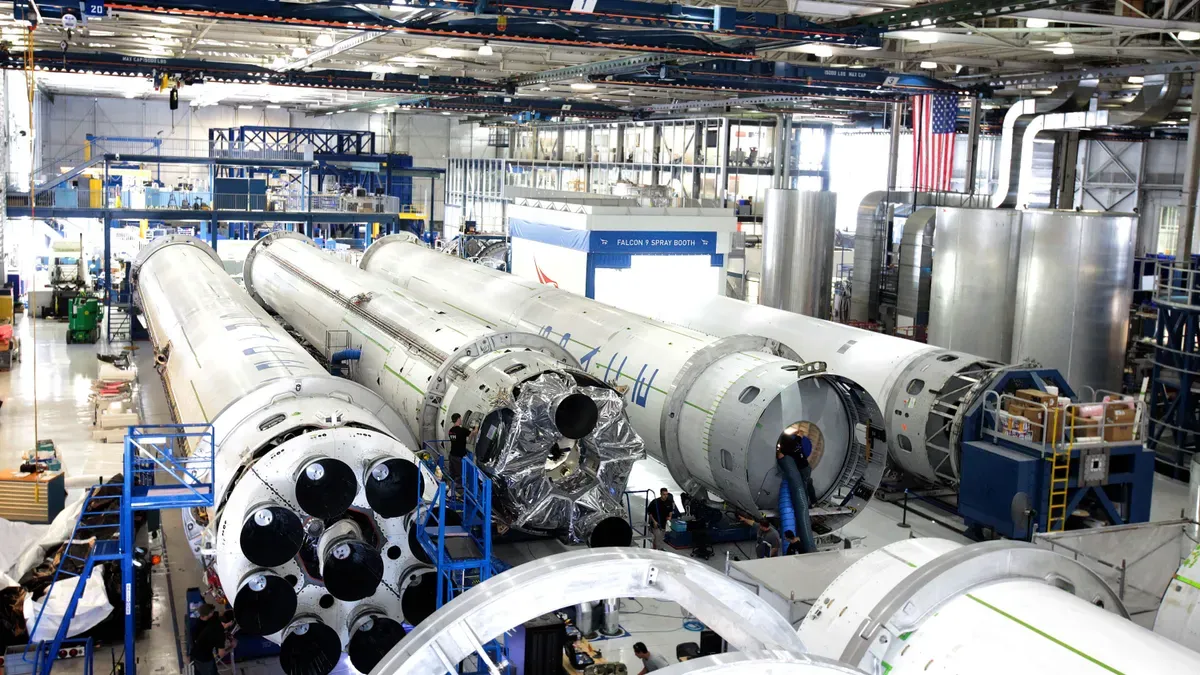
Reactive Liquid Rubbers HTPB serves as the primary binder in composite solid rocket propellants. This material holds solid granular ingredients—ammonium perchlorate and aluminum powder—together in a cohesive matrix. The binder provides a solid but elastic fuel mass, critical for structural integrity during handling and combustion. HTPB offers low-temperature flexibility, preventing brittleness in cold environments. Its excellent adhesion to metal ensures strong bonding with the motor casing. The polymer also provides excellent dispersion of fillers, leading to a homogeneous propellant mixture. HTPB allows higher solid fractions, reaching 88–90% total solids, while maintaining good physical properties. This performance makes it the preferred binder in modern propulsion systems.
Automotive Adhesives, Sealants, and Toughening Agents
CTBN and ATBN play essential roles in automotive structural adhesives. These rubbers create a dispersed rubbery phase inside the epoxy matrix during curing. The rubber particles cavitate under stress, absorbing impact energy and preventing crack propagation. This toughening mechanism delivers measurable improvements:
| Property | Improvement |
|---|---|
| Tensile Strength | Increased by 26% with 5 phr CTBN |
| Maximum Toughness | Achieved at 15 phr CTBN |
| Fracture Toughness (K IC) | Stable for >10 phr CTBN |
| Glass Transition Temperature (Tg) | Increased by 11.3°C with 25 phr CTBN |
Advanced adhesives with better impact resistance and fatigue durability prove important for electric and hybrid vehicles. Liquid polybutadiene also reduces VOC levels in coatings, enhances film flexibility, and maintains stable performance at low temperatures.
Industrial Coatings, Pipe Linings, and Electrical Encapsulation
HTPB-based polyurethane systems excel in electrical encapsulation. These resins exhibit a low glass-transition temperature of -75°C, hydrophobicity, acid-base resistance, and excellent dielectric properties. The telechelic structure allows precise control over cross-linking density, enabling tailored hardness for potting applications. Demand rises in renewable energy for potting electronics in wind turbines and solar inverters. HTPB-based compounds protect sensitive components in high-voltage applications, heavy-duty cable joints, and outdoor electrical equipment. The material's moisture resistance and mechanical strength ensure long-term environmental protection in demanding service conditions.
Reactive liquid rubbers provide versatile solutions for enhancing material performance. Each type serves specific curing chemistries and end-use conditions. HTPB and HTBN suit polyurethane systems; CTBN and CTPB excel in epoxy toughening; ATBN works well in amine-cured epoxies. Selecting the right rubber requires evaluating flexibility, thermal stability, chemical resistance, and curing systems. Matching functional groups to matrix resins achieves optimal toughness, adhesion, and durability.
FAQ
What is the difference between HTPB and CTPB?
HTPB carries hydroxyl end groups for polyurethane systems. CTPB contains carboxyl groups for epoxy toughening. Their backbone chemistries also differ.
Which reactive liquid rubber works best for epoxy toughening?
CTBN provides the best epoxy toughening performance. Its carboxyl groups react with epoxy resins. The nitrile backbone improves compatibility and adhesion.
Can ATBN cure at room temperature?
ATBN reacts directly with epoxy at room temperature without catalysts. This property makes it ideal for ambient-cure adhesives and coatings.
See Also
Key Facts About Thoriated Tungsten Electrodes For Superior TIG Welding
Comprehensive Nozzle Solutions For Gardeners, Bioprinters, And Lubrication Specialists
Unexpected Methods To Resolve Issues With Sulfur Recovery Catalysts
Leading Precoating Materials For Filtration Systems In The Year 2025
Explore The Top Five Applications For Single Stage Rotary Vane Vacuum Pumps