How RaymanTech AI Optical Sorter Solves Common Kidney Bean Sorting Problems
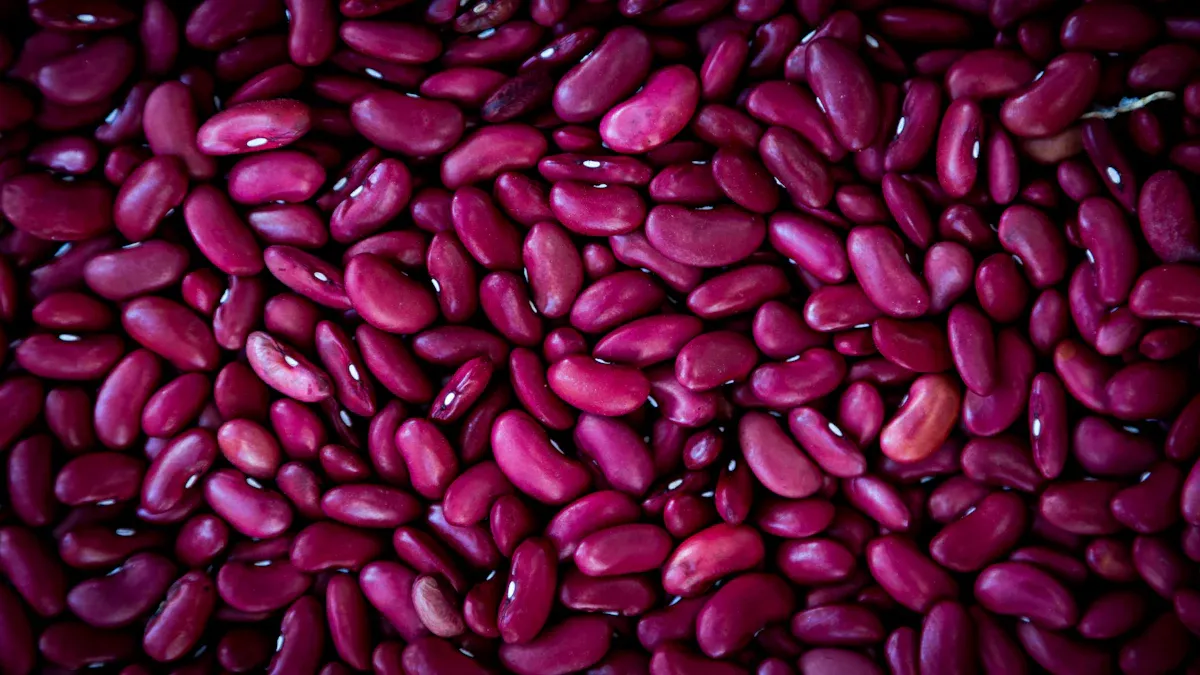
RaymanTech’s kidney bean sorter uses advanced AI optical sensors and X-ray inspection. This technology removes defective red and white kidney beans, ensuring consistent quality. Machine learning detects color, shape, and internal defects. The system increases productivity, improves sorting accuracy, and reduces waste compared to manual methods.
Key Takeaways
RaymanTech's AI optical sorter improves kidney bean quality by removing defective beans, ensuring only high-quality products are packaged.
The sorter increases efficiency by processing 10-15 tons of beans per hour, significantly reducing labor costs and time compared to manual sorting.
Advanced X-ray inspection detects hidden contaminants, enhancing food safety and ensuring a clean product for consumers.
Kidney Bean Sorter Challenges

Defective Bean Issues
Traditional sorting methods often struggle to remove all types of defective beans. These defects can include splits, mudball beans, mold, and beans with off-odors. The table below shows common issues found in kidney bean processing:
Type of Damage | Description |
|---|---|
Whole, split, or broken beans | Sprouted, immature, perforated, or discolored by weather or disease. |
Mudball beans | Beans covered in soil, considered dockage. |
Splits | Split beans and broken pieces. |
Magnesium spot | Black spot inside the bean, often in cranberry beans. |
Odour | Unpleasant smells that lower quality. |
Heated beans | Dull seed coats and dark color, showing damage. |
Rotted beans | Spongy beans in advanced decay. |
Mouldy beans | Exterior or interior mold growth. |
A kidney bean sorter with advanced optical technology can detect and remove these defective beans, including those that are discolored, damaged, or immature. This ensures a clean and high-quality product for both red and white kidney beans.
Color and Size Sorting
Uniformity in color and size is important for market value and consumer satisfaction. Manual sorting often fails to meet industry standards. The following table outlines key requirements:
Metric | Requirement |
|---|---|
Size (count per pound) | Defined count per pound |
Moisture content | Less than 12% |
Uniformity index | At least 90% |
Color consistency | Must meet ISO 17859 standards |
A modern kidney bean sorter uses cameras and AI to sort beans by color and size, achieving consistent results that meet these standards.
Contaminant Detection
Contaminants such as metals, glass, and plastics pose serious health risks. Manual sorting cannot reliably detect these hazards. The table below lists some dangerous contaminants and their effects:
Contaminant | Health Effects |
|---|---|
Lead (Pb) | Cognitive impairment, developmental delays, nervous system disorders |
Cadmium (Cd) | Kidney damage, osteoporosis, lung cancer |
Arsenic (As) | Skin lesions, cardiovascular diseases, increased cancer risk |
Mercury (Hg) | Neurological symptoms, developmental issues, cognitive impairments |
RaymanTech’s comprehensive approach, which includes X-ray inspection, helps detect and remove even micro-impurities and hidden contaminants, improving food safety.
Efficiency and Labor
Manual sorting is slow and labor-intensive. Automated systems, such as the kidney bean sorter, can process much larger volumes. For example, high-capacity industrial systems can handle 10-15 tons per hour, while manual or budget-friendly systems manage only 1-2 tons per hour. Automation increases efficiency, reduces labor costs, and ensures consistent quality.
RaymanTech Sorter Solutions
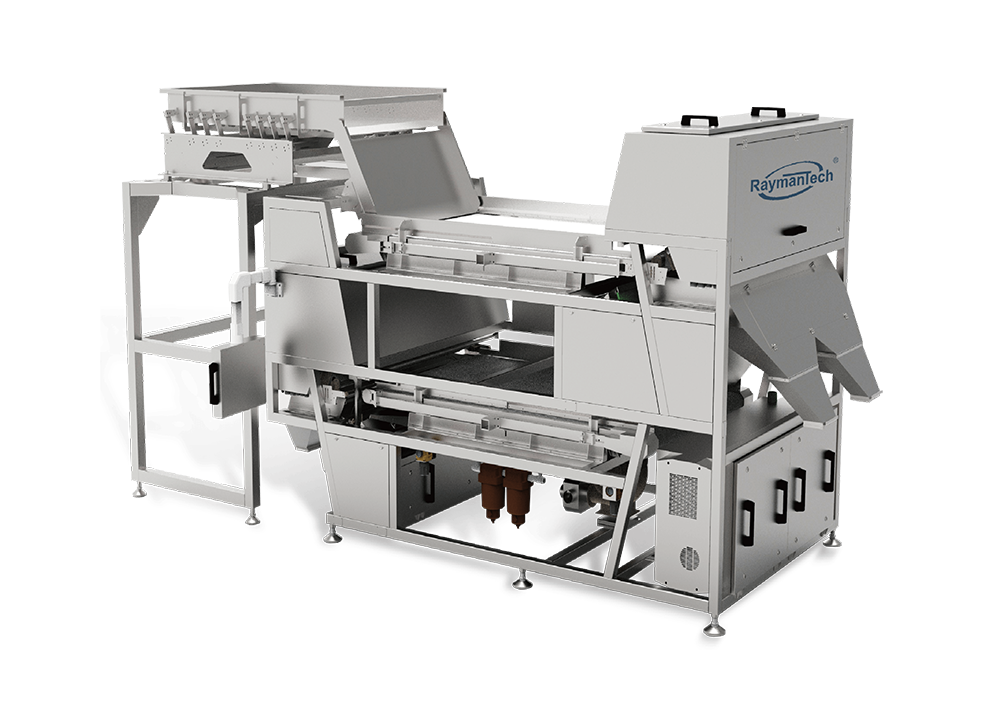
AI Optical Sorting Technology
RaymanTech uses advanced AI Deep Learning algorithms in its kidney bean sorter. These algorithms recognize complex defect patterns and distinguish between naturally variegated beans and damaged ones. The system captures detailed images using multi-beam imaging and high-resolution cameras. It analyzes the shape, color, and texture of each bean in real time. This process identifies subtle defects that traditional optical sensors may miss. The kidney bean sorter removes discolored, damaged, or immature beans, ensuring a consistent product for both red and white kidney beans.
Note: The AI optical sorter can sort beans by multiple grades in a single pass. This feature helps producers separate products based on quality levels efficiently.
The technology ensures only clean, uniform, and high-quality beans are selected for packaging.
It improves sorting accuracy and reduces waste.
X-Ray Inspection System
RaymanTech’s X-ray inspection system uses AI-driven technology to identify internal defects and foreign materials in kidney beans. The system detects issues that are not visible externally. It finds foreign objects that share similar color and shape with the beans. This ensures a comprehensive inspection process.
The X-ray inspection system can identify both metallic and non-metallic contaminants. These include glass, ceramic, stone, bone, hard rubber, and hard plastic. It is effective for inspecting various products, including canned goods and high-salinity foods. The kidney bean sorter uses X-ray sorting to provide assurance against high-density foreign materials. It ejects contaminants such as metal fragments, glass shards, stones, dense rocks, high-density plastics, and rubber.
Double Layer Conveyor
The AI Standard Double Layer Optical Sorter features a unique double-layer conveyor system. This design allows for a two-stage sorting process. The first layer removes larger impurities and defective beans. The second layer targets micro-impurities such as hair, fine strings, and tiny contaminants. The belt speed ranges from 150 to 180 meters per minute, supporting high-capacity production.
The double-layer conveyor increases throughput and maintains high output quality.
It operates reliably in high-dust environments and handles challenging product types, including wet, sticky, or frozen materials.
High Capacity and Adaptability
RaymanTech’s kidney bean sorter is engineered for high capacity and adaptability. It processes large volumes of beans quickly and efficiently. The system handles various bean types, including kidney beans, black beans, pinto beans, chickpeas, and soybeans. Each type has unique characteristics, and the sorter adapts to meet specific needs.
Metric | RaymanTech Sorter | Traditional Methods |
|---|---|---|
Defect contamination rates | Drop by over 90% | Higher rates |
Manual quality control labor | Decreases by 60% or more | Higher labor requirements |
Overall product yield | Increases by 3–5% | Lower yield |
Export rejection rates | Nearly eliminated | Higher rejection rates |
Customer testimonials show the effectiveness of RaymanTech’s kidney bean sorter. Michael Rodriguez, a production manager, said the machine revolutionized their production line. The accuracy and speed reduced waste by 30% in the first month. Sarah Chen, a quality control supervisor, noted significant improvements in sorting process, quality, and efficiency.
Tip: Automated sorting reduces labor costs and ensures consistent quality. It also increases product yield and lowers export rejection rates.
RaymanTech’s kidney bean sorter offers long-term value. Maintenance costs are manageable, with annual costs ranging from $3,000 to $10,000. The system’s reliability and efficiency make it a smart investment for bean processing operations.
RaymanTech’s AI optical sorter delivers reliable results for both red and white kidney beans.
Ensures improved quality and food safety
Increases efficiency and reduces labor costs
Removes damaged, discolored, or immature beans
Offers consistent, high-grade products
Discover how RaymanTech can transform your bean processing. Request a quote or demo today!
FAQ
How does the RaymanTech sorter improve red kidney bean quality?
The sorter removes discolored, damaged, or immature beans. This process ensures a consistent, high-quality product for red kidney bean packaging.
Can the sorter handle white kidney beans?
Yes. The machine sorts white kidney beans by color and size. Only clean, uniform, and high-quality beans are selected for packaging.
What contaminants can the system detect?
The system detects metals, glass, plastics, stones, and other foreign materials.
It uses both optical and X-ray technology for thorough contaminant removal.