What to Ask When Selecting a Freestanding Water Dispenser
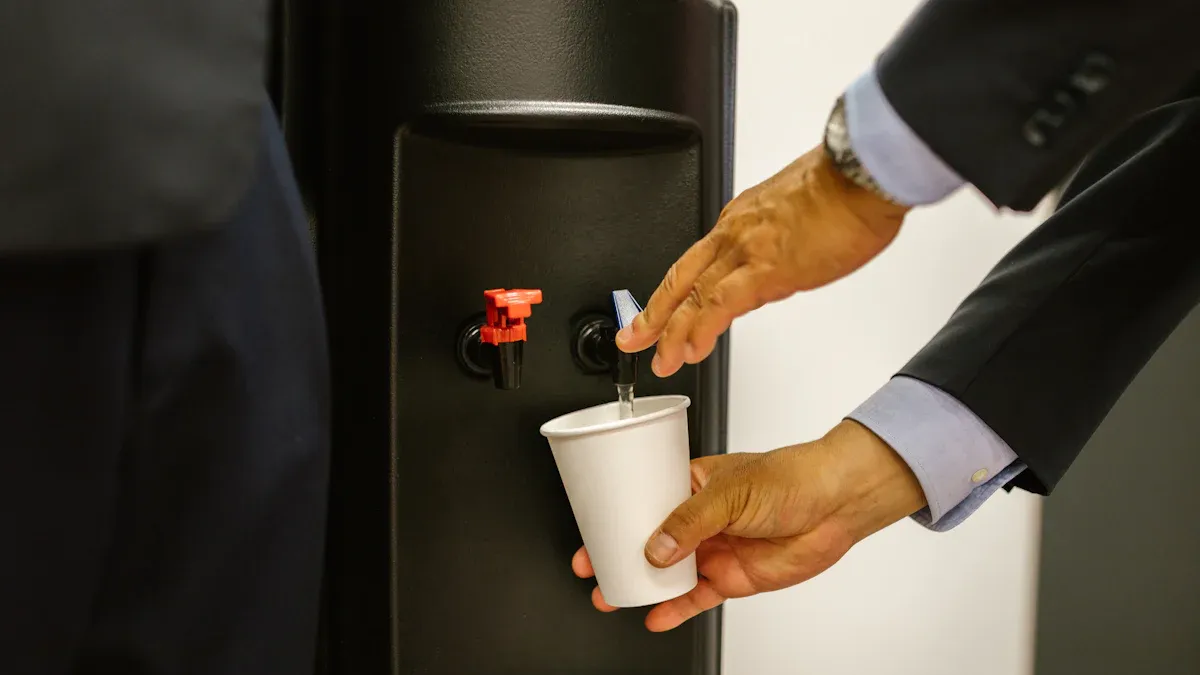
Choosing a freestanding water dispenser for your office requires careful thought. You need to consider several key points before making a decision. The global water dispenser market is expanding rapidly, showing a clear trend toward these convenient solutions. Asking specific questions helps you select the right unit for your workplace needs and budget.
Key Takeaways
- Choosing a water dispenser for your office needs careful thought.
- Ask specific questions to pick the right unit for your workplace and budget.
Key Financial and Contractual Questions
You must look beyond the sticker price to understand the true investment. Financial and contractual details determine the long-term value of your water dispenser. Asking direct questions about costs and agreements protects your budget from surprises.
What is the total cost of ownership?
The initial purchase or rental fee is just the beginning. You need to calculate the total cost of ownership (TCO) over the life of the unit. This includes all expenses related to the dispenser, from installation to daily operation. A major ongoing expense is maintenance. The average annual maintenance cost for a water filter system can range from $150 to $1,000, depending on the model and usage.
Filter replacements make up a large part of this cost. You should ask the vendor for a clear schedule and price list for filters. Typical replacement costs vary by system type:
- Reverse Osmosis Systems: Filters often need replacement every 6 to 12 months, costing between $30 and $100.
- Alkaline Water Systems: These specialized filters can cost from $50 to $120 to replace.
- Whole House Filters: Replacement cartridges generally fall in the $50 to $150 range.
💡 Pro Tip: Always ask for a complete TCO estimate in writing. This document should break down all anticipated costs for at least a 24-month period, including the unit, installation, filters, and scheduled maintenance.
What are the contract terms?
If you rent a freestanding water dispenser, the contract is a critical document. You must understand every clause before you sign. Rental agreements often have an initial term of 12 or 24 months. It is important to know what happens after this initial period. Does the contract automatically renew? If so, for how long?
Clarify these key points with your potential vendor:
- Contract Length: What is the minimum required term?
- Renewal Policy: What are the terms for contract renewal?
- Termination Clause: What is the process for ending the agreement early?
- Cancellation Fees: Are there financial penalties if you need to terminate the contract prematurely?
Understanding these terms helps you avoid getting locked into a long-term agreement that no longer fits your company's needs.
Are there any hidden fees?
Hidden fees can quickly inflate the cost of your water service. You should directly ask vendors to list all potential charges that are not part of the standard monthly bill. Many companies charge extra for services that you might assume are included.
Pay close attention to the following potential charges:
| Fee Type | What to Ask Your Vendor |
|---|---|
| Installation | Is there a one-time fee for setup and installation? |
| Late Payments | What is the penalty for a late payment? Some companies charge a fee up to $20. |
| Administrative Fees | Do you charge extra for paper invoices or for calling customer service to make a payment? These can be $6 or more per instance. |
| Emergency Service | What are the rates for unscheduled or after-hours maintenance? Expect higher hourly rates and flat call-out fees for nights or weekends. |
| Relocation | Is there a charge to move the dispenser to a new office or even to another room? Companies typically charge a fee for this service. |
| Cancellation | Do you charge a fee for canceling a scheduled delivery on short notice? This can be around $9. |
A transparent vendor will be happy to provide a complete fee schedule. This information empowers you to create an accurate budget and compare different providers fairly.
Evaluating Your Freestanding Water Dispenser Options
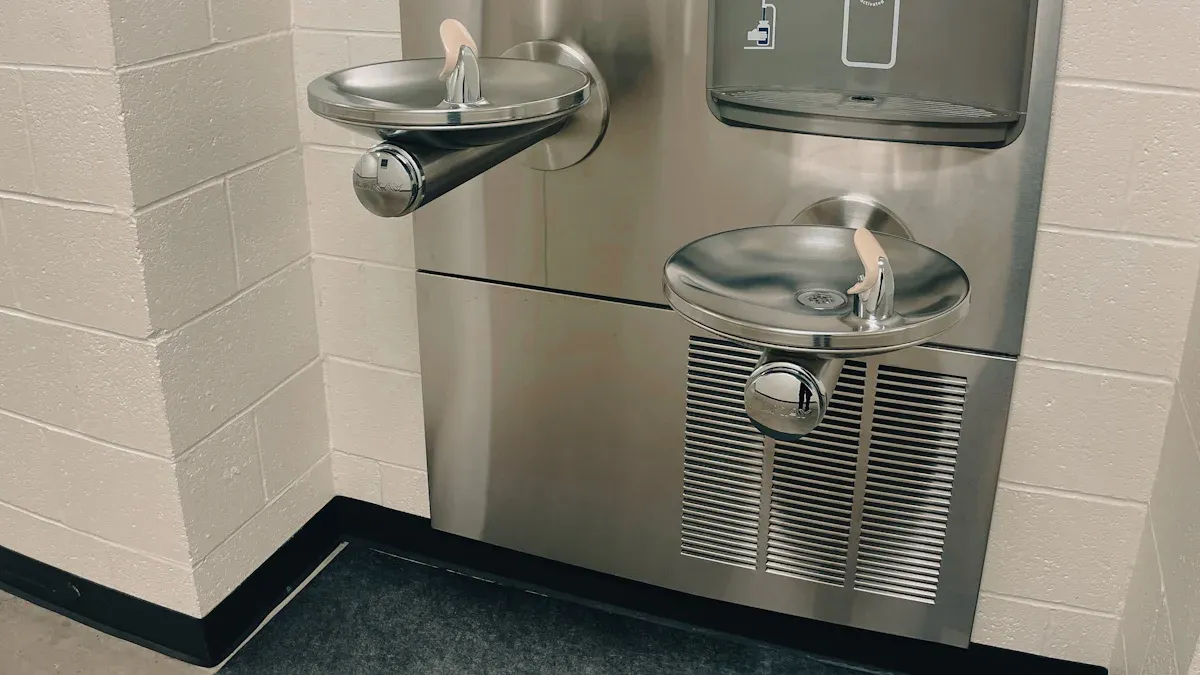
After you understand the costs, you need to evaluate the dispenser itself. The right unit provides clean, great-tasting water and meets your office's daily demands. You should focus on four key areas: filtration, performance, hygiene, and installation.
What are the filtration capabilities?
The primary job of a water dispenser is to provide clean water. The type of filtration technology it uses directly impacts water quality. Different systems remove different contaminants. You should ask vendors about the specific filtration stages in their units. Common technologies include carbon filtration and reverse osmosis (RO).
| Feature | Carbon Filtration | Reverse Osmosis (RO) |
|---|---|---|
| How it Works | Uses activated carbon to adsorb impurities. Water flows through the carbon, which traps contaminants in its porous structure. | Uses a semi-permeable membrane to remove dissolved solids. Water is forced through the membrane, leaving contaminants behind. |
| Contaminants Removed | Chlorine, chloramines, volatile organic compounds (VOCs), pesticides, and herbicides. It greatly improves taste and odor. | Dissolved salts, lead, fluoride, nitrates, arsenic, and microscopic organisms. It also removes chlorine. |
| Water Waste | Produces minimal to no wastewater. | Creates wastewater (brine) as it flushes contaminants away. The ratio of pure water to wastewater varies. |
| Removes Beneficial Minerals | Generally does not remove beneficial minerals like calcium and magnesium. | Removes both harmful contaminants and beneficial minerals, resulting in demineralized water. |
Activated carbon filtration is key to improving water's taste and odor. It absorbs chemicals like chlorine and other organic compounds that can make water unappealing.
To ensure a filter performs as advertised, you should look for NSF/ANSI certifications. These independent standards verify that a filter removes specific contaminants.
- NSF/ANSI 42: Certifies filters that reduce aesthetic impurities. This includes chlorine, particulates, iron, and zinc, which affect taste, color, and odor.
- NSF/ANSI 53: Certifies filters that reduce health-related contaminants. This is a crucial standard covering lead, asbestos, Cryptosporidium, and certain volatile organic compounds (VOCs).
- NSF/ANSI 58: Certifies reverse osmosis systems. It verifies the reduction of total dissolved solids (TDS) and contaminants like fluoride, arsenic, and nitrate.
Health-Related Contaminants (NSF 53) This important certification confirms the reduction of many harmful substances. These include lead, mercury, asbestos, radon, PFOA/PFOS, and VOCs like benzene and carbon tetrachloride.
Finally, ask about the filter replacement schedule. The lifespan of a filter depends on its type and your office's water usage.
| Filter Type | Typical Lifespan |
|---|---|
| Countertop | 3 to 12 months |
| Under-Sink (Basic) | 6 to 12 months |
| Under-Sink (RO membrane) | Up to 2 years |
| Whole-House (Carbon) | 6 months to 1 year |
What is the dispenser's capacity and performance?
A dispenser’s performance must match your team’s needs. You need to consider its output, recovery time, and temperature consistency. A unit in a high-traffic area must keep up with demand without long waits for water to cool or heat.
A typical commercial-grade freestanding water dispenser can produce about 1.55 gallons of cold water and 1.84 gallons of hot water per hour. Some high-capacity models can chill over 2.5 gallons (10 liters) per hour. You should also check the temperature ranges.
- 💧 Cold Water: Usually ranges from 39°F to 50°F (4°C to 10°C).
- 🔥 Hot Water: Typically ranges from 185°F to 198°F (85°C to 92°C).
The number of users is the most important factor. A general guideline is to have one water dispenser for every 25 employees. An office with 100 people may need four dispensers to avoid lines and ensure consistent access. For environments with many users, you should look for a unit with a capacity of 10 liters or more and a power rating between 1000W and 1500W. This ensures the dispenser can meet demand efficiently.
What are the maintenance and hygiene protocols?
Proper maintenance is essential for water safety and dispenser longevity. You need a clear plan for both daily cleaning and professional servicing. Your team can handle simple daily tasks, but a qualified technician should perform deeper sanitization.
Your staff should follow a basic cleaning schedule:
| Task Frequency | Action Items |
|---|---|
| Daily | Wipe down spigots and dispenser buttons with a food-safe disinfectant. Empty and wash the drip tray. |
| Weekly | Remove and scrub the drip tray and any other removable parts with warm, soapy water. Wipe down the entire exterior. |
💡 Pro Tip: Use a soft brush or a designated toothbrush to clean small, hard-to-reach spaces like nozzles and crevices. Bacteria and grime can accumulate in these spots.
Professional service is non-negotiable. A qualified engineer should perform a full sanitization every three to six months. This service prevents the buildup of bacteria, mold, and mineral deposits. For mains-fed systems, this quarterly service often includes filter replacement. Ask your vendor if their service plan includes these visits. The responsibility for changing filters usually depends on your contract. If you rent, the provider typically handles it. If you purchase the unit, you may be responsible.
Many modern dispensers also include advanced hygiene technologies.
- UV-C Purification: Uses ultraviolet light (wavelengths of 100-280 nanometers) inside the dispenser. This light deactivates the reproductive capabilities of bacteria, viruses, and other pathogens, keeping the water pure.
- Antimicrobial Surfaces: The dispenser's buttons, nozzles, and high-touch areas are coated with an antimicrobial agent. This coating prevents the growth of bacteria, mold, and fungi on the surface, providing long-lasting protection.
What are the installation and space requirements?
Before a freestanding water dispenser arrives, you must ensure you have the right space and connections for it. Measure the intended location carefully. A typical unit might be around 55 inches high and 13 inches wide, but dimensions vary. Always confirm the exact height, width, and depth with the vendor. Also, consider the unit's weight, which can be over 30 pounds empty.
A point-of-use (POU) dispenser requires a direct connection to your building's water line. This is why they are also called "plumbed-in" coolers. A technician will need access to a cold water pipe, usually under a nearby sink. Ensure the chosen location is within a reasonable distance of a water source.
Finally, check the electrical requirements. Most dispensers plug into a standard outlet, but you should always verify the specifics.
🔌 Common Electrical Needs:
- Voltage: 120 Volts
- Amperage: 15 amps
Confirm that you have a dedicated outlet that meets these specifications. Using an extension cord is generally not recommended. A proper setup ensures safety and optimal performance from day one.
Asking the right questions helps you make a confident choice. You can use this guide as a checklist when speaking with vendors. A thorough review ensures you select a freestanding water dispenser with high capacity and multiple functions. This process guarantees a cost-effective, hassle-free solution for your workplace.
FAQ
🗓️ How often should I service my water dispenser?
Your staff should clean it daily. A professional technician should perform a full sanitization service every three to six months to ensure optimal hygiene and performance.
💧 What's the difference between carbon and RO filtration?
Carbon filters improve taste by removing chlorine. Reverse osmosis (RO) systems remove more contaminants, including dissolved solids like lead and fluoride, but also remove beneficial minerals.
🏢 How many dispensers do I need for my office?
A good rule is one dispenser for every 25 employees. This guideline helps prevent lines and ensures everyone has easy access to fresh water throughout the day.