Proven Strategies for Maintaining and Operating Granulator Machines
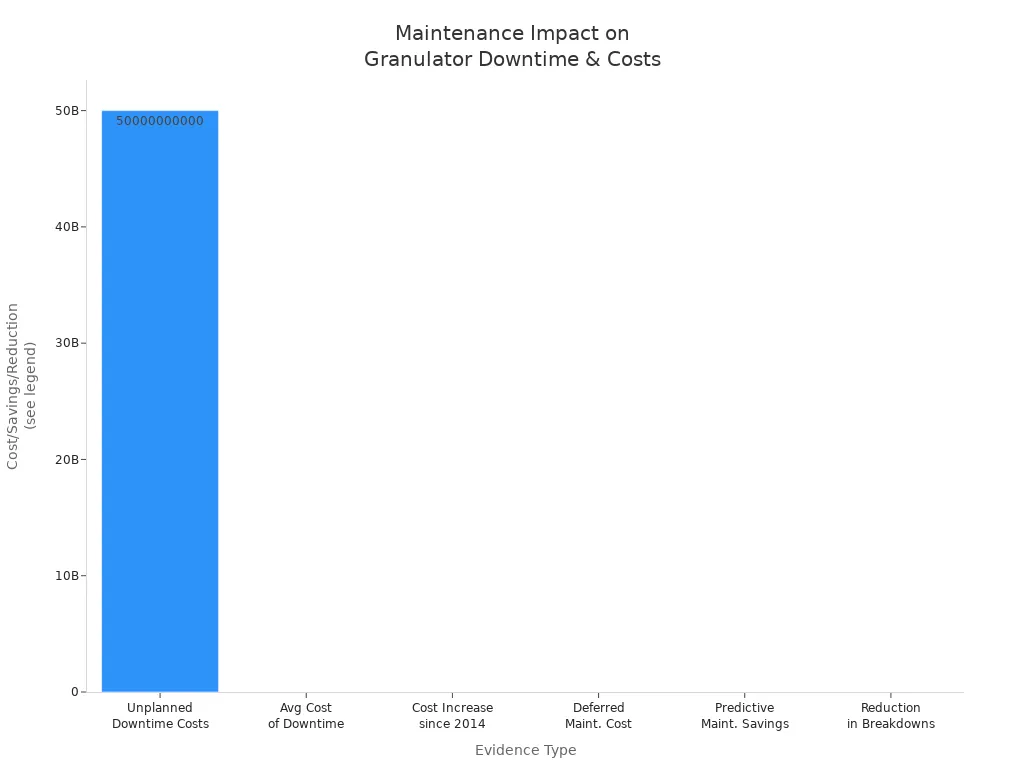
You keep granulator machines running smoothly when you inspect them often and clean them well. You save money by replacing worn parts on time and following safety rules. Regular maintenance can cut downtime costs by thousands of dollars. See how much you can save:
| Evidence Type | Statistic/Insight |
|---|---|
| Unplanned Downtime Costs | $50 billion per year for manufacturers |
| Average Cost of Equipment Downtime | $260,000 per hour on average |
| Deferred Maintenance Cost | 3 to 10 times more than regular maintenance |
| Predictive Maintenance Savings | 30 to 40% savings compared to reactive maintenance |
| Reduction in Breakdowns | 70 to 75% reduction with predictive maintenance |
Essential Maintenance for Granulator Machines
Keeping granulator machines in top condition starts with a strong maintenance routine. You can prevent most breakdowns by following daily, weekly, and periodic checklists. These steps help you spot problems early and keep your equipment running smoothly.
Daily Maintenance Checklist
You should check your granulator machines every day before and after use. This helps you catch small issues before they become big problems. Here is a simple checklist you can follow:
- Inspect the machine for any signs of wear or damage.
- Check for unusual noises during operation.
- Make sure the hopper is clear of leftover material.
- Lubricate moving parts as recommended by the manufacturer.
- Clean the reducer and check oil levels.
- Remove dust and debris from the machine surface.
Tip: Always check the device status before starting. A quick no-load test can help you spot hidden issues.
You can also use this table to understand why each task matters:
| Maintenance Task | Description |
|---|---|
| Lubrication | Keeps moving parts smooth and reduces wear. |
| Blade Sharpening | Sharp blades cut better and prevent jams. |
| Component Replacements | Replace worn parts like motors and screens to avoid sudden failures. |
Weekly Maintenance Checklist
Weekly checks go deeper than daily tasks. You should look at parts that do not need attention every day but still wear out over time. Here is what you should do each week:
- Inspect knives and screens for dullness or damage.
- Check drive belts for proper tension and signs of wear.
- Lubricate all bearings.
- Examine electrical connections for loose wires.
- Clean the cutting chamber more thoroughly.
Note: The average machine uptime at process plants is only 67% of scheduled uptime. Regular weekly checks help you beat this average and keep your granulator machines running longer.
Periodic Maintenance Checklist
Some maintenance tasks need to happen monthly, semi-annually, or yearly. These steps have a big impact on the performance and safety of your granulator machines. Use this table to guide your periodic maintenance:
| Maintenance Procedure | Impact on Performance |
|---|---|
| Regular Cleaning | Prevents buildup and clogs, keeping the machine running smoothly. |
| Blade Inspection and Replacement | Dull blades strain the motor and slow down production. |
| Belt and Chain Maintenance | Proper tension avoids slippage and protects the motor. |
| Lubrication | Reduces friction and extends the life of moving parts. |
| Electrical System Check | Stops electrical problems before they cause breakdowns. |
| Motor Maintenance | Fixes unusual noises or overheating early, saving money on repairs. |
| Safety Features Inspection | Makes sure all safety systems work, protecting you and your team. |
Alert: Never skip periodic maintenance. One-quarter of all downtime comes from major breakdowns that regular checks could have prevented.
By following these checklists, you help your granulator machines last longer and work better. You also reduce the risk of costly repairs and keep your workplace safe.
Operational Best Practices for Granulator Machines
Proper Material Feeding
You need to feed material into granulator machines the right way to keep them running safely and efficiently. When material floats on top of the rotor, it scrapes against the blades before cutting. This causes the blades to wear out faster and can even lead to equipment failure. Blockages, material leaks, and uneven particle sizes can also disrupt normal operation. If you use feed particles with low density, you may lose material during transport, which lowers efficiency. Make sure you clean the machine often and train operators well to avoid mistakes and keep the process smooth.
Tip: Always check for blockages and clear the hopper before starting. This simple step helps prevent many common problems.
Blade Care and Adjustment
Blades are the heart of your granulator machine. You should monitor amp readings and watch for overheating, which can signal dull blades. Keep the knife gap correct to ensure uniform particle size. Follow these steps for blade care:
- Gather tools and safety gear.
- Lock out the machine.
- Remove safety guards.
- Take out old blades and inspect them.
- Clean mounting surfaces.
- Install new blades and align them.
- Tighten bolts to the right torque.
- Test the machine and adjust if needed.
- Record your work.
- Plan regular inspections.
Belt Tension and Alignment
Belts must have the right tension and alignment. If the belt is too loose, it can slip and overheat. If it is too tight, it puts stress on bearings and can cause motor failure. Watch for cracks, strange noises, or worn parts. Always follow the manufacturer’s guidelines for tension and alignment.
- Correct belt tension helps your equipment last longer.
- Improper tension can lead to costly repairs and downtime.
Monitoring Motor and Bearings
You should check motors and bearings for excessive vibration and noise. These signs often mean parts are wearing out. Look for rough or loose bearings during inspections. Lubricate bearings regularly to help them last longer and avoid sudden breakdowns.
| Training Feature | Description |
|---|---|
| Custom Operator Training | Training matches your team’s specific needs. |
| Site Visit for Assessment | Experts visit your site to plan the best training. |
| Manufacturer Collaboration | Training uses the latest manufacturer guidelines. |
| Train the Trainer Sessions | Helps your team keep skills sharp over time. |
| Training Benefits | Less downtime, fewer mistakes, and better machine performance. |
Troubleshooting and Preventive Maintenance for Granulator Machines
Common Granulator Issues
You may notice several problems when you operate granulator machines. These issues can slow down production and affect the quality of your work. Watch for these common problems:
- Poor granule quality can lead to wasted material.
- Machine vibration and noise often signal worn parts or loose screws.
- Blockages in the machine stop the flow of material and cause jams.
- Electrical problems may cause sudden shutdowns or safety risks.
If you spot any of these issues, act quickly. Early detection helps you avoid bigger problems later.
How Maintenance Prevents Breakdowns
You can prevent most breakdowns by following a strong maintenance routine. Regular checks and cleaning keep your machine running smoothly. Here are some steps you should take:
- Check and clean the motor often to stop dust from building up. Dust can make the motor overheat.
- Inspect the coupling in the transmission part for damage. Damaged couplings can cause hazards.
- Tighten any loose screws to avoid mechanical failures.
- Replace lubricating grease and mechanical oil in bearings every six months. Fresh oil helps parts move easily.
When you troubleshoot, look for dull blades and sharpen or replace them. Make sure you use the correct screen and keep it clean. Adjust the feed rate to match the machine’s capacity. Never overload the machine. Clean ventilation openings for good air flow. Remove foreign objects from materials before feeding. Keep materials dry to prevent jams. Check and replace blown fuses. Inspect wiring for damage. Clean the machine to prevent blockages. Replace clogged filters and faulty sensors.
🛠️ Regular preventive maintenance saves you time and money. You reduce the risk of breakdowns and keep your granulator machines working at their best.
Safety Measures for Granulator Machines
Safety must always come first when you operate granulator machines. Regulatory agencies like OSHA and the Machinery Directive (2006/42/EC) set strict rules for safe machine operation. The Health and Safety Executive (HSE) stresses the need for proper safeguarding and clear instructions. Many accidents happen because workers ignore warning labels or use unsafe systems. You can prevent injuries by following safety checklists and reading all instructions.
Lockout/Tagout Protocols
You need to use lockout/tagout procedures before you perform any maintenance. This step stops the machine from starting by accident. OSHA regulations require approved lockout/tagout devices for all heavy machinery. These protocols protect you from serious injuries. Always turn off the power and lock the controls before you begin repairs or cleaning.
Personal Protective Equipment (PPE)
You should wear the right gear every time you work with granulator machines. PPE keeps you safe from flying debris, loud noises, and dust. Here is what you need:
- Safety goggles shield your eyes from dust and debris.
- Ear protection guards your hearing against loud sounds.
- Gloves protect your hands from cuts and burns.
- Dust masks filter harmful particles from the air.
Tip: Check your PPE before each shift. Replace damaged gear right away.
Safe Startup and Shutdown
You must follow best practices for starting and stopping granulator machines. These steps help you avoid damage and keep everyone safe.
- Close the hopper slide gate to stop material flow.
- Lower screw speed to 15–20 rpm.
- Stop screw rotation when material output drops.
- Keep cooling on unless you plan a long shutdown.
- Shut down the equipment completely.
Before startup, let all components reach the right temperature for at least 30 minutes. Start the screw only after soaking. Always perform safety checks before you power up. Use idle times for preventive maintenance.
Quality Parts and Maintenance Records for Granulator Machines
Using Genuine Replacement Parts
You should always choose genuine replacement parts when you maintain your equipment. These parts match or exceed the original manufacturer's standards. They help your machine work as it should and last longer. When you use high-quality parts, you see several benefits:
- Genuine parts keep your machine's performance steady.
- They reduce the chance of unexpected downtime.
- You spend less on repairs over time.
- Reliable machines help you avoid costly delays.
- You boost productivity and keep your work on schedule.
Tip: Using the right parts means you can trust your machine to run smoothly every day.
Keeping Accurate Maintenance Logs
You need to keep clear and detailed records for every maintenance task. Good logs help you track repairs, inspections, and regular upkeep. This habit makes it easier to spot problems early and plan for future needs.
| Evidence | Explanation |
|---|---|
| Accurate maintenance logs help track upkeep, repairs, and inspections. | This tracking is essential for maintaining the performance of granulator machines and minimizing downtime. |
| Maintenance logs provide a comprehensive historical record of an asset’s maintenance history. | This record is crucial for diagnosing issues and planning preventive maintenance, which enhances machine reliability. |
| Well-organized maintenance logs support informed decision-making. | Informed decisions lead to improved maintenance strategies, further enhancing equipment efficiency. |
You can follow these steps to keep your records organized:
- Use a Computerized Maintenance Management System (CMMS) to store all data.
- Tag each machine with a unique ID.
- Record the manufacturer and model.
- Write down every repair and inspection.
- Set up and follow preventive maintenance schedules.
- Track costs for each job.
- Monitor machine conditions to predict failures.
- Attach photos or documents to each record.
- Keep detailed work orders.
- Log calibration and inspection dates.
- Control who can edit records.
- Review your logs often to find ways to improve.
Note: Good records help you make smart choices and keep your machines running longer.
You keep granulator machines safe and efficient with regular care. See how these actions help:
| Evidence Description | Impact |
|---|---|
| Regular inspection and cleaning protocols | Extend machine life and maintain consistent output quality |
| Easy-access cutting chambers and tool-free blade changes | Reduce maintenance time, enhancing operational efficiency |
| Automation features like automatic screen changers | Reduce manual intervention, enhancing safety and efficiency |
- Energy savings can reach up to $15,000 each year per line.
- Yield increases may add $100,000 per year.
- Material purity improvements can add $50,000 annually.
Neglecting maintenance leads to unexpected breakdowns, higher repair costs, and more workplace injuries. Take action now to protect your equipment and your team.
FAQ
How often should you replace granulator blades?
You should inspect blades weekly. Replace them when you see dull edges, chips, or uneven cuts. Sharp blades keep your machine working well.
Tip: Record each blade change in your maintenance log.
What safety gear do you need for granulator maintenance?
You need safety goggles, gloves, ear protection, and a dust mask. This gear protects you from flying debris, loud noise, and dust.
| PPE Item | Purpose |
|---|---|
| Safety goggles | Protect your eyes |
| Gloves | Shield your hands |
| Ear protection | Guard your hearing |
| Dust mask | Filter harmful dust |
Why should you use genuine replacement parts?
Genuine parts match your machine’s design. You get better performance, fewer breakdowns, and longer equipment life. You also save money on repairs.