The Pros and Cons of a Home Sewage Treatment Plant
A home sewage treatment plant offers you long-term cost savings and environmental benefits. These advantages, however, come with responsibilities. You must perform regular maintenance and manage ongoing operational costs. Deciding if a water treatment plant for home is right for you involves weighing its independence against these hands-on requirements.
Key Takeaways
- A home sewage treatment plant cleans your home's dirty water. It uses natural steps to make the water safe to put back into nature.
- These systems save money over time and help the environment. They also give you freedom from city sewer lines.
- However, these systems cost more to set up and need regular care. You must also be careful about what you put down the drain.
What Is a Home Sewage Treatment Plant and How Does It Work?
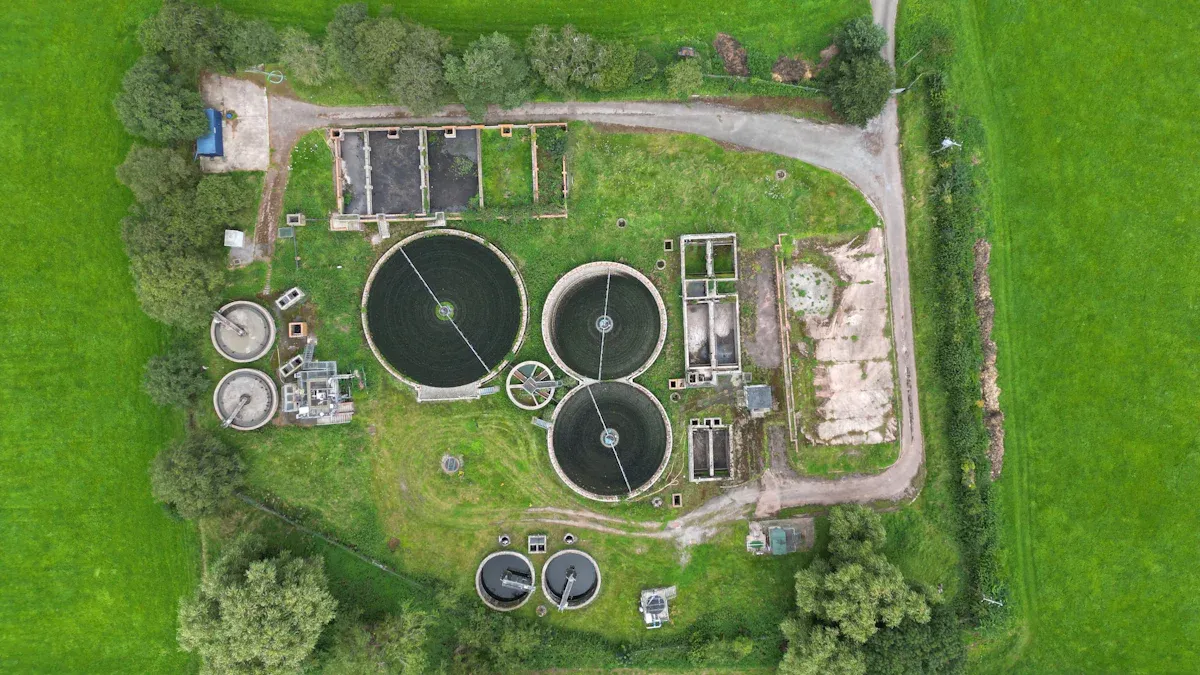
A home sewage treatment plant is a self-contained system that treats your household wastewater. It uses natural processes to clean the water to a high standard. This makes the water safe enough to release into a local watercourse or use for irrigation. A modern water treatment plant for home is more advanced than a traditional septic tank.
The Basic Treatment Process
Your system actively treats wastewater through several stages. This ensures a thorough cleaning process.
- Primary Settlement: Solids settle at the bottom of the first chamber, forming sludge.
- Aeration: The liquid then moves to a second chamber. An air pump introduces oxygen, which encourages aerobic bacteria to grow. These helpful bacteria consume the pollutants in the water.
- Final Settlement: The treated water flows into a final chamber. Any remaining small solids settle out.
- Discharge: The clean, treated water is then safely discharged from the system.
Key Differences from a Septic Tank
You might wonder how this system differs from a septic tank. A septic tank primarily separates solids and liquids. A water treatment plant for home actively cleans the water. The table below highlights the main differences.
| Feature | Home Sewage Treatment Plant | Traditional Septic Tank |
|---|---|---|
| Treatment Process | Uses an active, multi-stage process with aeration to break down waste. | Relies on a passive process where solids settle and decompose anaerobically. |
| Effluent Quality | Produces high-quality, clean water suitable for discharge. | Produces partially treated water that requires a large drain field for more cleaning. |
| Maintenance | Requires regular servicing of mechanical parts like air pumps. | Needs periodic pumping to remove sludge every few years. |
| Ongoing Costs | Has costs for electricity to run the pump and for regular maintenance. | Has very low operational costs, mainly for periodic pumping. |
The Pros: Key Benefits for Homeowners

Choosing a home sewage treatment plant gives you several powerful advantages. You can protect the environment, save money over time, and solve common property challenges. This system is a modern solution for responsible homeowners.
Achieve Long-Term Cost Savings
You might face a high initial cost for installation. However, a home sewage treatment plant can save you money in the long run. You avoid the monthly bills that come with being connected to a municipal sewer system. These public sewer fees often increase over time, but you will not be subject to these rate hikes. Your main ongoing costs will be for electricity and regular maintenance.
Let's look at a cost comparison. The numbers show how your annual expenses could be lower than paying for city services.
| Cost Comparison | Annual Cost for Home Treatment Plant | Annual Cost for Municipal Services |
|---|---|---|
| Service Fees | $614 (Electricity & Maintenance) | $840 (Sewer & Water Fees) |
Note: These figures are estimates. Your actual costs will depend on your location, system size, and local utility rates. The key takeaway is that you gain control over your expenses and can avoid unpredictable increases from your city.
Go Green with an Eco-Friendly System
You can significantly reduce your environmental impact with this system. Traditional septic tanks do very little to treat harmful nutrients like nitrogen and phosphorus. These pollutants can seep into groundwater and harm local ecosystems. A modern water treatment plant for home uses an advanced process to clean the water thoroughly.
The system introduces oxygen to encourage helpful bacteria to grow. These bacteria are experts at breaking down waste and removing nutrients. This process, called nitrification and denitrification, converts harmful ammonia into harmless nitrogen gas.
The difference in performance is striking.
| System Type | Nitrogen Reduction |
|---|---|
| Conventional Septic Tank | 5-10% |
| Advanced Treatment Unit | 54%-77% |
Because these systems are better for the environment, you may be able to get financial help to install one. Government incentives like tax credits, rebates, and grants are often available to encourage homeowners to choose eco-friendly options.
Gain Independence from Municipal Sewers
You gain valuable autonomy when you manage your own wastewater. You are no longer dependent on a central municipal system. This protects you from several potential problems:
- Service Interruptions: You will not lose service if there is a failure in the city's sewer infrastructure.
- Rate Hikes: You have control over your costs and are not subject to rising municipal sewer fees.
- Community Resilience: Your independence helps make your property more self-sufficient and resilient to external issues.
This freedom gives you peace of mind. You are in charge of a critical home utility.
Ideal for Properties with Poor Soil
Many properties are not suitable for a traditional septic system. This is often due to poor soil conditions. If your land has dense clay, shallow bedrock, or a high water table, a standard drain field will not work correctly. Wastewater cannot filter through the ground effectively.
A home sewage treatment plant solves this problem. It treats the water to such a high standard that the final effluent is clean and safe. This treated water can be discharged into a much smaller drain field or directly into a nearby ditch or stream, depending on local regulations.
A soil percolation test can tell you if your property needs an advanced system. If it takes longer than 45 minutes for water to drop one inch into the soil, a conventional system will likely fail. An advanced treatment unit is the perfect solution for these challenging sites.
Comply with Environmental Regulations
Protecting water quality is a top priority for local and state governments. Many areas have strict rules about how wastewater must be treated before it is released into the environment. These regulations are often based on guidelines from the Environmental Protection Agency (EPA), such as the Clean Water Act.
A home sewage treatment plant helps you meet these stringent requirements. The high-quality effluent it produces ensures you are not polluting local groundwater or surface water. Installing one of these systems shows you are a responsible property owner. It keeps you in compliance with environmental laws and helps protect your community's natural resources.
Potentially Increase Your Property Value
A modern, efficient, and compliant wastewater system can be a major asset. When it comes time to sell your home, a well-maintained treatment plant is a strong selling point. It is especially valuable for properties where a conventional septic system is not an option.
Potential buyers will see a home that is:
- Environmentally friendly
- Compliant with all regulations
- Free from expensive monthly sewer bills
This makes your property more attractive on the market. It demonstrates that the home has been thoughtfully updated with modern, reliable technology.
The Cons: A Look at the Drawbacks of a Water Treatment Plant for Home
While a home sewage treatment plant offers many benefits, you must also consider the potential downsides. These systems require a significant investment of money, time, and attention. Understanding the drawbacks helps you make a fully informed decision.
High Upfront Installation Costs
The initial purchase and installation of a treatment system represent a major financial commitment. The total price is often the biggest hurdle for homeowners. Several factors influence this high upfront cost.
- Equipment Costs: The machinery itself is the largest expense. The price increases with the system's capacity and complexity.
- Site-Specific Needs: The type of wastewater your home produces affects the cost. The system must handle the specific contaminants present.
- Installation and Transportation: Costs for shipping the unit and preparing the site for installation add up. A pre-assembled system may have different costs than one built on-site.
- Regulatory Compliance: Your local area has rules for wastewater discharge. Meeting these standards may require more advanced, and therefore more expensive, equipment.
Ongoing Maintenance Is Non-Negotiable
You cannot "set and forget" a home sewage treatment plant. These systems are active machines with mechanical parts that need regular service to function correctly. Neglecting this responsibility leads to serious and expensive problems. Your maintenance schedule will include inspections, pumping, and potential repairs.
A failing system is not just an inconvenience. It can cause sewage to back up into your home, create foul odors, and produce soggy, unusable areas on your lawn. In the worst cases, neglect can permanently pollute your groundwater and soil.
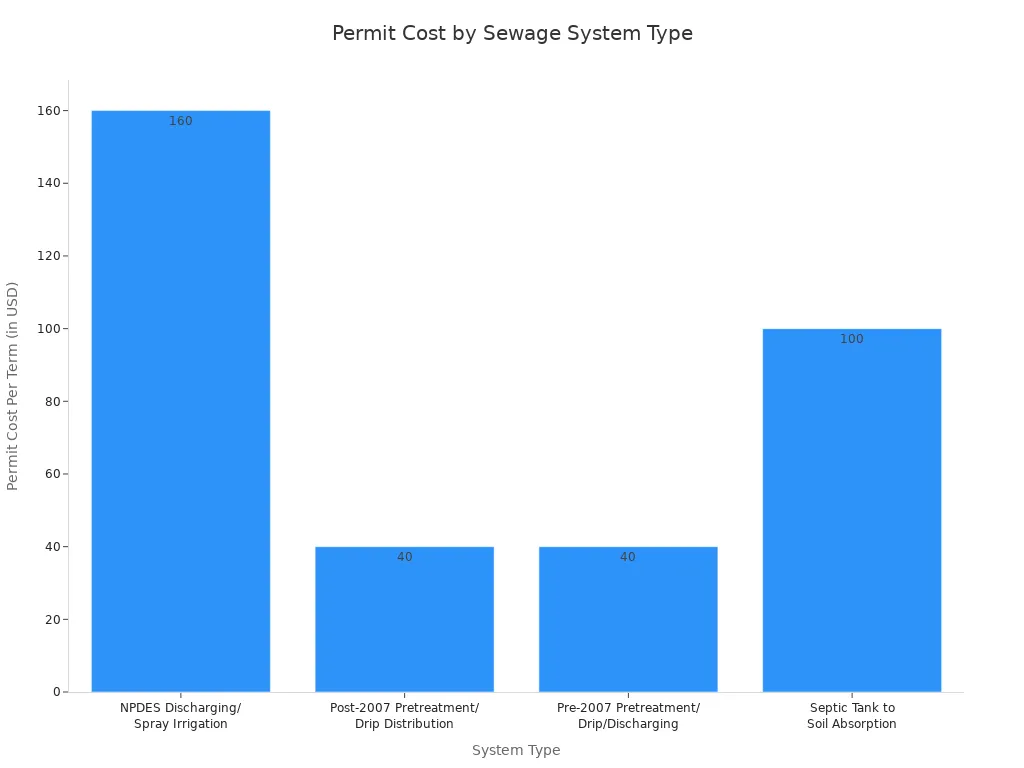
The costs for maintenance can vary. You should budget for annual service contracts, periodic pumping, and potential repairs. Local permit requirements also add to the ongoing expense. The table below shows how permit costs and service needs can differ based on your system type.
| System Type | Permit Term | Permit Cost Per Term | Service Requirements Per Term |
|---|---|---|---|
| NPDES Discharging / Spray Irrigation | 1 Year | $160 (includes $120 annual sample cost) | Current Service Contract / 2 Service Reports; Sample collected by Health Department |
| Post-2007 Pretreatment to Soil Absorption / Post-2007 Drip Distribution | 1 Year | $40 | Current Service Contract / 2 Service Reports (or as per manufacturer requirements) |
| Pre-2007 Pretreatment to Soil Absorption / Pre-2007 Drip Distribution / Pre-2007 Discharging | 1 Year | $40 | 1 Service Report |
| Septic Tank to Soil Absorption | 5 Years | $100 | 1 Pump Report (or Service Report) |
Requires a Consistent Power Supply
A key difference between a treatment plant and a septic tank is the use of electricity. Your system relies on a consistent power supply to run components like its air pump. This pump is vital for the aeration process that helps bacteria break down waste. A power outage will stop the treatment process. While a short outage is usually not a problem, a prolonged loss of power can disrupt the system's balance and reduce its effectiveness. This adds a small but constant cost to your monthly electricity bill.
Limits on What Goes Down the Drain
You must be very careful about what you put down your drains. The system relies on a living ecosystem of bacteria to treat wastewater. Certain substances can kill these helpful microorganisms and cause the system to fail. You should never dispose of the following items in your drains:
- Harsh chemicals, solvents, antifreeze, paints, or glues
- Pesticides and automotive fluids
- Drugs, medications, or other pharmaceuticals
- Cooking grease or oil
- Products with microplastics, like some body washes and toothpastes
Using a garbage disposal also puts extra strain on your system. It increases the amount of solid waste the tank must process. This can fill the tank faster and potentially clog the system, requiring more frequent maintenance.
Requires Adequate Space on Your Property
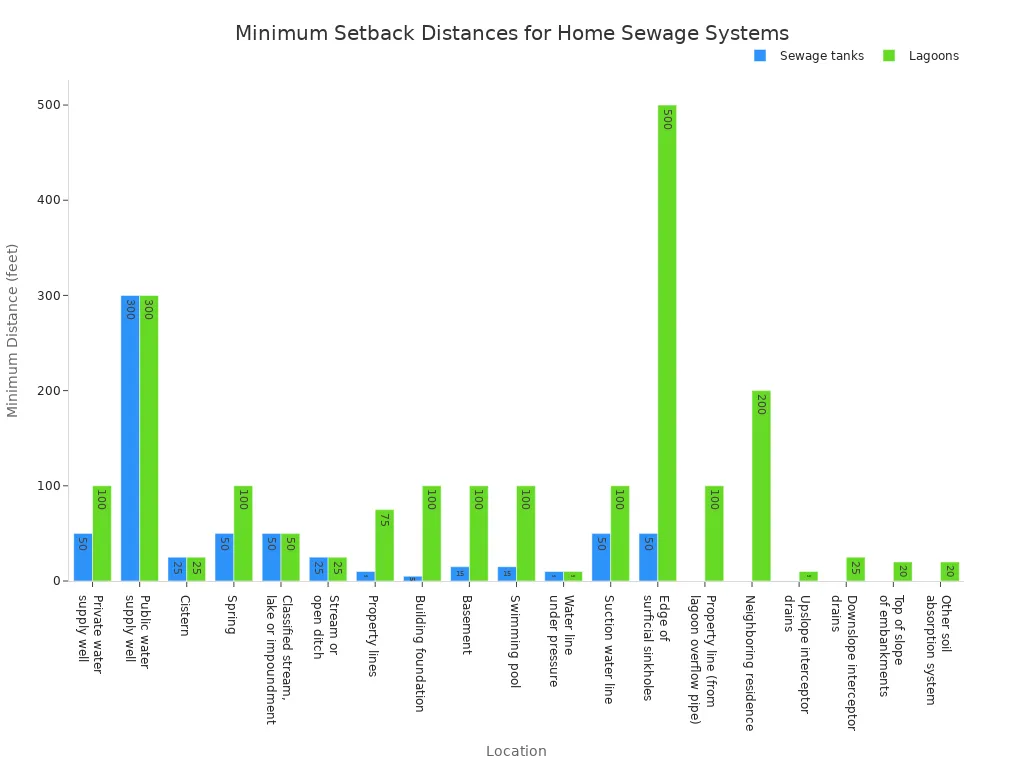
You need enough space on your property to install a water treatment plant for home. The system includes the tank itself and a discharge area. You must also follow local regulations for setback distances. These rules dictate how far the system must be from buildings, property lines, wells, and water sources. The table below shows some common minimum setback distances.
| Minimum distance in feet from: | Sewage tanks | Lagoons |
|---|---|---|
| Private water supply well | 50 | 100 |
| Public water supply well | 300 | 300 |
| Property lines | 10 | 75 |
| Building foundation | 5 | 100 |
| Stream or open ditch | 25 | 25 |
Risk of Water Contamination if Poorly Managed
The biggest risk of a poorly managed system is contamination. If the system fails, it can release untreated wastewater into the ground. Common causes of failure include overloading the system with too much water, tree root intrusion, and lack of maintenance. This failure can have serious consequences for your health and the environment.
Contaminated groundwater can pollute your well and your neighbors' water supplies. This water may contain harmful pathogens that cause severe illnesses.
- Bacteria: Can cause diseases like cholera, typhoid, and gastroenteritis.
- Viruses: Can lead to illnesses such as hepatitis A and polio.
- Nitrates: High levels are especially dangerous for infants. They can cause a condition called "blue baby syndrome," which affects the blood's ability to carry oxygen.
Children and the elderly are especially vulnerable to these waterborne diseases. A failing system not only threatens your family's health but can also damage your property value and harm local wildlife.
A water treatment plant for home is an excellent choice if you are ready for the responsibilities of maintenance. You trade long-term environmental benefits for consistent upkeep costs. The best choice for you depends on a few key factors:
- Your property's specific conditions
- Your overall budget
- Your willingness to actively manage the system
FAQ
How often should I service my system?
You should have your system professionally serviced at least once a year. Always follow the specific maintenance schedule recommended by the manufacturer for your model.
What happens if the power goes out?
A short power outage will not harm your system. However, a long outage stops the treatment process. This can reduce the system's cleaning effectiveness until power returns.
Is a treatment plant cheaper than a septic tank?
No, the initial installation cost is higher than a septic tank. You may save money over many years by avoiding public sewer fees and having a smaller drain field.