The Good and Bad of Using AI for X-Ray Analysis
Artificial intelligence in X-ray analysis delivers powerful advantages. It offers greater accuracy and speed. However, it also carries significant risks like algorithmic bias and errors. Healthcare administrators increasingly use x ray ai systems to improve workflows. For patients and doctors, this technology represents a major opportunity and a complex challenge.
Note: The global AI in medical imaging market is projected to reach over USD 8 billion by 2030, growing at a compound annual growth rate (CAGR) of about 34%. This rapid expansion highlights the technology's increasing importance.
The Upside: How AI Enhances X-Ray Analysis
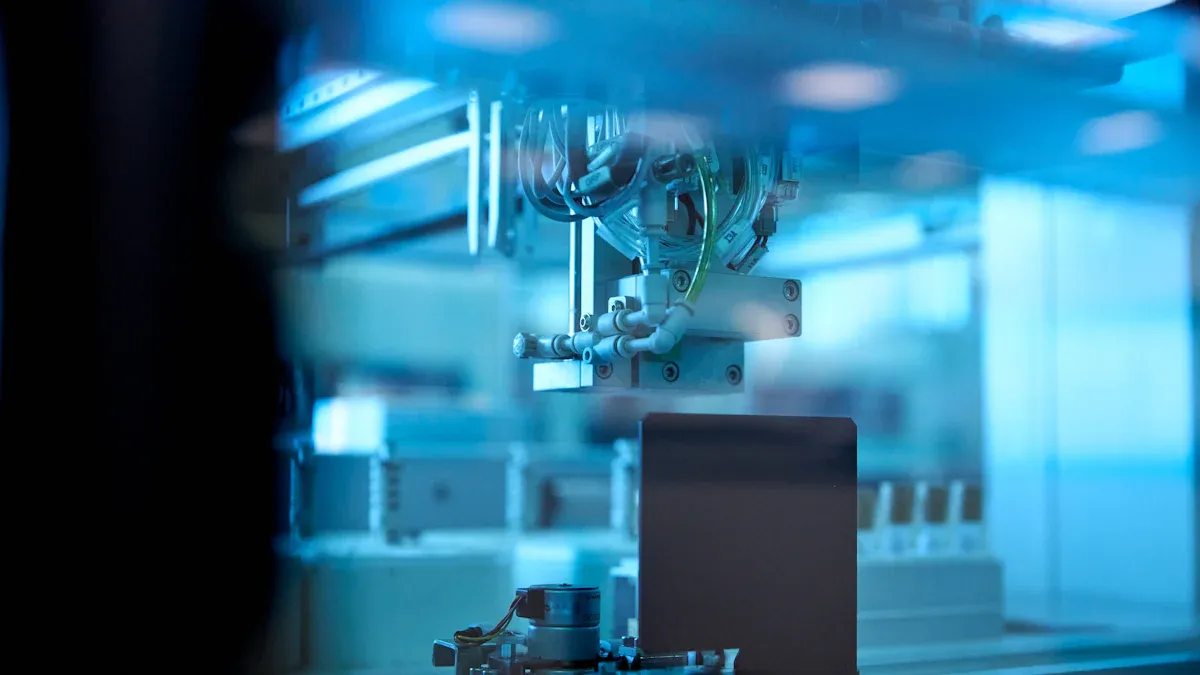
Artificial intelligence is rapidly transforming radiology. It provides powerful tools that improve how medical professionals interpret X-rays. These advancements lead to better accuracy, faster results, and more manageable workloads for specialists. The benefits directly translate to improved patient care and more efficient healthcare systems.
Boosting Diagnostic Accuracy
AI algorithms significantly enhance the precision of X-ray interpretation. They excel at detecting subtle patterns that the human eye might miss. A study evaluating the deep learning algorithm CheXNeXt found it performed on par with practicing radiologists for diagnosing conditions like pneumonia and atelectasis. This demonstrates that AI can be a reliable diagnostic partner.
AI methods also improve medical image quality by reducing digital noise and increasing contrast. This clarification helps radiologists spot faint abnormalities more easily. The technology acts as a second opinion, flagging suspicious areas for review and reducing both false positives and false negatives. AI assistance has shown particular strength in improving radiologist performance in detecting lung cancers on chest X-rays. Many FDA-cleared systems now help radiologists by identifying and categorizing suspicious regions of interest (ROIs) across eight distinct clinical areas:
- Cardiac
- Mediastinum/Hila
- Lungs
- Pleura
- Bones
- Soft Tissues
- Hardware
- Other
Accelerating Analysis and Results
Speed is a critical advantage of AI in radiology. An x ray ai system can analyze an image in seconds, a task that could take a human specialist much longer. This acceleration is vital in emergency settings. For instance, AI-powered triage tools have cut the diagnosis time for a collapsed lung (pneumothorax) from hours to less than 15 minutes.
The impact on workflow efficiency is profound. AI-assisted reporting can reduce a radiologist's reading time by 42% without sacrificing quality. This efficiency gain is especially noticeable in high-priority cases.
| Method | Turnaround Time for High-Priority Fracture X-rays |
|---|---|
| AI Software | 7.2 hours |
| Traditional Methods | 47.7 hours |
This data shows an 83% improvement in turnaround time, freeing up radiologists to focus on more complex interpretations.
“For me and my colleagues, it’s not an exaggeration to say that it doubled our efficiency. It’s such a tremendous advantage and force multiplier,” stated Samir Abboud, chief of emergency radiology at Northwestern Medicine.
Easing Radiologist Workload
The field of radiology faces a significant challenge with professional burnout. Some studies show over 75% of radiologists in Germany and 46% in U.S. private practices report burnout symptoms. A rising volume of images and pressure for fast turnarounds contribute to this strain.
AI tools help manage this immense workload by acting as an intelligent filter. AI triage software automatically prioritizes urgent cases, moving scans showing signs of stroke, pulmonary embolism, or fractures to the top of the review list. An AI model designed to flag life-threatening conditions like pneumothorax demonstrated high accuracy, catching cases that were initially missed or delayed. This ensures the most critical patients receive immediate attention.
Leading healthcare technology companies are deploying these solutions globally. Regulatory bodies have cleared hundreds of AI tools from developers like GE Healthcare, Siemens Healthineers, and Philips. For example, Lunit's FDA-cleared AI solution for breast cancer detection is being rolled out across a major U.S. imaging network. By automating routine tasks and prioritizing critical findings, AI allows radiologists to work more efficiently and focus their expertise where it is needed most.
The Downside: Risks of Using X Ray AI
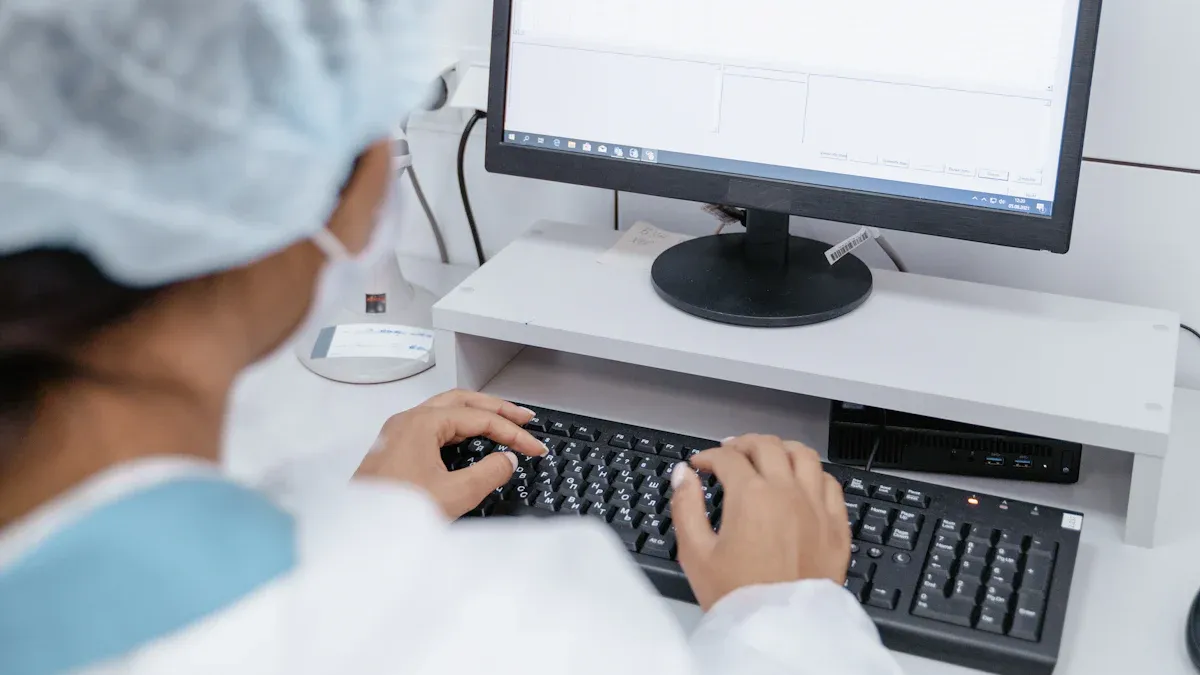
While AI offers remarkable potential, its integration into radiology is not without significant challenges. These tools introduce complex risks related to fairness, transparency, and human skill. Understanding these downsides is crucial for developing a responsible and effective partnership between clinicians and technology.
The Problem of Algorithmic Bias
One of the most serious risks in medical AI is algorithmic bias. This occurs when an AI system produces prejudiced results because of flawed assumptions in its machine learning process. Often, the root cause is unrepresentative training data. If an algorithm learns from a dataset that predominantly features one demographic group, its accuracy can plummet when analyzing images from underrepresented populations.
This creates dangerous "fairness gaps" where the AI performs differently for men and women or for patients of different ethnicities. Studies show that AI models can learn to use demographic information as an inaccurate shortcut for disease prediction. The problem is compounded when a hospital uses an AI model trained on data from another institution, as biases can reappear and even worsen in a new patient population. This imbalance means the clinical benefits of an x ray ai system might only apply to the majority groups, potentially widening existing healthcare disparities.
| Demographic Group | AI Application | Type of Bias/Issue |
|---|---|---|
| Ethnicity (Black vs. White patients) | Skin lesion classification | Models trained mostly on images of white patients show roughly half the accuracy when tested on Black patients, a group with higher melanoma mortality rates. |
| Gender (Men vs. Women) | Cardiovascular disease prediction | Models trained on mostly male datasets are often less accurate for women, who already face frequent misdiagnosis for heart attacks due to different symptoms. |
| Ethnicity (European ancestry) | Polygenic risk scores | The vast majority of genetic studies (GWAS) use data from individuals of European ancestry, making risk predictions less reliable for diverse populations. |
The "Black Box" and Accountability
Many advanced AI models operate as a "black box." Their internal decision-making processes are so complex that even their developers cannot fully explain how they arrive at a specific conclusion. This opacity presents a major hurdle for clinical adoption. It undermines a clinician's confidence, especially when an AI's recommendation contradicts their own expert judgment.
This lack of transparency raises critical questions about accountability. When a diagnostic error occurs, who is responsible? The legal and ethical landscape is still evolving, but several frameworks are emerging:
- The Physician: Courts expect physicians to use independent judgment. A doctor who blindly accepts an AI's flawed finding could be found negligent. The defense "the computer told me so" is unlikely to succeed, as the duty of care to the patient remains with the human expert.
- The Manufacturer: A developer could face a product liability claim if the AI has a design flaw or if the company failed to warn users about known limitations.
- The Healthcare Institution: A hospital may be held liable if it fails to provide proper training on the AI tool or does not monitor its use and performance.
Ultimately, AI is considered an advanced tool. The person wielding it—the radiologist—remains firmly in command of the diagnostic process and is primarily accountable for the final interpretation.
Risk of Over-Reliance and De-skilling
A significant concern among medical experts is the potential for over-reliance on AI to cause "de-skilling" among radiologists. If clinicians become too dependent on algorithms to flag abnormalities, their own diagnostic abilities could atrophy over time. A study on colonoscopies provided a stark warning: endoscopists who used AI for several months performed worse at detecting lesions on their own after the AI assistance was removed.
Clinical educators writing in the New England Journal of Medicine worry that AI in medical training could produce professionals who are highly efficient but less capable of independent problem-solving than their predecessors.
This phenomenon is not limited to medicine. Studies have shown that greater AI use correlates with reduced critical thinking. This dependency can also foster confirmation bias, where a radiologist is more likely to accept an AI's findings if they align with their initial impression, potentially causing them to overlook a subtle but critical alert from the AI that contradicts their view. To mitigate this, developers are creating tools like heatmaps that show why an AI flagged a certain area, encouraging radiologists to critically evaluate the system's reasoning rather than just accepting its conclusion.
Finding the Right Balance: AI as a Partner
The most effective approach to medical AI is not a competition between humans and machines. Instead, it is a partnership. This model leverages AI’s computational power to support the irreplaceable judgment of a trained radiologist. By finding the right balance, healthcare providers can maximize benefits while managing risks.
Augmenting Human Expertise
AI serves as a powerful assistant, augmenting a radiologist's natural abilities. Deep learning models enhance low-dose images by reducing noise and improving resolution. This allows them to detect subtle abnormalities like tiny lung nodules or fractures that are difficult for the human eye to see. The technology excels at specific, well-defined tasks, providing a reliable second look.
| AI Tool/Model | Application in Radiology | Key Outcome/Performance |
|---|---|---|
| Aidoc | Intracranial hemorrhage detection | Assists in early diagnosis, enhancing efficiency in emergency departments. |
| Deep learning algorithms | Brain tumor characterization | Achieved an AUC of 93.2% in distinguishing glioma grades, aiding treatment decisions. |
| AI software (deep learning) | Breast cancer detection | Reached an AUC of 89.6% in a large study, improving early detection. |
The Need for Human Oversight
Effective partnership requires clear rules and vigilant oversight. The radiologist must remain in control, using AI as a tool rather than a replacement. Best practices are emerging to ensure this balance is maintained safely and ethically.
- Education and Training: Radiologists need ongoing training to understand AI outputs, identify potential biases, and use the tools responsibly.
- Regulatory Compliance: All systems must adhere to strict guidelines from bodies like the FDA and comply with privacy laws like HIPAA to protect patient data.
- Explainable AI (XAI): Clinicians should use tools that make AI's reasoning transparent, building trust and allowing for critical evaluation of its suggestions.
- Bias Mitigation: Institutions must prioritize using AI trained on diverse datasets to ensure it performs fairly across all patient populations.
Combining Strengths for Better Care
When human expertise and machine precision work together, patient care improves significantly. An x ray ai system can handle time-consuming tasks, such as quantifying lung decay in seconds or classifying CT images to reduce radiation dose. This efficiency frees radiologists from repetitive work. They can then dedicate more time to complex diagnostic challenges, interdisciplinary collaboration, and direct patient interaction. This synergy leads to faster, more accurate diagnoses and reports that are easier for patients to understand, ultimately creating a more effective and humane healthcare experience.
What This Means for Patients
The integration of AI into radiology directly impacts the patient experience. This technology promises faster answers, earlier intervention, and a higher standard of care. Patients benefit when healthcare systems responsibly adopt these powerful new tools.
Faster, Earlier Diagnoses
AI significantly shortens the time patients wait for diagnostic results. It automates time-consuming tasks like lesion detection and image analysis, allowing for dramatic reductions in diagnosis time. This speed is critical for early disease detection.
- AI systems can reduce the time to diagnose breast lesions by up to 99%.
- They cut the diagnosis time for fresh rib fractures by 95%.
- AI models also help detect lung nodules on low-dose CT scans with high accuracy, enabling earlier cancer diagnosis.
This acceleration means patients can begin treatment sooner, which often improves outcomes.
Understanding the Technology's Role
Patients should understand that AI is an advanced tool that assists, but does not replace, their doctor. The technology enhances a radiologist's ability to provide an accurate diagnosis. It is not a standalone medical device.
AI is an optimizing tool to assist the radiologist in detecting suspicious findings, choosing a personalized patient protocol, and minimizing diagnostic errors.
The final interpretation and responsibility for a patient's care always remain with the human medical expert. The partnership between the radiologist and the AI system ensures a rigorous, evidence-based approach to medicine.
Ensuring Quality and Safety
Hospitals implement strict quality assurance protocols to ensure AI is used safely and effectively. Professional organizations like the American College of Radiology (ACR) have established national programs to guide this process. These frameworks require continuous AI model evaluation, adherence to privacy laws like HIPAA, and thorough training for all clinical staff. This oversight ensures the technology performs reliably and ethically, giving patients confidence in the quality of their AI-assisted care.
An x ray ai system offers transformative speed and precision, enhancing a radiologist's diagnostic ability. Its power demands balance through rigorous oversight, guided by ethical principles like justice and transparency to manage risks. The future is not replacement but a powerful partnership, creating intelligent connections between human expertise and AI for better patient care.
FAQ
Will AI replace my radiologist?
No. AI assists radiologists by highlighting potential issues. A human expert always makes the final diagnosis and remains responsible for patient care.
Is my health data safe when AI is used?
Yes. Healthcare institutions must follow strict privacy laws like HIPAA. These regulations protect all patient data, ensuring its security and confidentiality during AI analysis.
Can a patient request that AI not be used?
Patients can discuss their preferences with their healthcare provider. Hospital policies on AI usage vary, so direct communication is the best approach for specific requests.
See Also
Top Chinese Suppliers for X-Ray Inspection Machine Procurement
Innovations in Nitric Acid Separation and Purification: A Scientific Review
Canine Flu Antigen Tests: Uncovering the Most Accurate Diagnostic Methods
Understanding Pharmaceutical Checkweighers: Key Features and Definitions Explained
Automated Virus Sampling Tube Assembly Lines: A Smart Investment?