Pros and Cons of Installing a Recessed Water Dispenser
An in wall water dispenser is a great choice for homeowners who want a clean, space-saving kitchen. However, you must be ready for a higher cost and professional installation. This option is not practical for renters or people on a tight budget. It also does not work for those who want a simple, do-it-yourself setup.
Key Takeaways
- Recessed water dispensers save space and make your kitchen look modern. They fit inside the wall, which frees up counter and floor areas.
- These dispensers cost more to buy and install. You need professional help for installation, and repairs can be difficult because parts are inside the wall.
- Consider your budget and home structure before installing. Once installed, you cannot easily move the dispenser.
The Advantages of a Recessed Water Dispenser

Choosing a recessed water dispenser offers significant benefits for your home. You gain more than just convenient access to water. You also improve your kitchen's function, style, and value. Let's explore the key advantages.
Maximizes Usable Counter and Floor Space
Countertop and floor space are precious in any kitchen. A recessed water dispenser gives you that space back. Freestanding coolers take up valuable floor area. Countertop models create clutter where you could be prepping food. By installing the unit inside the wall, you free up these surfaces entirely. This creates a more open and functional workspace. You will have more room for cooking, small appliances, or simply a clean, uncluttered counter.
Creates a Sleek, Integrated Look
A major appeal of a recessed dispenser is its seamless appearance. The unit sits flush with your wall. This creates a clean, built-in look that elevates your kitchen's design. It blends perfectly with modern, minimalist, and high-end aesthetics. Unlike a bulky appliance that sticks out, a recessed model becomes part of your home's architecture.
Design Tip: You can match the dispenser's frame to your cabinetry or wall color. This makes it almost disappear for a truly integrated and custom finish. 🎨
This streamlined look makes your entire kitchen feel more organized and thoughtfully designed. It removes visual clutter and contributes to a calm, sophisticated atmosphere.
Enhances Home Safety
A recessed dispenser improves safety in several ways. First, it eliminates tripping hazards. Freestanding units often have power cords that can be a risk, especially for children and older adults. A recessed unit is hardwired into the wall, keeping floors clear and safe.
Second, an in wall water dispenser can improve accessibility. Many models are designed to comply with the Americans with Disabilities Act (ADA). This makes your home safer and more usable for everyone.
- A unit is often ADA-compliant if it does not stick out more than 4 inches from the wall.
- Manufacturers design recessed models to meet specific ADA rules for spout height, clear floor space, and knee clearance for wheelchair users.
This makes it a responsible choice for multi-generational homes or for homeowners planning to age in place.
Boosts Property Value
Upgrades that add both function and style can increase your home's market value. A built-in water dispenser is a luxury feature that impresses potential buyers. It signals a modern, well-maintained home. High-end and energy-efficient kitchen upgrades often provide a good return on investment. While a water dispenser is just one part of a kitchen, it contributes to the overall appeal that attracts higher offers.
Consider the potential return on investment for similar kitchen appliance upgrades:
| Appliance Type | Cost Range | ROI Percentage | Value Added Range |
|---|---|---|---|
| Energy-Efficient | $3,500 – $7,000 | 70-80% | $2,450 – $5,600 |
| Ultra-High-End | $15,000 – $30,000 | 30-45% | $4,500 – $13,500 |
Installing a recessed dispenser positions your kitchen in a more premium category, making it a smart investment for the future.
The Disadvantages of an In Wall Water Dispenser
While recessed dispensers offer a clean look, you should also understand their drawbacks. These units come with challenges related to cost, installation, and long-term upkeep. Knowing these disadvantages helps you make a fully informed decision.
Higher Upfront Unit and Installation Costs
The most significant drawback is the high initial expense. You will pay more for both the unit and the professional installation. A basic wall-mounted unit can cost between $1,000 and $2,500. Advanced models with features like refrigeration or ADA compliance can cost $2,500 to $5,000 or more.
Several factors influence the final installation price:
- The availability of nearby plumbing and electrical lines.
- Whether you are retrofitting an existing space or doing new construction.
- The specific location of the unit inside your home.
- The need for building permits to meet local codes.
These costs add up quickly compared to a simple countertop or freestanding model that you can buy and set up for a few hundred dollars.
Requires Complex Professional Installation
You cannot install an in wall water dispenser by yourself. This job requires a team of licensed professionals, including a plumber and an electrician. They must open your wall, run new water and drain lines, and connect the unit to your home's electrical system. This complexity makes professional help essential.
Professionals who install these systems often have special training. For example, the Water Quality Association (WQA) offers a Certified Installer (CI) certification. To earn this, installers must meet specific requirements.
- New Professionals: Must complete a training course, pass an exam, and get six months of hands-on experience.
- Experienced Professionals: Must complete a review session, an ethics course, and pass the certification exam.
Hiring certified experts ensures the job is done correctly and safely, but it also adds to the overall project cost.
Offers Limited Placement and No Portability
Once you install a recessed water dispenser, it is there to stay. You lose all portability. Unlike a freestanding cooler you can move to another room, a recessed unit is a permanent fixture. Its location depends entirely on your wall's structure and access to plumbing and electrical lines. This limits your placement options from the very beginning.
Moving the unit later during a kitchen remodel is a major project. It involves a process similar to the initial installation.
Remodeling Warning: Relocating a recessed dispenser is complex. Common mistakes include forgetting to get permits, using the wrong pipe materials, creating an improper slope for drain lines, and failing to test for leaks. Always consult a professional to avoid these costly errors.
This lack of flexibility is a key disadvantage. You must be certain about its placement before cutting into your walls.
Complicates Maintenance and Repairs
Fixing a recessed water dispenser is more difficult and expensive than servicing a standard model. The unit's main components are hidden inside the wall. If a leak occurs, a plumber must open the wall to access the pipes. This immediately increases the cost and mess.
Repair costs for in-wall leaks can vary widely. The price depends on the leak's severity, its accessibility, and the materials needed.
| Repair Method | Cost Range |
|---|---|
| Pipe Patching (small leaks) | $150 to $400 |
| Pipe Replacement (severe cracks) | $300 to $1,200 |
| Pipe Relining (less invasive) | $800 to $1,500 |
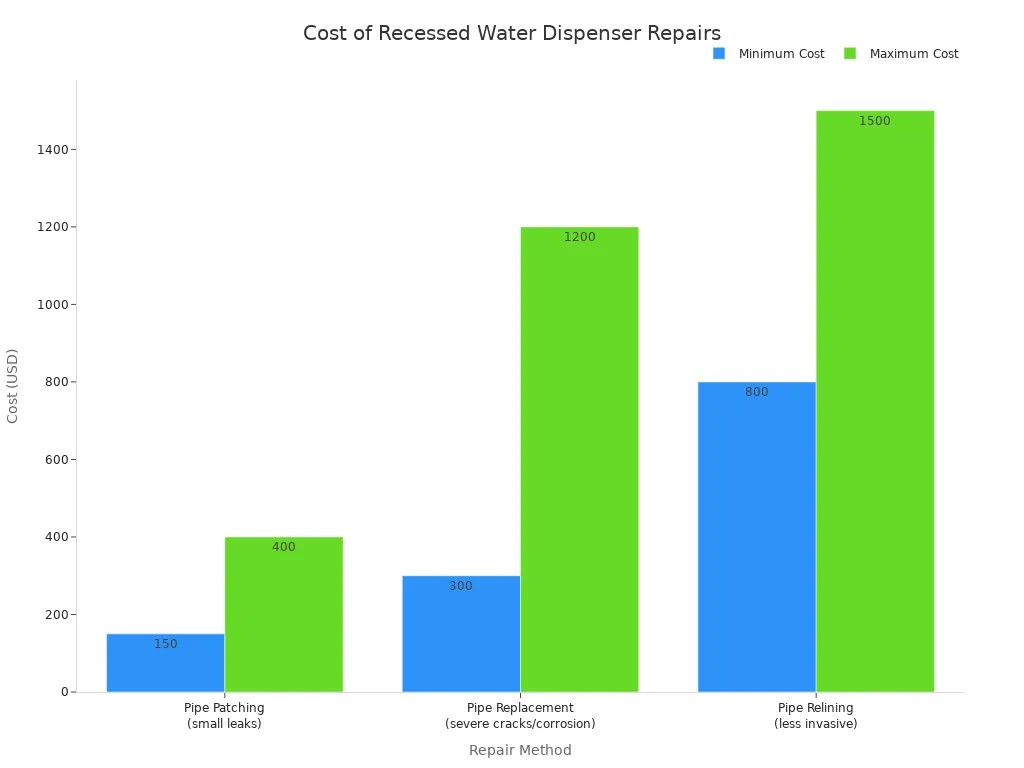
You can expect to pay around $300 to $700 for a straightforward pipe leak repair inside a wall. However, this does not include extra expenses like drywall repair, repainting, or mold remediation if water damage occurred. These additional tasks make even a small problem a significant undertaking.
Key Factors to Consider Before Installation
Installing an in wall water dispenser requires careful planning. You must evaluate your home's structure, utility access, and budget before starting. Considering these factors ensures a smooth installation process.
Wall Structure and Depth
First, you need to check your wall. The dispenser must fit between the wall studs. Most units are designed for standard stud spacing.
- You will need a minimum width of 16 inches between studs.
- The wall cavity must be deep enough to hold the entire unit.
A professional can help you confirm if your chosen location will work. This step prevents major issues during installation.
Access to Plumbing and Electrical
Your dispenser needs both water and power. A plumber must run a water line to the unit. This line should be within 30 inches of the connection point. Your home's water pressure should not exceed 80 psi. An electrician will also need to install a dedicated electrical outlet. Most units require a standard 110V outlet to function.
Long-Term Maintenance Plan
An in wall water dispenser needs regular upkeep to provide clean water. You should create a maintenance schedule. Key tasks include:
- Filter Replacement: Change filters every 6 to 12 months.
- Internal Sanitization: A professional should sanitize the unit every 6 months.
Following the manufacturer's recommendations will keep your dispenser running properly and extend its life.
Budget for Professional Help
The total project cost goes beyond the price of the unit. You must budget for professional labor. This includes hiring a plumber, an electrician, and a carpenter. The table below shows an average cost breakdown for installation, not including the dispenser itself.
| Category | Average Cost |
|---|---|
| Material | $325.44 |
| Labor | $257.49 |
| Tools/Supplies | $77.30 |
| Total | $660.23 |
Setting aside a clear budget helps you manage expenses for a successful installation.
At a Glance: Recessed vs. Freestanding Dispensers
Choosing the right water dispenser depends on your priorities. You must weigh the benefits of a built-in look against the simplicity of a traditional model. This quick comparison helps you see the main differences between a recessed unit and a freestanding one.
Pros of Recessed Dispensers
You gain several key advantages when you choose an in wall water dispenser. These benefits focus on design, space, and long-term value.
- Saves Space: The unit fits inside your wall. You get back valuable counter and floor space.
- Modern Look: It creates a clean, high-end appearance that blends with your kitchen.
- Increases Home Value: A built-in feature is an attractive upgrade for future buyers.
- Improves Safety: You eliminate tripping hazards from cords and bulky units on the floor.
Cons of Recessed Dispensers
You should also consider the significant drawbacks. These issues relate to cost, installation, and flexibility.
- High Cost: The unit and professional installation are much more expensive than a freestanding model.
- Complex Installation: You need a plumber and an electrician to install it correctly.
- Permanent Placement: You cannot move the dispenser easily once it is installed.
- Difficult Repairs: Maintenance and repairs require opening the wall, which adds cost and time.
Quick Tip: If you rent your home or plan to move soon, a freestanding dispenser is a more practical choice. A recessed unit is a permanent investment best suited for homeowners. 🏠
A recessed water dispenser is a great choice for your remodel if you value a high-end look and have the budget. If you prioritize lower costs and flexibility, other options like filtered pitchers or freestanding models are better. Ultimately, you choose this stylish upgrade for its built-in appearance, not for proven long-term cost savings. 💧
FAQ
How much does a recessed water dispenser cost?
The unit itself costs between $1,000 and $5,000. You should also budget around $660 for professional installation, which includes labor and materials.
How often should you change the filter?
You need to replace the filter every 6 to 12 months. Always check the manufacturer's guide for your specific model's requirements. Regular changes ensure clean water.