Why Gelatin Powder Unflavored Might Work for You
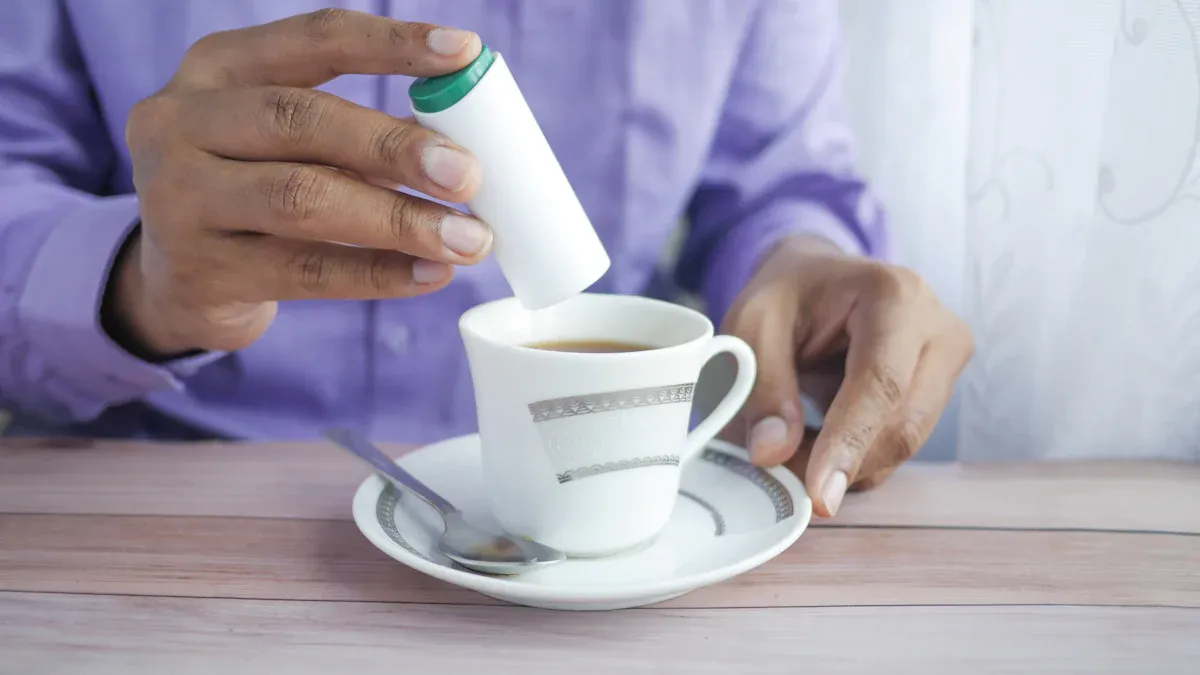
You can use gelatin powder unflavored to thicken sauces or soups without changing their flavor or color. Many cooks choose it because it works well in both sweet and savory dishes. You find it easy to dissolve in hot water and quick to rehydrate in cold water. Some people use it as an egg substitute or to make treats like gummies and marshmallows. You may face challenges if you have dietary restrictions or struggle with preparation.
Key Takeaways
- Gelatin powder unflavored is versatile. Use it in both sweet and savory dishes to enhance texture without altering flavor.
- It offers health benefits. Gelatin supports skin, joint, gut, and bone health, making it a valuable addition to your diet.
- Preparation is simple. Follow easy steps to bloom and dissolve gelatin, ensuring successful results in your recipes.
Pros of Gelatin Powder Unflavored
Versatility in Recipes
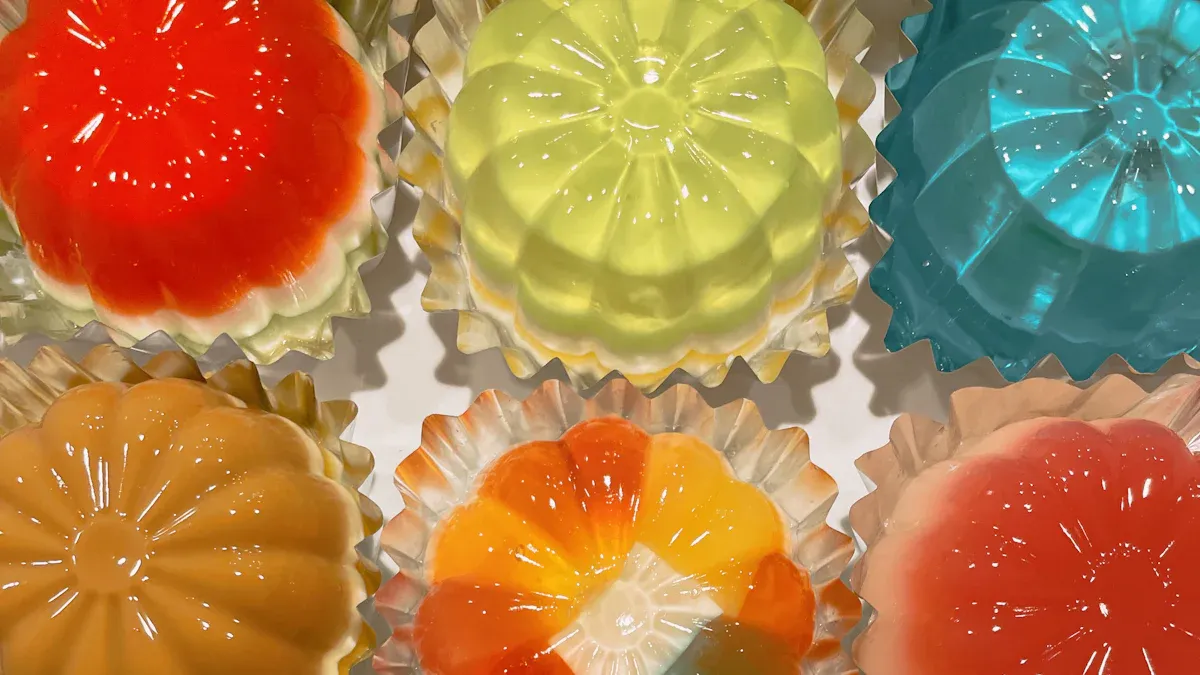
You can use gelatin powder unflavored in many types of recipes. It works well in both sweet and savory dishes. You might add it to desserts like homemade strawberry gelatin or coffee jelly. You can also use it to thicken soups, sauces, or even make marshmallows and gummies. The table below shows some popular recipes that use this ingredient:
| Recipe Name | Description | Link |
|---|---|---|
| Naturally Flavored Homemade Strawberry Gelatin | A nostalgic dessert that highlights the use of unflavored gelatin in creating a fruity gelatin treat. | Naturally Flavored Homemade Strawberry Gelatin |
| Coffee Jelly | A unique dessert that combines coffee and gelatin, showcasing versatility in sweet dishes. | Coffee Jelly |
You can see that gelatin powder unflavored fits into many cuisines. It gives you the freedom to create both classic and modern dishes.
Tip: You can use gelatin powder unflavored for creamy desserts like panna cotta or mousse. It gives a soft texture that melts in your mouth.
Health Benefits
You get more than just texture from gelatin powder unflavored. It contains important amino acids that support your health. The chart below shows the main amino acids found in this ingredient:
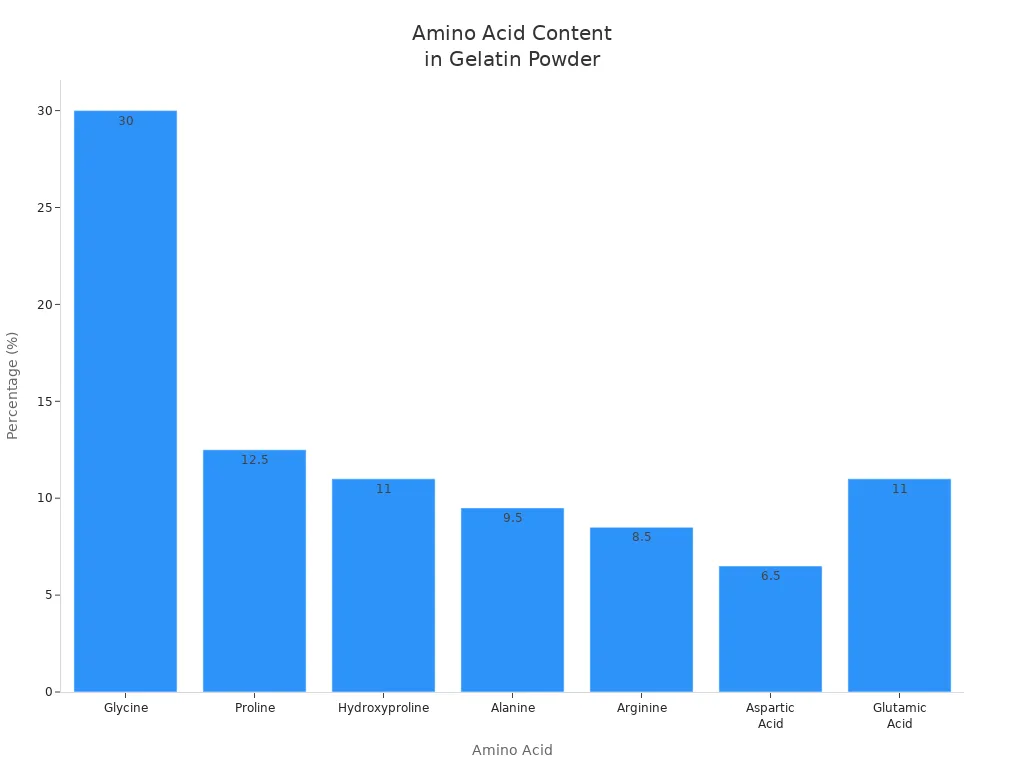
These amino acids help your body in many ways:
- Skin Health: You may notice better skin elasticity and fewer wrinkles.
- Joint Support: It can help reduce joint pain and support cartilage repair.
- Gut Health: It strengthens your gut lining and helps with digestion.
- Muscle Recovery: It aids muscle repair after exercise.
- Bone Health: It supports strong bones.
You can add gelatin powder unflavored to your diet for these benefits.
Neutral Taste
You do not have to worry about changing the flavor of your food. Gelatin powder unflavored does not add sweetness, color, or aroma. You can use it in layered desserts or molded dishes where you want the main flavors to stand out. In savory dishes, it thickens broths and sauces without changing their taste or clarity.
Chefs and home cooks like you appreciate this quality. You can stabilize whipped cream, set no-bake pies, or clarify broths. You get the texture you want without losing the original flavor of your dish.
Easy to Use
You will find gelatin powder unflavored simple to prepare. The steps are easy to follow:
| Step | Description |
|---|---|
| 1 | Measure 1 tablespoon (about 10 grams) for 2 cups of liquid. |
| 2 | Pour the gelatin into a small bowl. |
| 3 | Add about 1/4 cup of cold liquid and let it sit for 5 to 10 minutes to bloom. |
| 4 | Gently heat the mixture until fully dissolved. Do not boil. |
| 5 | For sheet gelatin, soak sheets in cold water for 5 to 10 minutes, then add to warm liquid. |
You do not need special tools or skills. You can use it in many recipes with just a few simple steps.
Cons of Gelatin Powder Unflavored
Dietary Restrictions
You may need to avoid gelatin powder unflavored if you follow certain diets. Gelatin comes from animal sources, so it does not fit vegetarian or vegan lifestyles. Some religious laws also restrict its use. You can see the reasons in the table below:
| Dietary Restriction | Reason for Avoiding Gelatin |
|---|---|
| Vegetarian | Gelatin is derived from animal sources. |
| Vegan | Gelatin is not plant-based. |
| Religious Laws | May conflict with halal or kosher dietary laws. |
If you want a plant-based option, you can try agar-agar or pectin. These alternatives work well for many recipes and fit more dietary needs.
Texture Issues
You may notice texture problems when you use gelatin powder unflavored. Sometimes your dish does not set, or it feels rubbery or too soft. Fruit juices like pineapple can stop gelatin from working unless you cook them first. Sugar also helps gelatin set, so recipes without enough sugar may not turn out right. The table below shows common texture issues and their causes:
| Texture Issue | Cause/Explanation |
|---|---|
| Failure to set | Insufficient blooming of gelatin or incorrect ratio of gelatin to liquid. |
| Rubbery texture | Using too much gelatin or allowing it to sit too long in the fridge. |
| Overly soft texture | Using too little gelatin in the mixture. |
| Impact of fruit juices | Certain fruit juices, like pineapple, contain enzymes that hinder gelatin's effectiveness unless cooked. |
| Sugar requirement | Gelatin requires sugar to gel properly; insufficient sugar can lead to poor setting. |
You can compare gelatin with other gelling agents. Gelatin gives you a smooth, tender texture that melts in your mouth. Pectin creates a firmer, grainier texture, which works better for jams and jellies.
| Gelling Agent | Texture Outcome | Description |
|---|---|---|
| Gelatin | Smooth, Tender | Melts easily in the mouth, ideal for creamy desserts like panna cotta or mousse. |
| Pectin | Firmer, Grainier | Holds shape well, suitable for jams and jellies. |
Preparation Challenges
You may face challenges when preparing dishes with gelatin powder unflavored. Gelatin needs careful handling. If you overheat it, the proteins break down and your dish will not set. If you underheat it, the gelatin does not bloom and you get a gritty texture. You may also see inconsistent results if your technique changes from batch to batch. Common mistakes include mixing protein powder into boiling water, skipping the bloom phase, or using flavored instant gelatin as a main protein source. These mistakes can cause clumping or poor texture.
- Thermal sensitivity: overheating can denature proteins, while underheating prevents proper blooming.
- Inconsistent taste and mouthfeel between batches if technique varies.
- Common pitfalls:
- Mixing protein powder directly into boiling water, which causes clumping.
- Skipping the bloom phase, leading to a gritty texture.
- Using flavored instant gelatin as a primary protein source, which is often misleading due to low actual protein content.
If your gelatin does not set, you can fix it by blooming properly, avoiding boiling, and using canned fruit or heating fresh fruit to break down enzymes. The table below shows troubleshooting tips:
| Issue | Likely Cause | Fix |
|---|---|---|
| Gelatin not setting | Not bloomed; overheated; enzymes (fresh pineapple/kiwi) | Bloom properly; don’t boil; use canned fruit or briefly heat enzymes |
Tip: You can improve your results by following the blooming step and watching the temperature closely.
Limited Flavor Enhancement
You may want more flavor in your recipes, but gelatin powder unflavored does not add taste. It only changes the texture. If you need a gelling agent that boosts flavor, you must add other ingredients. Gelatin works best when you want the main flavors to stand out. You may need to use fruit, spices, or extracts to create a more exciting dish.
Note: Gelatin powder unflavored gives you a blank canvas. You must supply the flavor yourself.
Who Should Consider Gelatin Powder Unflavored
Ideal Users
You benefit from gelatin powder unflavored if you enjoy experimenting in the kitchen. Home cooks, bakers, and those who want to improve the texture of their dishes often choose this ingredient. You may want to create classic desserts or try new recipes. If you care about health, you can use it to support your skin, joints, and digestion. You find it useful if you need a neutral ingredient that does not change the taste of your food.
Tip: You can use gelatin powder unflavored to make homemade gummies, mousse, or marshmallows. It helps you control the ingredients and avoid additives.
When It Excels
Gelatin powder unflavored works best in recipes where you want a tender, bouncy texture. You see great results in traditional jelly desserts, airy mousse, and molded dishes. The neutral flavor lets fruit, chocolate, or vanilla shine. You can use it in both sweet and savory recipes. It fits well in legacy recipes and modern creations.
- Jelly molds
- Mousse desserts
- Marshmallows
- Fruit-based treats
- Savory aspics
You notice that gelatin powder unflavored gives you versatility and reliable results across many cooking styles.
When to Avoid
You should avoid gelatin powder unflavored if you follow a vegetarian or vegan diet. It does not suit you if you have religious dietary restrictions. You may want to skip it if you need a gelling agent that adds flavor or if you struggle with preparation steps. Some fruits, like fresh pineapple, can prevent gelatin from setting unless you cook them first.
| Situation | Reason to Avoid |
|---|---|
| Vegetarian/Vegan Diet | Animal-derived ingredient |
| Religious Restrictions | May not meet dietary laws |
| Flavor Enhancement Needed | Gelatin does not add flavor |
| Preparation Challenges | Requires careful handling |
Note: You can choose agar-agar or pectin if you need a plant-based or easier alternative.
You can use gelatin powder unflavored to add protein and improve texture in many dishes. Most users rate it highly, as shown below:
| Rating | Number of Reviews |
|---|---|
| 5 stars | 80 |
| 4 stars | 38 |
| 3 stars | 19 |
| 2 stars | 11 |
| 1 star | 14 |
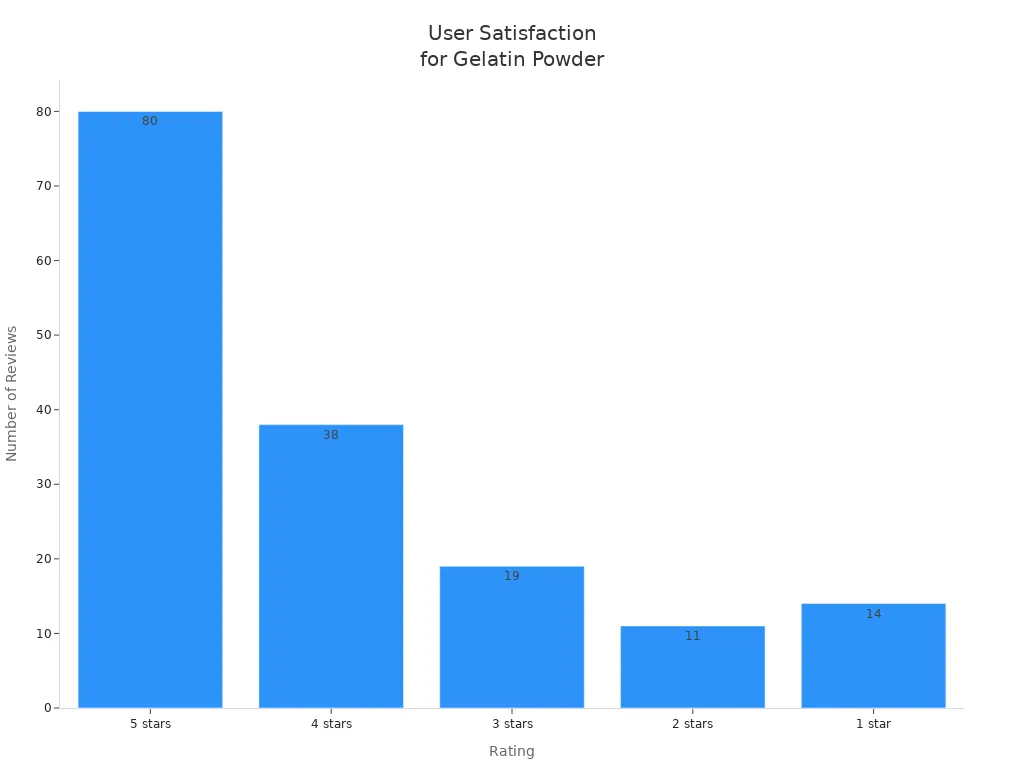
You should consider your dietary needs and cooking skills before deciding if it fits your kitchen.
FAQ
Can you use gelatin powder unflavored in cold recipes?
You can use it in cold recipes. You must bloom it in cold water first, then dissolve it in warm liquid before chilling.
Tip: Always bloom gelatin for best results.
Is gelatin powder unflavored safe for people with allergies?
You should check the label. Most gelatin powder contains only animal protein. It rarely causes allergies, but you must avoid it if you react to animal products.
| Allergen | Risk | |--|--| | Animal Protein | Possible |
How long does gelatin powder unflavored last after opening?
You can store it in a cool, dry place. It stays fresh for up to two years. Always seal the container tightly.
See Also
Creative Methods to Incorporate Bovine Gelatin Powder in Cooking
Comparative Analysis of Bovine, Fish, and Pork Gelatin Powders
The Health Benefits of Using Bovine Gelatin Powder Effectively
Key Indicators of High-Quality Bovine Gelatin Powder to Recognize
The Production Process and Composition of Edible Gelatin Explained