Private Label & OEM Gelatin: Choosing the Right Manufacturing Partnership Model
Launching a new gelatin product presents a critical fork in the road: choose a ready-made private label or invest in a custom OEM formula. Many brands struggle with this decision, unsure which path aligns with their goals. This confusion is understandable—both models offer distinct benefits, yet they serve different business strategies.
A private label supplement manufacturer provides existing formulations ready for branding, while an OEM partner builds a product from the ground up. Beyond Collagen, a premium manufacturer and private label OEM gelatin manufacturer, offers both routes, making it a versatile option for businesses at any stage. This guide cuts through the noise, offering a practical framework for evaluating your needs, budget, and market position. By the end, you will confidently select the right manufacturing partnership for your supplement or nutrition brand.
Understanding Private Label and OEM Gelatin
Two distinct manufacturing paths dominate the gelatin market. Each model serves different business needs, budgets, and timelines. Understanding the core differences helps brands select the right approach from the start.
Defining Private Label Manufacturing
Private label manufacturing involves selecting an existing gelatin formulation and branding it under a buyer's name. A private label supplement manufacturer like Beyond Collagen offers ready-made edible gelatin products. The buyer chooses from available options, adds their logo and packaging, then sells the product as their own. This model requires minimal investment in research and development.
Common private label gelatin products include biotin gummies, collagen gummies, protein gummies, melatonin gummies, creatine gummies, and apple cider vinegar gummies. Traditional confectionery items such as gummy bears, wine gums, and gumdrops have existed since the early 1900s. In the functional segment, gelatin gummies deliver vitamins, minerals, fibers, probiotics, proteins, collagen, botanicals, and other beneficial ingredients. This approach meets consumer demand for convenient dietary supplements.
The primary benefits of private label include faster time-to-market and lower upfront costs. A brand can launch within weeks rather than months. The private label supplement manufacturer handles production, quality control, and regulatory compliance. This arrangement suits startups testing new markets or established companies expanding product lines quickly.
Defining OEM and Contract Manufacturing
OEM, or Original Equipment Manufacturing, involves creating a unique product from scratch. Contract manufacturing partners develop custom formulations tailored to specific requirements. This model offers greater differentiation but demands more resources and time.
OEM customization options include selecting specific Bloom strengths, raw material origins, and processing types. The table below illustrates typical ranges:
Bloom Strength Range | Category | Raw Material Origins | Processing Type |
|---|---|---|---|
50–125 | Low Bloom | Pig skin, fish skin, beef hides/bones | Type A (acid) or Type B (alkaline) |
175–225 | Medium Bloom | Same as above | Same as above |
225–325 | High Bloom | Same as above | Same as above |
Custom options also include packaging, form (powder or granules), and blending of grades. A manufacturer may offer halal, kosher, ISO, and GMP certifications. This ability to develop custom formulations gives brands complete control over texture, gelling properties, and ingredient sourcing.
Contract manufacturing requires careful evaluation of cost structures and contract terms. The OEM partner becomes a long-term collaborator in product development. For brands seeking unique market positions, this investment pays dividends through proprietary formulas that competitors cannot easily replicate. The odm model represents the deepest level of partnership, where the manufacturer contributes expertise alongside production capacity.
Private Label vs. OEM: Key Trade-offs
Control, Cost, and Speed to Market
Choosing between private label and OEM manufacturing requires understanding three key trade-offs: initial investment, time to market, and product differentiation. Private label offers lower barriers to entry. A private label supplement manufacturer provides ready-made formulas. Buyers can launch a product with minimal upfront cost. The table below summarizes the differences.
Trade-off Dimension | Private Label | OEM Manufacturing |
|---|---|---|
Initial Investment | Lower MOQs (1,000–5,000 units), minimal R&D investment; lower upfront cost but higher long-term margin pressure | Higher MOQs (10,000–50,000 units), significant R&D investment; higher upfront cost but stronger long-term margin protection |
Time to Market | 6–10 weeks from deposit to finished goods | 16–24 weeks for first production run, including formula development, stability testing, and regulatory documentation |
Product Differentiation | Low – competitors can access the same pre-developed formulas, making differentiation nearly impossible | High – brand owns the formula and intellectual property, enabling unique ingredient stacking and a competitive moat |
Private label suits startups and brands testing new markets. The fast time to market allows quick validation. The contract manufacturer handles production and compliance. The brand focuses on marketing and distribution. The manufacturer must have clear contracts. Contract terms must clarify ownership and responsibilities. The ODM model provides additional design support. The ODM model aids in formulation development. The ODM model helps brands avoid common pitfalls. Many ODM manufacturers offer application consultation. The ODM service provides formula support. The contract manufacturer must be transparent. This collaboration delivers the best results for nutrition brands. The supplement market is competitive.
Quality and Customization Options
Quality remains critical in both manufacturing models. A reputable manufacturer holds certifications that open international doors. Quality certifications include ISO, Halal, and Kosher. Quality control is essential for batch consistency. The manufacturer holds quality certifications. The manufacturer offers customization options. As the source notes,
Halal gelatin expands export opportunities to international markets with strict Halal compliance requirements.
A private label supplement manufacturer can offer these certifications on pre-developed formulas. A private label supplement manufacturer may have limited customization. OEM manufacturing adds another layer of control. Brands can specify raw material origins and adjust functionality. The ODM approach allows for deeper customization. The ODM partner works closely with the brand. This ODM partnership results in a proprietary formula. The ODM model protects intellectual property. The ODM process includes stability testing. Quality testing ensures consistency. The partner also adjusts viscosity and gelling strength. These custom formulations create unique products with custom formulations. Supplement brands gain trust through verified certifications. The manufacturing process requires strict controls. These formulas ensure consistency. Custom requirements are met through OEM. Each batch undergoes rigorous testing for purity and strength. Moisture control is critical for texture consistency.
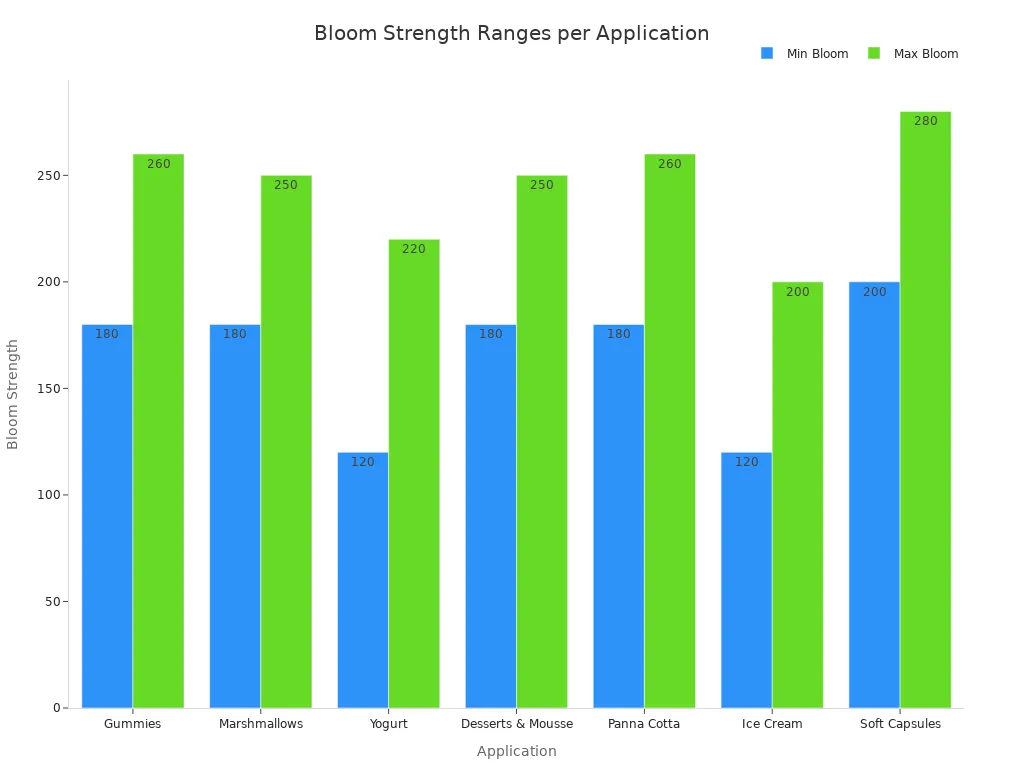
The table below shows recommended bloom ranges.
Application | Recommended Bloom Range |
|---|---|
Gummies | 180–260 Bloom |
Marshmallows | 180–250 Bloom |
Yogurt | 120–220 Bloom |
Desserts & Mousse | 180–250 Bloom |
Panna Cotta | 180–260 Bloom |
Ice Cream | 120–200 Bloom |
Soft Capsules | 200–280 Bloom |
OEM manufacturing allows buyers to select bovine, porcine, or fish origins. This flexibility meets dietary requirements and regional preferences. The contract partner guarantees batch consistency. Supplement brands benefit from a unique market position. The ODM partnership supports these variations. Regulatory compliance is built into the development process. Supplement products demand consistency. These factors make OEM a strong choice for established brands.
Choosing the Right Model for Your Business
Aligning with Your Goals and Budget
Every brand must answer a fundamental question before selecting a manufacturing path: what stage is the business at, and what does the budget allow? Startups typically face tight capital constraints and urgent launch timelines. A private label supplement manufacturer offers a ready-made edible gelatin product that a new brand can brand and sell within weeks. This approach minimizes upfront investment and reduces risk while testing market demand. Established brands, by contrast, often possess the resources to invest in custom development. They seek differentiation through proprietary formulas that competitors cannot replicate. The table below illustrates how decision factors shift between these two business stages.
Decision Factor | Startups | Established Brands |
|---|---|---|
Investment | Prefer private label due to lower upfront costs | Prefer OEM despite higher investment for differentiation |
Time to Market | Private label enables faster market entry | OEM involves longer development time |
Customization | Private label offers limited customization | OEM provides full control over formulation |
Brand Differentiation | Focus on packaging and marketing | Focus on unique product formulations |
Risk | Lower risk with private label for testing market | Higher risk but potential for stronger brand positioning |
Scalability | Private label for quick scaling and testing | OEM supports long-term innovation and brand building |
Budget plays a decisive role in this equation. A limited budget points toward private label options with lower minimum order quantities. A larger budget opens the door to OEM partnerships that require significant research and development investment. Market entry speed matters equally. A brand needing a quick launch should select private label. A brand willing to wait sixteen to twenty-four weeks for a unique product can pursue OEM. Product strategy also guides the choice. Short-term testing favors private label. Long-term product lines justify OEM investment. A collaborative private label supplement manufacturer can help a brand transition from one model to the other as the business grows.
Evaluating Your Market Position
Target market demands shape the manufacturing decision as much as internal goals do. Different consumer segments carry distinct expectations for gelatin products. The table below summarizes how target segments influence the choice between manufacturing models.
Target Segment | Influence on Choice |
|---|---|
Vegetarian, Vegan, Halal, Kosher | Plant-based HPMC shells are naturally suitable, making them mandatory for these segments. |
Clean-label, Sustainable | High-end health retailers in Europe and North America increasingly demand plant-based softgels due to consumer preference for these attributes. |
Mass market (e-commerce, pharmacies, sporting goods) | Gelatin shells offer better value for money. |
High-end health retail (Whole Foods, iHerb), EU, Middle East | HPMC is a must, not an option, for these channels. |
Premium vegan channels | Brands can offset the 30–50% higher cost of HPMC by positioning products here. |
Halal-certified raw materials, including gelatin, represent a non-negotiable requirement for Muslim-majority markets. Kosher certification opens doors to Jewish communities worldwide. ISO certification signals consistent quality to retailers and regulators. A manufacturer that holds these credentials, such as Beyond Collagen, serves both private label and OEM needs reliably. The manufacturer's edible gelatin comes in bovine, porcine, and fish origins with customizable Bloom strengths. This flexibility allows brands to match their product to regional preferences and dietary restrictions.
Choosing the best private label supplement manufacturer requires evaluating whether the partner can support the brand's market ambitions. A brand targeting premium health retailers needs a partner with clean-label credentials and sustainable sourcing. A brand serving mass market channels needs cost-effective gelatin shells. The manufacturing partner must align with the brand's quality standards. Quality remains the foundation of consumer trust in the supplement industry. Regulatory compliance protects the brand from legal complications. The right partner delivers both.
The decision ultimately balances speed against differentiation, cost against control. A startup entering a crowded market may choose private label for immediate presence. An established brand defending its position may invest in OEM for unique formulations. Both paths lead to success when the brand selects a partner that understands its goals. Beyond Collagen exemplifies this alignment, offering certifications, customization, and transparency across both manufacturing models. The manufacturer's ODM services support brands seeking deeper collaboration. The ODM approach combines manufacturing expertise with product development support. This partnership model delivers the best results for nutrition brands ready to grow.
Evaluating a Private Label OEM Gelatin Manufacturer
A thorough evaluation of a private label oem gelatin manufacturer protects the brand's reputation. Every brand should verify quality certifications and contract terms before signing an agreement. The right partner ensures product consistency and regulatory compliance. Selecting the right private label oem gelatin manufacturer requires due diligence.
Quality Certifications and Compliance
Quality certifications serve as the foundation of trust in the supplement industry. A reputable private label oem gelatin manufacturer holds multiple credentials. Halal certification confirms that gelatin comes from animals slaughtered according to Islamic law. Kosher certification provides access to Jewish communities worldwide. ISO 9001 verifies quality management systems. ISO 22000 or FSSC 22000 confirms food safety management. HACCP certification ensures systematic preventive approaches to food safety. GMP certification demonstrates compliance with pharmaceutical-grade production standards.
A brand seeking a quality supplement manufacturing company should audit these certifications directly. The manufacturer should provide documentation for each credential. The manufacturer must guarantee batch consistency across every shipment. The manufacturer should also offer raw material options that match certification requirements. The manufacturer plays a key role in maintaining quality standards. The quality and compliance framework ensures every batch meets the same high standard. The manufacturer should produce certificates of analysis for each shipment. The manufacturer should demonstrate commitment to continuous improvement. The private label oem gelatin manufacturer should hold all relevant certifications. A private label oem gelatin manufacturer can offer both bovine and fish origins.
Communication and Contract Terms
Clear contract terms prevent misunderstandings between brands and their partner. A private label supplement manufacturer should provide transparent pricing structures. The contract should specify minimum order quantities clearly. The contract should address price increase provisions. The contract should outline how ingredient costs get allocated. The contract manufacturing partner must communicate openly about schedules.
A contract manufacturing partner should also set clear MOQs and short-run terms. Pilot-run pricing and a volume ramp-up plan help brands avoid high minimums. Contract manufacturing requires careful attention to escalation clauses. A notice period prevents sudden price hikes. Deadlines for certificates of analysis and batch records protect both parties. The odm approach combines manufacturing expertise with product development. The odm model allows for custom formulations that meet specific needs. The odm process includes stability testing and regulatory documentation. The odm partner works closely with the brand throughout development. The odm services protect intellectual property through proprietary formulas. The odm approach delivers custom supplement manufacturing solutions. The odm model helps brands avoid common pitfalls. The odm partnership ensures the brand owns the final formula. The odm capabilities set a manufacturer apart from competitors. The odm process creates a competitive advantage. A private label supplement manufacturer should offer odm services for brands seeking deeper collaboration. The odm model provides the benefits of custom formulations. The odm approach supports manufacturing quality supplements for diverse markets. The odm process delivers nutrition products that meet specific requirements.
Avoiding Common Partnership Pitfalls
Hidden Costs and MOQ Considerations
Many brands enter a partnership without understanding the full cost structure. A private label supplement manufacturer may quote a low base price. Hidden costs then emerge. These include labeling fees, testing charges, and shipping surcharges. A clear contract prevents surprises. The contract should specify all costs upfront. The contract should also set minimum order quantities for a defined period.
A contract manufacturing partner may raise MOQs after the first production run. This forces the brand to hold more inventory than planned. The manufacturing agreement should bind MOQ terms clearly. A reputable manufacturer offers transparent terms. Beyond Collagen provides clear, upfront agreements. The manufacturer also offers consistent quality across every batch. This consistency reduces the risk of production delays. A private label supplement manufacturer should also provide clear cost breakdowns. This transparency helps supplement brands plan their budgets. The supplement market demands reliability. A trustworthy manufacturer delivers this reliability.
Protecting Your Brand and Formula
Intellectual property protection matters most for OEM projects. A custom formula represents a significant investment. The brand must own the formula. An OEM partnership requires careful planning. The contract manufacturing agreement should specify ownership rights. The agreement should prevent the manufacturer from selling the same formula to competitors.
A private label supplement manufacturer handling OEM work must protect the formula. The contract manufacturing partner should agree to non-disclosure terms. The supplement industry relies on trust. Regulatory compliance ensures the product meets standards. A reliable manufacturer prioritizes quality and transparency. The manufacturer should share valid ISO, HACCP, or Kosher certifications. The manufacturer should also provide third-party test results. These results confirm product consistency. The manufacturer's reputation matters. Many buyers prioritize reputation when selecting a supplier. Long-standing relationships often indicate better service and consistency. The manufacturer should also offer custom adjustments. Adjusting gelling strength or clarity ensures the product meets specific needs. A responsible partner invests in the brand's long-term success. The supplement product must meet consumer expectations. A reliable manufacturer supports this goal.
Private label delivers speed and lower cost. OEM provides custom formulations and brand control. Brands must evaluate a manufacturer's quality certifications, communication, and contract terms. These factors determine the success of any supplement product launch. The framework in this guide helps supplement brands assess their own business goals. Research potential partners carefully before signing a manufacturing agreement.
Beyond Collagen serves as a trusted private label OEM gelatin manufacturer. The company exemplifies the qualities discussed: certifications, customization, and transparency. A private label supplement manufacturer can serve both new and established brands. A reliable partner supports long-term success through consistent quality.
Start your search today using the framework above. Choose a partner that sets you up for long-term success.
FAQ
What is the main difference between private label and OEM gelatin?
Private label involves selecting an existing formula from a manufacturer. OEM creates a unique custom formula. OEM offers more control over the final product.
How quickly can a brand launch a gelatin supplement?
A launch usually takes 6 to 10 weeks. The manufacturer handles production and compliance. This allows the brand to focus on marketing and distribution.
What certifications should a gelatin supplement manufacturer hold?
A reputable manufacturer should hold ISO, Halal, and Kosher certifications. These credentials ensure quality and provide access to international markets.
What are the typical minimum order quantities for supplement manufacturing?
A manufacturer sets private label MOQs at 1,000 to 5,000 units. A project often requires 10,000 to 50,000 units. The manufacturer requires higher minimums for custom formulations.
How does a supplement brand protect its formula in an OEM partnership?
The brand must secure a contract with the manufacturer that specifies formula ownership. Non-disclosure agreements prevent the manufacturer from selling the formula to others.