Porcine Gelatin Powder vs Bovine and Fish Gelatin Differences and Best Uses
Porcine gelatin powder, bovine gelatin, and fish gelatin differ in melting points, solubility, and flavor. Porcine gelatin powder offers a neutral taste and slow dissolution, making it ideal for food and pharmaceutical products. Fish gelatin excels in pharmaceutical and cosmetic uses due to its immunological safety.
- Bovine: Robust flavor, high solubility, hearty dishes.
- Fish: Delicate, slightly fishy, pharmaceutical and cosmetic applications.
- Porcine: Mild, slow to dissolve, versatile in foods.
Porcine Gelatin Powder, Bovine, and Fish Gelatin at a Glance
Gelatin comes from different animal sources, and each type offers unique properties. Manufacturers and chefs often choose between porcine gelatin powder, bovine gelatin, and fish gelatin based on their functional needs, cost, and dietary requirements. Understanding the distinctions helps users select the right gelatin for their application.
Tip: The source of gelatin affects its amino acid profile, price, and suitability for specific recipes or products.
Quick Comparison Table
| Feature | Porcine Gelatin Powder | Bovine Gelatin | Fish Gelatin |
|---|---|---|---|
| Source | Pig skin and bones | Cow hides and bones | Fish skin and scales |
| Key Amino Acids | Aspartate, Glutamic Acid, Lysine, Tyrosine | Proline, Hydroxyproline, Leucine, Isoleucine, Valine | Threonine, Serine, Methionine |
| Texture | Firm, elastic gels | Strong, resilient gels | Soft, less elastic gels |
| Flavor/Odor | Neutral, mild | Robust, slightly meaty | Delicate, sometimes fishy |
| Melting Point | Medium | High | Low |
| Solubility | Moderate | High | High |
| Price | Lower due to abundant raw materials | Higher due to cattle sourcing | Highest due to limited supply |
| Best Uses | Confectionery, desserts, capsules | Marshmallows, aspics, hearty dishes | Pharmaceuticals, cosmetics, cold desserts |
Porcine gelatin powder remains a popular choice for food products because of its neutral taste and cost-effectiveness. Bovine gelatin appeals to those who require a stronger gel and do not have dietary restrictions. Fish gelatin serves as an alternative for people with religious or dietary needs, especially in pharmaceutical and cosmetic industries.
Source and Extraction Methods
Porcine Gelatin Powder
Manufacturers produce porcine gelatin powder from pig skin and bones. The extraction process involves several precise steps:
- Pretreatment removes impurities and prepares the raw materials.
- Hydrolysis breaks down collagen into gelatin.
- Extraction uses hot water or dilute acid solutions to separate gelatin.
- Refining includes filtration, clarification, evaporation, sterilization, drying, rutting, grinding, and sifting.
Extraction methods directly influence purity and yield. Porcine gelatin powder typically achieves a yield of 46%, favored for clarity in paper sizing. Producers face challenges such as fluctuating raw material prices and stringent regulatory frameworks. Recent innovations, including enzyme-assisted extraction and sustainable sourcing, enhance yield and purity while reducing environmental impact.
Bovine Gelatin
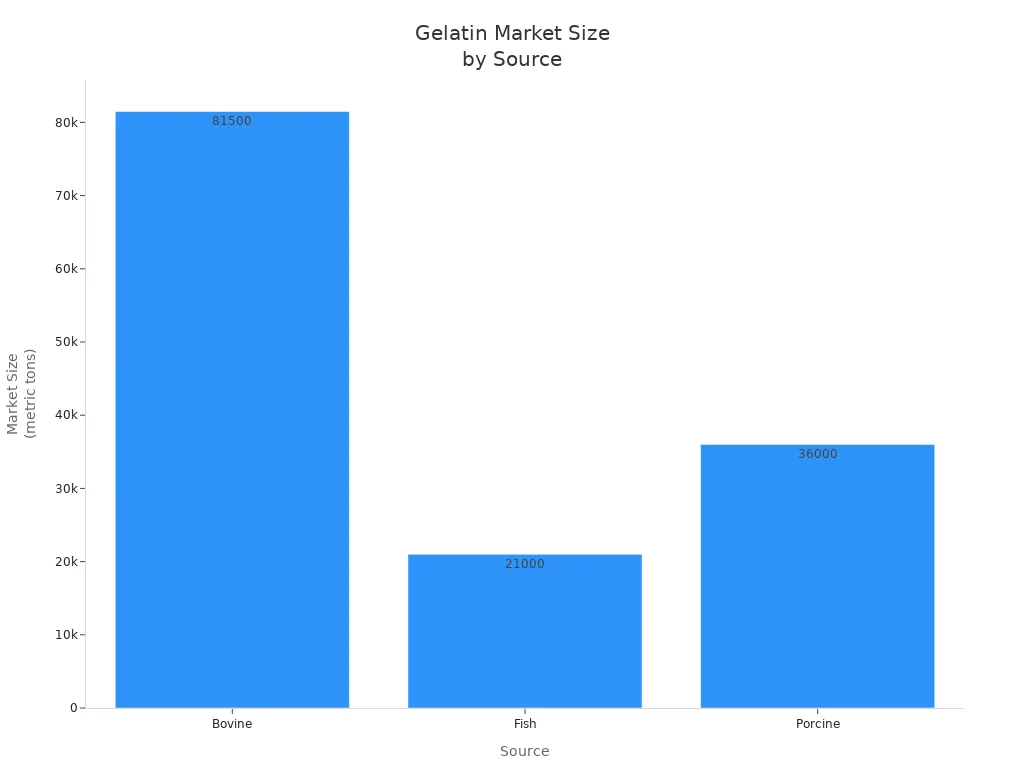
Bovine gelatin comes from cow hides and bones. The extraction process mirrors that of porcine gelatin, with careful pretreatment and hydrolysis. Producers extract gelatin using hot water or acid solutions, then refine it through filtration and drying. Bovine gelatin yields about 29.4%, preferred for viscosity in adhesives. The amino acid composition differs, with lower glycine, proline, and arginine compared to porcine gelatin. Market share remains high, with 81,500 metric tons produced annually.
| Property | Bovine Gelatin | Porcine Gelatin |
|---|---|---|
| Amino Acid Composition | Lower Glycine, Proline, Arginine | Higher Glycine, Proline, Arginine |
| Bloom Strength | Lower | Higher |
| Turbidity | Highest at pH 7 | Highest at pH 9 |
Fish Gelatin
Fish gelatin derives from fish skin and scales. Producers use similar extraction steps, but recent innovations such as fermentation and electrodialysis improve yield and reduce water waste. Fish gelatin serves specialized applications, with a market size of 21,000 metric tons and a 6.2% CAGR. Extraction methods yield high gel strength and foaming properties, making fish gelatin valuable in pharmaceuticals and cosmetics.
Sustainable sourcing and technological advances continue to shape the gelatin industry, responding to consumer demand and regulatory challenges.
Physical and Functional Properties
Gel Strength and Texture
Gelatin's ability to form gels with varying firmness and elasticity makes it a staple in both culinary and industrial applications. The gel strength, measured in Bloom units, indicates how firm a gelatin gel will become after setting. Higher Bloom values correspond to stronger, more resilient gels. Manufacturers and chefs often select gelatin based on the desired texture of the final product.
The following table summarizes typical Bloom strength values for the three main types of gelatin:
| Type of Gelatin | Typical Bloom Strength Values |
|---|---|
| Porcine Gelatin | Higher Bloom values |
| Bovine Gelatin | Slightly lower Bloom values |
| Fish Gelatin | Lower Bloom strength |
Porcine gelatin powder consistently delivers higher Bloom strength, resulting in firmer and more elastic gels. Bovine gelatin produces slightly softer gels, which still maintain good resilience. Fish gelatin, on the other hand, forms softer and less elastic gels. This property makes fish gelatin suitable for delicate desserts and pharmaceutical capsules, where a gentle texture is preferred.
Note: Gel strength not only affects mouthfeel but also determines the suitability of gelatin for specific recipes, such as marshmallows, gummies, or aspics.
Melting Point and Solubility
The melting point of gelatin influences how it behaves in recipes and products. A lower melting point allows gelatin-based foods to melt smoothly in the mouth, while a higher melting point provides stability in warmer conditions.
- Porcine gelatin: Melting point ranges from 30.23 °C to 21.46 °C, depending on processing and concentration.
- Fish gelatin: Melting points typically range from 27.25 °C to 28.65 °C.
Bovine gelatin generally exhibits a higher melting point than both porcine and fish gelatin, which makes it ideal for dishes that require heat stability, such as aspics and certain confections.
Solubility also plays a critical role in gelatin's functionality. All three types—porcine, bovine, and fish—dissolve readily in hot water, which is essential for smooth incorporation into recipes. However, none of these gelatins dissolve well in cold water, which means they must be hydrated and then heated for optimal results.
| Type of Gelatin | Solubility in Hot Water | Solubility in Cold Water |
|---|---|---|
| Porcine Gelatin | Soluble | N/A |
| Bovine Gelatin | Soluble | N/A |
| Fish Gelatin | Soluble | N/A |
Tip: For best results, always bloom gelatin in cold water before dissolving it in hot water. This process ensures even hydration and prevents clumping.
Flavor and Odor Differences
Flavor and odor play a critical role in determining the best gelatin for specific culinary applications. Each type of gelatin—porcine, bovine, and fish—offers distinct sensory characteristics that influence the final product.
Porcine gelatin powder typically presents a mild and neutral profile. Chefs often select it for desserts and confections where a clean taste is essential. Bovine gelatin, on the other hand, can introduce a slightly robust or meaty note. This characteristic makes it suitable for savory dishes, aspics, and hearty confections. Fish gelatin stands out for its delicate aroma and taste. Manufacturers prefer fish gelatin for products where subtlety is crucial, such as mousses, panna cotta, and pharmaceutical capsules.
The following points summarize how these differences impact food applications:
- Fish gelatin works well in delicate desserts. Its neutral taste and odor ensure that it does not overpower subtle flavors.
- Porcine and bovine gelatins may impart slight flavors from their animal sources. These notes can influence the overall taste of food products, especially in recipes with mild ingredients.
- Fish gelatin’s unique texture and lower melting point make it ideal for cold items. Porcine and bovine gelatins provide firmer textures, which benefit candies and savory preparations.
Tip: When preparing recipes with light or floral flavors, chefs often choose fish gelatin to preserve the intended taste. For chewy candies or savory aspics, porcine or bovine gelatin delivers the desired structure and mouthfeel.
Selecting the right gelatin ensures that the final product achieves both the intended flavor and texture, enhancing consumer satisfaction.
Culinary and Non-Culinary Uses

Best Uses for Porcine Gelatin Powder
Porcine gelatin powder serves as a versatile ingredient in many industries. Chefs and manufacturers use it in confectionery to create fruit gums, meringues, and caramels. It stabilizes foams, binds ingredients, and controls sugar crystallization. In dairy products, it improves texture in yogurts and cream cheese. It also reduces syneresis, which prevents liquid separation. Many dessert recipes rely on porcine gelatin powder for a melt-in-the-mouth texture, especially in jellies and milk-based treats. Pharmaceutical companies use it for capsules and coatings due to its clarity and neutral taste.
Tip: Porcine gelatin powder works well in recipes that require a firm, elastic gel and a clean flavor profile.
Best Uses for Bovine Gelatin
Bovine gelatin finds its place in both culinary and industrial applications. It provides structure in marshmallows, aspics, and hearty meat dishes. Its high melting point makes it suitable for foods that need to hold their shape under heat. Many chefs choose bovine gelatin for savory preparations and robust confections. The adhesive industry values its viscosity for glues and paper products. Bovine gelatin also appears in photographic films and some cosmetic items.
Best Uses for Fish Gelatin
Fish gelatin stands out in pharmaceutical and cosmetic products. Its lower melting point and delicate texture make it ideal for mousses, panna cotta, and cold desserts. Manufacturers prefer fish gelatin for capsules and creams, especially when dietary or religious restrictions apply. It offers immunological safety, which benefits sensitive consumers. Some specialty candies and desserts use fish gelatin to maintain a subtle flavor and soft consistency.
Note: Fish gelatin provides an excellent alternative for those who avoid pork or beef products due to dietary laws or allergies.
Dietary, Religious, and Allergen Considerations
Kosher and Halal Status
Religious dietary laws play a significant role in gelatin selection. In Islam, porcine gelatin remains strictly haram due to its pork origin. Bovine gelatin can be halal if sourced from cattle slaughtered according to Sharia law. Fish gelatin is generally accepted as halal, provided it comes from permissible fish species. Jewish dietary laws also impact gelatin use. Kosher certification for bovine gelatin requires adherence to specific slaughter methods, which differ from halal standards. Fish gelatin with reliable kosher certification is widely accepted by both Jewish and Muslim communities.
| Gelatin Type | Halal Certification Requirements | Kosher Certification Requirements |
|---|---|---|
| Porcine Gelatin | Strictly prohibited | Not applicable |
| Bovine Gelatin | Must follow Sharia slaughter regulations | Must follow kosher slaughter laws |
| Fish Gelatin | Generally accepted, no specific slaughter required | Widely accepted with reliable certification |
| Type of Gelatin | Dietary Restrictions in Islam |
|---|---|
| Porcine Gelatin | Considered haram (forbidden) |
| Bovine Gelatin | Halal if properly sourced |
| Fish Gelatin | Generally considered halal |
Allergen Concerns
Allergy risks differ among gelatin types. Porcine and bovine gelatin can trigger reactions in individuals with alpha-gal syndrome, as both contain galactose-alpha-1, 3-galactose. Fish gelatin typically does not contain common allergens and rarely causes allergic responses.
| Type of Gelatin | Common Allergen | Associated Allergy |
|---|---|---|
| Porcine Gelatin | Galactose-alpha-1, 3-galactose | Related to alpha-gal |
| Bovine Gelatin | Galactose-alpha-1, 3-galactose | Related to alpha-gal |
| Fish Gelatin | None reported | Rarely allergenic |
Note: Individuals with alpha-gal syndrome should avoid both porcine and bovine gelatin.
Vegetarian and Vegan Alternatives
Plant-based alternatives offer solutions for those avoiding animal-derived gelatin. The most popular options include:
- Agar agar: Extracted from red algae, forms strong gels with minimal use.
- Pectin: Sourced from apples and citrus, ideal for jams and marmalades.
- Corn starch: Thickens sauces and creams, creating a smooth texture.
- Potato starch: Versatile for soups, sauces, and some desserts.
These alternatives provide gelling and thickening properties suitable for vegetarian and vegan diets.
Gelatin selection depends on solubility, flavor, texture, melting properties, and shelf life. The table below summarizes these factors:
| Factor | Porcine Gelatin | Bovine Gelatin | Fish Gelatin |
|---|---|---|---|
| Solubility | Good | Good | Poor |
| Flavor and Odor | Minimal | Meaty | Fishy |
| Texture | Firm | Elastic | Soft |
| Melting Properties | High | High | Low |
| Shelf Life Stability | Good | Good | Poor |
Consumer preferences vary by region and dietary needs. Bovine gelatin dominates in areas with halal or kosher requirements. Fish gelatin appeals to those seeking sustainable options. Porcine gelatin remains popular where cost matters. Choosing the right gelatin involves balancing recipe requirements, cultural practices, and ethical considerations.
FAQ
What is the main difference between porcine, bovine, and fish gelatin?
Porcine gelatin comes from pigs, bovine from cows, and fish gelatin from fish. Each type has unique melting points, textures, and suitability for specific dietary needs.
Can people with dietary restrictions use fish gelatin?
Fish gelatin usually meets halal and kosher requirements. Many people with religious or dietary restrictions choose fish gelatin as a safe alternative.
Does gelatin contain any common allergens?
Porcine and bovine gelatin may trigger reactions in people with alpha-gal syndrome. Fish gelatin rarely causes allergies and does not contain common allergens.
See Also
Comparing Bovine Gelatin Powder With Fish And Pork Varieties
Understanding The Composition And Production Of Bovine Gelatin
10 Creative Methods To Incorporate Bovine Gelatin In Cooking