Got Leaks? How Polyurethane Amine Catalysts Can Help
Stubborn water leaks in concrete and masonry require an advanced solution. The financial impact of such issues is significant.
According to The American Insurance Association, water leaks result in property losses of over $10 billion annually.
The answer lies in modern polyurethane grouts. These systems use specialized Polyurethane Amine Catalysts like Dimethylaminoethoxyethanol (DMDEE). This key ingredient enables the grout to react instantly with water. It expands upon contact, creating a permanent, flexible, and waterproof seal exactly where it is needed most.
What is DMDEE and Why is it a Superior Catalyst?
Dimethylaminoethoxyethanol (DMDEE) is the engine that drives high-performance polyurethane grouts. It is a specialized catalyst that precisely manages the chemical reaction needed to stop leaks. Understanding its role and properties reveals why it is the superior choice for professional waterproofing.
Understanding the Role of DMDEE
DMDEE is a high-performance tertiary amine catalyst. Professionals use these types of Polyurethane Amine Catalysts to control the speed and quality of the polyurethane foam reaction. In grouting, DMDEE’s primary job is to initiate a rapid reaction when the grout encounters water. It ensures the grout expands quickly to fill cracks and voids. However, it controls this reaction. The process is not uncontrollably fast. This balance allows the foam to form a dense, uniform structure, creating a more reliable and permanent seal.
Key Chemical Properties and Advantages
The chemical makeup of DMDEE gives it a distinct advantage. Its properties are ideal for creating a tough, waterproof barrier.
| Property | Value |
|---|---|
| Viscosity @ 20 °C | 216.6 cst |
| Water Solubility | Completely miscible |
| Flash Point | 156.5 °C |
Its complete miscibility with water is crucial. This property ensures the catalyst works efficiently the moment the grout is injected into a wet environment.
When compared to other amine catalysts, DMDEE consistently demonstrates a more balanced and controllable performance profile, making it ideal for demanding waterproofing applications.
A look at its performance against other catalysts highlights this balanced profile:
| Catalyst | Reaction Type | Relative Activity | Foaming Speed | Water/Alcohol Selectivity |
|---|---|---|---|---|
| DMDEE | Water-blown | Moderate | Medium | High |
| A-1 | Water-blown | High | Fast | Medium |
| BL-11 | Water-blown | Very High | Very Fast | Very High |
| PC-5 | Water-blown | Low-Moderate | Slow | Low |
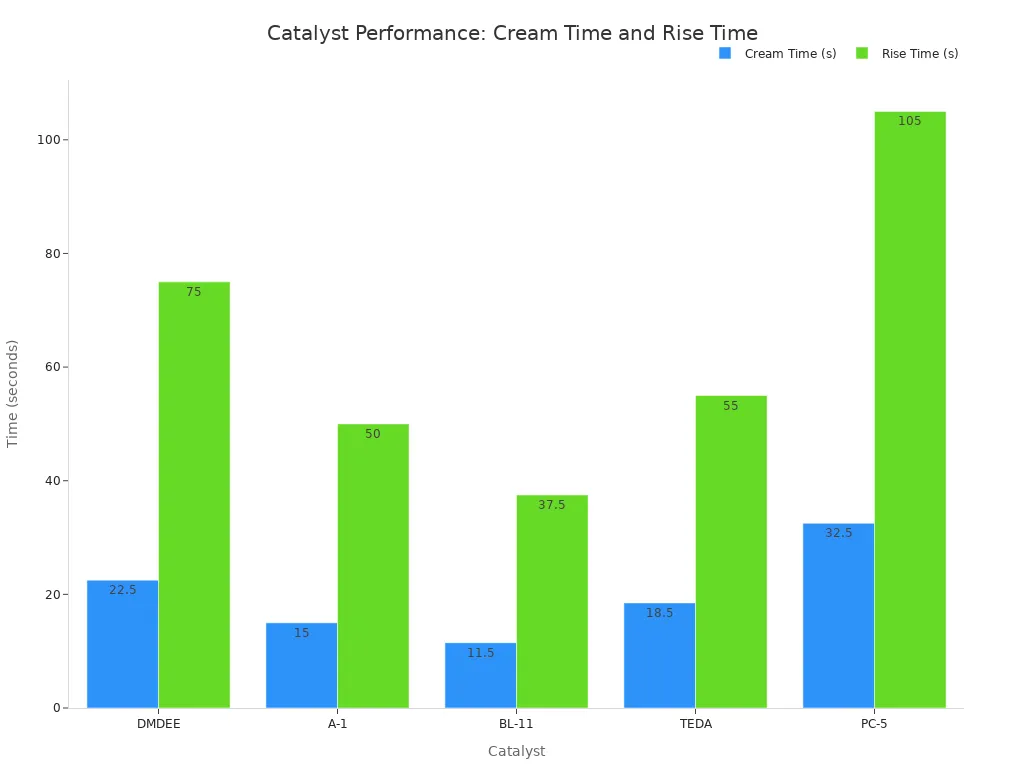
The chart below visualizes the difference in reaction times. DMDEE provides a moderate cream and rise time, giving technicians better control during application compared to overly aggressive catalysts.
Key advantages of DMDEE include:
- Balanced Reactivity: It offers a moderate reaction speed. This avoids the poor skin formation and uneven cells caused by very fast catalysts.
- High Water Selectivity: It primarily reacts with water. This focus minimizes premature gelling and creates a better foam structure.
- Superior Foam Quality: The controlled reaction produces excellent core stability and uniform cells for a durable, long-lasting seal.
The Power of Polyurethane Amine Catalysts in Grouting
Polyurethane amine catalysts are the driving force behind effective waterproofing grouts. They transform a liquid resin into a solid, water-blocking foam. The catalyst's specific properties determine the speed, structure, and durability of the final seal. A high-quality catalyst like DMDEE ensures the grout performs reliably under demanding conditions, especially when stopping active leaks.
How DMDEE Accelerates the Sealing Process
DMDEE provides the rapid response needed to stop flowing water in its tracks. When a technician injects the polyurethane grout into a wet crack, the DMDEE catalyst immediately initiates a chemical reaction with the water. This process is both fast and controlled, allowing for a highly effective seal.
The sealing action unfolds in a clear sequence:
- Injection: A low-viscosity grout containing the DMDEE catalyst is injected directly into the leaking crack or void.
- Reaction: The grout makes contact with water. DMDEE's high water selectivity ensures it catalyzes a powerful reaction with the water itself.
- Expansion: The grout begins to expand within seconds. It can increase its volume by up to 30 times, generating pressure that forces the foam into every tiny fissure.
- Curing: The foam quickly cures into a tough, rubber-like solid. This solidifies the seal and permanently stops the water flow.
This accelerated process is a core advantage of advanced Polyurethane Amine Catalysts. It allows technicians to work against active water pressure, something that is impossible with slower-curing materials.
Creating a Durable, Closed-Cell Foam Barrier
The quality of the waterproof seal depends entirely on the foam's structure. DMDEE excels at producing a dense, closed-cell foam. This structure is a matrix of tiny, individual bubbles that are completely sealed off from one another. Water cannot penetrate or pass through this barrier.
The result is not just a temporary plug but a permanent, monolithic seal. The closed-cell foam becomes an integral part of the structure, providing a flexible and resilient waterproofing solution that lasts for decades.
The foam created with a DMDEE catalyst offers several key characteristics:
| Feature | Benefit |
|---|---|
| Impermeability | The closed-cell structure is inherently waterproof and does not absorb water. |
| Flexibility | The cured foam remains flexible, allowing it to accommodate minor structural movements without cracking. |
| Adhesion | The foam bonds tenaciously to wet concrete, ensuring the seal stays in place. |
| Durability | It resists chemicals, mildew, and soil acids, preventing degradation over time. |
The controlled reaction guided by the catalyst is crucial. It prevents the formation of large, interconnected (open) cells, which would allow water to seep through. This makes DMDEE-catalyzed grouts a superior choice for creating a truly permanent and reliable waterproof barrier.
How DMDEE-Catalyzed Grout Outperforms Other Methods
Choosing the right waterproofing method is critical for a successful, long-lasting repair. While several options exist, DMDEE-catalyzed polyurethane grout offers distinct performance advantages over traditional methods like epoxy injection and hydraulic cement, especially when dealing with active leaks and dynamic cracks.
vs. Epoxy Injection for Active Leaks
Epoxy injection is a well-regarded method for structural concrete repair. It creates an incredibly strong, rigid bond that restores the integrity of a cracked structure. However, its effectiveness plummets when faced with an active water leak. Epoxies require a dry, clean substrate to cure properly and achieve a strong bond.
The Challenge with Epoxies and Water 💧
Active water flow presents several problems for epoxy resins:
- Water flowing through a crack can disrupt the epoxy's curing process or wash it out before it hardens.
- Most epoxies require dry surfaces, as excessive moisture prevents them from bonding correctly to the concrete.
- Technicians must first stop the leak with temporary measures before they can even attempt an epoxy injection.
This is where DMDEE-catalyzed polyurethane grout excels. It is specifically designed to work in wet environments. Instead of being hindered by water, it uses water as a reactant. The grout seeks out moisture and reacts on contact, expanding rapidly to form a flexible, waterproof seal that stops the leak from the inside out.
A second critical difference is flexibility. Epoxy cures into a hard, rigid solid. Polyurethane grout cures into a tough but flexible foam. This is vital for structures that experience thermal expansion and contraction or minor settlement.
| Feature | Cured Polyurethane Grout | Cured Epoxy Resin |
|---|---|---|
| Flexibility | Remains flexible, tolerating minor substrate movement. | Cures very hard and is less forgiving to movement. |
| Movement Tolerance | Accommodates seasonal expansion and contraction. | Requires stable substrates; can crack under stress. |
| Application Suitability | Ideal for stopping active leaks and sealing dynamic cracks. | Best for structural bonding on dry, stable surfaces. |
For active leaks, the choice is clear. Polyurethane grout provides an immediate and adaptable solution that works with water, not against it.
vs. Hydraulic Cement for Lasting Repairs
Hydraulic cement is a common quick-fix for stopping leaks. It is a powder that, when mixed with water, sets rapidly to form a hard plug. While it can stop a low-pressure leak in minutes, it is fundamentally a temporary patch, not a permanent repair. Its long-term performance is poor due to its inherent material properties.
The primary failure of hydraulic cement is its rigidity and weak adhesion. It creates a brittle surface plug that does not truly bond with the existing concrete.
Researchers note that a primary failure mode in cementitious plugs is "interface stripping," where the bond between the plug and the surrounding material breaks down under pressure or movement. The plug simply separates from the wall of the crack.
This weakness means the repair is destined to fail. Any natural movement in the concrete structure—from temperature changes or ground settlement—will cause the inflexible plug to crack or debond, allowing the leak to return. These repairs often fail within weeks or months.
In contrast, polyurethane grouts powered by advanced Polyurethane Amine Catalysts offer a durable, long-term solution. The liquid grout is injected deep into the crack, filling its entire depth. It then expands to create a tenacious bond with the concrete itself.
| Feature | Hydraulic Cement | Polyurethane Grout |
|---|---|---|
| Adhesion | Weak surface adhesion; applied in a groove. | High tensile strength; injected deep into cracks. |
| Flexibility | ❌ Brittle and rigid. | ✅ Flexible; withstands movement. |
| Durability | ⚠️ Short-term patch. | ✅ Long-term repair (lifespan of 70+ years). |
| Movement Tolerance | Cannot withstand movement; cracks again. | Easily accommodates dynamic crack movement. |
The flexible, closed-cell foam becomes an integral part of the structure. It can withstand wet/dry cycles, resist corrosion from groundwater ions, and endure freeze-thaw cycles without degrading. This ensures the repair remains effective for the life of the structure, stopping the cycle of temporary fixes and providing true peace of mind.
Practical Applications and Best Practices
DMDEE-catalyzed polyurethane grouts offer versatile and powerful solutions for a wide range of waterproofing challenges. Understanding their ideal applications and how to select the right system ensures a successful, permanent repair. Following best practices for handling is equally crucial for safety and performance.
Ideal Use Cases for Waterproofing
The effectiveness of a polyurethane grout depends on matching the product type to the specific leak conditions. Professionals primarily choose between two types of grouts: hydrophilic and hydrophobic.
-
Hydrophilic Grouts: These "water-loving" grouts are ideal for sealing cracks in continuously damp environments like basements, retaining walls, and tunnels with persistent seepage. They absorb water and form a flexible, self-healing gel or foam. This makes them perfect for sealing non-structural cracks subject to minor movement or vibration.
-
Hydrophobic Grouts: These "water-repelling" grouts are the go-to solution for stopping high-pressure, active leaks. They react with a catalyst to form a rigid, closed-cell foam that aggressively pushes water out. This makes them essential for curtain grouting behind structures, filling large voids, and stopping gushing leaks in dams or culverts.
Safety First: A Critical Best Practice 👷
Technicians must always prioritize safety when working with these materials. Proper handling includes wearing splash-proof goggles and chemical-resistant gloves. Working in a well-ventilated area is mandatory to keep vapor concentrations low. Following these protocols prevents injury and ensures a safe application environment.
Choosing a High-Performance Grouting System
Selecting a superior grouting system involves looking beyond the basic product type. Professionals evaluate several key factors to guarantee long-term performance and reliability. A high-quality system should deliver on technical specifications, certifications, and manufacturer support.
When choosing a system, look for these indicators of quality:
- Verified Performance: The product's technical data sheet (TDS) should list critical properties like viscosity, tensile strength, and adhesion strength on wet concrete (ideally >200 psi).
- Industry Certifications: Reputable products often carry certifications like NSF/ANSI 61 for use in potable water tanks or comply with ASTM standards for concrete repair.
- Manufacturer Credibility: Partner with manufacturers who are ISO 9001-certified. They should provide robust technical support, including detailed application guides and access to engineering assistance.
Ultimately, the goal is to choose a system that not only stops the leak today but also provides a durable, flexible, and permanent barrier for the life of the structure.
For stopping persistent water leaks, DMDEE-catalyzed polyurethane grout is the definitive, high-performance solution. Its ability to catalyze a rapid reaction with water ensures the formation of a tough, flexible, and impermeable barrier that other methods cannot match. This approach also offers significant environmental advantages.
Choosing a long-lasting repair method like this promotes sustainability by:
- Extending the lifespan of existing infrastructure.
- Using environmentally inert materials that do not harm soil or groundwater.
- Reducing waste from frequent demolition and replacement.
Stop managing leaks and eliminate them for good. Choose a waterproofing grout that leverages the power of a DMDEE catalyst for a fast and permanent fix.
FAQ
Is this a DIY-friendly repair?
Professionals should handle this repair. The process requires specialized high-pressure injection equipment and technical training. This ensures a safe and effective application. It is not a typical DIY project.
How long does the repair last?
A repair using DMDEE-catalyzed polyurethane grout is permanent. The flexible, waterproof foam bonds with the concrete. It is designed to last for the entire service life of the structure, often exceeding 70 years.
Can this grout be used on dry cracks?
This type of grout requires water to react and expand. For dry cracks, technicians may pre-wet the area by flushing it with water. This ensures the catalyst properly initiates the foaming reaction for a successful seal.
What makes DMDEE a better catalyst?
DMDEE provides a balanced and controlled reaction. It avoids the structural flaws caused by overly fast catalysts. This controlled speed creates a dense, uniform, closed-cell foam, resulting in a more durable and reliable waterproof seal.
See Also
Unexpected Methods for Effective Sulfur Recovery Catalyst Troubleshooting
Essential Safety Guidelines for Storing Nitric Acid Securely
Silicone Sealant: The Unsung Hero of Modern Home Construction and Decor
Understanding Nozzle Solutions for Diverse Applications: Gardening to Bioprinting
Simplifying AHRI 400/401 Heat Exchanger Assistance for Easy Understanding