Polyester(PET) Cure Wrap Tape For Vulcanization Explained Simply
Polyester(PET) Cure Wrap Tape For Vulcanization handles intense industrial demands. Manufacturers select this tape for its durable polyester material, available in both plain and twill weave. Technical specifications include thickness from 0.28 mm to 0.80 mm, width from 20 mm to 175 mm, and high temperature insulation up to 550 ℃.
| Specification | Details |
|---|---|
| Material | Polyester |
| Structure | Plain and Twill weave |
| Thickness | 0.28+/-0.01mm to 0.80+/-0.01mm |
| Width | 20mm-175mm |
| High Temperature Insulation | 550 ℃ |
| Breaking Strength | ≥3700 to ≥9800 N/50mm |
| Color | White |
Polyester(PET) Cure Wrap Tape For Vulcanization: Technical Specifications
Material Composition
Manufacturers design Polyester(PET) Cure Wrap Tape For Vulcanization using high-quality polyester film as the main component. This film comes in different thicknesses and colors to suit various industrial needs. The adhesive layer, which can be silicone or acrylic, provides reliable bonding and performance during vulcanization.
| Component | Description |
|---|---|
| Polyester Film | The primary component, available in various thicknesses and colors. |
| Adhesive | Can be silicone or acrylic, depending on application needs. |
Polyester film ensures durability and heat resistance, while the adhesive type determines the tape’s suitability for specific curing environments.
Thickness
Thickness plays a critical role in the tape’s ability to withstand pressure and heat during vulcanization. Polyester(PET) Cure Wrap Tape For Vulcanization typically ranges from 8 to 100 microns, allowing manufacturers to select the best option for their process.
| Thickness (micron) |
|---|
| 12-100 |
| 8-100 |
Thicker tapes offer greater strength and insulation, while thinner tapes provide flexibility for complex shapes.
Width and Length
Polyester(PET) Cure Wrap Tape For Vulcanization is available in a wide range of widths and lengths. Standard widths range from 20 mm to 175 mm, accommodating different hose diameters and industrial requirements. Lengths vary to meet production volume and application needs, ensuring efficient coverage and minimal waste.
Tip: Selecting the correct width and length helps reduce material costs and improves process efficiency.
Tensile Strength and Elongation
Tensile strength measures how much force the tape can withstand before breaking. Polyester(PET) Cure Wrap Tape For Vulcanization demonstrates impressive tensile strength, which increases with thickness. Elongation indicates the tape’s ability to stretch without losing integrity.
| Thickness (μm) | Tensile Strength (kgf/m²) |
|---|---|
| 12μm | 0.18 |
| 15μm | 0.22 |
| 25μm | 0.37 |
| 38μm | 0.58 |
| 50μm | 0.75 |
| 75μm | 1.12 |
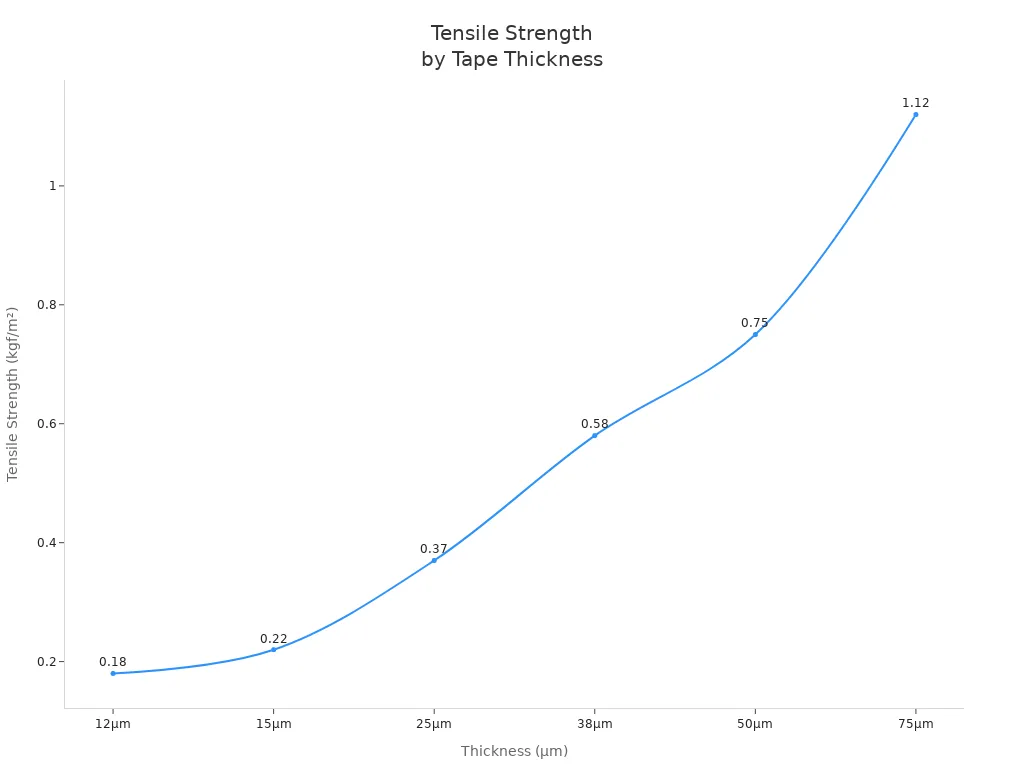
Manufacturers measure tensile strength by dividing the maximum load by the bonding area. High tensile strength ensures the tape maintains compressive force, preventing hose deformation and delamination during vulcanization.
Temperature Resistance
Polyester(PET) Cure Wrap Tape For Vulcanization withstands high temperatures, performing effectively up to 400°F. The tape maintains its structural integrity during short-term exposure to heat. Prolonged exposure, however, can affect adhesion and strength. Manufacturers must consider both the temperature and duration of the vulcanization process to ensure optimal tape performance.
Adhesion Properties
Adhesion properties determine how well the tape bonds to surfaces under heat and pressure. Manufacturers test adhesion using the inclined rolling ball method, which provides repeatable results and quality control.
| Testing Method | Description |
|---|---|
| Inclined Rolling Ball Method | A fast and easy method for initial adhesion testing with good repeatability and quality control. |
| Key Considerations | 1. Constant thickness of adhesive layer. 2. Proper bonding between adhesive and backing material. 3. Stiffness of backing material should not affect adhesion. |
| Applications | Suitable for high temperature and electric environments, automotive, electronic, and coating industries. |
- Polyester(PET) Cure Wrap Tape For Vulcanization provides compressive force, eliminating voids and preventing delamination.
- The tape maintains hose shape and integrity under heat, preventing deformation.
- Polyester tape offers higher and more controlled compressive force compared to other materials.
Surface Finish and Color
Surface finish and color options allow manufacturers to match tape to specific applications and visual requirements. Polyester(PET) Cure Wrap Tape For Vulcanization is available with film backing and a variety of adhesive types.
| Surface Finish | Color Options |
|---|---|
| Film Backing | Black, Blue, Clear, Green, Red, Yellow |
| Adhesive Type | Silicone, Acrylic |
| Thickness | 1.0mil to 5.0mil |
Color coding helps with identification and process control in industrial settings.
Packaging Options
Packaging affects both shelf life and usability. Polyester(PET) Cure Wrap Tape For Vulcanization meets ASTM D5486 standards and comes with a polyester film backing and hot melt or synthetic rubber resin adhesive. Standard packaging includes a 3-inch core diameter and options for carrier and adhesive thickness.
| Feature | Details |
|---|---|
| Standards Met | ASTM D5486, Type II, Class 2 |
| Carrier/Backing | polyester (PET) film |
| Adhesive | hot melt/synthetic rubber resin |
| Thickness | 3 mils (carrier, adhesive), 2 mils (carrier) |
| Adhesion | 65 ounces per inch (to stainless steel) |
| Tensile Strength | 55 pounds per inch (longitudinal) |
| Service/Operating Temperature | -45°F to 140°F |
| Application Temperature | -10°F to 120°F |
| Elongation | 100% |
| Core | 3" diameter |
| Country of Origin | United States |
- High temperatures can accelerate tape degradation.
- Excessive humidity may compromise packaging and tape integrity.
- Direct sunlight can reduce tape performance.
- Extreme conditions can cause blocking, where tape layers stick together.
- Condensation from temperature changes can affect usability.
Proper packaging and storage protect the tape’s quality and ensure reliable performance during vulcanization.
Why Technical Specifications Matter and How to Choose the Right Tape
Impact of Specifications on Vulcanization Performance
Technical specifications determine how Polyester(PET) Cure Wrap Tape For Vulcanization performs during the curing process. The tape’s thickness affects its ability to withstand pressure and heat. Thicker tape provides more insulation and strength, which helps maintain the shape of rubber hoses and prevents deformation. Tensile strength ensures the tape holds up under stretching forces, keeping the product intact throughout vulcanization.
Temperature resistance is another critical factor. The tape must endure high temperatures without losing adhesion or structural integrity. If the tape cannot handle the heat, it may fail, leading to defects in the finished product. Adhesion properties also play a role. Strong adhesion keeps the tape in place, preventing gaps or delamination. Manufacturers rely on these specifications to achieve consistent, high-quality results.
Tip: Always match the tape’s specifications to the demands of your vulcanization process to avoid costly errors.
Suitability for Different Vulcanization Processes
Different vulcanization processes require specific tape characteristics. For example, high-pressure curing needs tape with greater tensile strength and thickness. Low-temperature processes may allow for thinner tape with moderate adhesion. The type of rubber and the shape of the product also influence tape selection.
Manufacturers consider the environment where the tape will be used. Exposure to solvents, humidity, or fumes can affect bonding. Selecting tape with the right adhesive type ensures reliable performance in challenging conditions. Polyester(PET) Cure Wrap Tape For Vulcanization offers versatility, making it suitable for automotive hoses, industrial tubing, and electrical insulation.
Note: Evaluate the curing method and environmental factors before choosing tape for your application.
Checklist for Selecting Polyester(PET) Cure Wrap Tape For Vulcanization
Selecting the right tape involves several important factors. The table below summarizes what manufacturers should consider:
| Factor | Description |
|---|---|
| Type of adhered material | The molecular structure and surface roughness affect the bonding effect of the product. |
| Surface contaminants | Dust, oil, and moisture can affect bonding; cleaning with acetone or alcohol is recommended. |
| Adhesion pressure | The pressure during adhesion affects bond tightness; suitable pressure varies by process requirements. |
| Adhesion temperature | Appropriate temperature is crucial to avoid residue or insufficient adhesion, improving filling properties. |
| Usage environment | Solvent-like liquids, fumes, or humidity can impact bonding; suitable environments should be chosen. |
| Other reasons | Expired products, improper storage, and mismatched parameters can also affect performance. |
Manufacturers should review each factor before making a decision. Cleaning the surface and applying the correct pressure and temperature help maximize tape performance. Proper storage and matching tape specifications to process requirements ensure reliable results.
✅ Use this checklist to guide your selection and achieve optimal vulcanization outcomes.
Understanding technical specifications helps manufacturers select the right tape for each vulcanization process. Key factors include temperature resistance, chemical durability, and strong adhesion. Reliable tape performs well in electronics, aerospace, and automotive settings. Using the checklist ensures informed decisions and consistent, high-quality results.