How PET Cure Wrap Tape Solves Hose Manufacturing Defects
Manufacturers require reliable methods to produce high-quality hoses for a rapidly growing market. The demand for automotive and industrial hoses is projected to expand significantly in the coming years.
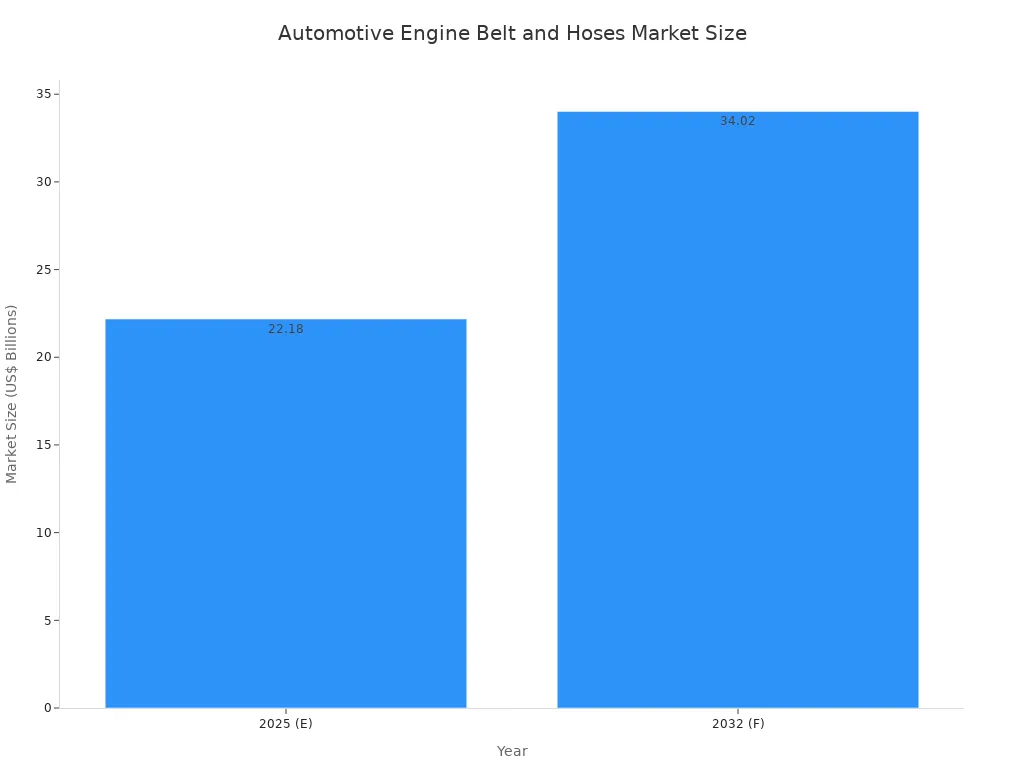
Note: Maijie Textiles' Polyester(PET) Cure Wrap Tape For Vulcanization applies consistent, high-tensile pressure during curing. This process, unlike some applications using Nylon Curing Tape, compacts rubber, ensures uniform dimensions, and creates a flawless surface finish. It directly prevents common defects like ovality and delamination.
Achieving Dimensional Stability and a Perfect Surface
A hose's final dimensions and surface quality are critical for its performance and safety. The application of external pressure during vulcanization is the most effective method to control these outcomes. Polyester(PET) Cure Wrap Tape For Vulcanization provides the necessary compressive force to guarantee a perfect product, free from common physical defects.
How Tape Ensures Uniform Hose Diameter
Consistent hose diameter is essential for creating secure connections and ensuring proper flow rates. Manufacturers must adhere to strict industry standards for dimensional accuracy. The tape plays a vital role in meeting these specifications. It wraps tightly around the uncured hose, applying uniform pressure along its entire length. This force compacts the rubber compound against the internal mandrel, eliminating variations in wall thickness and ensuring the final inside diameter is precise.
The International Organization for Standardization (ISO) outlines these requirements in standard ISO 1307. This standard classifies hoses based on their manufacturing process to control the inside diameter. Using a high-quality cure wrap tape is especially critical for producing mandrel-built hoses that meet the tightest tolerances.
- Type A: Hoses built on a rigid mandrel for the highest level of diameter control.
- Type B: Hoses built on a flexible mandrel.
- Type C: Hoses made without a mandrel.
- Type D: Flexible extruded plastics hoses.
How Tape Prevents Ovality and Sagging
During the high-heat curing process, uncured rubber is soft and susceptible to gravity. Without proper support, a hose can easily deform, leading to an oval shape (ovality) or sagging along its length. These defects compromise the hose's structural integrity and ability to form a proper seal.
The cure wrap tape acts as a strong, temporary exoskeleton. Its high-tensile strength provides continuous support around the hose's circumference. This external reinforcement holds the hose in a perfectly round shape throughout the entire vulcanization cycle. The tape effectively counteracts the forces of gravity and internal material shifts, preserving the intended circular profile from start to finish.
How Tape Creates a Smooth, Glossy Finish
The external appearance of a hose is often an indicator of its overall quality. A smooth, glossy surface is not just for aesthetics; it signifies a well-compacted and properly cured product. The cure wrap tape is directly responsible for creating this flawless finish.
The pressure from the tape smooths the outer rubber surface, pressing it into a uniform, dense layer. High-performance tapes from Maijie Textiles are engineered with exceptionally smooth surfaces. Many also incorporate release coatings. This special coating ensures the tape separates cleanly from the rubber after curing, preventing any imprints, marks, or surface voids. The result is a hose with a professional, glossy appearance that is free of imperfections.
Using Polyester(PET) Cure Wrap Tape For Vulcanization to Boost Structural Integrity
A hose's true strength lies within its internal structure. Multi-layer hoses, which combine rubber with reinforcement materials like fabric or steel wire, must function as a single, unified unit. The Polyester(PET) Cure Wrap Tape For Vulcanization is instrumental in achieving this structural cohesion. It provides the critical compressive force during curing that transforms separate layers into a robust, integrated product.
Preventing Delamination with Enhanced Layer Bonding
Delamination occurs when the layers of a hose separate from each other. This defect severely compromises the hose's pressure rating, flexibility, and overall safety, often leading to premature failure. A strong bond between the inner tube, reinforcement layers, and outer cover is non-negotiable.
The primary cause of delamination during manufacturing is a weak or incomplete bond between layers. This can happen for several reasons.
Common Manufacturing Faults Leading to Delamination:
- Material Incompatibility: Using different rubber compounds with mismatched properties can prevent them from bonding securely.
- Process Errors: Uneven mixing of rubber compounds, improper temperature control during mixing, or insufficient vulcanization time can create weak points at the layer interfaces.
- Molding Defects: Trapped air between layers during assembly can form bubbles that prevent the surfaces from making contact and bonding during the cure.
The cure wrap tape directly counteracts these issues by applying intense, uniform pressure. This force physically presses the layers together, eliminating any potential gaps or air pockets. The intimate contact ensures that the rubber compounds flow and cross-link effectively across the layer boundaries, creating a powerful chemical and mechanical bond. Manufacturers can validate this bond strength through standardized quality checks like delamination strength testing and peel strength testing, ensuring the final product meets rigorous performance standards.
Reducing Porosity and Internal Voids
Porosity refers to the presence of tiny holes or voids within the rubber. These imperfections act as stress concentration points, creating weak spots that can lead to cracks or ruptures when the hose is pressurized. Porosity is typically caused by trapped air, moisture, or volatile organic compounds (VOCs) that turn into gas during the high heat of vulcanization.
The Polyester(PET) Cure Wrap Tape For Vulcanization provides a simple yet powerful solution. As the tape is wrapped around the hose, its compressive force compacts the raw rubber compound. This pressure effectively squeezes out trapped air and other volatile substances before the curing process begins. ⚙️
During vulcanization, the tape maintains this pressure, preventing any released gases from expanding and forming bubbles or voids. It forces the rubber to cure into a solid, dense, and non-porous structure. The result is a hose with superior integrity, enhanced resistance to pressure and environmental factors, and a significantly longer operational lifespan. By eliminating these internal micro-defects, the tape ensures the hose's structure is as flawless on the inside as it is on the outside.
Optimizing the Curing Process for Uniform Results
A uniform cure is essential for producing a reliable and durable hose. The vulcanization process must be precisely controlled to ensure every part of the hose achieves the same structural properties. Cure wrap tape is a key tool for achieving this consistency.
Improving Heat Transfer for an Even Cure
Consistent heat distribution is critical during vulcanization. Uneven heating can create significant problems for the final product.
An inconsistent cure directly affects a hose's mechanical properties. It can lead to variations in hardness, causing issues like uneven compression, premature wear, or poor sealing. The tape helps prevent this by pressing the hose assembly tightly, which improves thermal conductivity. This ensures heat from the curing medium, such as steam or a salt bath, transfers efficiently and evenly through the rubber. The result is a uniformly cross-linked structure with consistent hardness and strength along the entire hose length.
Compacting the Compound to Eliminate Blisters
Blisters are surface or internal defects caused by trapped gas expanding during vulcanization. These voids create weak points that can lead to catastrophic hose failure under pressure. The formation of blisters often stems from several root causes during material preparation and processing.
- Excess moisture in the rubber or reinforcement materials.
- Air trapped within the compound during mixing.
- Volatile components that turn to gas at high temperatures.
The Polyester(PET) Cure Wrap Tape For Vulcanization compacts the raw compound with immense pressure. This force squeezes out trapped air and moisture before they can cause problems. During the heating cycle, the tape maintains this tight wrap, preventing any remaining gases from expanding and forming blisters. It forces the rubber to cure into a dense, solid material, ensuring the hose's structural integrity is free from these critical defects.
PET cure wrap tape offers a direct solution to manufacturing defects. It provides the compressive force for dimensional stability and a flawless surface. The Polyester(PET) Cure Wrap Tape For Vulcanization guarantees superior layer adhesion and facilitates a uniform cure. Integrating this essential tool allows manufacturers to reduce scrap rates and boost production efficiency.