Exploring the Role of Plate and Shell Heat Exchangers in Process Optimization
Industrial plants rely on precise temperature control to maximize productivity. A plate and shell heat exchanger helps operators boost energy efficiency, reduce operational costs, and maintain process reliability. Engineers select models based on fluid properties and application demands. Choosing the right equipment ensures optimal performance and long-term value.
Plate and Shell Heat Exchanger Working Principles
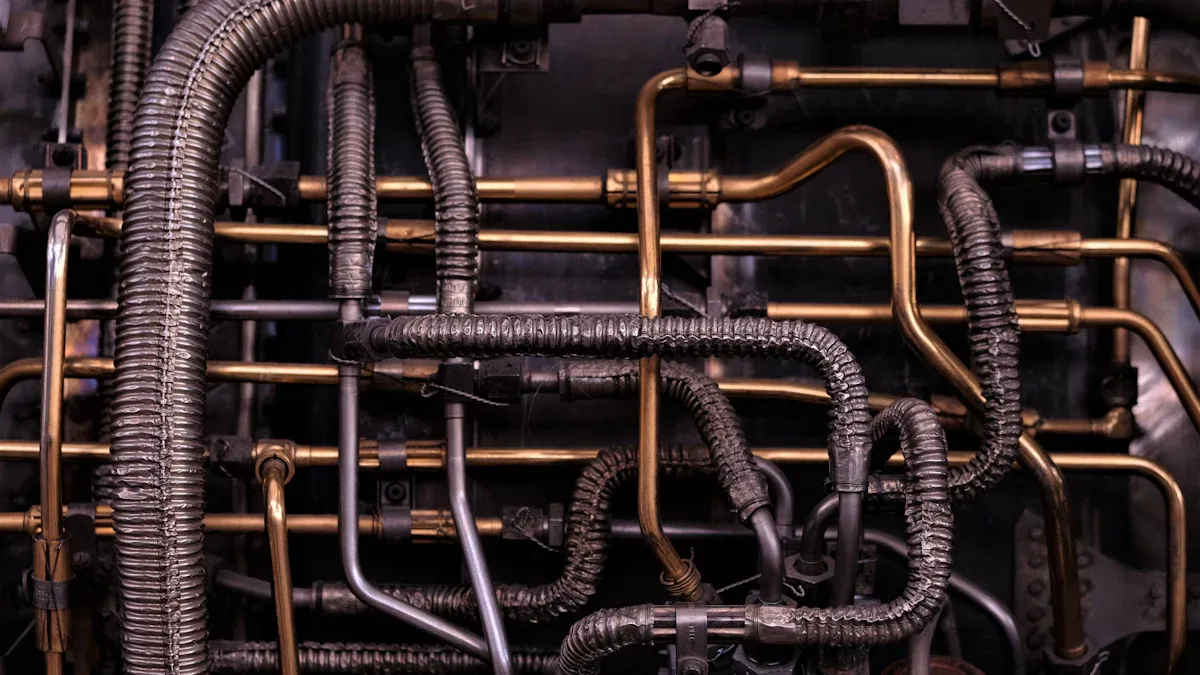
Plate Heat Exchanger Design
Engineers design plate heat exchangers with multiple thin, corrugated metal plates. These plates stack together to create separate channels for hot and cold fluids. The fluids flow in alternate channels, which allows efficient heat transfer across the large surface area. Gaskets or welding seal the plates and prevent mixing. Operators can easily expand or clean these exchangers by removing or adding plates.
Shell Heat Exchanger Design
Shell heat exchangers use a bundle of tubes enclosed in a cylindrical shell. One fluid flows through the tubes, while the other moves around them inside the shell. Baffles inside the shell direct the flow and increase turbulence. This design supports high-pressure applications and handles fluids with particles or high viscosity. Maintenance teams often choose shell designs for their durability and ability to process large volumes.
Heat Transfer Mechanisms
A plate and shell heat exchanger relies on conduction and convection to transfer heat between fluids. The metal plates or tube walls conduct heat from the hot side to the cold side. Fluid movement on both sides enhances convection, which increases the rate of heat transfer. Efficient designs maximize surface area and turbulence, which improves thermal performance.
Note: Proper selection of a plate and shell heat exchanger design ensures optimal heat transfer and process efficiency.
Plate and Shell Heat Exchanger Performance Comparison
Thermal Efficiency Analysis
Engineers evaluate thermal efficiency to determine how well a heat exchanger transfers energy between fluids. Plate heat exchangers often deliver higher thermal efficiency than shell designs. The large surface area of the plates allows rapid heat exchange. Turbulent flow between the plates increases the rate of heat transfer. Shell heat exchangers perform well in applications with high pressure or large volumes, but their efficiency may decrease if the flow becomes laminar.
| Type | Typical Thermal Efficiency (%) | Key Advantage |
|---|---|---|
| Plate Heat Exchanger | 85-95 | High surface area |
| Shell Heat Exchanger | 75-85 | Handles high pressure |
Tip: Selecting a plate and shell heat exchanger with the right design improves energy recovery and reduces waste.
Pressure Drop and Flow Considerations
Pressure drop affects the energy required to move fluids through a heat exchanger. Plate heat exchangers create higher pressure drops due to narrow channels and turbulent flow. Operators must consider pump capacity when choosing this type. Shell heat exchangers offer lower pressure drops, which suits processes with high flow rates or sensitive fluids. Engineers analyze system requirements to balance efficiency and pressure loss.
- Plate heat exchangers: Higher pressure drop, increased turbulence
- Shell heat exchangers: Lower pressure drop, suitable for large flows
Maintenance and Cleaning Requirements
Maintenance teams prefer equipment that is easy to clean and service. Plate heat exchangers allow quick access by removing individual plates. This design simplifies cleaning and reduces downtime. Shell heat exchangers require more effort to clean, especially when handling viscous or fouling fluids. Regular maintenance extends the service life of both types and ensures consistent performance.
Note: Frequent cleaning prevents scaling and improves the reliability of any plate and shell heat exchanger.
Application Suitability
Each heat exchanger type fits specific industrial needs. Plate heat exchangers work best in food processing, HVAC, and chemical industries where high efficiency and compact size matter. Shell heat exchangers suit oil refineries, power plants, and heavy-duty applications that demand durability and high pressure tolerance.
Common Applications:
- Plate heat exchangers: Dairy, breweries, pharmaceuticals
- Shell heat exchangers: Petrochemical, steam generation, cooling water circuits
Engineers assess process conditions, fluid properties, and operational goals before selecting a plate and shell heat exchanger for optimal results.
Process Optimization Factors for Plate and Shell Heat Exchanger
Energy Savings and Sustainability
Industrial facilities strive to reduce energy consumption. Plate and shell heat exchangers help operators recover waste heat and lower fuel usage. These systems transfer thermal energy efficiently, which minimizes losses. Many plants choose models with high heat transfer rates to support sustainability goals. By using less energy, companies decrease greenhouse gas emissions. Engineers often recommend regular performance monitoring to maintain optimal efficiency.
Tip: Selecting a heat exchanger with a compact design can further reduce energy requirements and support green initiatives.
Operational Cost Reduction
Cost control remains a priority in process industries. Plate and shell heat exchangers offer significant savings by improving heat recovery and reducing utility expenses. Maintenance teams benefit from designs that simplify cleaning and servicing. Fewer breakdowns mean lower repair costs and less downtime. Operators often track performance metrics to identify opportunities for further cost reduction.
| Factor | Impact on Costs |
|---|---|
| Efficient heat transfer | Lower energy bills |
| Easy maintenance | Reduced labor costs |
| Durable construction | Fewer replacements |
Reliability and Service Life
Reliability ensures uninterrupted production. Plate and shell heat exchangers feature robust materials that resist corrosion and fouling. Engineers select models with proven durability for demanding environments. Regular inspections and preventive maintenance extend service life. Many facilities implement monitoring systems to detect issues early. Reliable equipment supports consistent output and long-term process optimization.
Selecting the Right Plate and Shell Heat Exchanger for Industrial Applications
Process Requirements and Fluid Properties
Engineers start by analyzing the process requirements. They examine the temperature range, pressure levels, and flow rates. Each process demands specific thermal performance. Fluid properties play a critical role in this selection. Viscosity, corrosiveness, and particulate content affect the choice of heat exchanger. For example, highly viscous fluids may require a shell design because it handles thicker substances with ease. Plate designs suit clean, low-viscosity fluids that need rapid heat transfer.
Operators often use a checklist to match heat exchanger types to process needs:
- Temperature and pressure limits
- Fluid viscosity and composition
- Required heat transfer rate
- Fouling tendency
Tip: Always verify fluid compatibility with the materials used in the heat exchanger to prevent corrosion and extend service life.
Space and Installation Constraints
Industrial facilities often face space limitations. Engineers measure available floor area and vertical clearance before selecting equipment. Plate heat exchangers offer a compact footprint and stackable design. These units fit into tight spaces and allow easy expansion. Shell heat exchangers require more room due to their cylindrical shape and tube bundle. Facilities with limited space prefer plate models for their flexibility.
A comparison table helps operators evaluate installation options:
| Factor | Plate Heat Exchanger | Shell Heat Exchanger |
|---|---|---|
| Footprint | Small | Large |
| Expansion | Easy | Difficult |
| Maintenance Access | Simple | Moderate |
Note: Consider future expansion plans when choosing a heat exchanger. Compact units simplify upgrades and maintenance.
Budget and Lifecycle Costs
Budget constraints influence equipment selection. Initial purchase price varies between plate and shell heat exchanger models. Plate designs often cost less upfront and require lower installation expenses. Shell models may have higher initial costs but offer durability for demanding applications. Lifecycle costs include maintenance, energy consumption, and replacement parts. Operators calculate total cost of ownership to make informed decisions.
Key factors affecting lifecycle costs:
- Purchase price
- Installation expenses
- Maintenance frequency
- Energy efficiency
- Replacement intervals
Facilities that prioritize long-term savings invest in models with high reliability and low maintenance needs. Engineers recommend evaluating both short-term and long-term costs to optimize process performance and financial outcomes.
Plate and shell heat exchangers play a vital role in process optimization. Engineers improve efficiency, reduce costs, and support sustainability by selecting the right model.
- Evaluate process needs
- Consider space and budget
- Choose reliable equipment for long-term performance
Careful selection ensures consistent results in industrial applications.
FAQ
What is the main advantage of plate heat exchangers?
Plate heat exchangers provide high thermal efficiency. Their compact design allows engineers to save space and achieve rapid heat transfer in many industrial processes.
How often should operators clean shell heat exchangers?
Operators should inspect and clean shell heat exchangers regularly. Most facilities schedule maintenance every six to twelve months, depending on process conditions and fouling rates.
Can plate and shell heat exchangers handle corrosive fluids?
Engineers select materials like stainless steel or titanium for corrosive fluids. Proper material choice ensures long service life and reliable performance in harsh chemical environments.
See Also
Evaluating Performance of Shell Versus Plate Heat Exchangers
Ways to Reduce Environmental Impact Using Plate Heat Exchangers
Comprehensive Guide on the Functionality of Plate Heat Exchangers
Innovations in Heat Exchanger Manufacturing Boost Industrial Efficiency
Understanding Advantages of Commercial Heat Exchangers for 2025