Understanding the Role of X-ray Inspection in Modern Drug Manufacturing
Pharmaceutical x-ray inspection plays a critical role in maintaining drug safety and quality. Many manufacturers rely on this technology for packaging validation and quality control.
- More than 50% of pharmaceutical companies have integrated X-ray systems for these purposes.
- Over 45% use automated X-ray inspection for non-destructive testing and dosage verification.
Scientific studies show that X-ray scanning does not compromise the quality of drug tablets under standard conditions.
Pharmaceutical X-ray Inspection and Product Safety
Preventing Contamination in Drug Manufacturing
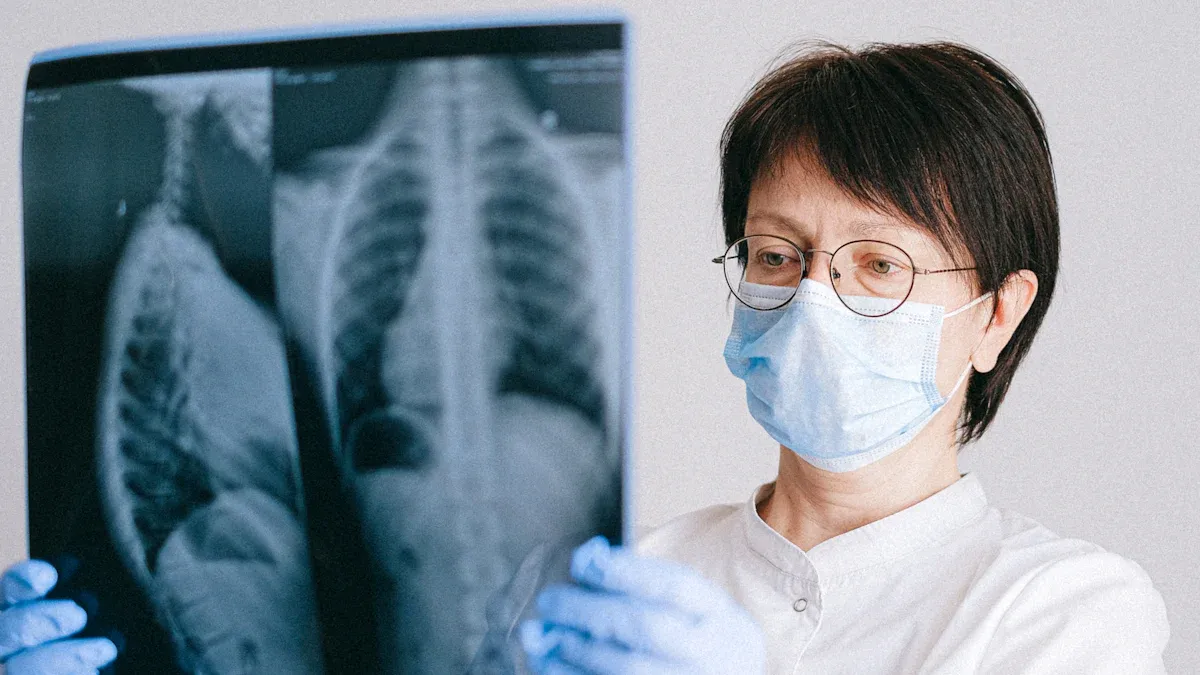
Drug manufacturing environments face constant risks from foreign contaminants. Pharmaceutical x-ray inspection systems serve as a frontline defense against these hazards. They can identify and remove a wide range of contaminants before products reach patients. Common contaminants detected by these systems include:
- Metal particles that may pose health risks
- Glass and ceramic fragments that threaten product integrity
- Stone and bone pieces, which sometimes enter raw materials
- Plastic and rubber particles from equipment or packaging
- Chemical impurities and adulterants that compromise safety
Manufacturers rely on pharmaceutical x-ray inspection to ensure that every batch meets strict safety standards. These systems operate in real time, allowing immediate action when contamination occurs. This proactive approach protects both consumers and brand reputation.
Ensuring Consistent Quality Standards
Maintaining consistent quality is essential in pharmaceutical production. X-ray inspection technology strengthens quality control processes at multiple stages. It helps minimize the risk of defective or contaminated products entering the market. Key contributions of these systems include:
- Non-destructive testing of sensitive drug products
- Real-time detection of defects such as cracks, misaligned tablets, or incorrect sealing
- Compliance with Good Manufacturing Practice (GMP) standards
- Reduction of product loss during quality checks
Pharmaceutical x-ray inspection machines undergo thorough validation, including installation qualification (IQ), operational qualification (OQ), and performance qualification (PQ) protocols. These steps demonstrate compliance with GMP and FDA guidelines, forming the foundation of a robust pharmaceutical quality system.
Research indicates that when implemented correctly, X-ray inspection enhances product integrity, strengthens safety, and improves quality control, which ultimately helps in detecting contaminants and preventing product recalls.
Manufacturers who invest in advanced inspection systems build consumer trust and meet global regulatory expectations. Consistent quality assurance supports patient safety and reduces costly recalls.
Pharmaceutical X-ray Inspection for Regulatory Compliance
Meeting Global Regulatory Requirements
Regulatory agencies set strict standards for drug manufacturing. Companies must follow these rules to ensure product safety and maintain market access. Pharmaceutical x-ray inspection helps manufacturers meet these requirements by providing reliable detection of contaminants and supporting quality assurance.
The following table summarizes the main global regulations that impact x-ray inspection in pharmaceutical manufacturing:
| Regulation/Standard | Description |
|---|---|
| Food Safety Modernization Act (FSMA) | Aims to ensure the safety of food and pharmaceutical products through preventive measures. |
| Hazard Analysis and Critical Control Points (HACCP) | A systematic approach to food safety that identifies and controls hazards. |
| Good Manufacturing Practices (GMP) | Regulations that ensure products are consistently produced and controlled according to quality standards. |
Manufacturers who implement x-ray inspection systems can demonstrate compliance with these regulations. They use these systems to identify hazards, control risks, and document preventive actions. Regulatory audits often require proof of contamination control and consistent quality checks. X-ray inspection provides this evidence, supporting both domestic and international market access.
Note: Regulatory compliance not only protects consumers but also strengthens a company's reputation in the global pharmaceutical industry.
Supporting Documentation and Traceability
Accurate record-keeping and traceability are essential in pharmaceutical manufacturing. Companies must document every step of the production process. Pharmaceutical x-ray inspection systems support this requirement by generating electronic records and audit trails.
The table below highlights key features that enhance documentation and traceability:
| Feature | Description |
|---|---|
| User Authorization | Ensures that only authorized personnel can access and modify records, enhancing data security. |
| Audit Trail | Captures a history of all changes to records, ensuring accountability and traceability. |
| Data Output to USB | Allows for secure data transfer and backup, maintaining data integrity. |
| Data Encryption/Decryption | Protects sensitive data from unauthorized access, ensuring compliance with data protection regulations. |
| Record Retrieval | Facilitates easy access to parameter and operation history, supporting efficient audits and inspections. |
These features help companies respond quickly to regulatory inspections. They can retrieve detailed records, show evidence of compliance, and trace any issues back to their source. Automated audit trails and secure data management reduce the risk of human error and data tampering.
Pharmaceutical x-ray inspection systems play a vital role in modern documentation practices. They help manufacturers maintain transparency, improve accountability, and meet the expectations of regulatory authorities worldwide.
Main Functions of Pharmaceutical X-ray Inspection
Detecting Foreign Particles and Contaminants
Pharmaceutical x-ray inspection systems play a crucial role in identifying unwanted materials in drug products. These systems can detect a wide range of foreign particles, even those as small as 80-100μm. Common contaminants include:
- Metal shavings and steel fragments
- Glass pieces and glass fragments
- Mineral stones
- High-density plastics and polymers
- Dense organic materials such as hair or nylon strings
Operators rely on these systems to catch contaminants that may enter during manufacturing or packaging. The ability to spot both metallic and non-metallic particles helps ensure product safety before distribution.
In-line Quality Control of Tablets and Capsules
Manufacturers use x-ray inspection to maintain high standards during production. These systems provide real-time detection of hidden flaws and foreign objects without damaging the product. Key benefits include:
- Detection of metal fragments and verification of tablet counts in bottles
- Identification of missing tablets and seal integrity in blister packs
- Confirmation of contamination and fill levels in capsule containers
X-ray inspection systems enhance product safety and help companies comply with regulatory standards. They often outperform manual inspection by catching defects that are not visible to the naked eye.
Analyzing Product Structure and Fill Levels
Advanced imaging technologies allow pharmaceutical x-ray inspection systems to analyze the internal structure of tablets and capsules. These systems verify that each unit meets precise specifications, which is essential for dosage accuracy. High-resolution imaging can:
- Determine the distribution of active ingredients and excipients
- Identify counterfeit products by comparing internal structures
- Evaluate changes in product structure over time
X-ray inspection also verifies fill levels in opaque bottles quickly and without opening the packaging. This non-destructive approach maintains product integrity and supports efficient, high-volume production.
Safety of Pharmaceutical X-ray Inspection
Scientific Studies on X-ray Effects
Researchers have examined the impact of x-ray exposure on pharmaceutical products. Their findings show that x-ray inspection does not affect the quality or effectiveness of medicines. The radiation dose used during these inspections remains much lower than the amount people receive from natural background sources each day. For example, studies have exposed model pharmaceutical substances to x-rays for up to two hours without observing any degradation. The U.S. Food and Drug Administration also confirms that the radiation dose from these inspections is less than the daily background radiation dose. This evidence demonstrates that pharmaceutical x-ray inspection protects product integrity and patient safety.
Note: The extremely low exposure levels used in pharmaceutical x-ray inspection ensure that both active ingredients and excipients remain stable throughout the process.
Regulatory Guidelines and Industry Perspectives
Regulatory agencies such as the FDA and EMA provide clear guidelines for the use of x-ray systems in drug manufacturing. These organizations require manufacturers to validate their inspection processes and document all safety measures. Industry leaders support these guidelines by adopting best practices and investing in advanced x-ray technology. They conduct regular audits and equipment maintenance to ensure compliance. Many companies also train staff to operate x-ray systems safely and efficiently. This collaborative approach between regulators and industry helps maintain high safety standards and public trust.
Benefits of Pharmaceutical X-ray Inspection
Enhanced Quality Assurance Processes
Modern drug manufacturers have documented significant improvements in quality assurance after adopting advanced inspection systems. Teams have reduced first test run preparation time by 25% and cut subsequent test run setups by 95%. Test execution time decreased by 20%, while the time required to create bugs dropped by 50%. Setup time for customized PDF reports fell by 95%. These improvements have led to faster release cycles and higher product quality. Teams now focus on strategic tasks instead of repetitive administrative work. Reliable compliance documentation has become more accessible. Companies also report a 25–30% reduction in export rejections, a 20% decrease in contamination-related customer complaints, and a 10–12% improvement in production line uptime.
Automated inspection reduces human error and enhances detection accuracy, especially when systems use artificial intelligence and machine learning.
| Evidence Point | Description |
|---|---|
| Automation | X-ray inspection automates the process, minimizing manual checks and errors. |
| Enhanced Detection | AI and machine learning improve detection accuracy. |
| Non-destructive Testing | Allows thorough checks without damaging products. |
Streamlined Manufacturing and Reduced Waste
Manufacturers rely on these systems to ensure safety, efficacy, and regulatory compliance. X-ray inspection equipment detects foreign objects, missing components, and packaging defects. As manufacturing complexity increases, companies need sophisticated solutions. Advanced image processing enables immediate decision-making, and systems can automatically remove defective products from production lines. Real-time alerts for process deviations help minimize waste. Integration with manufacturing execution systems and enterprise resource planning platforms optimizes processes and enhances efficiency.
Improved Traceability and Data Integration
Real-time data collection supports predictive maintenance and process optimization. IoT-enabled systems allow remote monitoring and control, which improves traceability. Data analytics integration helps manufacturers identify patterns and maintain consistent product quality. The integration of data from inspection systems enhances compliance with regulatory standards and provides essential documentation. This capability is crucial as regulatory requirements evolve, ensuring that companies can meet both domestic and international standards.
Emerging Applications of Pharmaceutical X-ray Inspection
Inspecting Lyophilized and Diverse Product Types
Manufacturers face new challenges as drug formulations diversify. Lyophilized products, for example, require specialized inspection methods. Traditional visual checks often fail to detect foreign matter in these products, especially when packaged in opaque containers. Recent reviews highlight the need for advanced control strategies. Non-destructive technologies, such as x-ray imaging, offer reliable solutions for these challenges.
- Automated x-ray systems now detect particulate matter in lyophilized parenteral products.
- These systems predict critical quality attributes, supporting robust quality assurance.
- X-ray imaging enhances the visibility of lyophilized cake structures, which helps assess product quality.
- Automated image-based detection methods address the limitations of manual inspection.
- Studies show that x-ray imaging effectively identifies various particulates, including those invisible to the naked eye.
Manufacturers also use x-ray inspection for non-traditional pharmaceutical products. This technology detects a wide range of contaminants, such as glass, stones, and dense plastics. It measures density differences, ensuring product integrity and safety.
Advancements in Low-Energy X-ray Systems
Technological progress drives the adoption of low-energy x-ray systems in pharmaceutical x-ray inspection. These advancements focus on improving detection accuracy, sustainability, and operational efficiency.
| Advancement Type | Description |
|---|---|
| Digital X-ray systems | Innovations enhance detection capabilities. |
| Real-time imaging | Provides immediate feedback during inspection. |
| AI-enhanced defect detection | Increases accuracy in identifying defects. |
| Sustainability focus | Low-energy systems reduce environmental impact. |
| Miniaturization | Compact units enable on-site inspections. |
| IoT integration | Improves connectivity and data sharing. |
| Machine learning | Boosts efficiency of defect detection algorithms. |
| High-resolution cameras | Capture detailed images for real-time analysis. |
| Advanced X-ray detectors | Facilitate high-speed image capture and immediate feedback. |
These innovations help manufacturers maintain high standards while reducing operational costs and environmental impact.
Pharmaceutical x-ray inspection supports safe and effective drug manufacturing. Scientific research and regulatory standards confirm its value. Manufacturers who use this technology achieve:
- Stronger product safety and quality
- Reliable compliance with industry regulations
- Better protection for patient health
Companies that adopt advanced inspection systems set higher standards for the industry.
FAQ
How does x-ray inspection differ from metal detection in pharmaceuticals?
X-ray inspection detects both metallic and non-metallic contaminants. Metal detectors only find metals. X-ray systems also analyze product structure, fill levels, and packaging integrity.
Is x-ray inspection safe for all drug types?
Yes. Scientific studies confirm that x-ray inspection does not alter drug composition or potency. Regulatory agencies approve its use for tablets, capsules, and lyophilized products.
What maintenance do x-ray inspection systems require?
Operators perform routine calibration, software updates, and safety checks. Manufacturers recommend scheduled servicing to ensure consistent performance and compliance with industry standards.
See Also
Top Locations for Purchasing X-Ray Inspection Equipment in China
Understanding Pharmaceutical Checkweighers and Their Key Characteristics
Enhancing Pharma Efficiency with Modern Capsule Decapsulation Machines
Three Essential Industrial Checkweighers for Food Manufacturing Facilities
A Comprehensive Guide to Choosing Tablet Sampling Machines for Labs