Types of Pharmaceutical Processing Machines and What They Do
Pharmaceutical Processing Machines help you turn raw ingredients into safe medicines. The market for these machines stands at $25.2 billion in 2024 and could reach $46.4 billion by 2034. You will find many types, such as mixers and dryers, used in Pharmacutical Processing machines every day.
Pharmaceutical Processing Machines: Core Equipment
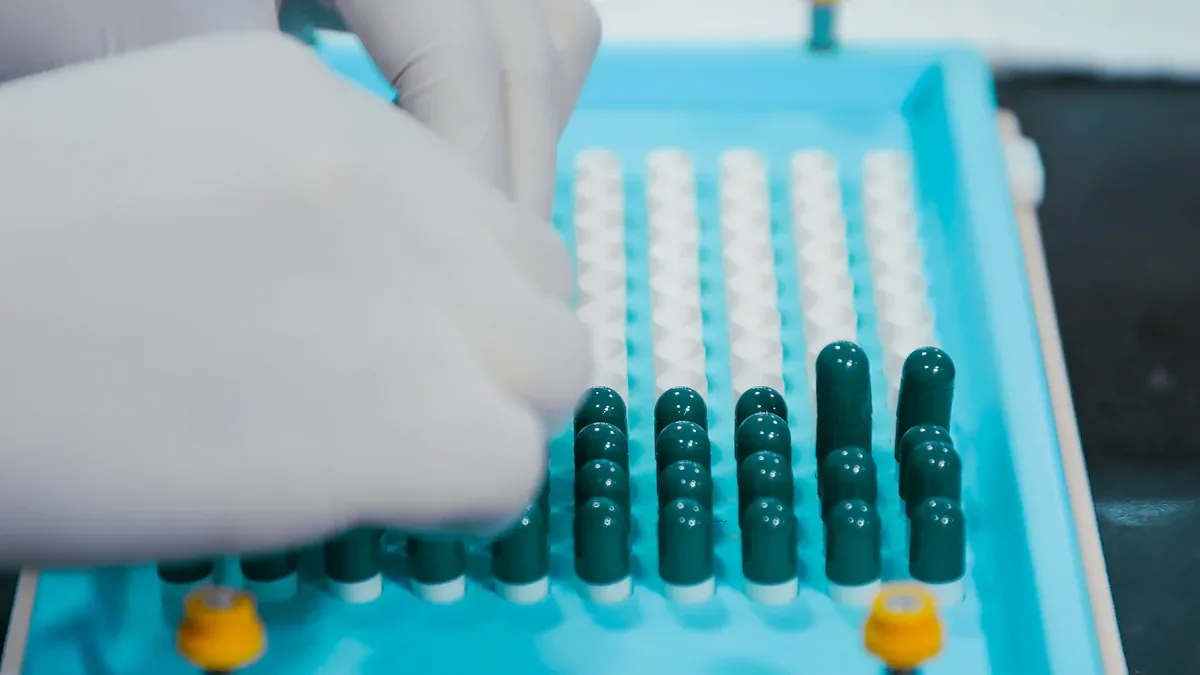
Pharmaceutical Processing Machines form the backbone of medicine manufacturing. You use these machines to mix, shape, dry, and prepare medicines for packaging. Each type of machine has a unique job, and together they help you make safe and effective drugs.
Note: Processing equipment includes machines like mixers, granulators, and heat exchangers. These tools are essential for turning raw materials into finished medicines.
Mixers and Blenders
You rely on mixers and blenders to combine powders, liquids, and other ingredients. These machines help you achieve a uniform blend, which is important for medicine quality and safety. Different types of mixers serve different purposes:
| Mixer Type | Application Description |
|---|---|
| High Shear Mixers | Emulsify, dissolve solids, and prepare fine suspensions. |
| Ribbon Blenders | Blend powders and granules for large batches of dry ingredients. |
| Planetary Mixers | Mix high-viscosity products like ointments, creams, and gels. |
| Fluidized Zone Mixers | Gently mix delicate materials, often used in coating and granulating. |
| Double Cone Blenders | Homogeneously mix dry powders and granules, especially for small, high-value batches. |
| V-Blenders | Blend dry powders and granular materials with minimal effort. |
| Homogenizers | Create stable emulsions and suspensions, especially for injectables. |
| Vacuum Mixers | Mix under vacuum to remove air bubbles and prevent oxidation in pastes and creams. |
Mixing quality, torque, and power matter when you choose a mixer. These factors ensure you get even blending and efficient operation.
Granulators
Granulators help you turn powders into granules. Granules flow better and compress more easily into tablets. You can choose from several types:
| Type of Granulator | Description |
|---|---|
| Oscillating Granulators | Use a moving rotor to push powder through a mesh, creating uniform particles. |
| Roller Compactor Granulator | Press powders between rolls to form granules without using liquids. |
| High Shear Granulator | Mix powders at high speed for consistent density and size. |
| Vibrating Granulator | Use vibration to break down particles, ensuring precise granule sizes. |
| Fluid Bed Granulator | Suspend powders in air for even moisture and heat distribution. |
You can process between 15 kg/h and 20,000 kg/h, depending on the granulator type and your production needs.
Tablet Presses
Tablet presses shape granules or powders into tablets. You use rotary tablet presses for high-speed production. These machines can make up to 1,000,000 tablets per hour. Over 65% of global tablet production uses rotary presses. You must follow strict quality standards, such as cGMP, to ensure each tablet has the right weight, thickness, and hardness. Cleanliness and record-keeping are also important for safety and traceability.
Coating Machines
You use coating machines to cover tablets and capsules with a thin layer. This coating can control how the drug releases in the body, protect it from moisture, or mask a bad taste. Common types include:
- Standard Coating Pan
- Perforated Coating System
- Fluidized or Air Bed Coating System
Automated coating machines help you improve quality and efficiency. They also make medicines safer and easier to take by controlling drug release and protecting the product.
Dryers
Dryers remove moisture from powders, granules, or tablets. You need this step to prevent spoilage and ensure product stability. Types of dryers include:
- Agitated Vacuum Dryers: Good for heat-sensitive products.
- Spray Dryers: Turn slurries into fine powders in seconds.
- Flash Dryers: Use hot air for quick drying.
- Drum Dryers: Dehydrate liquids into powders.
- Vacuum Drum Dryers: Work under reduced pressure for delicate products.
Drying times depend on the dryer type and the material you process.
Milling Machines
Milling machines reduce particle size. You use them to make powders finer and more uniform. This step helps medicines dissolve better in the body, which can improve how well the drug works. Micronization, a special milling process, makes particles even smaller, increasing the surface area and boosting absorption.
Sterilizers
Sterilizers kill germs and make equipment or products safe. You choose the sterilization cycle based on what you need to clean. Some common cycles are:
- Gravity (for glassware)
- Pre-Vacuum (for wrapped goods)
- Liquids (for media and water)
- Flash (for quick sterilization)
- Low Temperature (for heat-sensitive items)
- Steam-Air Mix (for liquid-filled syringes)
You must pick the right cycle to keep products safe and effective.
Homogenizers
Homogenizers help you mix ingredients until they are smooth and uniform. You use them to make creams, ointments, and suspensions. These machines use high pressure and force to break down particles. Homogenization improves stability, increases bioavailability, and helps some drugs work better.
Tip: Homogenizers are key for making stable suspensions and creams that look and feel the same every time.
Sieving Machines
Sieving machines separate particles by size. You use them to make sure powders and granules are the right size for further processing. Mesh sizes range from 40 to 400. Finer mesh means smaller particles. Sieving helps you control quality and consistency.
Agitators
Agitators keep liquids and mixtures moving. You use them to blend, dissolve, or suspend ingredients. There are several types:
| Aspect | Details |
|---|---|
| Types of Agitators | Anchor, Turbine, Propeller, Paddle, Magnetic |
| Applications | Dissolving APIs, blending, chemical reactions, emulsification |
| Advantages | Better product quality, faster processing, less contamination |
| Regulatory Compliance | Must meet GMP and FDA/EMA standards |
Agitators help you make sure every batch is mixed well and meets safety standards.
Dosing Systems
Dosing systems measure and deliver exact amounts of ingredients. You use them to add liquids or powders to a process. Types include:
| Type of Dosing System | Description |
|---|---|
| Volumetric Dosing Systems | Measure and deliver by volume, good for liquids. |
| Gravimetric Dosing Systems | Measure and deliver by weight, very accurate. |
| Peristaltic Dosing Systems | Use a pump for precise fluid delivery, best for low flow rates. |
| Metering Dosing Systems | Deliver a set volume per pump stroke. |
| Batch Dosing Systems | Add a fixed amount in one batch. |
| Continuous Dosing Systems | Add ingredients at a steady, controlled rate. |
You can trust dosing systems to keep your process accurate and safe.
Pumps
Pumps move liquids and slurries through your production line. You choose the pump type based on what you need to move and how fast. Common types include:
| Pump Type | Description |
|---|---|
| Lift pumps | Move water from a reservoir, focus on volume. |
| Arterial pumps | Feed systems and increase pressure quickly. |
| Booster pumps | Increase flow rate, often used with other pumps. |
| Centrifugal pumps | Versatile and efficient, used for many pharmaceutical applications. |
| Lobe pumps | Handle pastes and small solids, keep flow steady and sanitary. |
| Diaphragm pumps | Manage pressure changes and flow rates, resist corrosion. |
| Chemical pumps | Transfer aggressive or corrosive liquids safely. |
You depend on pumps to keep your Pharmaceutical Processing Machines running smoothly.
Pharmaceutical Processing Machines: Packaging Equipment
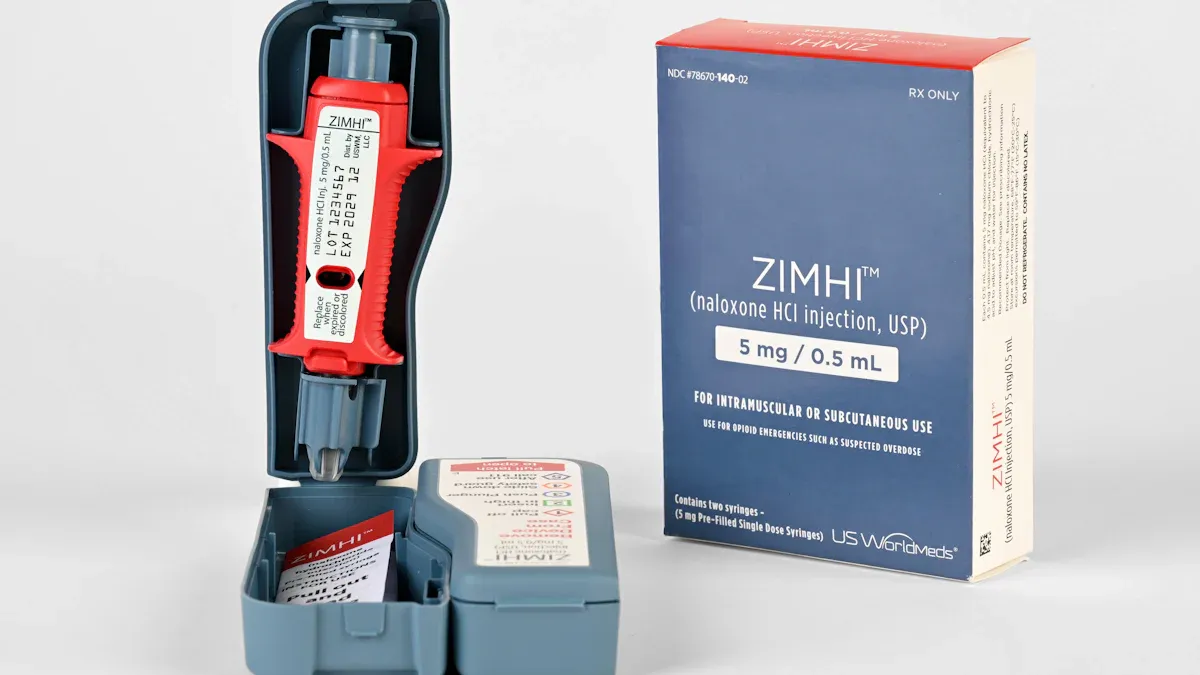
Packaging equipment helps you prepare medicines for safe delivery and use. You use these machines to fill, seal, label, and box medicines so they stay clean and easy to handle.
Filling Machines
Filling machines help you put the right amount of medicine into bottles, vials, or tubes. You can use different types depending on what you need to fill. Here is a table to show the main types:
| Type of Filling Machine | Description |
|---|---|
| Powder Filling Machines | Fill bottles or containers with powder medicines. |
| Solid Filling Machines | Place tablets or capsules into bottles or packs. |
| Aerosol Filling Machines | Fill cans with sprays or foams. |
| Liquid/Paste Filling Machines | Fill bottles or tubes with liquid or creamy medicines. |
Some high-speed fillers can fill up to 300 bottles per minute. This speed helps you keep up with large orders.
Capsule Filling Machines
You use capsule filling machines to put powder or tiny pellets into empty capsules. These machines make sure each capsule has the right dose. Capsule fillers help you work faster and keep every capsule the same.
Capping Machines
Capping machines seal bottles and containers after filling. You can choose from several types:
| Type of Capping Machine | Description | Automation Level |
|---|---|---|
| Screw Capping Machines | Twist caps onto bottles; good for many sizes. | Semi-automatic to fully automatic |
| Snap Capping Machines | Press caps onto bottles with a push. | Semi-automatic to fully automatic |
| Press Capping Machines | Push caps down with force; can control tightness. | Semi-automatic to fully automatic |
| Roller Capping Machines | Use rollers to twist caps; work at medium to high speed. | Fully automatic |
| Rotary Capping Machines | Cap many bottles at once for high output. | Fully automatic |
| Inline Capping Machines | Cap bottles as they move along a conveyor. | Semi-automatic to fully automatic |
You use capping machines to stop leaks and keep medicines safe from germs.
Blister Packaging Machines
Blister packaging machines pack tablets or capsules into small pockets made of plastic and foil. You get many benefits from blister packs:
- Keep medicines safe from air and moisture
- Show if someone has tampered with the pack
- Make it easy for people to take the right dose
- Meet health and safety rules
- Lower shipping costs because they are light and compact
Labeling Machines
Labeling machines put labels on bottles, boxes, or blister packs. You can use different types:
- Wrap-around labelers for bottles and vials
- Print-and-apply labelers for batch numbers and dates
- Front and back labelers for flat boxes
Some machines can label hundreds of items each minute. Labels help you follow the law and make sure people know what medicine they have.
Cartoning Machines
Cartoning machines put filled bottles, blister packs, or tubes into cartons. These machines fold, fill, and seal the boxes. You can use horizontal, vertical, or end-load cartoners for different products. Cartoning machines help you work faster, lower labor costs, and keep packaging neat and accurate.
Tip: Using the right packaging equipment helps you protect medicines and meet strict safety standards.
Pharmaceutical Processing Machines: Quality Control Instruments
Quality control instruments help you make sure every medicine meets strict standards. You use these tools to check the strength, release, and size of your products. Here are some of the most important instruments you will find in a pharmaceutical lab:
- Calipers and Micrometers
- Spectrophotometers
- High-Performance Liquid Chromatography (HPLC)
- Gas Chromatography (GC)
- X-ray Fluorescence (XRF) Spectrometers
- Coordinate Measuring Machines (CMM)
- Tensiometers and Surface Tension Meters
- Particle Size Analyzers
- Moisture Analyzers
- Hardness Testers
Tablet Hardness Testers
Tablet hardness testers help you measure how much force it takes to break a tablet. You use them to make sure tablets can survive handling, packaging, and shipping. These testers help you keep tablet quality steady, which protects patients and meets safety rules. Most testers use advanced technology for accurate results and less human error. You must follow standards from groups like USP and Ph. Eur. when you use these machines.
Tip: Hardness testers also check if your tablets stay strong during storage and transport.
Dissolution Testers
Dissolution testers show you how fast a drug releases its active ingredient in liquid. This step is key for checking if the medicine will work well in the body. You set up the test with the right liquid, temperature (usually 37°C), and mixing speed. You use USP Apparatus 1 (basket) or 2 (paddle) for different tablets. You must keep good records and calibrate your equipment often to meet regulations.
- Always use the same test conditions for every batch.
- Write down your test steps and results for traceability.
Particle Size Analyzers
Particle size analyzers let you measure how big or small your powder or granule particles are. The size affects how well a drug dissolves and works. You can use different types of analyzers, each with its own range:
| Analyzer Type | Measurement Range |
|---|---|
| Dynamic Image Analysis (DIA) | 0.8 μm to 30 mm |
| Laser Diffraction | Below 1 nanometer to 30 mm |
| CAMSIZER P4 | 20 μm to 30 mm |
| CAMSIZER X2 | 0.8 μm to 8 mm |
You choose the analyzer based on your product and the detail you need. Accurate particle size testing helps you make safe and effective medicines every time.
You can group pharmaceutical processing machines into three main categories:
- Processing equipment
- Packaging equipment
- Quality control instruments
Each machine helps you turn raw materials into safe medicines. When you understand these machines, you see how pharmaceutical manufacturing follows strict steps and standards.
FAQ
What is the most important pharmaceutical processing machine?
You need all machines for safe medicine production. Tablet presses and mixers often play the biggest roles in making solid medicines.
How do you keep pharmaceutical machines clean?
You clean machines with special solutions. You follow strict cleaning steps.
- Remove all product
- Wash parts
- Dry completely
Why do you test medicine with quality control instruments?
| Reason | Benefit |
|---|---|
| Safety | Protects patients |
| Consistency | Ensures same results |
| Compliance | Meets legal standards |