Your guide to pharmaceutical gelatin in hard capsule production.
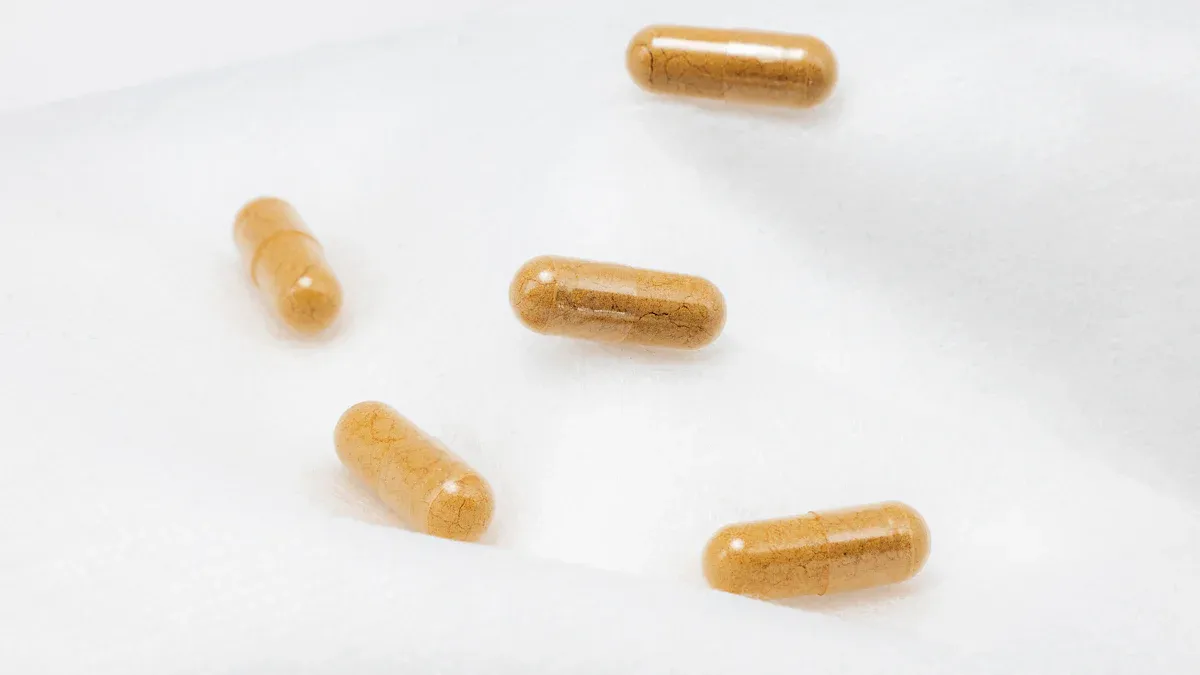
Pharmaceutical gelatin in hard capsule production relies on a unique molecular structure. Gelatin's triple-helix formation provides capsules with mechanical strength and precise dissolution. Key properties like Bloom strength and viscosity ensure capsule durability and reliable API release. This performance drives a significant market for pharmaceutical gelatin.
Gelatin-Based Hard Capsules Market Growth The market is projected to grow steadily, reflecting its importance in drug delivery.
Metric 2024 Value 2033 Forecast CAGR (2025-2033) Market Size USD 1.27 Billion USD 1.78 Billion 3.5%
Key Takeaways
- Gelatin's unique structure gives capsules strength and helps them dissolve correctly in the body.
- Key properties like Bloom strength and viscosity make sure capsules are strong and have the right shape.
- Controlling humidity is very important to stop capsules from becoming too soft, sticky, or brittle.
The Molecular Blueprint of Gelatin
Gelatin’s journey from a raw material to a functional capsule component begins at the molecular level. The entire process hinges on transforming a robust natural protein into a versatile, thermo-reversible gel.
From Collagen to Gelatin Polypeptides
Manufacturers derive pharmaceutical gelatin from collagen. This structural protein is abundant in animal sources.
- Cattle bones
- Pig skin
These sources provide high-protein Type I and Type III collagen. The conversion process uses hydrolysis to break down the large collagen molecules into smaller gelatin polypeptides. This chemical process defines the gelatin type. For example, acid hydrolysis produces Type A gelatin, while alkaline hydrolysis yields Type B gelatin. The resulting gelatin contains a mix of polypeptide chains with varying molecular weights. These chains are rich in specific amino acids like glycine, proline, and hydroxyproline, which are the essential building blocks for the final gel structure.
Note: Modern science also explores recombinant collagen and gelatin from sources like yeast and transgenic plants. These methods offer uniform molecular weights (e.g., 100 kD, 65 kD) for highly specialized applications.
The Triple-Helix Gelation Process
The gelation process gives gelatin its unique properties for capsule making. It starts by dissolving gelatin polypeptides in hot water, where they exist as disorganized random coils. As this solution cools, a remarkable transformation occurs. The polypeptide chains begin to self-assemble and wind around each other, forming a strong and interconnected three-dimensional network known as the triple-helix.
This physical gelation is highly sensitive to temperature.
- Optimal helix formation occurs at low temperatures, typically around 4°C (39°F).
- At body temperature 37°C (98.6°F), the helices unwind, causing the gel to dissolve.
The cooling rate during manufacturing directly impacts the network's strength. A controlled cooling process promotes a more organized and robust triple-helix structure. This careful management of temperature ensures the final hard capsule has the necessary rigidity and stability.
Key Properties for Capsule Performance
The molecular structure of gelatin directly influences its physical properties. These properties are critical for successful pharmaceutical gelatin in hard capsule production. Manufacturers carefully control Bloom strength, viscosity, and thermal reversibility to create a reliable and effective final product.
Bloom Strength: The Measure of Rigidity
Bloom strength measures the stiffness and mechanical strength of the gelatin gel. This property is a direct result of the triple-helix network formed during cooling. A higher Bloom value indicates a stronger, more rigid gel. This rigidity is essential for preventing capsule damage during manufacturing, filling, and transport.
Pharmacopeias provide clear standards for this property.
- Hard gelatin capsules typically require gelatin with a Bloom strength between 200 and 250 grams.
- Suppliers ensure their pharmaceutical-grade gelatin meets these international standards (USP, EP, JP) for quality and consistency.
A higher Bloom strength creates a firmer capsule wall. For example, increasing the Bloom value makes the gelatin film stronger and more physically stable. This helps the capsule maintain its structural integrity. However, excessively high Bloom strength can make the gelatin film brittle if not balanced correctly.
Manufacturing Alert: The Risk of Low Bloom Strength Using gelatin with inadequate gel strength can cause significant production issues. Low-bloom gelatin may lead to sticky capsules that fuse together, a defect known as "twins" or "bricking." It also increases the risk of cracked or broken capsules, which compromises the product's shelf life and fails to protect the active ingredients inside.
Viscosity: Ensuring Uniform Wall Thickness
Viscosity describes a fluid's resistance to flow. In capsule manufacturing, the viscosity of the hot gelatin solution is a critical parameter. It determines how the solution coats the stainless-steel mold pins during the dipping process. Proper viscosity ensures the formation of a capsule wall with uniform thickness and consistent weight.
Pro Tip: For high-speed capsule dipping, the ideal viscosity of the gelatin solution is typically between 30 and 60 millipoise when measured at 60°C.
Controlling viscosity is essential for product quality.
- Uniform Wall Thickness: Viscosity directly affects how much gelatin adheres to the mold pins, controlling the final shell thickness.
- Product Consistency: Stable viscosity is necessary for producing capsules with uniform dimensions and weight.
- Defect Prevention: Poor viscosity control can lead to physical defects like poor seals or leaks in the finished capsules.
Temperature has a significant impact on viscosity. As the temperature of the gelatin solution increases, its viscosity decreases. Even small temperature fluctuations near the gel point (the temperature where the liquid becomes a gel) can cause sudden, dramatic changes in viscosity. Therefore, manufacturers must maintain strict temperature control throughout the production run to ensure consistent capsule quality.
Thermal Reversibility: The Key to Dissolution
Gelatin's most valuable property is its thermal reversibility. The triple-helix network that provides strength at room temperature is designed to break down at body temperature (37°C). This causes the capsule to dissolve and release its contents inside the body. Standard gelatin capsules perform this function with remarkable speed. Studies show they can rupture in as little as 60 seconds and release over 80% of their drug content within 5 minutes in simulated gastric fluid (pH 1.2).
However, this process can be disrupted by a phenomenon called cross-linking. Exposure to high heat and humidity can cause the gelatin polypeptides to form permanent chemical bonds. This cross-linking prevents the triple-helices from unwinding properly, which significantly slows down capsule dissolution and drug release. This can cause a product to fail its dissolution specifications.
When comparing gelatin to alternatives like HPMC (hydroxypropyl methylcellulose), gelatin's dissolution profile is often more reliable, especially across different pH levels.
| Capsule Type | Performance in Acidic Media (pH 1.2) | Performance in Neutral Media (pH 6.8) | Key Observation |
|---|---|---|---|
| Gelatin | Rapid release (>85% in 30 mins) | Rapid release (>85% in 30 mins) | Consistent and fast dissolution. |
| HPMC (with gellan gum) | Very poor release (<35% in 2 hours) | Slow release | Performance is highly pH-dependent. |
| HPMC (pure) | Delayed release | Delayed release | Slower than gelatin across all media. |
If cross-linking is suspected as the cause of dissolution failure, pharmacopeial guidelines (USP <711>) recommend a second test. This test involves adding an enzyme, such as pepsin, to the dissolution medium to help break down the cross-linked gelatin.
Optimizing Pharmaceutical gelatin in hard capsule production

Achieving a high-quality final product requires careful selection and control of gelatin and its environment. Manufacturers can fine-tune capsule properties by choosing the right gelatin type and managing moisture exposure throughout the process.
Type A vs. Type B Gelatin
The choice between Type A and Type B gelatin impacts formulation compatibility. Type A gelatin results from acid processing, while Type B comes from alkaline processing. This difference creates distinct isoelectric points, which is the pH at which the gelatin molecule has a neutral charge.
- Type A Gelatin: Has an isoelectric point between pH 7.0 and 9.0. It is cationic (positively charged) in acidic solutions.
- Type B Gelatin: Has an isoelectric point between pH 4.7 and 5.2. It is anionic (negatively charged) in most formulations above this pH.
This distinction is critical for preventing interactions with active pharmaceutical ingredients (APIs). Manufacturers also modify a product's firmness by using different gelatin variants or by altering gelatin concentrations to meet specific performance targets.
The Role of Water Content and Humidity
Humidity control is essential for successful pharmaceutical gelatin in hard capsule production. Gelatin is hygroscopic, meaning it naturally absorbs moisture from the air. This property makes capsules vulnerable to environmental conditions.
Humidity Alert: The Danger Zone Storing gelatin capsules above 60% relative humidity (RH) leads to uncontrolled water absorption. This excess moisture makes the capsule walls soft, sticky, and unstable, increasing the risk of leaks and deformation.
High humidity causes significant problems. Capsules can soften in just a few hours, and prolonged exposure may lead to irreversible cross-linking that slows dissolution. Conversely, low humidity makes capsules brittle and prone to cracking. To ensure quality in pharmaceutical gelatin in hard capsule production, manufacturers must follow strict environmental controls.
Best practices for humidity management include:
- Maintaining a controlled environment of 15-25°C and 30-60% RH.
- Using industrial dehumidifiers and monitoring systems in production and storage areas.
- Employing moisture-barrier packaging like blister packs and including desiccants to absorb moisture.
- Minimizing the capsule's exposure to ambient air during filling and packaging.
These steps are a mandated Good Manufacturing Practice (GMP) requirement to ensure product integrity and safety.
Gelatin's performance is not arbitrary. Its triple-helix structure dictates capsule strength and dissolution. Mastering these scientific principles is essential for professionals in pharmaceutical gelatin in hard capsule production. This knowledge ensures the creation of high-quality, reliable products that meet strict GMP standards and pave the way for innovation.
FAQ
Why is Bloom strength important for capsules?
Bloom strength measures gel rigidity. It ensures capsules are strong enough to prevent damage during manufacturing and transport. This property guarantees capsule integrity.
What is the difference between Type A and Type B gelatin?
The manufacturing process creates the difference. Type A gelatin uses acid processing. Type B gelatin uses alkaline processing. This affects their chemical charge and interaction with APIs.
How does humidity affect gelatin capsules?
High humidity makes capsules soft and sticky. Low humidity makes them brittle and prone to cracking. Proper humidity control is essential for capsule stability.
See Also
Understanding Edible Gelatin: Production Process and Core Ingredients Explained
Bovine Gelatin Powder: Unveiling Its Composition and Manufacturing Journey
Identifying Quality: Essential Indicators of Premium Bovine Gelatin Powder
Elevate Your Cooking: Ten Clever Uses for Bovine Gelatin Powder
The Health Benefits: Why Bovine Gelatin Powder Is a Potent Supplement