Evaluating the PFD-200 Freeze Dryer for Mango Processing in 2026
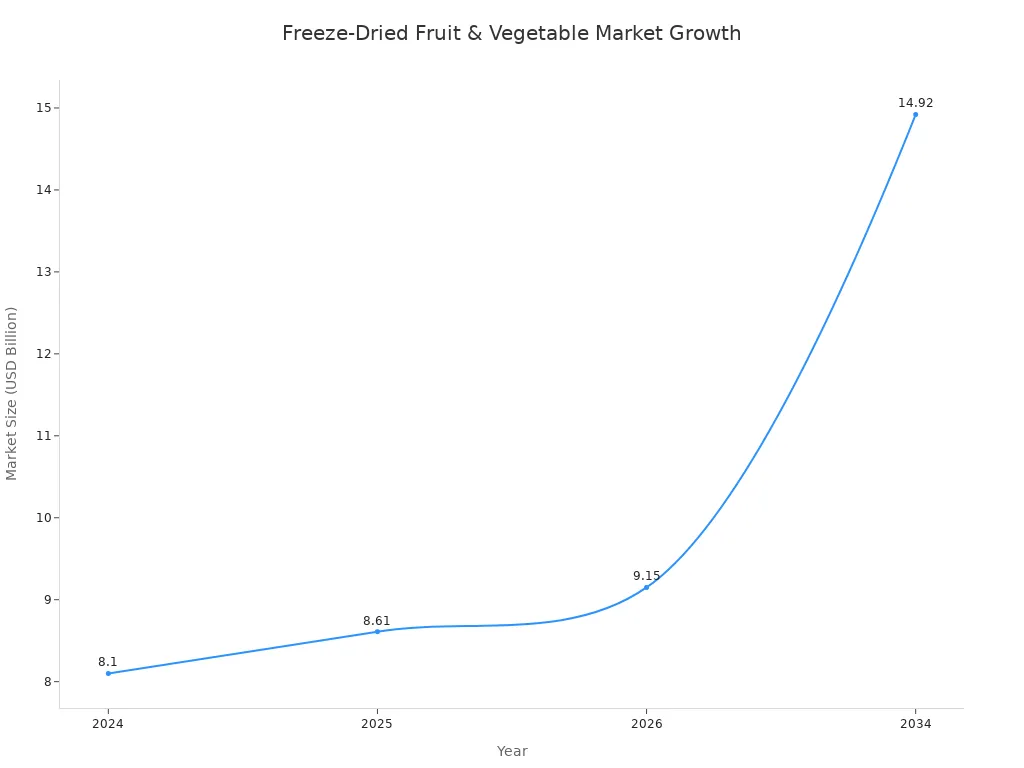
The freeze-dried fruit market is set to reach $9.15 billion in 2026. You can capture this growth. The PFD-200 freeze dryer remains a reliable workhorse for your small or medium-sized operation. It balances cost-effectiveness with the premium quality consumers demand, though larger businesses may need higher-capacity alternatives.
Key Takeaways
- The PFD-200 freeze dryer helps small businesses make high-quality freeze-dried mangoes. It processes 200 kg of mangoes daily.
- This machine makes mangoes that look good, taste great, and keep their nutrients. This helps you sell a premium product.
- The PFD-200 is built strong with stainless steel. It is easy to clean and lasts a long time. This makes it a good investment for your business.
PFD-200 Performance Metrics for Mango Processing
You must evaluate key performance metrics to determine if the PFD-200 fits your business goals. This analysis covers the machine's throughput, energy demands, and its ability to produce the high-quality freeze-dried mango your customers expect.
Analyzing Processing Time and Throughput
Your production capacity directly impacts your revenue. The PFD-200 offers a clear and reliable output for small to medium-sized enterprises. You can process a significant amount of product with this machine. It handles a daily input capacity of 200 kg of fresh, prepared mango.
A typical processing cycle for mangoes in the PFD-200 takes approximately 18 hours. This timeframe allows you to complete one full batch and begin a second one within a single 24-hour operational day. This consistent throughput makes production planning straightforward.
💡 Daily Production Snapshot:
- Input Capacity: 200 kg of fresh mango per batch.
- Cycle Time: 18 hours.
- Batches per Day: 1+ (approximately 1.3 batches in 24 hours).
- Result: You can reliably process over 200 kg of mango daily, establishing a predictable supply chain for your business.
Evaluating Energy Consumption by 2026 Standards
Energy costs are a critical operational expense. You need to assess the PFD-200's power usage against 2026 industry standards. While this freeze dryer is known for its reliability, its energy efficiency reflects its original design era. It performs well for its category but may consume more power than newer, premium-priced models emerging in the market.
Consider the following comparison to benchmark your potential operational costs.
| Feature | PFD-200 Freeze Dryer | Hypothetical 2026 High-Efficiency Model |
|---|---|---|
| Primary Focus | Robustness & Reliability | Maximum Energy Efficiency |
| Power Draw | Standard for its class | Potentially 15-25% lower |
| Upfront Cost | Cost-Effective | Higher Initial Investment |
| Best For | SMEs prioritizing quality & budget | Large-scale ops minimizing variable costs |
Your decision depends on balancing the initial capital investment against long-term energy expenses. The PFD-200 provides a cost-effective entry point, while newer technologies may offer lower running costs at a higher price.
Assessing Final Mango Quality and Nutrient Retention
The ultimate measure of success is the quality of your final product. Here, the PFD-200 truly excels. The freeze-drying process, or lyophilization, is the gold standard for preserving the delicate characteristics of mangoes. You can consistently produce a premium product that commands a higher market price.
Your customers will notice the superior quality in several ways:
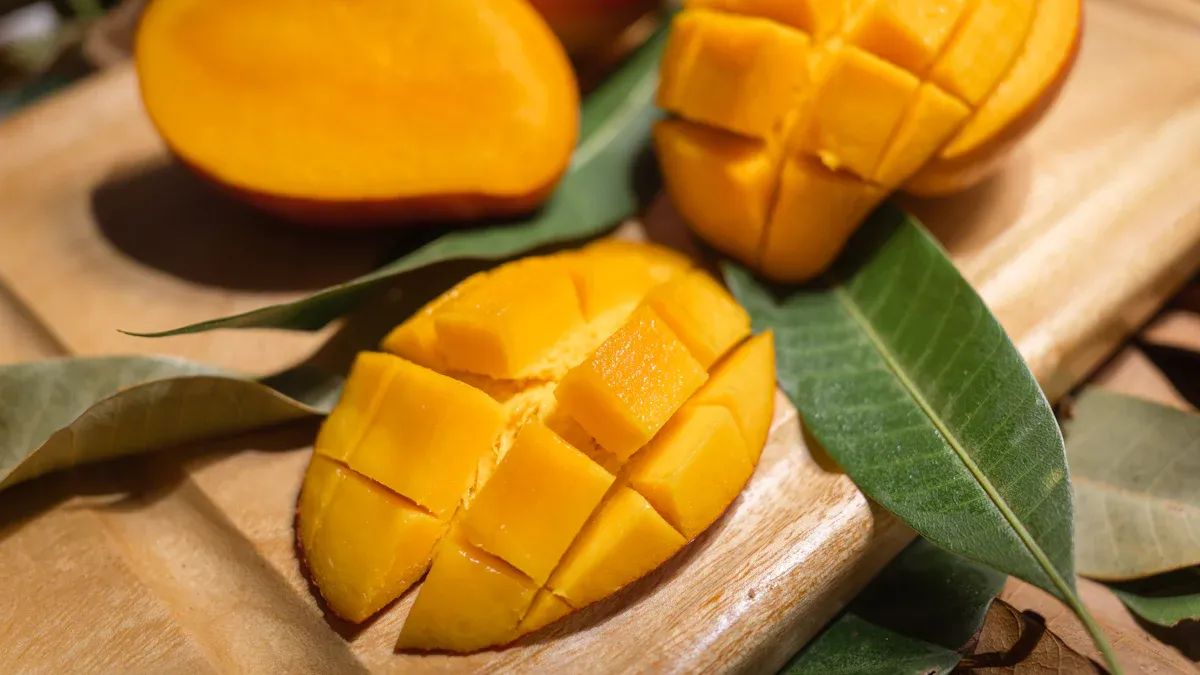
- Vibrant Color: The mango pieces retain their natural, bright yellow-orange hue.
- Intense Flavor: The process locks in the sweet, tropical flavor profile without degradation.
- Crisp Texture: The final product has a light, airy, and satisfyingly crisp texture.
- Nutrient Retention: Crucial vitamins, like Vitamin C, and antioxidants are largely preserved, making it a healthy snack option.
This machine helps you create a product that looks, tastes, and feels premium. You are not just selling a dried fruit; you are offering a high-value sensory experience.
Technical Suitability of the PFD-200 Freeze Dryer
Beyond performance numbers, you must confirm the PFD-200’s technical specifications align with your operational needs. This machine’s construction, process control, and integration potential are key factors for long-term success. A robust build and defined parameters ensure you can produce high-quality mangoes consistently.
Value of 304 Stainless Steel Build Quality
The PFD-200 freeze dryer is built entirely from 304 stainless steel, a critical feature for food processing. This material choice provides significant advantages for your operation. Its primary benefit is exceptional corrosion resistance. The chromium in the steel forms a passive, self-healing oxide layer when exposed to oxygen. This invisible barrier protects the metal from corrosive attack and prevents any reaction with food substances, ensuring your mangoes remain pure and uncontaminated.
You will also find that the smooth surface of 304 stainless steel makes cleaning and sanitation simple. This is crucial for preventing bacterial growth and maintaining hygiene standards.
- Corrosion Resistance: Prevents rust and contamination, protecting product integrity.
- Easy to Clean: Allows for thorough sanitation with standard agents.
- Durability: The self-healing surface extends the machine's operational life.
Optimal Process Parameters for Mangoes
You can achieve perfect freeze-dried mangoes by using the correct machine settings. The PFD-200 allows you to control the key parameters for both primary and secondary drying stages. Following these optimized settings ensures efficient water removal while preserving the mango's structure and quality.
| Drying Stage | Drying Chamber Pressure | Product Temperature |
|---|---|---|
| Primary Drying (Sublimation) | 20–50 Pa | N/A |
| Secondary Drying (Desorption) | 10–30 Pa | 50°C - 60°C |
💡 Pro Tip: You should monitor these parameters closely. Consistent application of these settings is the secret to producing a uniform, high-quality product in every batch.
Integrating into a Full Production Workflow
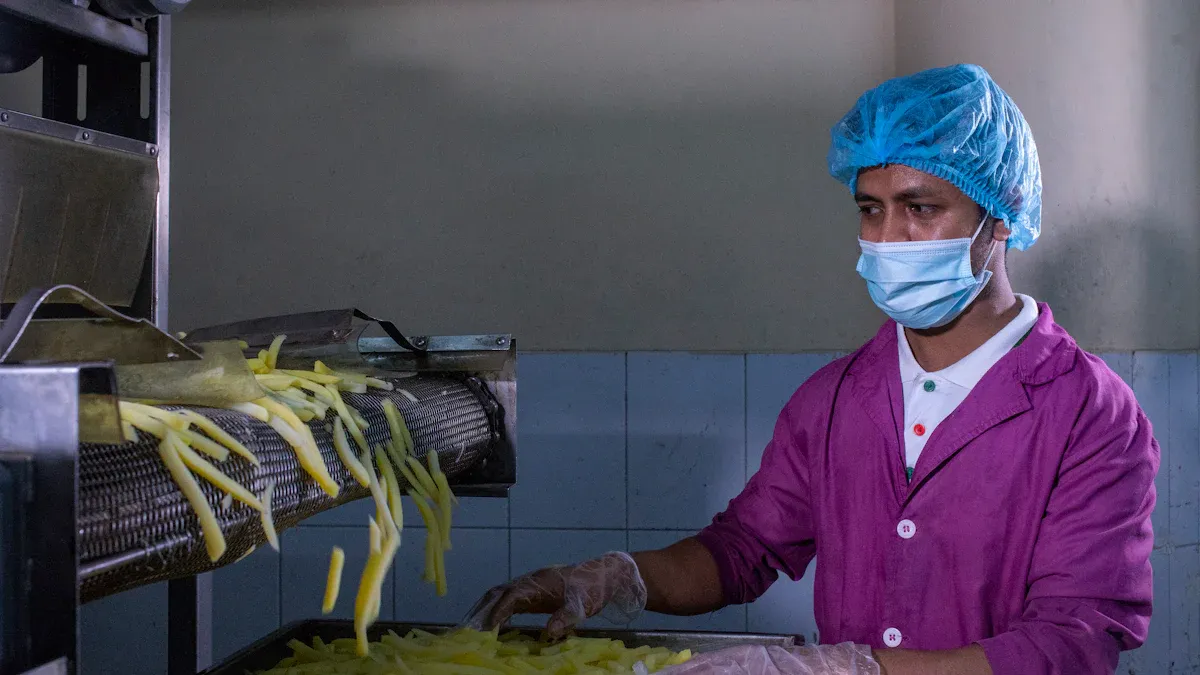
You need to plan how the PFD-200 fits into your entire production line. As a batch-based system, it presents specific workflow considerations. Manual preparation of the mangoes before loading is a necessary step. This can be time-consuming, so you must allocate labor effectively.
Because the system processes mangoes in distinct batches, your overall throughput is limited by the cycle time. This structure also introduces potential bottlenecks. You should create clear standard operating procedures (SOPs) to minimize risks like sample contamination during transfers and ensure consistent results between different operators. Proper data management for each batch will help you track quality and troubleshoot any issues efficiently.
2026 Market Competitiveness and ROI
You must analyze the PFD-200's market position and financial viability to make a smart investment. Your success depends on understanding how this machine compares to alternatives and what your return on investment (ROI) will look like. This analysis will help you build a profitable and sustainable business.
PFD-200 vs. Alternative Drying Technologies
You have several options for drying mangoes, but each method produces a vastly different final product. The PFD-200 freeze dryer uses lyophilization to create a premium product that stands out in the market. Other methods like traditional air drying, Individual Quick Freezing (IQF), or spray drying serve different purposes and create different consumer experiences.
This table shows you the key differences between freeze-dried and traditionally dried mangoes.
| Feature | Freeze-Dried Mango | Traditional Dried Mango |
|---|---|---|
| Texture | Light, crisp, and airy with a distinct snap | Soft, dense, and chewy |
| Flavor | Bright and clean, very close to fresh mango | Deeper and more caramelized |
| Nutrient Retention | Preserves more heat-sensitive vitamins like Vitamin C | Retains fiber but may lose some vitamins due to heat |
| Shelf Life | Exceptionally long (up to 25 years if packaged correctly) | Shorter than freeze-dried |
| Appearance | Retains original shape and vibrant color | Often shrunken and darker in color |
Your choice of technology defines your product category. You should also be aware of other industrial methods to understand the full market landscape.
| Method | Key Characteristics | Best For |
|---|---|---|
| Freeze Drying | Sublimation removes moisture, preserving structure. | High-end snacks, powders, and baking ingredients. |
| IQF | Mango pieces are frozen individually and rapidly. | Smoothies, salads, and desserts where fresh texture is key. |
| Spray Drying | Mango puree is atomized into a fine powder. | Drink mixes, flavorings, and industrial food additives. |
| Pulping | Flesh is pureed for use in liquids. | Juices, yogurts, and ice creams. |
The PFD-200 positions your business in the premium snack category, where customers pay more for superior quality, texture, and nutritional value.
Calculating the Cost-Benefit for SMEs
You need to perform a clear cost-benefit analysis to confirm the PFD-200 is the right fit for your small or medium-sized enterprise (SME). Your ROI depends on balancing the initial investment with your operational costs and revenue potential.
You should analyze three core financial areas:
- Initial Capital Expenditure (CapEx): This is the upfront cost of the PFD-200 and any necessary facility modifications. The PFD-200 offers a competitive price point compared to larger industrial systems, making it an accessible entry into the premium market.
- Operating Expenses (OpEx): You must track your ongoing costs. These include energy consumption, labor for mango preparation and packaging, and machine maintenance. As noted earlier, the PFD-200 is reliable but not the most energy-efficient model by 2026 standards. You must factor this into your financial projections.
- Revenue Potential: Your revenue is a direct result of your production output and the price your product commands. Freeze-dried mangoes sell at a significant premium over traditionally dried fruit. You can calculate your potential revenue by multiplying your daily output (over 200 kg of fresh mango) by the market price for your high-quality product.
Financial Snapshot:
- Investment: Moderate upfront cost for the machine.
- Costs: Predictable expenses for energy, labor, and raw materials.
- Revenue: High-margin sales from a premium product.
Your profit is the difference between your high-margin revenue and your manageable operational costs.
Future-Proofing Your Investment
Investing in equipment requires you to think about long-term growth. The PFD-200 offers a solid foundation, but you must plan for the future to ensure your investment remains valuable. Its primary strength is its robust build and the consistent quality it delivers, which helps you establish a strong brand reputation from day one.
The main limitation of this freeze dryer is its batch capacity. As your business grows, a single unit may not meet rising demand. You can future-proof your operation in a few ways:
- Modular Growth: Start with one PFD-200. As your sales increase, you can add a second or third unit. This modular approach allows you to scale your production capacity in line with your revenue growth, minimizing initial financial risk.
- Process Optimization: Continuously refine your workflow. Improving your mango preparation speed or streamlining your packaging process can help you maximize the output from your existing equipment.
- Long-Term Upgrade Path: View the PFD-200 as your entry into the market. It allows you to build a customer base and generate cash flow. Later, you can reinvest profits into a larger, continuous-process system if your ambition is to become a large-scale industrial producer.
💡 Strategic Tip: Use the PFD-200 to perfect your product and build your brand. Its reliability gives you the stability needed to secure market share. Plan your capital budget to allow for adding more units as you hit specific sales milestones.
Operational Best Practices for the PFD-200
You can maximize the PFD-200's performance by following established best practices. Proper mango preparation, careful process monitoring, and correct packaging are essential. These steps ensure you produce a consistently high-quality product that retains its value.
Mango Pre-Treatment for Optimal Results
Your final product quality begins with the raw material. You must select mangoes at their peak ripeness for the best results. Harvesting too early gives you a tough and bland product. Harvesting too late results in mushy, discolored fruit that clumps together.
The best mango to freeze dry would be the freshest ones at their peak ripeness. Don’t pick the green ones unless you want to have sour crisps to boost your appetite.
After selecting the right fruit, you should wash, peel, and slice the mangoes to a uniform thickness. This consistency helps ensure even drying throughout the entire batch, preventing wet spots and improving overall efficiency.
Navigating the Three Drying Stages
The PFD-200 automates the complex transition between drying stages. You primarily need to monitor the process. The machine’s control system uses comparative pressure measurements to know when primary drying (sublimation) is complete.
- It compares readings from a Pirani gauge and a capacitance gauge to calculate a pressure ratio (
Pratio). - A
Prationear 1.6 shows primary drying is active. - The system automatically begins secondary drying when the
Pratiodrops below 1.07 for at least 15 minutes, indicating all ice has sublimated.
This automated control simplifies operations and guarantees a precise, repeatable drying cycle for every batch.
Post-Processing and Packaging Requirements
Your freeze-dried mangoes are highly hygroscopic, meaning they readily absorb moisture from the air. You must package them immediately after the drying cycle finishes to protect their crisp texture and long shelf life. Use high-barrier packaging to block moisture and oxygen.
| Material Name | Key Features |
|---|---|
| CareFoil | High barrier film, reduces moisture and oxygen migration. |
| CareSilver | Economical, effective, and free of toxins like BPA. |
| Care Clear | Affordable, provides quality protection against moisture. |
For optimal protection, you should also consider these steps:
- Use multi-layer packaging systems with metallized films to block light.
- Employ heat-sealed pouches to prevent moisture reabsorption.
- Flush packages with nitrogen before sealing to displace oxygen and extend shelf life.
The PFD-200 freeze dryer is a recommended investment for your SME in 2026. It delivers consistent, high-quality mangoes with its robust build and reliable process. While its batch capacity is a limitation for large-scale ambitions, it offers proven value for premium production.
Your final decision hinges on balancing capital investment against your production scale and growth strategy.
FAQ
What is the expected lifespan of the PFD-200?
You can expect a long operational life. Its 304 stainless steel build resists corrosion and wear. Proper maintenance ensures the machine will serve your business for many years.
How much maintenance does the PFD-200 require?
You should perform regular maintenance. This includes cleaning the chamber after each batch and checking the vacuum pump oil. The robust design minimizes complex service needs.
Can I use any type of mango in the PFD-200?
You will get the best results from mangoes at peak ripeness. This ensures optimal flavor, color, and texture. Avoid under-ripe or over-ripe fruit for consistent quality.