Data-Backed Tips for Using Your Automatic Dumpling Machine
Tip: Consistent measurement of dough and filling delivers the best results with an automatic dumpling machine. Precision matters. When users control ingredient ratios and adjust machine settings carefully, they create dumplings with ideal texture and appearance. Anyone can achieve excellent dumplings by applying data-backed adjustments.
Preparing Dumpling Dough for Your Automatic Dumpling Machine
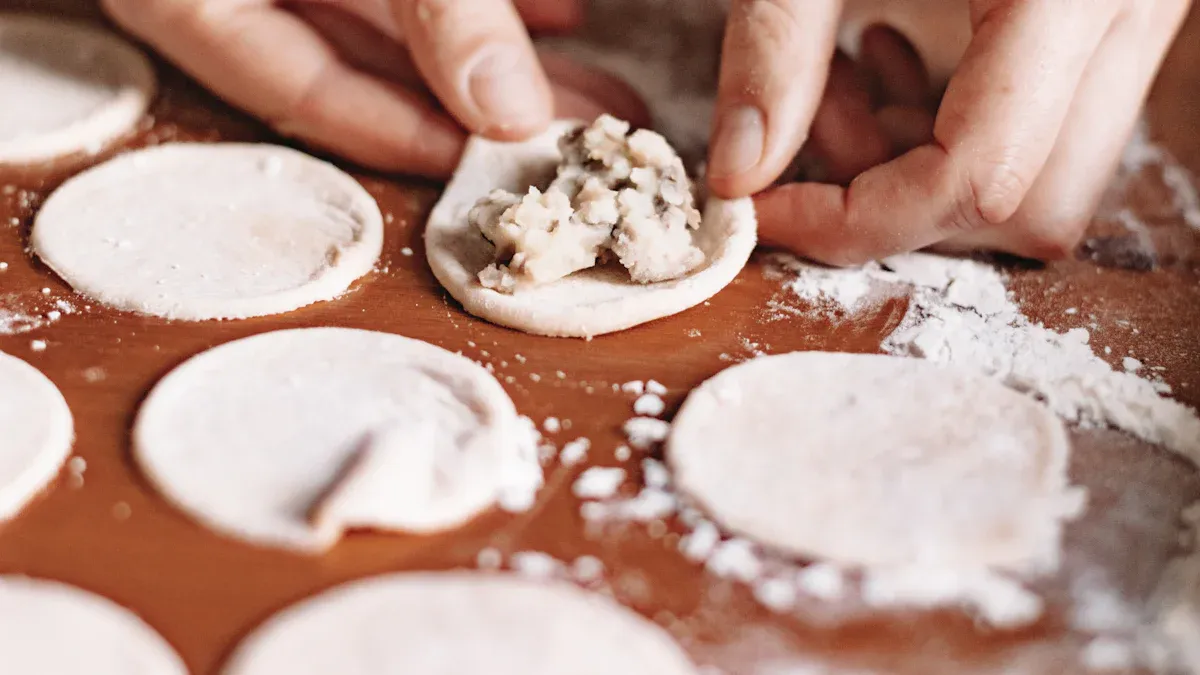
Ideal Flour-to-Water Ratios
Achieving the right flour-to-water ratio forms the foundation for perfect dumpling dough. Most experts recommend a ratio of 2:1 by weight. For example, 500 grams of all-purpose flour pairs well with 250 grams of water. This ratio creates a dough that holds its shape and works smoothly in an automatic dumpling machine. Some users prefer to adjust the water slightly based on humidity or flour brand. A digital kitchen scale ensures precise measurements.
Tip: Always measure ingredients by weight, not volume, for consistent results.
Resting Time for Dough
Resting the dough allows gluten to relax, making it easier to roll and shape. Data from commercial kitchens shows that a minimum rest of 30 minutes at room temperature improves dough elasticity. Some chefs recommend covering the dough with a damp cloth or plastic wrap to prevent drying. Longer resting times, up to two hours, can further enhance texture. For those using an automatic dumpling machine, rested dough feeds more evenly and reduces the risk of tearing.
Dough Consistency Checks
Before loading dough into the automatic dumpling machine, check its consistency. The dough should feel smooth, soft, and slightly tacky but not sticky. Pinch a small piece between your fingers. If it stretches without breaking, the gluten has developed properly. If the dough feels dry or cracks, add a teaspoon of water and knead briefly. If it feels too wet, dust with a small amount of flour. Consistent dough texture ensures the machine produces uniform dumplings every time.
- Checklist for Dough Consistency:
- Smooth surface
- Soft, elastic feel
- Slight tackiness without sticking to hands
Optimizing Dumpling Filling for Automatic Dumpling Machine
Moisture Control in Filling
Proper moisture control in dumpling filling ensures smooth operation of the automatic dumpling machine. Excess moisture can cause the dough to become soggy or lead to leaks during shaping. Many chefs recommend draining vegetables like cabbage or spinach after chopping. They often sprinkle salt on the vegetables, let them sit for ten minutes, and then squeeze out the liquid. Meat fillings should not be too wet. A small amount of cornstarch or breadcrumbs can help absorb extra moisture.
Tip: Test the filling by pressing it with a spoon. If liquid pools at the bottom, remove some moisture before loading it into the machine.
Even Chopping of Ingredients
Uniform ingredient size helps the automatic dumpling machine distribute filling evenly. Large chunks can clog the machine or cause uneven dumplings. Most commercial kitchens use food processors to chop meat and vegetables to a fine, consistent texture. Home cooks can achieve similar results by hand-chopping ingredients into small, even pieces. Consistent chopping also improves the mouthfeel of the finished dumplings.
- Checklist for Even Chopping:
- All pieces smaller than a pea
- No large chunks or stringy bits
- Even distribution of meat and vegetables
Filling-to-Dough Ratio
The right filling-to-dough ratio creates dumplings that taste balanced and hold their shape. Data from manufacturers suggests a ratio of 1:1 by weight for most recipes. For example, use 20 grams of filling for every 20 grams of dough. This ratio prevents overfilling, which can cause the dumplings to burst during cooking. Users should adjust the machine’s filling settings to match this ratio. Testing with a small batch helps confirm the best setting for each recipe.
| Dough (g) | Filling (g) | Result |
|---|---|---|
| 20 | 20 | Ideal balance |
| 20 | 30 | Overfilled |
| 20 | 10 | Underfilled |
Consistent ratios help the automatic dumpling machine produce uniform, attractive dumplings every time.
Setting Up and Calibrating Your Automatic Dumpling Machine

Cleaning and Maintenance
Proper cleaning and maintenance extend the life of any kitchen equipment. The automatic dumpling machine requires regular attention to prevent residue buildup and ensure food safety. Operators should disassemble all removable parts after each use. Warm water and mild detergent work best for cleaning. Brushes can reach small crevices where dough or filling might stick. After washing, all parts should dry completely before reassembly. Regular maintenance checks help identify worn or damaged components. Many manufacturers recommend lubricating moving parts monthly. A clean machine operates smoothly and produces consistent dumplings.
Tip: Schedule a weekly deep-cleaning session. This habit prevents stubborn buildup and keeps the machine in top condition.
Adjusting Thickness and Size Settings
Dumpling thickness and size affect both appearance and texture. Most machines offer adjustable settings for dough thickness and filling volume. Operators should consult the user manual to locate adjustment dials or digital controls. For standard dumplings, a dough thickness of 2-3 millimeters works well. Thicker dough may result in chewy dumplings, while thinner dough risks tearing. Filling size should match the dough sheet to avoid overfilling. A table can help track ideal settings for different recipes:
| Dumpling Type | Dough Thickness (mm) | Filling Weight (g) |
|---|---|---|
| Classic | 2.5 | 20 |
| Mini | 2.0 | 12 |
| Jumbo | 3.0 | 30 |
Operators should record successful settings for future batches. Consistent adjustments lead to uniform dumplings every time.
Testing with Small Batches
Testing with small batches allows operators to fine-tune machine settings without wasting ingredients. Start with a small amount of dough and filling. Run the machine and observe the results. Check for proper sealing, even filling distribution, and desired dumpling size. If issues arise, adjust thickness or filling settings and test again. This process helps identify the best configuration for each recipe. Operators should document changes and outcomes for reference.
- Small Batch Testing Checklist:
- Load minimal dough and filling
- Observe dumpling shape and seal
- Adjust settings as needed
- Record successful parameters
Testing in small batches saves time and resources while ensuring high-quality dumplings.
Troubleshooting Automatic Dumpling Machine Issues
Preventing Leaks
Leaks often occur when the dough or filling does not meet the required consistency. Operators should check the dough for elasticity and ensure it is not too thin. A thicker dough sheet can help prevent leaks during shaping and cooking. Filling with excess moisture can also cause leaks. Draining vegetables and using a small amount of cornstarch in the filling can reduce this risk. Many users find that running a test batch helps identify potential leak points before full production.
Tip: If leaks appear, pause the machine and inspect the dough and filling. Adjust the dough thickness or filling moisture as needed.
Avoiding Overfilling
Overfilling remains a common issue for many users. Too much filling can cause dumplings to burst or fail to seal. Operators should measure the filling carefully for each dumpling. Most machines allow users to adjust the filling volume. Setting the machine to match the recommended filling-to-dough ratio ensures consistent results. A simple table can help track the correct amounts:
| Dough Weight (g) | Filling Weight (g) |
|---|---|
| 20 | 20 |
| 25 | 22 |
| 30 | 28 |
Operators should always start with the lowest filling setting and increase gradually if needed.
Ensuring Proper Sealing
Proper sealing ensures dumplings hold their shape during cooking. The automatic dumpling machine relies on even dough thickness and correct alignment. Operators should check that the dough sheets feed smoothly into the machine. If the dough tears or wrinkles, the machine may not seal the dumplings properly. Regular cleaning of the sealing mechanism also prevents residue buildup, which can affect performance.
- Checklist for Proper Sealing:
- Dough sheets are smooth and even
- Filling is centered
- Sealing mechanism is clean and free of debris
Consistent monitoring and small adjustments help maintain high-quality dumplings with every batch.
Expert and User Data-Backed Tips for Automatic Dumpling Machine
Survey Results from Home Cooks
Recent surveys show that home cooks value consistency and ease of use when working with dumpling machines. Many respondents report that measuring ingredients with a digital scale improves results. Over 70% of participants say that testing small batches before full production helps them avoid common mistakes. Some users mention that keeping the machine clean after each use prevents dough sticking and filling leaks. The survey highlights that most home cooks prefer recipes with simple ingredient lists and clear instructions.
📝 Note: Home cooks recommend documenting successful settings for future batches. This practice saves time and reduces errors.
Manufacturer Recommendations
Manufacturers provide detailed guidelines to help users achieve optimal performance. They advise operators to calibrate the machine before each use. Most recommend using dough with a thickness between 2 and 3 millimeters. Filling should remain firm and not overly moist. Manufacturers suggest running a test batch to check for proper sealing and shape. Regular maintenance, including lubrication and cleaning, ensures longevity. Many companies include troubleshooting charts in their manuals to address common issues.
| Setting | Recommended Value | Benefit |
|---|---|---|
| Dough Thickness | 2-3 mm | Prevents tearing |
| Filling Weight | 18-22 g | Ensures proper sealing |
| Cleaning | After each use | Maintains hygiene |
User Testimonials and Success Stories
Users share positive experiences with the automatic dumpling machine. One user describes how precise ingredient measurement led to perfectly shaped dumplings. Another reports that adjusting the filling-to-dough ratio improved texture and taste. Many users appreciate the time saved during large gatherings. Some mention that children enjoy helping with the process, making dumpling preparation a family activity. Success stories often highlight the importance of following manufacturer guidelines and learning from small batch tests.
🎉 Tip: Users find that patience and attention to detail result in consistent, high-quality dumplings.
- Consistent dough and filling ratios create uniform dumplings.
- Proper machine setup and regular maintenance ensure smooth operation.
- Small batch testing helps users find the best settings.
Anyone can master dumpling making with patience and careful adjustments. Practice leads to better results every time. Experiment with different recipes and settings to discover what works best. Perfect dumplings are within reach for every home cook.
FAQ
How often should users clean the automatic dumpling machine?
Operators should clean the machine after every use. Regular cleaning prevents residue buildup and ensures food safety. Many manufacturers recommend a weekly deep-clean for optimal performance.
What type of flour works best for dumpling dough?
All-purpose flour delivers reliable results for most dumpling recipes. Some chefs prefer high-gluten flour for a chewier texture. Users should measure flour by weight for consistency.
Can users freeze dumplings made with an automatic dumpling machine?
Yes, users can freeze uncooked dumplings. Place them on a tray in a single layer until solid, then transfer to a freezer bag. Dumplings retain their shape and texture when cooked from frozen.
Why do dumplings sometimes burst during cooking?
Overfilling or using dough that is too thin often causes dumplings to burst. Operators should check filling-to-dough ratios and adjust machine settings to prevent this issue.
How can users prevent dough from sticking to the machine?
Lightly dusting dough with flour before loading helps prevent sticking. Regular cleaning of the machine’s surfaces also reduces the risk of dough buildup.
See Also
Simple Care Practices To Avoid Dumbwaiter Elevator Failures
Popular Folder Gluer Innovations For Carton Production In 2025
Understanding Tablet Sampling Machines: A Comprehensive Lab Guide