Pentyl nitrite CAS 463-04-7 Solves Common Synthesis Problems

You can use Pentyl nitrite CAS 463-04-7 to solve many synthesis problems in organic chemistry. This compound gives you higher yields and better selectivity. Its unique properties help you create safer reactions. You benefit from reliable results and easier workflows in your laboratory.
Key Takeaways
- Pentyl nitrite CAS 463-04-7 boosts reaction yields, helping you achieve more product with fewer side reactions.
- Using Pentyl nitrite enhances selectivity, allowing you to create purer products and reduce unwanted byproducts.
- This compound enables safer reaction conditions, minimizing the need for harsh chemicals and lowering accident risks.
Common Synthesis Problems in Organic Chemistry
Low Yields in Key Reactions
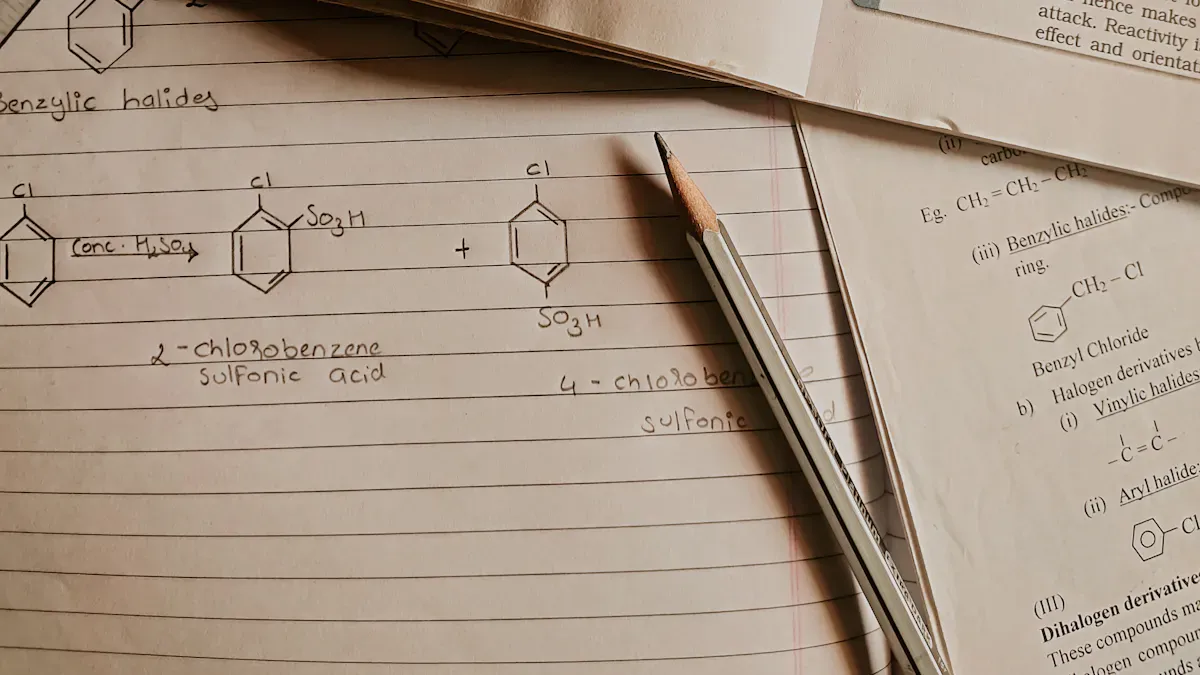
You often face low yields when working with organic reactions. Each step in a synthesis can reduce your final product. For example:
- Every physical manipulation can cause a 2% yield loss.
- Isolated yields rarely go above 94%.
- Yields above 90% are considered excellent, while those above 80% are very good.
These numbers show how hard it is to get high yields in practice.
Poor Selectivity and Byproduct Formation
Selectivity is a big challenge. You may find that reactions produce unwanted byproducts or isomers. For instance:
- In some syntheses, poor stereo- and regioselectivity leads to undesired isomers.
- Attempts to improve selectivity can still result in mixtures that are hard to separate.
- Even with careful planning, you might get only the wrong isomer.
Hazardous and Unstable Reaction Conditions
Many reactions require dangerous or unstable conditions. The table below shows some real risks:
| Study Title | Focus | Key Findings |
|---|---|---|
| Toxic organic emissions from batch combustion of styrene | Hazardous reaction conditions in organic chemistry | Toxic emissions linked to oxidation reactions and chemicals like styrene |
You also need to watch out for accidents:
- Peroxide build-up has caused serious and fatal accidents.
- Explosions have happened during solvent removal and distillation.
Limited Substrate Compatibility
A great variety of challenges lie ahead. These include, but are certainly not limited to: Broadening substrate scope, particularly for the formation of metal-π complexes suitable for intermolecular coupling.
A central limitation to the synthetic application of many enzymes is their hard-to-predict and too-often poor substrate scopes when compared to organic methodologies.
Some reactions only work with certain substrates, which limits your options.
Difficult Reaction Control and Reproducibility
You may struggle to repeat results in your lab. For example, in one study, only 1 out of 10 labs could make a pure product using the same method. This shows how hard it can be to control and reproduce organic reactions.
Pentyl nitrite CAS 463-04-7 helps you address these common problems, making your synthesis work more reliable and efficient.
Pentyl nitrite CAS 463-04-7 as a Solution
Boosting Reaction Yields
You want to get the most product from your reactions. Pentyl nitrite CAS 463-04-7 helps you achieve higher yields in many organic syntheses. This compound acts as a reliable reagent that reacts cleanly with your starting materials. You can use it to minimize side reactions and reduce waste. Many chemists report that using Pentyl nitrite CAS 463-04-7 leads to more consistent and higher yields, especially in key steps like diazotization and nitroso compound formation.
Tip: Try Pentyl nitrite CAS 463-04-7 in your next synthesis. You may see a noticeable increase in your product amount.
Enhancing Selectivity in Synthesis
You often need to make one specific product without making unwanted byproducts. Pentyl nitrite CAS 463-04-7 gives you better control over selectivity. Its chemical structure allows you to target certain functional groups without affecting others. This means you can make fewer byproducts and get purer products. When you use Pentyl nitrite CAS 463-04-7, you spend less time on purification and more time on making new molecules.
- You can separate your desired product more easily.
- You avoid wasting time and resources on removing impurities.
Enabling Safer Reaction Conditions
Safety matters in every lab. Pentyl nitrite CAS 463-04-7 lets you work under safer conditions. You do not need to use harsh acids or dangerous oxidants. This compound is a colorless transparent liquid with a stable profile. You can handle it with standard lab safety practices. Many users find that reactions with Pentyl nitrite CAS 463-04-7 produce fewer toxic byproducts and lower the risk of accidents.
| Feature | Benefit for You |
|---|---|
| High purity (≥98.5%) | Fewer impurities |
| Low water content | More stable reactions |
| Convenient packaging | Easy to measure and use |
Facilitating Mild and Controlled Environments
You want your reactions to run smoothly and predictably. Pentyl nitrite CAS 463-04-7 works well under mild conditions. You do not need high temperatures or strong acids. This helps you avoid decomposition and keeps your reactions under control. You can repeat your experiments and get similar results each time. This reliability makes your workflow more efficient.
Note: Mild conditions also protect sensitive functional groups in your molecules.
Expanding Substrate Scope
You may want to try new reactions with different starting materials. Pentyl nitrite CAS 463-04-7 gives you the flexibility to work with a wide range of substrates. You can use it in the synthesis of flavors, fragrances, and other organic compounds. Its versatility means you can explore new chemistry and develop innovative products. Many chemists choose Pentyl nitrite CAS 463-04-7 when they need a reagent that adapts to different needs.
- You can test new ideas without changing your main reagent.
- You can scale up your reactions for industrial use.
Pentyl nitrite CAS 463-04-7 stands out as a practical solution for common synthesis problems. You gain higher yields, better selectivity, safer conditions, and more options for your research.
Practical Applications of Pentyl nitrite CAS 463-04-7
Diazotization and Nitroso Compound Synthesis
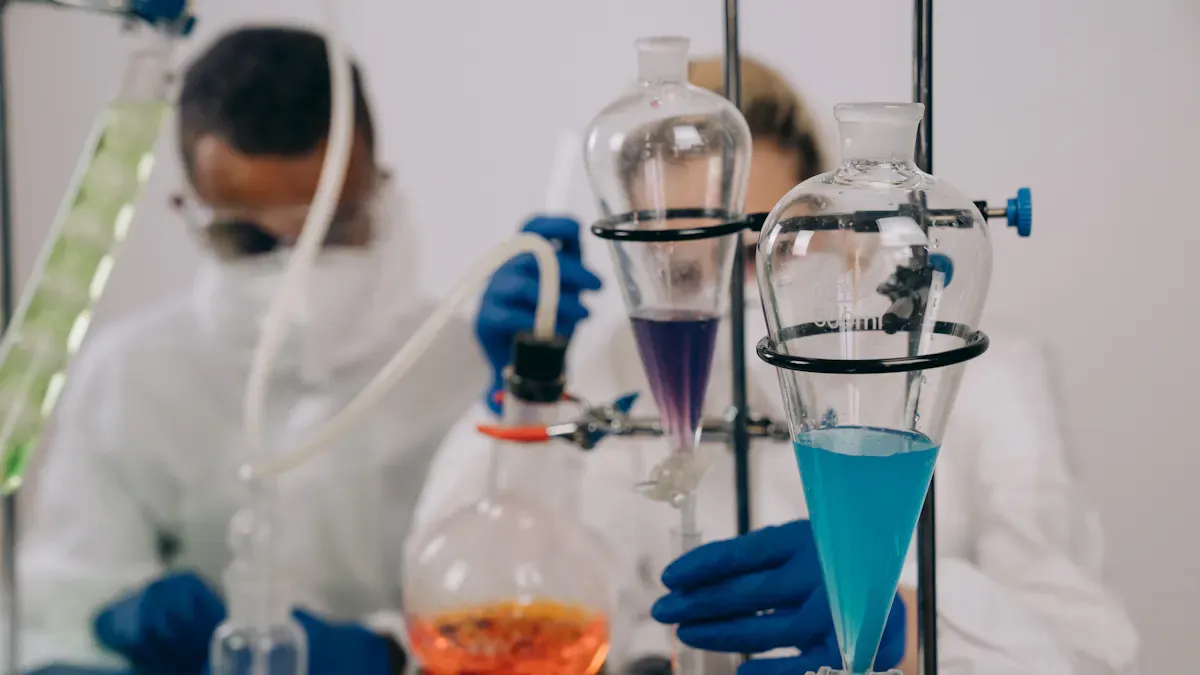
You can use Pentyl nitrite CAS 463-04-7 to make diazonium salts and nitroso compounds. These chemicals help you build more complex molecules. When you add pentyl nitrite to your reaction, you often see smooth and fast formation of these key intermediates. This makes your work easier and more reliable.
Tip: Try using pentyl nitrite in your next diazotization reaction. You may notice cleaner results and fewer byproducts.
Alkylation and Functional Group Transformations
You can use pentyl nitrite to change the structure of your molecules. It helps you add or swap groups on your starting material. Many chemists use it for alkylation reactions. You can also use it to introduce nitroso groups, which can lead to new and useful products.
- You can make new building blocks for your synthesis.
- You can explore different chemical pathways.
Industrial-Scale Organic Synthesis
You can scale up your reactions with pentyl nitrite. Its high purity and stable liquid form make it easy to handle in large batches. Many factories use it to make important chemicals for other industries. You get consistent results, even when you work with bigger amounts.
| Application Area | Benefit for You |
|---|---|
| Bulk synthesis | Reliable outcomes |
| Process safety | Easier handling |
Flavor and Fragrance Compound Development
You can use pentyl nitrite to create flavors and fragrances. It helps you make special aroma compounds that go into perfumes and food products. You get more control over the scent and taste profiles. This lets you design unique products for your customers.
Note: Many leading brands trust pentyl nitrite for its quality and performance in flavor and fragrance development.
Comparison of Pentyl nitrite CAS 463-04-7 with Alternative Reagents

Versus Sodium Nitrite in Organic Synthesis
You may wonder how Pentyl nitrite CAS 463-04-7 compares to sodium nitrite. Sodium nitrite is a common reagent, but it often needs strong acids to work. This can make your reactions harsher and less safe. Pentyl nitrite CAS 463-04-7 lets you run reactions under milder conditions. You avoid using strong acids and reduce the risk of unwanted side reactions. You also get better control over your process.
| Reagent | Reaction Conditions | Safety Level | Ease of Use |
|---|---|---|---|
| Sodium nitrite | Needs strong acid | Moderate | Moderate |
| Pentyl nitrite | Mild, neutral | High | Easy |
Versus Other Alkyl Nitrites
You might have used other alkyl nitrites before. Some of these can be less stable or have lower purity. Pentyl nitrite CAS 463-04-7 offers high purity and a stable liquid form. You can measure and handle it easily. This helps you get more reliable results in your experiments.
Note: High purity means fewer impurities in your final product.
Cost, Availability, and Handling Benefits
You want a reagent that is easy to buy and store. Pentyl nitrite CAS 463-04-7 comes in convenient packaging sizes. You can choose the amount that fits your needs. The product has a long shelf life, so you do not have to worry about it going bad quickly. You also benefit from simple storage requirements. This makes your lab work smoother and more efficient.
Tips for Effective Use of Pentyl nitrite CAS 463-04-7

Optimizing Reaction Conditions
You can get the best results by adjusting your reaction setup. Start with small test batches. Change one variable at a time, such as temperature or mixing speed. Record your results in a notebook. This helps you find the best conditions for your synthesis.
Tip: Use clean glassware and measure your chemicals carefully. Small mistakes can change your outcome.
Safety and Best Laboratory Practices
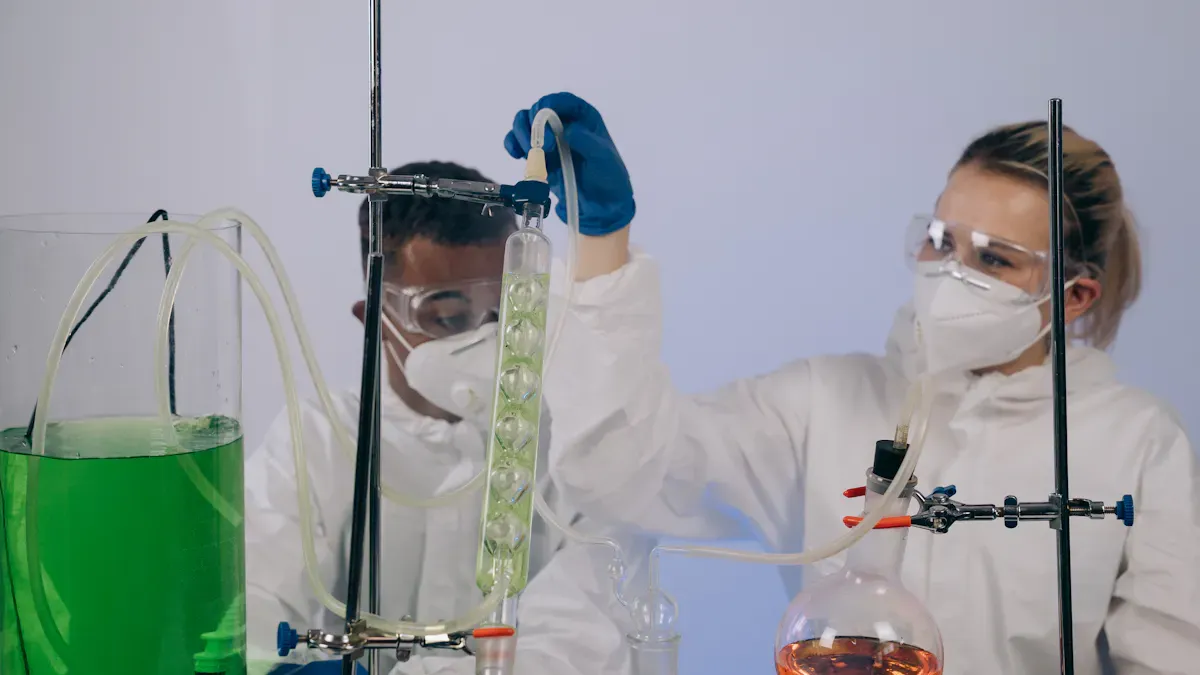
You must always protect yourself when working with chemicals. Wear gloves, goggles, and a lab coat. Work in a well-ventilated area or use a fume hood. If you spill Pentyl nitrite CAS 463-04-7, clean it up right away and tell your supervisor.
| Safety Gear | Why You Need It |
|---|---|
| Gloves | Protect your hands |
| Goggles | Shield your eyes |
| Lab coat | Keep your clothes safe |
Storage, Stability, and Shelf Life
Store your chemical in a cool, dry place. Keep the container tightly closed. Check the label for the expiration date. Pentyl nitrite CAS 463-04-7 stays stable for up to one year if you store it properly.
Note: Do not freeze the container. Room temperature works best.
Troubleshooting and Common Pitfalls
If your reaction does not work, check your steps. Make sure you used the right amounts. Look for leaks or spills. If you see strange colors or smells, stop and ask for help. You can solve most problems by reviewing your notes and following safety rules.
- You can solve many synthesis problems with Pentyl nitrite CAS 463-04-7.
- You get higher yields and better selectivity in your reactions.
- You work in safer and more efficient ways.
- You improve your success and productivity in organic synthesis projects.
FAQ
What is Pentyl nitrite CAS 463-04-7 used for?
You use Pentyl nitrite to make flavors, fragrances, and other organic compounds. It helps you get better yields and safer reactions in your lab.
How should you store Pentyl nitrite CAS 463-04-7?
You keep Pentyl nitrite in a cool, dry place. Make sure the container stays tightly closed. Room temperature works best for storage.
Is Pentyl nitrite CAS 463-04-7 safe to handle?
Always wear gloves, goggles, and a lab coat. Work in a ventilated area. You protect yourself by following standard lab safety rules.
See Also
Innovative Techniques for Aminoguanidine Bicarbonate Production and Uses
Essential Guidelines for Safe Nitric Acid Storage Practices
Industrial Applications and Solubility of 2 5-Furandicarboxylic Acid
Understanding 60 Percent Nitric Acid and Its Industrial Uses
Recent Innovations in Nitric Acid Separation and Purification Methods