Calculating the Payback of a Coffee Bean Sorter
An investment in a coffee bean sorter requires careful financial analysis. Roasteries calculate the payback period by dividing the total investment cost by the net annual financial gain. Key variables include cost reductions from less labor and wasted product. Revenue growth from premium pricing and increased throughput also plays a crucial role.
The market for this equipment shows steady growth, indicating its increasing importance.
| Metric | Value |
|---|---|
| Market Size 2024 | 799.2 USD Million |
| Market Size 2025 | 846.3 USD Million |
| Market Size 2035 | 1,500 USD Million |
| CAGR (2025 - 2035) | 5.9% |
A roasted coffee beans optical sorter represents a significant, yet potentially profitable, investment for a modern roastery.
Step 1: Calculate Your Total Investment Cost
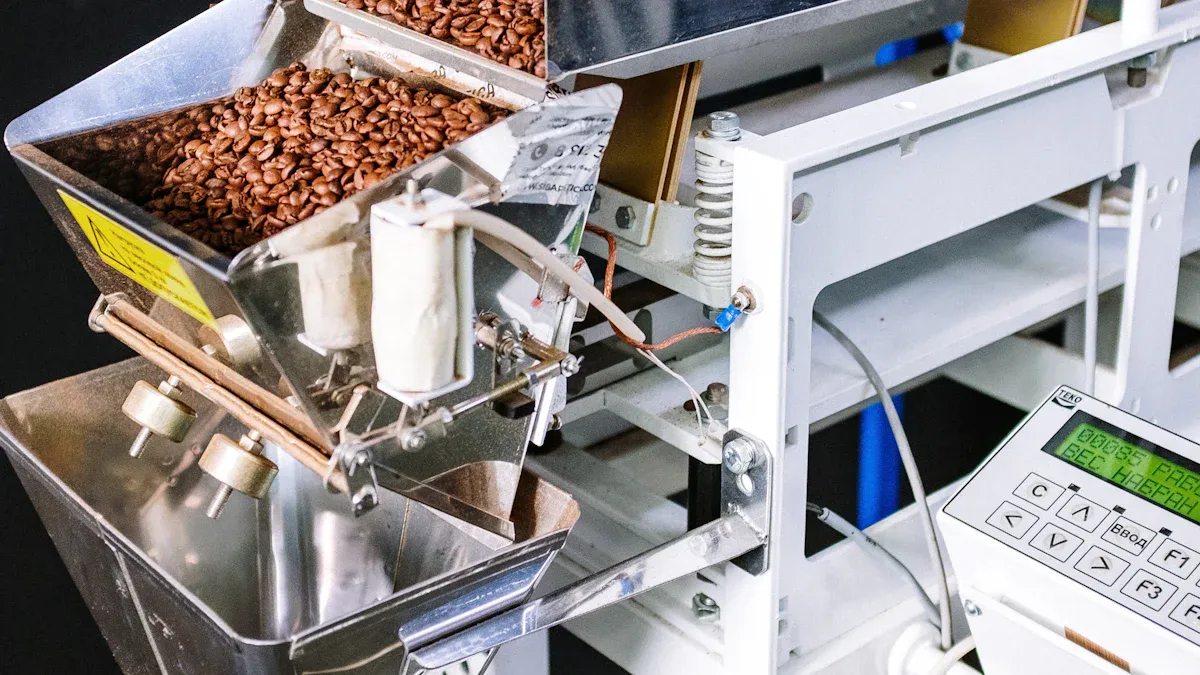
A roastery must first determine the complete upfront investment. This total cost extends beyond the machine's sticker price. A comprehensive calculation provides the baseline for an accurate payback analysis. Businesses should account for all expenses required to make the sorter fully operational.
Purchase Price and Shipping
The initial purchase price is the largest single expense. Roasteries must also budget for several related costs. These additional items significantly impact the total investment. Key costs to include are:
- Freight and Shipping: Transporting heavy, delicate machinery can be expensive.
- Transit Insurance: This protects the investment against damage during shipment.
- Import Duties and Taxes: International purchases often incur tariffs and local taxes.
Installation and Setup Fees
Professional installation ensures the sorter functions correctly from day one. These fees cover the technician's time and expertise. A business should also consider potential facility modifications. The roastery might need new electrical wiring, compressed air lines, or structural supports to accommodate the equipment.
Pro Tip: Request a detailed installation quote from the supplier. This document should itemize all potential charges, including technician travel and lodging, to prevent unexpected expenses.
Staff Training and Integration
Effective training empowers the team to operate the sorter efficiently. The cost of training includes the instructor's fees and the operational downtime while staff learns the new system. Proper training is not an optional expense. It is a crucial investment that ensures the roastery maximizes the machine's capabilities and achieves the projected return on investment.
Step 2: Quantify Annual Cost Reductions
After calculating the initial investment, a roastery must identify where the sorter will save money. An optical sorter directly reduces operational costs in several key areas. These savings accumulate annually, contributing significantly to the machine's payback. A business can quantify these reductions to build a strong financial case for the investment.
Reduced Manual Sorting Labor
An automated sorter drastically cuts the need for manual labor. Human sorters are slow and expensive. An optical sorter processes thousands of kilograms per hour, a task that would require a large team of employees. The efficiency difference is substantial.
| Sorting Method | Quantity (kg) | Time (hours) | Rate (kg/hour) |
|---|---|---|---|
| Manual | 5 | 3 | ~1.67 |
| Automated (Optical Sorter) | 6,000 - 10,000 (cherries) | 1 | 6,000 - 10,000 |
To calculate this saving, a roastery multiplies the total manual sorting hours eliminated per year by the average hourly wage, including benefits. This figure often represents the largest single cost reduction.
Decreased Product Waste
Manual sorting is prone to human error. Workers may accidentally discard high-quality beans along with the defects. This "good-in-bad" waste directly reduces a roastery's sellable product and revenue.
An optical sorter uses advanced sensors to identify defects with incredible precision. It minimizes the accidental removal of good beans, thereby increasing the final product yield from each batch. This improved accuracy translates directly to more coffee to sell and higher profits.
Lower Operational Expenses
The financial benefits extend beyond labor and product waste. A roastery can realize savings in other operational areas. Consolidating the sorting process into one efficient machine can lead to:
- Reduced costs for employee benefits and overhead associated with a large sorting team.
- Lower energy consumption compared to lighting and climate-controlling a large manual sorting space.
- Fewer expenses related to managing a larger workforce, such as HR and payroll administration.
Step 3: Estimate Annual Revenue Growth
A coffee bean sorter drives profitability by creating new revenue streams, not just by cutting costs. A business can unlock significant financial growth by improving its product and operational capacity. These gains are a critical component of the payback calculation.
Increased Throughput and Yield
An optical sorter processes coffee beans at a much faster rate than manual labor. This speed directly increases a roastery's production capacity. The business can roast and package more coffee each day without adding more staff. This enhanced throughput leads to several key benefits:
- Faster fulfillment of large orders.
- Increased total volume of sellable coffee.
- Ability to scale production to meet seasonal demand.
This efficiency gain translates directly into higher annual sales potential.
Premium Pricing Opportunities
Exceptional consistency allows a roastery to market its coffee as a premium product. An optical sorter removes nearly all defects, ensuring every bag meets the highest quality standard. Customers are willing to pay more for a reliably excellent coffee experience.
A roastery can justify higher price points by guaranteeing a defect-free product. This consistency builds brand trust and elevates the coffee from a commodity to a specialty good, boosting profit margins on every sale.
Access to New Wholesale Markets
Many large-scale buyers, such as specialty cafes, hotel chains, and grocery stores, have strict quality requirements. A sorter provides the documentation and consistency needed to meet these standards, opening doors to lucrative wholesale contracts. For instance, Rosso Coffee utilized advanced sorter technology to meet growing demand and expand its wholesale and online revenue by an impressive 450%. This demonstrates how investing in quality control technology enables a roastery to capture larger, previously inaccessible markets and achieve substantial growth.
Why a Roasted Coffee Beans Optical Sorter Boosts ROI
An investment in a coffee bean sorter is a strategic move that pays dividends far beyond simple cost savings. The technology directly enhances product quality, boosts operational efficiency, and strengthens brand reputation. These three pillars work together to create a powerful return on investment (ROI), transforming the sorter from a mere piece of equipment into a central driver of profitability and growth. Understanding these benefits is key to appreciating the machine's full financial impact.
Enhancing Final Product Quality
A roasted coffee beans optical sorter is essential for achieving the highest level of product quality. It meticulously removes defective beans that negatively impact flavor. Even a few immature beans, known as quakers, can introduce astringency and diminish a coffee's final cup score. Other defects, like those from insect damage, can create unpleasant flavors described as "rotting organic matter." Removing these problematic beans is critical. Advanced sorters use laser and computer-driven technology to identify and eject discolored beans, ensuring a cleaner, more consistent flavor profile. This process elevates the coffee's quality, helping it achieve and maintain a specialty-grade status.
Maximizing Processing Efficiency
Automated sorting technology delivers significant gains in processing speed and efficiency. A roastery can dramatically increase its output without expanding its labor force. This boost in productivity allows the business to handle larger volumes and scale operations effectively. Different sorting technologies offer various efficiency improvements.
| Innovation | Efficiency Improvement |
|---|---|
| AI-Powered Sorting | 25% faster |
| Optical Recognition | 20% increase |
| Infrared Sorting | 30% less energy |
| Laser Sorting | 40% enhancement |
By adopting a roasted coffee beans optical sorter, a roastery can process more coffee in less time, directly enhancing its production capacity and revenue potential.
Improving Brand Reputation
A commitment to superior quality control builds a powerful brand reputation. Customers associate the brand with a consistently excellent coffee experience. This trust justifies premium pricing and fosters customer loyalty. For example, brands like 787 Coffee build their reputation on a "farm to cup" model that guarantees quality at every stage. A roasted coffee beans optical sorter provides the consistency needed to make such a promise. It eliminates the guesswork in quality control and ensures every bag meets the brand's high standards. This dedication to defect-free coffee distinguishes a roastery in a competitive market, attracting discerning customers and wholesale partners.
Step 4: The Payback Formula and a Practical Example
After quantifying costs and financial gains, a roastery can bring all the data together. This final step uses a simple formula to determine the payback period. The calculation provides a clear timeline for when the coffee bean sorter will have paid for itself, offering a concrete metric for data-driven decision-making.
The Payback Period Formula
The payback period is a financial metric used to evaluate an investment's efficiency. It determines the time required for a project to recover its initial cost from the cash receipts it generates. A business calculates the simple payback period by dividing the initial investment by the average annual cash inflows the investment produces. The result shows the number of years needed for the investment to pay for itself.
The net annual cash flow is the total financial benefit the sorter generates each year. It is the sum of all annual cost reductions (Step 2) and annual revenue growth (Step 3).
Payback Period = Initial Investment / Net Annual Cash Flows
A shorter payback period generally indicates a more attractive investment, as it means the business recovers its capital more quickly.
A Step-by-Step Calculation
A practical example illustrates how a roastery can apply this formula. Let's analyze a hypothetical business, "Summit Roasters," to see the payback period for its new optical sorter.
1. Total Investment Cost (from Step 1)
Summit Roasters compiled all upfront expenses to determine its total initial investment.
| Expense Item | Cost |
|---|---|
| Sorter Purchase Price | $75,000 |
| Shipping and Insurance | $4,000 |
| Installation & Facility Upgrades | $6,000 |
| Staff Training | $2,500 |
| Total Initial Investment | $87,500 |
2. Net Annual Financial Gain (from Steps 2 & 3)
Next, the roastery calculated the total annual financial benefit by combining cost savings and new revenue.
| Financial Gain Category | Annual Value |
|---|---|
| Cost Reductions | |
| Reduced Manual Labor | $28,000 |
| Decreased Product Waste | $5,000 |
| Lower Operational Overhead | $2,000 |
| Revenue Growth | |
| Increased Throughput & Sales | $12,000 |
| Premium Pricing Margin | $8,000 |
| Net Annual Cash Flow | $55,000 |
3. The Final Payback Calculation 🧮
With the two key figures established, Summit Roasters can now calculate its payback period.
- Initial Investment:
$87,500 - Net Annual Cash Flow:
$55,000
Payback Period = $87,500 / $55,000
The calculation reveals a payback period of approximately 1.59 years.
This result means Summit Roasters can expect its investment in the optical sorter to be fully paid off by the new financial gains in just over a year and a half. After this point, the $55,000 in annual net cash flow becomes pure profit, significantly boosting the roastery's long-term profitability.
A systematic financial analysis provides clear justification for a roasted coffee beans optical sorter. The Payback Period formula is a powerful tool for data-driven decisions. Experts agree a roasted coffee beans optical sorter is a strategic investment, essential for achieving top quality, efficiency, and long-term profitability in a competitive market.
FAQ
Can a small roastery benefit from an optical sorter?
Yes. Smaller models offer a lower entry cost. The payback comes from premium pricing, reduced waste, and labor savings, which are crucial for small business profitability and growth.
Is the payback period the only financial metric to use?
No. Businesses also use metrics like Return on Investment (ROI) and Net Present Value (NPV). The payback period is a simple, effective tool for initial investment assessment.
See Also
Capsule Sorters: Essential Tools for Effective Defect Removal Explained
Top Capsule Checkweighers for Buyers to Evaluate in 2025
Boosting Pharma Efficiency: Modern Capsule Decapsulation Machines Unveiled
Essential Industrial Checkweighers: Three Must-Haves for Every Food Plant
Ampoule Filling Line Manufacturers: A Comprehensive Production Line Comparison