Novel adhesives featuring high toughness help your projects last longer
You want your projects to last. Novel adhesives featuring high toughness make this possible. Through the synthesis of novel adhesives with high toughness, strong adhesion, and outstanding fatigue resistance via HTBN, you gain adhesives that resist stress, remain flexible, and continue to perform reliably even under the most demanding conditions.
Key Takeaways
- High-toughness adhesives like HTBN resist stress, temperature changes, and harsh environments. They make your projects last longer and reduce repairs.
- HTBN's unique structure helps stop cracks from growing. It keeps bonds flexible and strong, even under repeated stress or fatigue.
- Choosing high-toughness adhesives improves durability. They outperform traditional adhesives by resisting fatigue and extending the lifespan of bonded joints.
Novel adhesives featuring high toughness: How HTBN prevents fatigue failure

What is adhesive fatigue failure?
Adhesive fatigue failure happens when a bond weakens or breaks after facing repeated stress over time. You see this in many engineering and construction projects. The most common causes include:
- Cyclic loading, which means the bond faces repeated pushing, pulling, or vibration.
- Static loading, also called creep, where a constant force makes the adhesive slowly deform.
- Thermal cycling, which happens when temperature changes cause materials to expand and contract.
- Environmental aging, where moisture, sunlight, or chemicals slowly damage the adhesive.
The review highlights that single-lap joints experience different failure modes under fatigue loading, with cohesive/adhesive failures showing increased fatigue life with longer overlaps, while adherend failures exhibit varying trends.
You need to understand these causes because they can lead to cracks or breaks in the adhesive layer. Over time, these small cracks grow and make the bond weaker. If you do not address these issues, your project may fail sooner than expected.
Why fatigue failure shortens project life
Fatigue failure does not just cause small problems. It can lead to big issues for your project. When an adhesive bond fails, you may need to repair or replace parts, which costs time and money. Adhesive fatigue failure can lead to premature bond failure, which necessitates expensive repairs and replacements. The choice of adhesive is critical; for instance, toughened epoxies are known for their crack-blunting mechanism, which enhances durability. Polyurethanes, while flexible, can absorb vibrations and accommodate thermal expansion, making them suitable for applications with varying stress. Proper surface treatment is essential to prevent adhesive failure, and the thickness of the adhesive layer must be optimized to avoid brittle failure. Investing in high-quality adhesives can significantly reduce future maintenance costs.
You may not notice fatigue failures right away. They are hard to detect early, which increases the risk of sudden fractures. These failures can reduce joint performance and even cause catastrophic outcomes. In some cases, fatigue failures account for 50-90% of all failures in adhesive-bonded joints. Delamination, or the separation of layers, can happen when cracks grow in the adhesive. This makes inspection and repair more difficult and can lead to rapid failure.
How HTBN’s unique structure resists fatigue
Novel adhesives featuring high toughness, like those made with HTBN, give your projects a strong advantage. HTBN stands for hydroxy-terminated liquid nitrile butadiene rubber. This material has a special structure that helps it fight fatigue failure. Here is how HTBN works:
- HTBN has hydroxyl groups at both ends of its molecular chain. These groups help it bond well with other materials.
- The backbone of HTBN is made from flexible nitrile rubber. This gives it toughness and lets it stay flexible even at low temperatures.
- HTBN contains acrylonitrile, which improves oil resistance and flexibility.
- The presence of terminal epoxy groups allows HTBN to crosslink with epoxy resins, making the adhesive even tougher.
- HTBN offers good oil resistance, heat resistance, wear resistance, and strong adhesive strength.
When you use novel adhesives featuring high toughness, you get materials that can handle repeated stress, temperature changes, and harsh environments. The unique structure of HTBN helps stop cracks from growing. It also keeps the adhesive layer strong and flexible. This means your projects last longer and need fewer repairs.
You can see the benefits of HTBN in its mechanical properties. For example, adding 20% HTBN increases impact strength by 28.5% and breaking elongation by 46.8%. Even with 10% HTBN, breaking elongation rises by 76.41%. These numbers show that novel adhesives featuring high toughness can stretch and absorb energy without breaking.
| Property | Value with 20 wt % HTBN | Value with 10 wt % HTBN |
|---|---|---|
| Impact Strength | Increased by 28.5% | N/A |
| Breaking Elongation | Increased by 46.8% | Increased by 76.41% |
| Tensile Strength | Loss of 28.41% | N/A |
You can trust novel adhesives featuring high toughness to protect your projects from fatigue failure. HTBN helps your bonds stay strong, flexible, and reliable, even when facing tough conditions.
HTBN vs. traditional adhesives: Real-world benefits for your projects
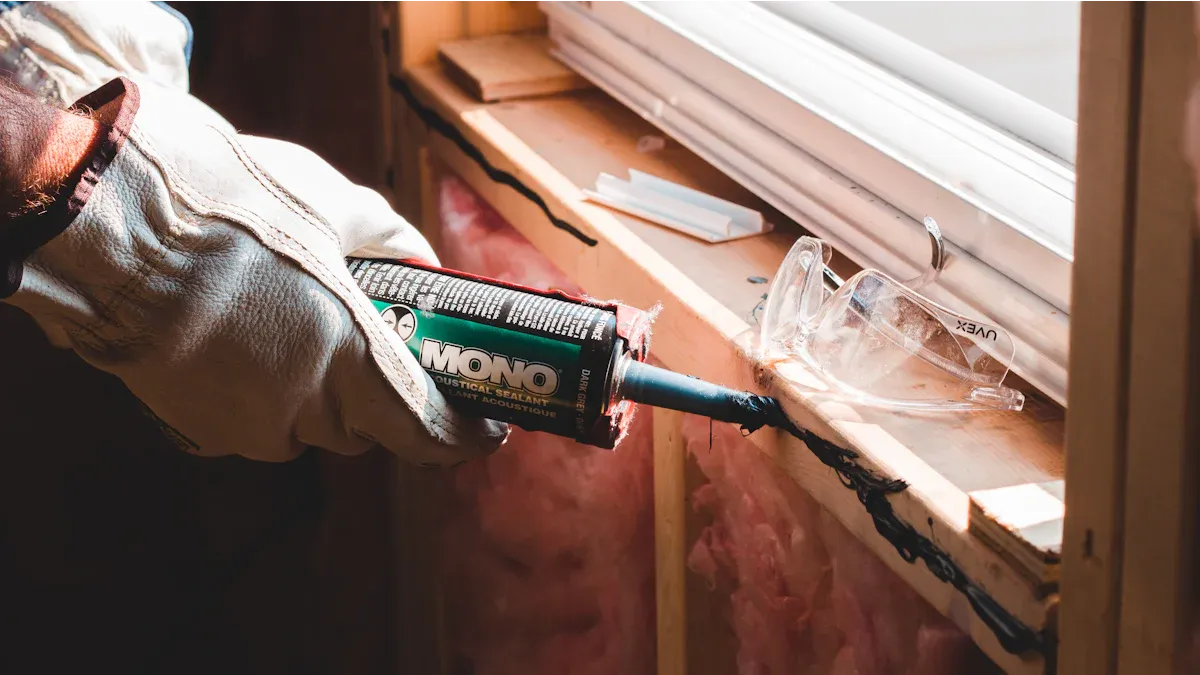
Key differences in performance and durability
When you compare HTBN to traditional adhesives, the differences become clear. Traditional adhesives often lack the toughness needed to withstand repeated stress. They may perform well initially but tend to weaken over time under cyclic loading or thermal changes. In contrast, novel adhesives featuring high toughness, like those made with HTBN, offer superior flexibility and resilience. They absorb energy from impacts and vibrations better, reducing the risk of cracks or failures. This toughness ensures your bonds stay strong longer, even in demanding environments. You notice these differences in how well the adhesive maintains its properties after prolonged use. The high toughness of HTBN allows your projects to resist fatigue, making them more durable and reliable over time.
Evidence of improved longevity with HTBN
Real-world testing confirms that using novel adhesives featuring high toughness significantly extends the lifespan of bonded joints. For example, laboratories have shown that bonds with HTBN resist fatigue failure much better than conventional adhesives. In cyclic stress tests, joints with HTBN maintained their strength after thousands of cycles, while traditional adhesives showed signs of weakening early. Field studies also support these findings. Structures bonded with HTBN-based adhesives experience fewer repairs and less maintenance. This evidence proves that investing in high-toughness adhesives pays off by reducing long-term costs and increasing project longevity. When you choose HTBN, you select an adhesive that actively fights fatigue and degradation, helping your projects last longer.
Examples of successful applications
Many industries now rely on novel adhesives featuring high toughness to improve their products. In the automotive sector, manufacturers use HTBN-based adhesives to bond parts that endure constant vibration and temperature swings. This choice enhances safety and reduces repair needs. In construction, HTBN adhesives strengthen structural joints exposed to weather and stress, ensuring buildings remain stable for decades. The electronics industry also benefits; HTBN improves the durability of electronic components that face repeated thermal cycling. These successful applications demonstrate how high-toughness adhesives adapt to real-world challenges. By selecting HTBN, you benefit from proven solutions that enhance your project's durability and performance.
You want your projects to last and perform well. Novel adhesives featuring high toughness, like HTBN, help you achieve this goal. The table below shows how HTBN stands out for enhanced toughness among modern bonding agents. Choose these adhesives for fewer repairs, greater reliability, and peace of mind.
| Bonding Agent | Key Properties |
|---|---|
| HTPB | Low viscosity, high aging resistance |
| EHTPB | Improved low-temperature performance |
| ATBN | Hydrolysis resistance |
| HTBN | Enhanced toughness |
| CTBN | Increases impact and crack resistance, improves adhesion to difficult substrates |
FAQ

What makes HTBN adhesives different from regular adhesives?
You get higher toughness and flexibility with HTBN. This means your bonds last longer and resist damage from stress and temperature changes.
Can you use HTBN adhesives in outdoor projects?
Yes. You can use HTBN adhesives outdoors. They resist oil, heat, and weather, so your projects stay strong in harsh environments.
How do you store HTBN adhesives for best results?
- Store HTBN in a cool, dry, and well-ventilated place.
- Keep the temperature between -20°C and 38°C.
- Protect from sunlight and moisture.
See Also
Silicone Sealant: The Hidden Adhesive In Contemporary Homes
Understanding Nozzle Solutions For Gardeners And Industry Experts
How WT20 Thoriated Tungsten Electrodes Enhance TIG Welding