What Are the Most Durable Alternatives to Marble?
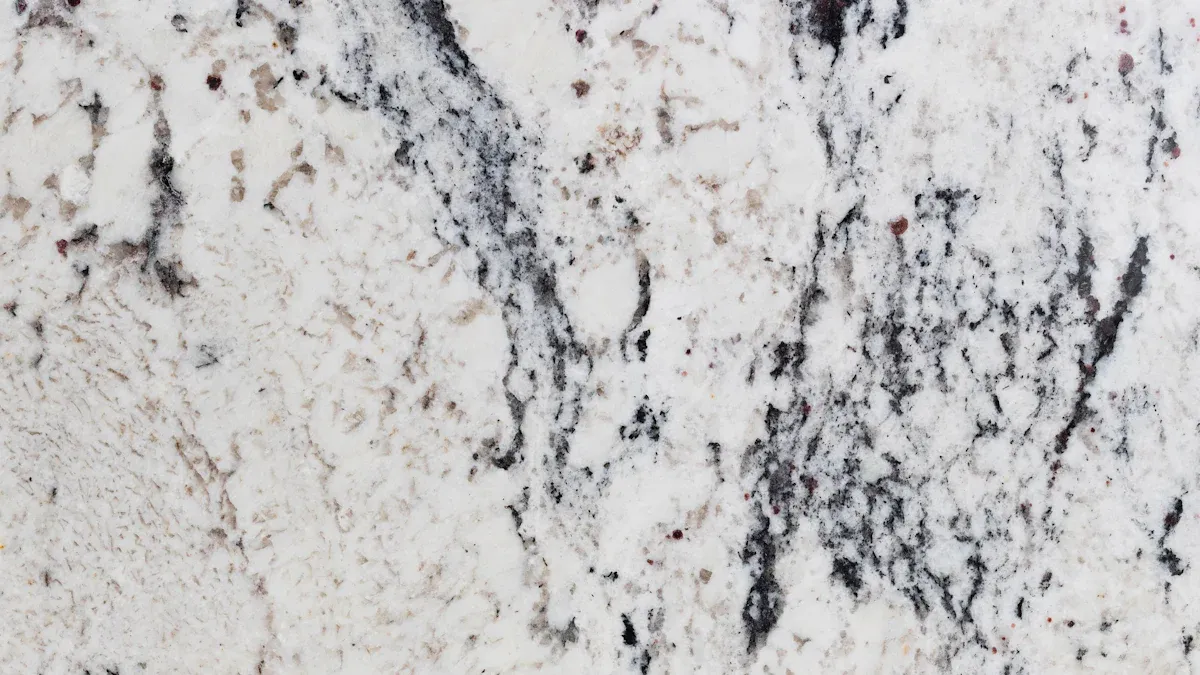
For homeowners seeking marble's classic beauty without its fragility, the most durable marble alternative options are Sintered Stone, Quartz, and Quartzite.
These materials deliver superior resistance to stains, scratches, and heat. They also closely mimic marble's elegant appearance, providing both style and strength for any home.
Key Takeaways
- Sintered stone is the best choice for durability. It resists scratches, stains, and heat very well.
- Quartz is great for easy care. It does not need sealing and cleans up simply.
- Quartzite is the strongest natural stone. It looks like marble but is much harder and resists damage.
Why Homeowners Seek Marble Alternatives
Marble offers timeless elegance, but its delicate nature presents significant challenges in modern homes. Many homeowners discover that its beauty comes with a high price in terms of upkeep and worry. Understanding these drawbacks is the first step toward finding a more practical solution for a busy household.
High Maintenance Demands
Marble requires consistent and careful maintenance to preserve its appearance. It is a porous stone, meaning it needs regular sealing to protect it from absorbing liquids. Homeowners must commit to this sealing process, typically once or twice a year. Daily cleaning also demands special attention, as harsh or acidic cleaners can damage the stone's surface. This level of care is often more than people want for a functional space like a kitchen.
Prone to Stains and Etching
The porous quality of marble makes it highly susceptible to staining and etching. Common kitchen spills like wine, coffee, juice, or oil can quickly seep into the stone and leave permanent marks. Acidic substances, such as lemon juice or vinegar, cause etching—a chemical reaction that dulls the surface and creates light-colored spots.
Quick Tip: Etching is not a stain; it is physical damage to the stone's surface. While some light etching can be professionally polished out, it is often permanent.
Durability in Busy Kitchens
A busy kitchen is a demanding environment, and marble often struggles to keep up. It is a relatively soft stone, making it prone to scratches from knives or chips from dropped pots and pans. The constant risk of damage can cause stress for families who use their kitchen daily for cooking and gathering. For this reason, many seek a durable marble alternative that provides peace of mind without sacrificing style.
Sintered Stone: The Best Overall Performer
When performance is the top priority, sintered stone stands out as the premier marble alternative. This engineered material combines cutting-edge technology with natural minerals to produce a surface that excels in every durability category. It offers the sophisticated look of marble with none of the vulnerabilities, making it an ideal choice for modern, high-use areas.
Unmatched Durability
Sintered stone’s incredible strength comes from its unique manufacturing process. Technicians fuse natural minerals together under intense heat and extreme pressure. This process, called sintering, mimics the geological forces that create natural stone but in a controlled environment. The result is an incredibly dense and robust material, free of the weak points and porosity found in stones like marble.
Superior Resistance Features
The dense, non-porous nature of sintered stone gives it exceptional resistance to common kitchen hazards. Homeowners gain peace of mind knowing their countertops can handle daily life. Key features include:
- Stain-Proof: Completely non-porous, it repels liquids like wine, coffee, and oil without any need for sealing.
- Scratch-Resistant: Its hardened surface is one of the most scratch-resistant options available, standing up to knives and abrasives.
- Heat-Proof: You can place hot pots and pans directly on the surface without fear of scorching or cracking. 🔥
- UV-Resistant: The colors will not fade or yellow over time, making it suitable for outdoor applications as well.
The Closest Look to Marble
Sintered stone excels at replicating marble's visual appeal. Using high-definition imaging and advanced printing, manufacturers create slabs with realistic, through-body veining that mimics the depth and elegance of natural Calacatta or Carrara marble.
Design Tip: Unlike other materials where patterns are only on the surface, the veining in many high-quality sintered stones runs through the entire slab. This ensures a consistent, natural look on edges and cutouts.
Quartz: The Low-Maintenance Champion
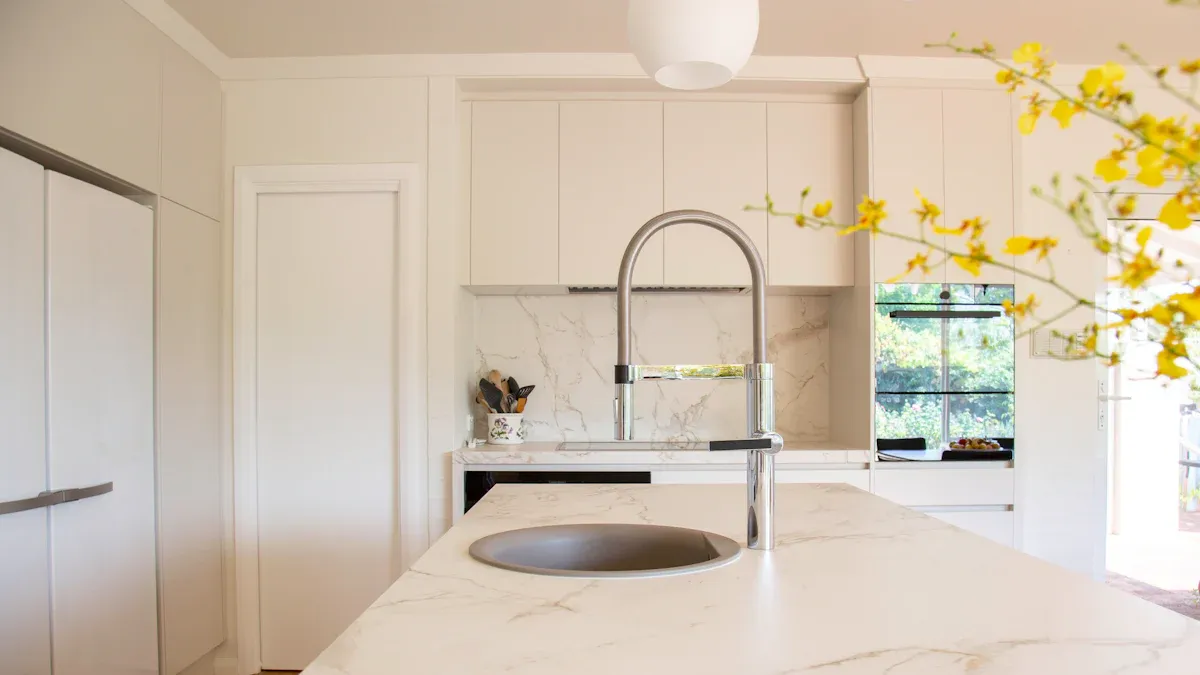
Quartz offers an exceptional blend of durability and effortless upkeep, making it a favorite for homeowners who value convenience. This engineered stone provides the luxurious look of marble without the demanding maintenance routine. It stands as a practical and beautiful solution for any high-traffic area.
Engineered for Strength
Manufacturers create quartz slabs by combining approximately 90% ground natural quartz with polymer resins and pigments. This mixture is then compacted into dense, non-porous slabs under intense pressure and heat. This engineering process produces a surface that is more consistent and resilient than many natural stones. The added resins bind the quartz crystals together, eliminating the natural fissures and pores that make marble vulnerable to damage.
Key Durability Features
The engineered composition of quartz gives it several key advantages for busy households. Homeowners appreciate its reliable performance and simple cleaning requirements. Its primary benefits include:
- Non-Porous Surface: Quartz never needs sealing. It completely resists stains from coffee, wine, and oils.
- High Scratch Resistance: The hardness of the natural quartz minerals protects the surface from most scratches.
- Easy to Clean: A simple wipe-down with soap and water is all that is needed for daily maintenance.
Consistent Marble-Look Patterns
Quartz provides a reliable and uniform appearance that is difficult to achieve with natural stone. The manufacturing process allows for precise control over the color and veining. This ensures the slab homeowners select at the showroom is exactly what they will get in their home.
Design Advantage: This consistency is ideal for large projects or kitchens with multiple countertop sections, as it guarantees a seamless and matching look across all surfaces.
Quartzite: The Toughest Natural Stone
For those who desire the authenticity of natural stone, quartzite presents the ultimate combination of beauty and brawn. This metamorphic rock offers the graceful veining of marble but with a hardness that surpasses even granite. It stands as the most durable natural stone option for a high-performance kitchen.
Harder Than Granite
Quartzite begins its life as sandstone. Intense geological heat and pressure recrystallize the sand grains and fuse them together into an incredibly dense and hard stone. On the Mohs scale of hardness, quartzite typically scores a 7, while granite scores around 6 to 6.5. This slight difference makes quartzite exceptionally resistant to abrasion and wear, providing a superior level of durability for a busy home.
Natural Heat and Scratch Resistance
The inherent hardness of quartzite translates directly into outstanding performance. Its dense structure provides a surface that resists scratches from knives and daily kitchen activities. Homeowners also gain peace of mind from its natural heat tolerance.
- Scratch Defense: Protects against everyday wear and tear.
- Heat Proof: Safely handles hot pots and pans directly on the surface. ♨️
This resilience makes quartzite a practical work surface that does not demand constant caution.
Unique, Marble-Like Veining
Quartzite delivers the stunning visual appeal many seek from marble. It often features soft, sweeping veins and a luminous quality that brings elegance to any space. Each slab is a unique creation of nature, ensuring no two countertops are exactly alike. This provides a one-of-a-kind look that engineered materials cannot replicate.
Pro Tip: While quartzite is naturally durable, sealing it is still essential. Sealing protects the stone from absorbing liquids and prevents potential staining, preserving its unique beauty for years to come.
Porcelain Slabs: Strong and Versatile
Porcelain slabs have emerged as a highly engineered and versatile alternative to marble. Made from refined clay and minerals fired at extremely high temperatures, porcelain offers a lightweight yet incredibly strong surface. Its manufacturing process creates a material perfectly suited for modern design and demanding environments, from kitchen countertops to bathroom vanities.
High-Density and Non-Porous
The production process gives porcelain its core strengths. Manufacturers bake a specialized clay mixture at over 2,000°F, creating a glass-like material that is exceptionally dense. This process eliminates pores and voids, resulting in a completely non-porous surface. Unlike natural stone, porcelain does not require any sealing to protect it from moisture. This inherent quality makes it a fundamentally low-maintenance and durable option for any home.
Excellent Stain and Heat Resistance
Porcelain’s non-porous nature provides outstanding resistance to everyday hazards. Homeowners will find it is one of the most forgiving surfaces available.
- Stain-Proof: It repels liquids, so spills like wine, coffee, and acidic juices wipe away easily without leaving a trace.
- Heat-Resistant: The material can withstand direct contact with hot pans, offering great functionality in a busy kitchen. 🔥
This combination of features ensures the surface remains pristine with minimal effort.
Realistic Printed Veining
Modern technology allows manufacturers to print high-definition, realistic marble patterns directly onto the surface of porcelain slabs. This process achieves the elegant look of stones like Calacatta and Carrara with remarkable accuracy.
Design Note: The printing technology for porcelain is constantly advancing. This allows for a vast selection of designs, from subtle veining to bold, dramatic patterns, giving homeowners immense creative freedom.
Granite: The Classic, Budget-Friendly Option
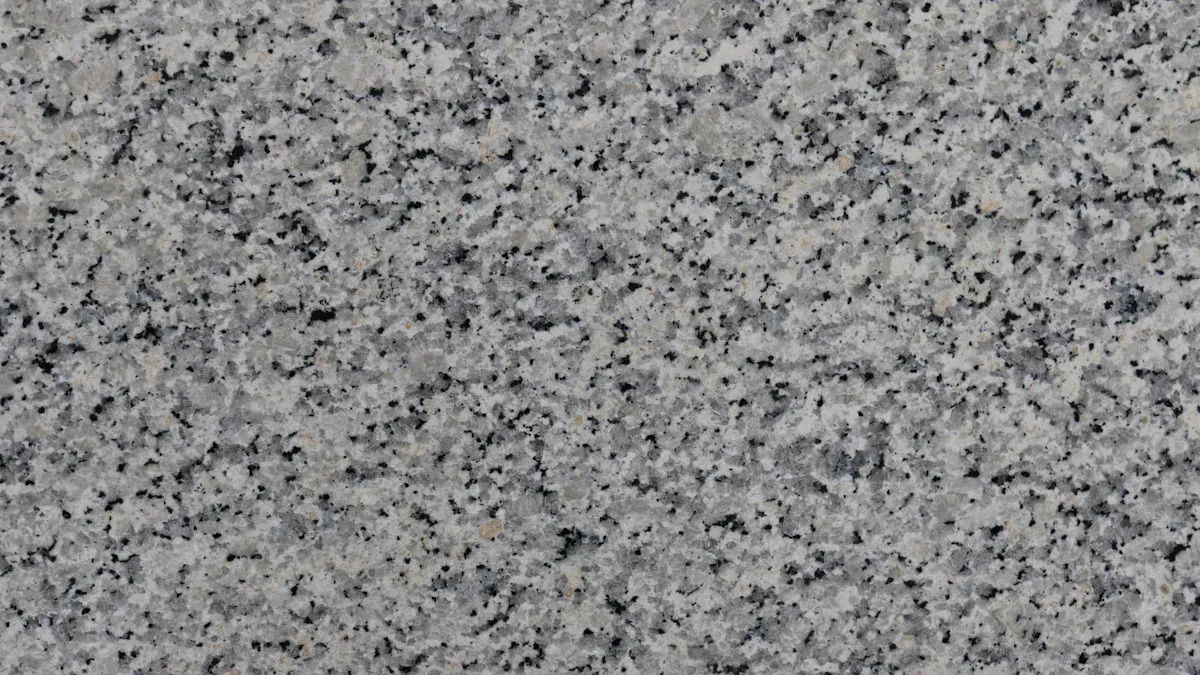
Granite remains a top contender for homeowners seeking a durable and affordable countertop. This natural stone has a long-standing reputation for reliability, offering a practical balance of strength, beauty, and value that has been trusted for decades.
A Proven Kitchen Workhorse
For years, granite has served as a dependable surface in countless homes. This natural igneous rock provides exceptional performance for its price point. Its proven track record makes it a go-to choice for busy kitchens and high-traffic areas. Homeowners appreciate its ability to withstand the demands of daily life, from meal preparation to family gatherings, making it a smart and lasting investment.
Natural Heat and Scratch Defense
Granite’s natural composition gives it excellent defensive qualities. The hard, dense stone easily resists scratches from knives and abrasives during everyday use. It also provides superior heat tolerance.
- Heat-Proof: You can place hot pots directly on the surface without causing scorch marks or cracks. 🔥
- Scratch-Resistant: Its tough surface holds up well against daily wear and tear.
This inherent toughness makes it a practical and worry-free option for active cooks.
Light-Colored Granite Varieties
Many people associate granite with dark, speckled patterns, but numerous light-colored varieties offer an aesthetic similar to marble. Slabs like River White, Alaska White, and Colonial White feature soft gray veining and creamy, bright backgrounds. These options provide the airy feel of marble with the robust durability of granite.
Design Tip: When choosing a light-colored granite, always view the entire slab in person. Natural variations mean each piece is unique, allowing you to select a pattern that perfectly matches your vision.
Concrete: The Modern, Customizable Look
Concrete offers a unique, industrial-chic aesthetic for homeowners seeking a departure from traditional stone. Modern concrete countertops are highly engineered surfaces, providing a bold statement piece that is both customizable and tough. This material brings a raw, minimalist beauty to contemporary kitchen designs.
Engineered for Toughness
Today’s concrete countertops are far superior to standard pavement. Fabricators use specialized, high-performance mixes that include additives like polymers and fibers. This process creates a dense, strong material capable of withstanding the rigors of a busy kitchen. The engineered composition significantly reduces the risk of cracking and enhances overall durability, making it a reliable work surface.
Resistance Through Sealing
Concrete is naturally porous, so its resistance to damage depends heavily on a high-quality sealer. A robust topical or penetrating sealer is essential for protecting the surface. Proper sealing provides several key benefits:
- It creates a barrier against stains from food and liquids.
- It prevents etching from acidic substances like lemon juice.
- It makes the surface easier to clean and maintain.
Maintenance Note: Homeowners must reapply the sealer periodically to maintain this protective layer. The frequency depends on the type of sealer used and the amount of kitchen activity.
Unique Industrial Aesthetic
Concrete delivers a distinct look that no other material can replicate. It provides a cool, modern vibe that complements industrial, minimalist, and contemporary styles. Each countertop is custom-poured, allowing for complete control over shape, thickness, and color. Homeowners can choose from a wide range of pigments to create a truly one-of-a-kind surface. This level of customization makes concrete an excellent choice for achieving a specific design vision. 🎨
Durability at a Glance: A Quick Comparison
Choosing the right material involves balancing different performance features. This quick comparison helps clarify how each option stacks up in the most important durability categories. The table below provides a simple overview to guide your decision.
| Material | Stain Resistance | Scratch Resistance | Heat Resistance | Maintenance Level |
|---|---|---|---|---|
| Sintered Stone | Excellent | Excellent | Excellent | Very Low |
| Quartz | Excellent | Very Good | Fair | Very Low |
| Quartzite | Good (Sealed) | Excellent | Excellent | Low-Moderate |
| Porcelain | Excellent | Very Good | Excellent | Very Low |
| Granite | Good (Sealed) | Very Good | Excellent | Low-Moderate |
| Concrete | Fair (Sealed) | Fair | Good | Moderate-High |
Stain Resistance
Sintered stone, porcelain, and quartz offer the best performance. Their non-porous surfaces provide a complete barrier against spills. Quartzite and granite require proper sealing to achieve good stain resistance. Concrete is the most vulnerable and depends entirely on its sealer.
Scratch Resistance
Quartzite and sintered stone lead this category with exceptional hardness. Granite and quartz also provide very good protection against daily wear. Concrete is the softest material and can scratch more easily.
Heat Resistance
Natural stones like quartzite and granite, along with engineered sintered stone and porcelain, can handle direct heat from hot pans. 🔥 Homeowners should use trivets with quartz, as its resins can be damaged by high temperatures.
Maintenance Level
Key Takeaway: For a "set it and forget it" surface, choose sintered stone, quartz, or porcelain. These materials never require sealing. Natural stone options and concrete demand periodic resealing to maintain their protective layer and appearance.
How to Choose the Right Marble Alternative
Selecting the perfect material depends on balancing your specific needs for performance, appearance, and budget. Each option offers a unique set of benefits tailored to different homeowner priorities. This guide helps you identify the ideal surface for your project.
For Maximum Durability and Style
Homeowners prioritizing top-tier performance and aesthetics should choose sintered stone. This material delivers unmatched resistance to scratches, stains, and heat. Its advanced manufacturing process creates realistic, through-body veining that closely mimics natural marble. Sintered stone is the ultimate choice for a high-use kitchen where both style and strength are non-negotiable.
For Low Maintenance and Consistency
Quartz is the champion for those seeking effortless upkeep. Its non-porous surface requires zero sealing and easily resists stains. Manufacturers produce quartz with uniform colors and patterns, ensuring a consistent look across large areas. This reliability makes it a practical and predictable choice for busy families who value convenience.
For Natural Beauty and Hardness
Quartzite is the leading marble alternative for anyone who loves the unique character of natural stone. It offers the graceful, sweeping veins of marble but with superior hardness that resists scratches and heat. Each slab is a one-of-a-kind piece of nature, providing an exclusive and elegant look for your home.
Pro Tip: For projects where natural stone is a must but durability is key, quartzite provides the best of both worlds.
For Budget-Conscious Projects
Granite is an excellent option for achieving a durable and beautiful kitchen on a budget. Light-colored varieties like River White or Alaska White offer a bright, airy aesthetic similar to marble. Granite has a proven track record as a kitchen workhorse, providing great heat and scratch resistance at a more accessible price point.
Sintered stone provides the best mix of marble aesthetics and superior durability. For zero-maintenance needs, quartz is the top choice. Quartzite stands out as the toughest natural stone option. Ultimately, homeowners must balance appearance, performance, and budget to select the ideal marble alternative for their project.
FAQ
Which marble alternative is the most durable overall?
Sintered stone offers the best all-around performance. It provides superior resistance to scratches, stains, and heat, making it the top choice for durability.
What is the most durable natural stone alternative to marble?
Quartzite is the toughest natural stone. It is harder than granite and offers excellent resistance to both scratches and heat while providing a beautiful, marble-like appearance.
Which option requires the least maintenance?
Quartz, sintered stone, and porcelain require the least maintenance. Their non-porous surfaces never need sealing and offer excellent stain resistance for easy, worry-free cleaning. 🧼
See Also
Steel vs. Wood: Pros and Cons of Support Column Materials
Sustainable Beauty: Why Bamboo Packaging is the Green Choice
ASME Section VIII: Choosing the Right Pressure Vessel Materials
Finding the Top Nameplate Supplier: Key Qualities for 2025
Customer Insights: Top-Rated Wooden Bamboo Storage Box Reviews