Understanding molybdenum high-temperature furnaces in 2025
You use a molybdenum high-temperature furnace when you need strong, precise heat for advanced materials. In 2025, you benefit from new molybdenum alloys, smarter control systems, and energy-saving designs. These changes help you work cleaner and faster, even in growing fields like additive manufacturing and advanced ceramics.
Molybdenum high-temperature furnace: Working principles and operation
Heating elements and operational principles
You rely on the heating elements to reach the high temperatures needed for advanced processes. In a molybdenum high-temperature furnace, you often use either pure molybdenum or molybdenum disilicide (MoSi₂) as the heating element. Each type has its own strengths. The table below shows how they compare:
| Property | Molybdenum Heating Elements | Molybdenum Disilicide (MoSi₂) Heating Elements |
|---|---|---|
| Maximum Operating Temperature | Up to 1900°C | Up to 1850°C |
| Oxidation Resistance | Needs vacuum atmosphere | Forms protective SiO₂ glass film |
| Electrical Conductivity | High | High |
| Thermal Stability | Excellent | Excellent |
| Mechanical Strength | High | High |
| Configuration | Wire, rod, strip, tubes | Various configurations |
| Efficiency | Moderate | High heating rate, low power use |
You see that molybdenum heating elements work best in a vacuum or controlled atmosphere. This setup keeps them from oxidizing and breaking down. MoSi₂ elements can handle some air because they form a glassy layer that protects them. Both types give you strong, steady heat and last a long time.
The operational principles of a molybdenum high-temperature furnace focus on even heating, chemical resistance, and durability. You benefit from these features because they help you process materials without warping or contamination. Here is a quick overview:
| Advantage | Description |
|---|---|
| High melting point | Molybdenum melts at 2,623°C, so you can use it for very hot jobs. |
| Excellent thermal conductivity | You get even heating, which means better results. |
| Chemical resistance | Molybdenum does not react with most acids or corrosive substances. |
| Low thermal expansion | The furnace keeps its shape and does not warp easily. |
| Durable and long-lasting | You can use the furnace many times without problems. |
| Resistant to oxidation | Your materials stay clean and pure. |
| Cost-effective | You save money compared to using platinum or other expensive materials. |
Temperature range and control systems
You can use a molybdenum high-temperature furnace for jobs that need very high heat. These furnaces can reach up to 1700°C (3100°F) in normal use. Under special conditions, you can push them to 1900°C (3450°F). If you go above 1900°C, the molybdenum becomes brittle and may break. This makes the furnace perfect for melting, sintering, and heat-treating advanced materials.
To keep the temperature steady and safe, you use modern control systems. Here are some features you might find:
- Computer automation lets you set and monitor temperature, pressure, and gas flow with software.
- PLC (Programmable Logic Controller) systems help you automate heating and cooling, so you get the same results every time.
- Remote monitoring allows you to check and control the furnace from a distance, which keeps you safe.
- Energy efficiency features help you save power and lower costs.
- Data logging records every step of your process, which helps you check quality later.
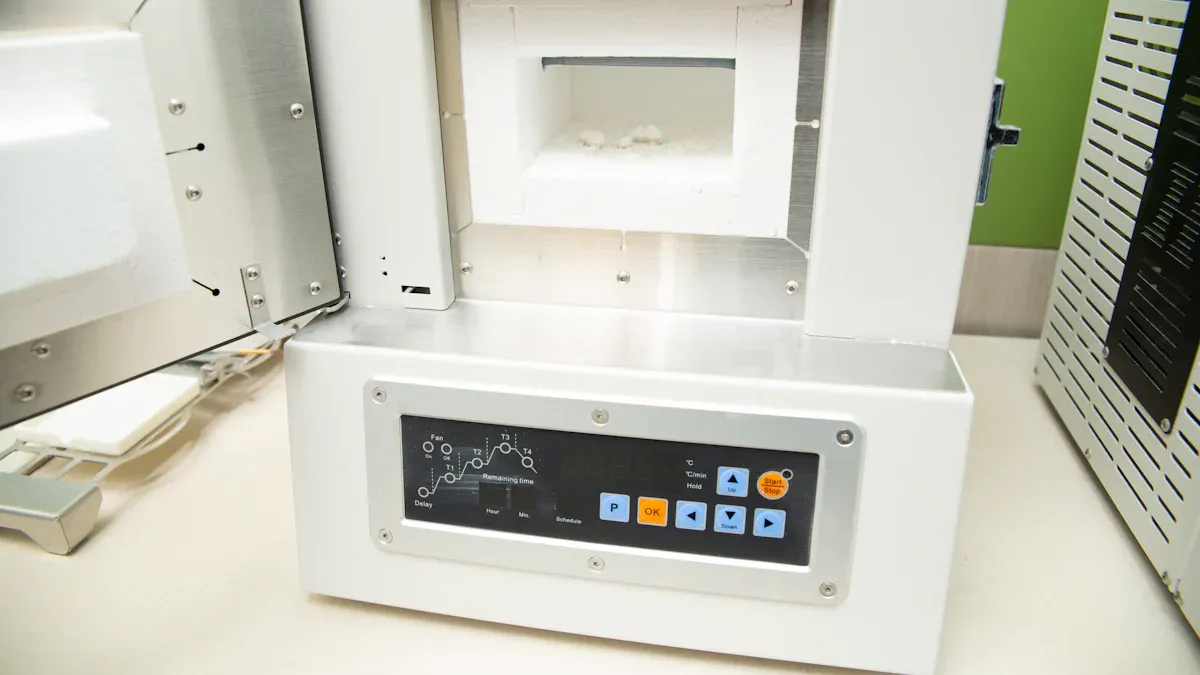
- Touch screen panels make it easy for you to change settings and see what is happening inside the furnace.
Tip: Using these advanced control systems, you can achieve precise and repeatable results, even for the most demanding applications.
Contamination control and atmosphere management
You want your materials to stay pure during high-temperature processing. The molybdenum high-temperature furnace helps you do this by using a vacuum or a special gas atmosphere. When you use a vacuum, you remove oxygen and other gases that could react with your materials. This keeps your products clean and free from defects.
You can also use protective gases like nitrogen, argon, or hydrogen. These gases create a safe environment for your materials and prevent unwanted reactions. The furnace body and lid use high-grade stainless steel to keep the vacuum tight. The heating elements are made from high-purity molybdenum, which helps maintain the right temperature. A strong vacuum system keeps the atmosphere stable and clean.
- Molybdenum vacuum furnaces give you precise control over the heating process.
- You avoid oxidation and contamination, which is important for ceramics, metallurgy, and electronics.
- Advanced control systems and a strong vacuum system work together to protect your materials.
Note: By managing the atmosphere inside the furnace, you ensure high-quality results and reduce the risk of defects in your finished products.
Molybdenum high-temperature furnace: Features, construction, and advantages
Material properties of molybdenum
When you choose a Molybdenum high-temperature furnace, you benefit from the unique properties of molybdenum. This metal stands out because it can handle extreme heat and stress. Here are some key reasons why molybdenum works so well in these furnaces:
- High melting point (over 2600°C)
- Excellent thermal conductivity
- Good strength at elevated temperatures
- Resistance to bending and cracking
- Low coefficient of thermal expansion
- Ability to maintain structural integrity under extreme temperatures
These properties help you achieve stable and reliable results, even when you push the furnace to its limits. Molybdenum’s strength and stability mean you can process advanced materials without worrying about warping or breakdown.
Furnace design and construction
You will notice that the design of a Molybdenum high-temperature furnace focuses on durability and precision. The construction uses high-quality materials and advanced engineering to ensure safe and efficient operation. The table below highlights the main design features:
| Design Feature | Description |
|---|---|
| Furnace Body and Lid | Made from high-grade stainless steel, designed to maintain a high vacuum. |
| Heating Elements | Constructed from high-purity molybdenum for achieving high temperatures. |
| Insulation Screens | Minimize heat loss and ensure uniform temperature distribution. |
| Vacuum System | Includes pumps, valves, and gauges for maintaining vacuum and atmosphere. |
| Control System | Advanced systems for precise control over furnace parameters. |
You also see some unique construction details. The furnace often has a vertical shell made from 304 stainless steel. The lid uses water cooling to protect the system from overheating. The bottom structure is strong and stable, which helps the furnace last longer. These features set it apart from other high-temperature furnaces.
Tip: The specialized design of these furnaces lets you achieve higher temperatures and better control than many other furnace types.
Efficiency and energy consumption
You want your furnace to work efficiently and save energy. The Molybdenum high-temperature furnace offers several features that help you reach this goal. The table below shows what makes these furnaces efficient:
| Factor | Description |
|---|---|
| Oxidation Resistance | Molybdenum forms a protective layer of molybdenum trioxide (MoO₃) to prevent further oxidation. |
| Strength and Durability | Retains strength up to 1700°C, ensuring resistance to mechanical stresses and thermal shocks. |
| Efficient Heat Distribution | Good thermal conductivity ensures uniform heat distribution for consistent heating. |
| TZM Alloy | Enhanced strength and higher recrystallization temperature, operational up to 1400°C. |
| Lanthanated Molybdenum | Improved resistance to recrystallization and warpage, usable at temperatures up to 2000°C. |
| Molybdenum Disilicide | Low resistivity and excellent oxidation resistance, maintaining performance under high watt loads. |
You also need to consider the environmental impact. These furnaces use a lot of energy during operation. The production and transport of molybdenum can lead to greenhouse gas emissions. You can reduce your impact by using energy-saving features and maintaining your furnace well.
Note: Choosing the right heating element, such as MoSi₂, can lower your total cost of ownership because it lasts longer and needs less maintenance than other options.
Maintenance and long-term performance
To keep your Molybdenum high-temperature furnace running smoothly, you should follow a regular maintenance routine. Here are some best practices:
- Regularly clean the muffle chamber to remove residues and contaminants.
- Replace damaged or worn-out components promptly, including molybdenum foil and vacuum gauge.
- Check for leaks in the vacuum system using helium leak detectors.
- Clean the cooling system every 3-5 months to ensure efficient heat dissipation.
- Always wear appropriate personal protective equipment (PPE) when operating the furnace.
- Keep a fire extinguisher nearby and know emergency procedures.
- Do not exceed the set temperature to prevent equipment failure.
When you follow these steps, your furnace will last longer and perform better. Compared to other furnace materials, molybdenum offers several long-term advantages:
| Property | Molybdenum | Other Materials |
|---|---|---|
| Melting Point | 2623°C | Varies (generally lower) |
| Oxidation Resistance | Excellent up to 1600°C | Generally lower |
| Thermal Conductivity | High | Varies |
| Mechanical Strength | Retains strength at high temps | May become brittle |
| Thermal Expansion Coefficient | Low | Varies |
You get exceptional resistance to high temperatures, a protective layer against oxidation, and strong performance under mechanical stress. The furnace ensures efficient heat distribution and keeps its strength over time. This means you can rely on your Molybdenum high-temperature furnace for demanding applications year after year.
Molybdenum high-temperature furnace: Applications and advancements in 2025
Industrial and research applications
You see molybdenum high-temperature furnaces used in many industries. These furnaces give you reliable heating solutions for manufacturing. They help you keep thermal conditions steady, which improves product quality. You find them in high-temperature industries where strong and consistent heat is important.
- Metallurgy
- Ceramics
- Electronics
- Glass manufacturing
You also use these furnaces in different settings:
- Industrial furnaces
- Laboratory furnaces
- Glass melting
- Ceramics production
In research, you depend on molybdenum vacuum furnaces for high-temperature processing and material synthesis. These furnaces keep your environment clean and free from contamination. You can manage temperature with great precision, which is important for experiments in metallurgy, ceramics, and electronics.
Technological advancements and smart control systems
In 2025, you benefit from smart control systems in your furnace. These systems use AI and machine learning to optimize heating cycles and predict when maintenance is needed. You get advanced PLC systems and touch-screen interfaces for precise control over heating and atmosphere.
Computer automation lets you manage furnace settings with high accuracy. Intelligent control systems give you real-time monitoring and adjustments. This helps you get better results and reduces mistakes.
Tip: Smart control systems help you achieve higher product quality and more consistent results.
Future trends and emerging uses
You will see new trends shaping the future of these furnaces. More industries want cleaner and faster processing. You may use these furnaces in new areas like additive manufacturing and advanced ceramics. Smart technology will keep improving, making your work easier and more efficient. You can expect even more precise control and lower energy use in the years ahead.
You rely on molybdenum high-temperature furnaces for precise control and clean processing. These furnaces help you produce high-quality materials and save energy across many industries.
| Advantage | Description |
|---|---|
| Consistent Temperature Control | You get reliable results for important jobs. |
| Uniform Heating | Your products stay strong and even. |
| High-Temperature Strength | The furnace works well under tough conditions. |
| Energy Efficiency | You use less power and lower emissions. |
You will see more growth as new industries need better furnaces. The market is expected to reach $2.5 billion in 2024 and grow 5-7% each year through 2030.
You can expect smarter controls and more sustainable designs in the future.
See Also
Understanding Molybdenum Furnaces Designed for High-Temperature Applications
Assessing Molybdenum Plugs for Seamless Steel Pipe Manufacturing in 2025
Key Benefits of WT20 Thoriated Tungsten Electrodes for TIG Welding
Ways to Reduce Environmental Impact Using Plate Heat Exchangers
Enhancing Industrial Efficiency Through Plate Air Preheaters