Key Features to Look for in Modern In-shell Nut Sorting Machines
Modern nut processors increasingly invest in advanced in-shell nut sorter technology.
| Type of Machine | Market Share | Processing Capacity | Adoption Rate | Efficiency Improvement |
|---|---|---|---|---|
| Fully-automatic | 57% | Up to 3,000 kg/hour | 48% | 99% defect detection |
| Semi-automatic | 31% | Up to 1,000 kg/hour | 19% | 68% compared to manual |
| New installations (2023) | N/A | >2,500 kg/hour | 61% | N/A |
These machines deliver greater sorting accuracy, higher yield, and improved sustainability, driving better product quality and operational efficiency.
Sorting Accuracy in In-shell Nut Sorter
Advanced Detection and Sensor Technology
Modern in-shell nut sorter machines rely on advanced detection and sensor technology to achieve high sorting accuracy. Deep learning systems enable rapid and accurate detection of nut quality. These non-destructive methods identify defects and abnormalities, which improves classification and grading. Optical sorting machines play a key role in removing defects early, reducing food waste, and ensuring only high-quality nuts move forward in the process. They also lower labor costs by operating faster and longer than human workers. Data insights from these machines help processors track defects and refine their processes for better results.
- Optical sorting and AI-powered detection systems improve the identification of defective nuts while preserving good product.
- High-resolution cameras and AI algorithms, such as those used in the Qcify AIR sorter, ensure only defective kernels are removed, which enhances yield and quality.
- AI-driven systems continue to evolve, allowing real-time optimizations that further boost sorting accuracy.
Consistency and Precision in Sorting Results
Consistency and precision in sorting directly impact the overall yield and quality of processed nuts. Leading in-shell nut sorter models achieve impressive accuracy rates:
| Machine Type | Average Sorting Accuracy (%) |
|---|---|
| Walnut Sorting Machine | 92.98 |
| Almond Sorting Machine | 99.7 |
Color sorter machines are crucial for grading and defect removal, helping businesses meet international quality standards. Enhanced sorting accuracy leads to reduced waste and improved yield, which is essential for maintaining product quality. Companies that invest in advanced sorting technologies strengthen their brand reputation and comply with strict food safety regulations, reducing the risk of product recalls.
Automation and Smart Technology in In-shell Nut Sorter
AI-Powered Sorting Capabilities
Modern automation transforms the way processors handle nuts. Advanced in-shell nut sorter machines now feature intelligent separation of shell and kernel, high-frequency vibration feeding, and fast response systems. Operators benefit from simple interfaces powered by intelligent operating systems.
| Feature Description |
|---|
| Intelligent separation of shell and kernel |
| High-frequency vibration feeding |
| Fast response with magnetic and dynamic solenoid valve |
| Simple operation via an intelligent operating system |
AI-powered sorting capabilities set new standards for accuracy and efficiency. The VSEE intelligent sorting machine uses advanced imaging and AI algorithms to grade nuts by size, color, and surface defects. This technology reduces manual labor and increases operational efficiency. Deep learning techniques process visual data quickly, ensuring consistent product quality. These systems adapt to changes in nut types and sizes, which improves performance and reduces waste.
| Benefit | Description |
|---|---|
| Improved Accuracy | AI systems learn from data to enhance sorting precision across various products. |
| Dynamic Adjustment | AI adapts to changes in product types and sizes, ensuring consistent performance. |
| Cost Efficiency | Automation reduces labor costs and material waste, providing long-term savings. |
Real-Time Data Monitoring and Analytics
Smart technology enables real-time data monitoring and analytics. These systems use cameras and machine learning to detect and classify materials instantly. Operators receive immediate insights, which helps optimize workflows and reduce inefficiencies. Poly Perception’s AI system, for example, improves efficiency and purity by providing accurate, real-time classification. Transitioning to advanced data platforms reduces latency and improves data storage, which enhances the speed and accuracy of sorting operations.
Tip: Real-time analytics empower managers to make faster, data-driven decisions, leading to better resource allocation and improved product quality.
Versatility of In-shell Nut Sorter
Multi-Nut Compatibility and Adaptability
Processors require equipment that can handle a wide range of nut types efficiently. Modern machines support multiple varieties, allowing facilities to switch between products with minimal downtime. The following table highlights the nut types that leading machines can process:
| Nut Type | Description |
|---|---|
| Almonds | Commonly processed in various sizes. |
| Cashews | Requires specific sorting due to size. |
| Pistachios | Often sorted for quality and size. |
| Peanuts | Standard nut type with specific properties. |
Manufacturers design advanced machines to meet the needs of diverse operations. For example, the AMD® AHT Series Inshell Walnut Grading Machine offers several features:
- Efficient grading for inshell walnuts.
- Integration of size grading, color sorting, and defect removal.
- Compatibility with different walnut varieties for flexible processing.
This adaptability ensures processors can respond quickly to market changes and customer demands.
Adjustable Sorting Parameters for Different Nut Types
Adjustable sorting parameters play a critical role in maintaining high product quality. Inline vibration sorting systems, combined with optical or mechanical technologies, address unique challenges such as separating nuts from shells and debris. This flexibility helps maintain purity and quality, which is essential as market requirements evolve.
A mechatronics system for sorting in-shell pistachio nuts demonstrates the value of adjustable parameters. The system processes images automatically, distinguishing between hulled and non-hulled samples. This customization allows operators to fine-tune the machine for each nut type, improving sorting efficiency and reducing waste.
Note: Versatile machines help processors maximize their investment by supporting a broader product portfolio with consistent results.
Energy Efficiency in In-shell Nut Sorter
Low Power Consumption Features
Manufacturers design modern sorting machines with energy-saving components. They use efficient motors and intelligent power management systems. These features help reduce operational costs and support sustainability goals. Many machines now include standby modes that lower energy use during idle periods. LED lighting and advanced sensors also contribute to lower power consumption. Operators benefit from reduced utility bills and a smaller environmental footprint. Energy-efficient designs ensure that processors can maintain high throughput without sacrificing performance.
Optimized Workflow for Reduced Energy Use
A well-optimized workflow plays a critical role in minimizing energy consumption. Each stage of nut processing, from dehusking to packaging, impacts overall efficiency. For example, precision dehusking prevents fermentation and reduces waste. Efficient drying lowers moisture content, which improves the effectiveness of later stages. Advanced cracking machines increase kernel recovery, boosting throughput. Air and vibration systems enhance kernel extraction, while optical scanners in grading and sorting reduce manual labor and energy use. Energy-efficient roasting and packaging methods preserve flavor and minimize power requirements.
| Stage | Description | Impact on Energy Use and Throughput |
|---|---|---|
| Dehusking | Prevents fermentation, ensuring quality and reducing waste | Lowers waste, saves energy in later stages |
| Drying | Reduces moisture, enhancing quality and efficiency | Improves efficiency, reduces drying time |
| Cracking | Precision machines improve kernel recovery | Increases throughput, lowers energy per unit output |
| Kernel Extraction | Air and vibration systems enhance separation | Boosts efficiency, reduces manual intervention |
| Grading & Sorting | Optical scanners improve sorting accuracy | Cuts energy use, reduces labor needs |
| Roasting & Packaging | Energy-efficient methods enhance flavor | Minimizes energy consumption, maintains quality |
An in-shell nut sorter with these features helps processors achieve both cost savings and environmental responsibility.
Ease of Maintenance for In-shell Nut Sorter
Modular and Accessible Design
Manufacturers design modern machines with modular components and accessible layouts. This approach allows technicians to replace or repair parts quickly. Operators benefit from reduced downtime and lower maintenance costs. Regular maintenance keeps the machine running at peak performance and prevents unexpected breakdowns. The following list highlights common maintenance challenges faced by operators:
- Checking for wear and tear on moving parts
- Monitoring for misalignment of components
- Ensuring proper lubrication without over-lubricating
- Cleaning to prevent dirt buildup
A modular design helps address these challenges efficiently. Technicians can access critical areas without dismantling the entire machine. This feature increases uptime and supports consistent production schedules.
User-Friendly Interfaces and Diagnostics
User-friendly interfaces simplify daily operations. Touchscreen panels and intuitive controls guide operators through maintenance routines. Built-in diagnostics alert staff to potential issues before they become serious problems. These features reduce the need for specialized training and minimize human error.
The impact of easy maintenance extends to overall productivity. Plants that adopt Total Productive Maintenance (TPM) see significant improvements:
| Parameter | Before TPM | After TPM | Improvement |
|---|---|---|---|
| OEE (Overall Equipment Effectiveness) | 55% | 75% | +20% |
| Machine Breakdown Time (per week) | 6 hrs | 2 hrs | ↓ 67% |
| Kernel Breakage Rate | 22% | 12% | ↓ 45% |
| Yield of Whole Kernels | 68% | 82% | +14% |
| Manpower Productivity (kg per worker/day) | 35 kg | 42 kg | +20% |
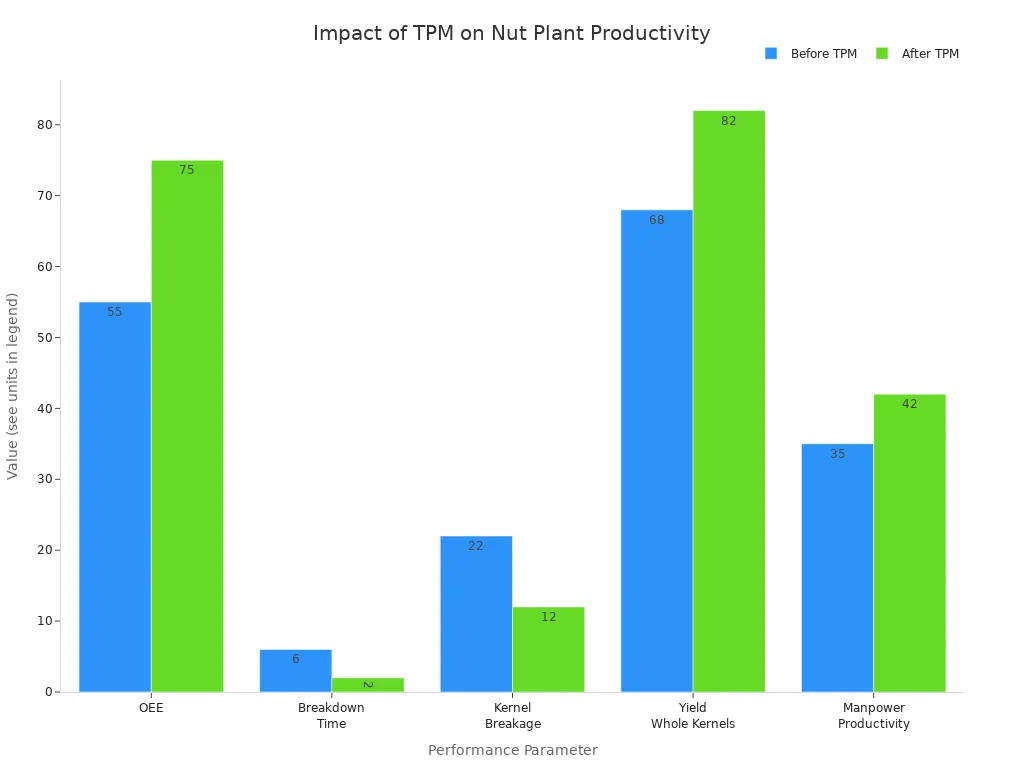
An In-shell nut sorter with these features supports higher yield, less downtime, and better resource utilization.
Sustainability in In-shell Nut Sorter
Eco-Friendly Materials and Construction
Manufacturers now prioritize sustainability when designing sorting equipment. They select materials and components that minimize environmental impact. Many modern machines feature recyclable construction and energy-efficient motors. These choices help processors reduce their carbon footprint and support green initiatives. Common eco-friendly features include:
- Energy-efficient motors that lower electricity consumption.
- Recyclable materials used in frames and panels.
- Precision shelling and sorting systems that minimize waste.
These design elements allow processors to meet regulatory standards and appeal to environmentally conscious consumers. Companies that invest in sustainable equipment demonstrate leadership in responsible manufacturing.
Waste Reduction and Resource Efficiency
Advanced sorting technology enables processors to maximize yield and minimize waste. The latest systems integrate shell material into final products, which increases fiber and phytonutrient content. Producers benefit from higher output and improved nutritional profiles. The following table highlights key contributions to waste reduction and resource efficiency:
| Evidence Point | Description |
|---|---|
| Whole-nut usage (kernel + shell) | Integrating the shell into the final product maximizes yield per nut and reduces waste by utilizing shell material rich in fiber and phytonutrients. |
| High-yield nut-paste/flour | Producing nut-paste or flour that includes shell-derived fiber improves the nutritional profile compared to conventional products. |
| Cleaner ingredient list & circularity | Using whole nuts reduces the need for additives, aligning with clean-label trends and minimizing over-processing. |
| Cost and resource efficiency | More output per harvested nut lowers raw material costs, enhancing margins for producers. |
| Scalability and supply-chain simplification | Consolidating processes into one system eliminates the need for separate waste handling, streamlining operations. |
An In-shell nut sorter with these capabilities supports both environmental goals and operational efficiency. Processors achieve higher margins and deliver products that meet consumer demand for sustainability.
Processors should select an In-shell nut sorter that matches their operational needs for capacity, adjustability, energy efficiency, and kernel recovery rate.
| Feature | Importance |
|---|---|
| Capacity (kg/hour) | Aligns throughput with daily volume to avoid idle costs. |
| Adjustability | Enables customization for varying processing needs. |
| Energy Efficiency | Reduces operational costs and environmental impact. |
| Kernel Recovery Rate | Ensures high quality output by maximizing whole kernel yield. |
Staying updated with technology trends ensures better product quality and long-term savings. Experts recommend:
- Adopting X-ray and hyperspectral imaging for quality and safety.
- Monitoring advancements in real-time processing and standardized protocols.
FAQ
What types of nuts can modern in-shell nut sorters process?
Processors use advanced machines to sort almonds, walnuts, pistachios, cashews, and peanuts. Manufacturers design these systems for multi-nut compatibility and quick adaptation.
How does automation improve nut sorting efficiency?
Automation enables faster sorting, reduces manual labor, and increases accuracy. Operators monitor real-time data, which helps optimize workflows and maintain consistent product quality.
Are in-shell nut sorters easy to maintain?
Technicians benefit from modular designs and user-friendly interfaces. Machines provide diagnostic alerts, which simplify maintenance and minimize downtime for processing facilities.
See Also
Essential Industrial Checkweighers For Every Food Manufacturing Facility
Must-Have Capsule Checkweighers For Buyers In 2025
The Importance Of Capsule Sorters In Eliminating Defects
Enhancing Pharma Efficiency With Advanced Capsule Decapsulation Machines
Popular Features Of Folder Gluers For 2025 Carton Production