Maximizing Collagen Peptide Powder Shelf Life Through Proper Storage
Yes, collagen peptide powder does expire, yet proper storage can significantly extend its usability. Many buyers worry about wasting money on a spoiled product or question whether consuming it past the date remains safe. This article delivers a clear, practical guide on collagen peptide powder storage shelf life, covering ideal conditions and spoilage indicators.
Understanding how long does collagen powder last requires attention to moisture, heat, and air exposure. Consumers often confuse the best-by date with a safety deadline, but that date signals quality rather than danger. Proper handling protects every batch of collagen powder from premature degradation.
Recognizing the expiration signs empowers users to make confident decisions. Trusting visual cues and smell prevents unnecessary waste while ensuring safe consumption. This guide positions itself as the definitive resource for extending collagen powder freshness through simple, actionable steps.
Understanding Collagen Peptide Powder Storage Shelf Life
The collagen peptide powder storage shelf life depends on three primary environmental factors. Each factor attacks the product through a distinct chemical pathway. Understanding these mechanisms helps consumers protect their investment and maintain product quality.
The Primary Enemies: Moisture, Heat, and Air
Moisture poses the greatest threat to collagen powder. Water activity above 0.6, which corresponds to roughly 10–12% moisture content, sharply accelerates chemical degradation. Pharmaceutical standards recommend hygroscopic powders stay below 10% moisture. Excess water triggers hydrolysis, breaking peptide bonds and altering the molecular weight of the hydrolyzed protein. This degradation reduces efficacy and changes how the peptides behave in the digestive system.
Heat accelerates these destructive reactions. Both oxidation and Maillard reactions follow Arrhenius kinetics, meaning the reaction rate roughly doubles for every 10°C increase in temperature. Maillard browning occurs when lysine residues react with reducing sugars at temperatures as low as 40–50°C in the presence of moisture. This process cross-links lysine, rendering it biologically unavailable and producing brown discoloration.
Air exposure introduces oxygen that oxidizes specific amino acid residues. Proline, hydroxyproline, methionine, and cysteine all remain susceptible to reactive oxygen species. This oxidation produces stale or bitter flavors and reduces amino acid availability. Manufacturers flush packaging with nitrogen to prevent this degradation pathway.
Collagen powder clumps because it is hydrophilic. When powder contacts moisture, the outer particles instantly absorb water, become sticky and gelatinous, and form a waterproof barrier that traps dry powder inside. The powder also absorbs moisture from the air during storage, causing hard beads or clumps to form before use.
Why Light Exposure Matters Less Than You Think
Light degrades some nutrients, but collagen peptides demonstrate relative stability against photodegradation. The expected shelf life of peptides does not shrink dramatically from light exposure alone. However, dark storage remains best practice for preserving peptide stability.
Consumers should focus their attention on moisture control and temperature management rather than worrying excessively about light. The shelf life of peptides extends naturally when users prioritize the three primary enemies. Storing peptides in a dark cupboard still offers protection, but the risk of contamination from light remains minimal compared to moisture damage.
Maintaining proper conditions prevents loss of potency and extends the usable window for every batch of collagen powder. Users who control moisture, heat, and air exposure will notice their collagen maintains its original texture, color, and neutral odor throughout the recommended usage period.
How Long Does Collagen Powder Last? A Clear Timeline
The best-by date printed on a supplement container represents a quality indicator, not a strict safety deadline. Understanding collagen peptide powder storage shelf life helps consumers maximize their investment. Manufacturers estimate this date through accelerated stability testing, a process defined in ICH Q1A(R2) guidelines where products endure elevated temperature and humidity to predict real-time degradation. Consumers should respect this date for optimal potency, but knowing this timeline prevents unnecessary waste. Reputable manufacturers assign unflavored bovine or marine peptide powders a best-by window of 2 to 3 years from production. Flavored, sweetened, or blended products often carry shorter stated windows, sometimes 18 to 24 months, because sugars and fats degrade faster than plain peptide powder.
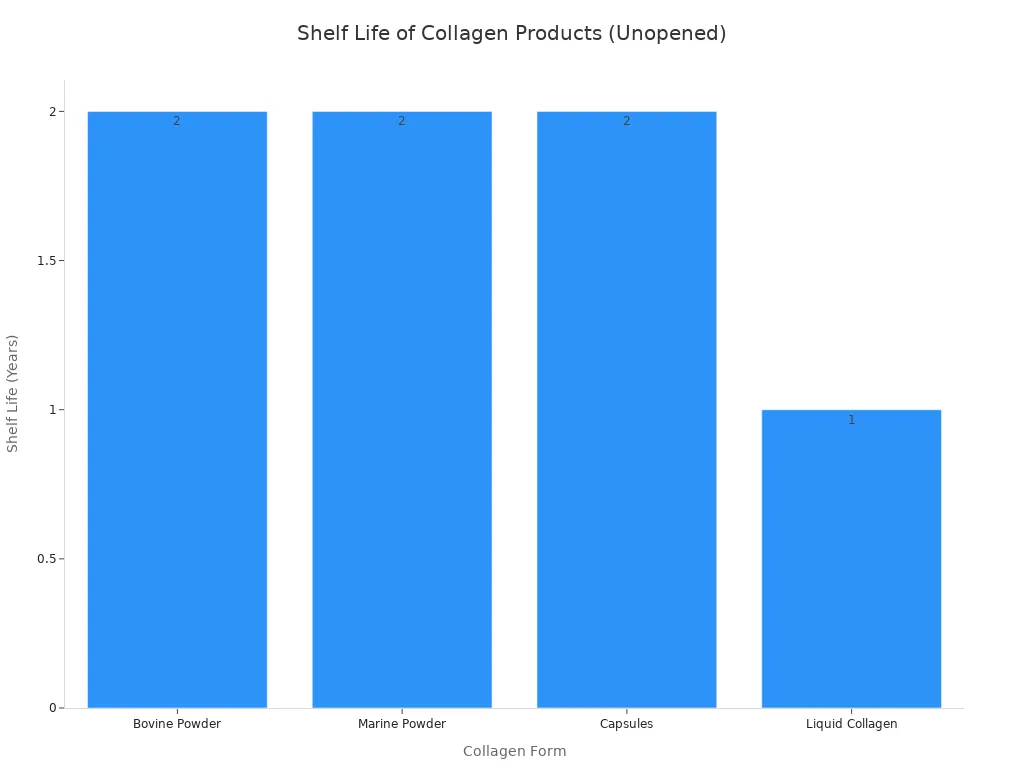
Unopened Shelf Life: 18 to 24 Months
Most powder products maintain their quality for 18 to 24 months when unopened and stored in a cool, dry environment. The factory seal prevents oxygen and moisture from entering, preserving the powder's neutral odor and texture. Bovine and marine powder typically last 2 years under these ideal conditions. The integrity of the safety seal determines whether the product survives its full duration. A compromised seal allows moisture and air to enter, shortening the usable window.
Hydrolyzed peptides are chemically stable because they are broken down into simple amino acid chains and kept at a very low moisture content, which prevents the rapid degradation seen in more complex proteins.
This inherent stability means that the powder can last almost indefinitely under ideal conditions. Some sources suggest that properly sealed, dry powder maintains its molecular structure for many years without significant loss of potency. Lyophilized, or freeze-dried, peptides demonstrate even greater stability than liquid forms. These peptides can last for several years when stored at low temperatures, though room temperature storage suffices for typical consumption patterns.
Product Form | Unopened Duration | Key Vulnerability |
|---|---|---|
Powder | Moisture & Humidity | |
Liquid Form | 12 Months | Bacterial Growth |
Capsules | 24 Months | Heat & Light |
Flavored Powder | 12–18 Months | Flavor Degradation |
Opened Powder: Use Within 60 to 90 Days
Once the factory seal breaks, oxygen and environmental moisture enter the container. Many consumers wonder does collagen powder expire after the printed date, but the answer depends on storage conditions. The powder has a recommended usage window of 60 to 90 days after opening. Proper storage during this period prevents moisture absorption and maintains peptide stability. The product remains safe beyond this window if stored correctly, but quality gradually declines. Each time the container opens, fresh air enters and accelerates the degradation process.
Factor | Effect on the Product | Prevention Tip |
|---|---|---|
Moisture | Causes clumping and mold growth | Store in a dry pantry away from the stove |
Heat | Accelerates chemical degradation | Keep at room temperature or cooler |
Light | Breaks down amino acid chains | Use opaque containers or dark cabinets |
Air | Leads to oxidation and off flavors | Ensure the lid is tightened after every use |
A typical 1-pound container lasts most users roughly 30 to 60 days with daily use. Finishing the container within the 60 to 90 day window avoids the risk of clumping, off odors, and reduced efficacy. Consumers who understand how long does collagen powder last can plan their purchases accordingly. The answer to how long does collagen powder last depends heavily on storage conditions after opening. Users who monitor the powder for signs of moisture will notice it maintains its original quality throughout the recommended period.
Recognizing the difference between best-by date and expiration date helps consumers make informed decisions. The best-by date indicates peak quality, while the expiry date marks a hard cutoff. The product does not present a toxicity risk shortly after that date, but it gradually loses potency. This loss of potency means the powder may not deliver the same benefits as a fresh batch. Trusting one's senses for clumping, discoloration, or off smells provides the most reliable safety check. If the powder pours freely and smells neutral, it remains suitable for consumption.
Recognizing Spoilage: Key Signs Your Powder Has Gone Bad
Fresh collagen powder typically appears off-white or cream-colored with a neutral, mild odor. Users who understand how to tell if collagen powder is bad can avoid consuming compromised products. Recognizing spoilage signs early prevents digestive upset and wasted money.
Visual and Textural Changes: Clumping and Discoloration
Clumping represents the first visible warning sign. Moisture from humidity, steam, or damp utensils creates hard, sticky clumps that resist breaking apart. This moisture creates an environment where bacteria and mold thrive. Users should test clumps gently. Powder that crumbles easily remains acceptable. Hard, stubborn clumps indicate moisture ingress.
Cause | Sign | Why Spoilage |
|---|---|---|
Moisture from humidity or damp utensils | Hard, sticky clumps | Bacteria and mold growth |
Oxidation from air, light, or heat | Dark yellow or brown color | Amino acid breakdown |
Contamination from a damp scoop | Localized clumps | Accelerated spoilage |
Discoloration signals oxidation damage. Fresh collagen powder maintains a light cream color. A shift toward dark yellow or brown indicates amino acid breakdown. Users should watch for green, black, or blue specks, which indicate mold contamination. Any visible mold requires immediate disposal.
Olfactory and Taste Indicators: A Sour or Rancid Smell
The nose provides reliable spoilage detection. A sour, funky, or cardboard-like aroma signals trouble.
If you catch a whiff of something sour, 'funky,' or reminiscent of old cardboard, the amino acids may have begun to oxidize or moisture has triggered microbial activity.
Several chemical processes produce these odors. Oxidation breaks down amino acids. Environmental hydrolysis from air moisture creates breeding grounds for microbes. The Maillard reaction, triggered by heat, turns powder yellow or brown while contributing off smells.
Marine collagen presents a special case. Fish-derived powder retains a slight oceanic scent even after processing. When moisture or heat damages marine collagen, the fishy note intensifies dramatically. Users familiar with their product's normal aroma can detect this change.
Rancidity occurs when trace fats oxidize, producing a pungent, sour odor. Consumers wondering does collagen powder expire should trust their senses above printed dates. The expiration date indicates quality decline, but sensory cues confirm actual spoilage. Any sour, rancid, or intensely fishy smell means the collagen has degraded. Consuming spoiled powder may cause digestive upset. When in doubt, discard the product.
How to Store Collagen Powder for Maximum Freshness
Mastering how to store collagen powder for maximum freshness requires attention to two critical decisions: the container that holds the product and the environment where it rests. These choices determine whether the powder maintains its peptide stability for the full 60 to 90 day usage window or degrades prematurely. Users who implement proper storage techniques protect their investment and ensure every scoop delivers the intended benefits.
The Ideal Container: Airtight and Opaque
The original packaging from reputable manufacturers provides an effective barrier against light and air. Many brands design their pouches and tubs specifically to protect the powder from environmental threats. However, some products arrive in bags that do not reseal properly after opening. Users should transfer the powder to an airtight container when the original packaging fails to close securely.
Glass jars with rubber gaskets offer excellent protection. BPA-free plastic containers with snap-lock lids also work well. The container must block light completely, as transparent vessels allow photodegradation over time. A simple plastic tub with a loose lid will not protect the powder from humidity. The seal must create a true barrier against moisture and oxygen.
Negative Effect | Recommended Mitigation | |
|---|---|---|
Moisture | Causes clumping and mold growth | Store in a dry pantry away from the stove |
Light | Breaks down amino acid chains | Use opaque containers or dark cabinets |
Air | Leads to oxidation and off flavors | Ensure the lid is tightened after every use |
Users should also consider adding silica gel packs inside the container. These small packets absorb excess moisture that enters during brief openings. The powder itself is hygroscopic, meaning it actively pulls water from the air. Silica gel provides an extra layer of defense against this natural tendency.
The Best Location: Cool, Dry, and Dark
Finding the right spot for collagen powder storage shelf life involves more than placing the container on a counter. The location must remain cool, dry, and dark throughout the day. A pantry or cupboard away from the stove, dishwasher, or sink provides the ideal environment. These appliances generate heat and humidity that accelerate chemical degradation.
Storage in a pantry or cupboard away from heat and light is often the best place for powder product storage. Always ensure that the pouch or tub is well sealed after every use to maintain powder freshness.
Refrigeration presents a hidden danger. Taking a cold container out of the fridge and opening it in a warm room triggers condensation. Moisture forms on the powder's surface because the temperature difference causes water vapor to condense. Since collagen powder is hygroscopic, this absorbed moisture leads to clumping, spoilage, and potential mold growth. The expert recommendation is to store the powder in a cool, dry pantry instead, avoiding refrigeration altogether.
Freezing offers a viable option only for long-term storage exceeding one year. Users who purchase in bulk can transfer portions to an airtight, moisture-proof bag and freeze them. This approach works because the powder remains sealed and frozen, preventing moisture contact. However, freezing proves unnecessary for typical 60 to 90 day use patterns. Each time the frozen container opens, condensation risks damage.
Myth: If collagen doesn't smell bad, it is 100% effective. Fact: Collagen can lose its potency and bioavailability long before it develops a foul odor. While it might be safe to eat, it may not provide the joint and skin support you expect.
Understanding how to store collagen powder properly also means keeping it away from strong odors. The powder absorbs surrounding smells, which alters its neutral flavor profile. Spices, coffee, and cleaning products should remain at a distance. Users who follow these best practices for storing peptides maintain the powder's original quality throughout its usable life.
The consequences of improper storage extend beyond clumping. Oxidation breaks down amino acid chains, reducing bioavailability for tissue repair. The Maillard reaction causes yellowing and loss of solubility when heat meets trace sugars. Moisture introduction allows bacteria and mold to thrive on the protein. Each of these degradation pathways reduces the effectiveness of every serving.
Consequence | Description |
|---|---|
Peptide structure weakens over time, making the powder less effective for tissue repair and recovery goals. | |
Poor solubility | Aged collagen becomes hydrophobic, leading to clumping and a gritty texture in liquids. |
Digestive discomfort | Oxidized proteins are harder to process, potentially causing bloating in sensitive individuals. |
Marine collagen demands extra vigilance. Sunlight damages fish-derived powder through oxidation, leading to loss of beneficial properties. An opaque container in a dark cupboard protects this sensitive product. Users who purchase smaller batches reduce the risk of spoilage before completion. Regular checks for changes in color, texture, or smell allow early detection of problems. Discard the powder immediately if any warning signs appear.
Beyond Collagen: Premium Quality for Extended Freshness
Beyond Collagen stands as a leading supplier of high-quality edible gelatin and collagen peptides. The company sources raw materials from bovine, porcine, and fish origins. Every batch undergoes rigorous quality control measures. This commitment to excellence directly supports the collagen powder storage shelf life that consumers expect from a premium product.
Our Edible Gelatin: Designed for Stability
The edible gelatin product line offers customizable Bloom strengths ranging from low to high. This flexibility allows manufacturers to tailor gelling properties for specific applications. A low Bloom creates soft, elastic textures perfect for gummies. A high Bloom produces firm, stable gels suitable for pharmaceutical capsules. Each formulation maintains consistent performance across food and pharmaceutical sectors.
Pharma compliance standards govern every production step. The manufacturing process follows Current Good Manufacturing Practices under FDA regulation 21 CFR Part 111. These rules mandate precision dosing and label accuracy. Such strict oversight directly impacts product integrity over time. Consumers receive exactly what the label promises, batch after batch.
Beyond Collagen identifies itself as a GMP and ISO certified manufacturing partner. The company states that its products maintain a typical shelf life of 24 months when stored correctly in sealed containers. This quality assurance framework supports extended freshness claims.
Advanced testing methods verify purity and stability for every batch. High-Performance Liquid Chromatography, or HPLC, confirms purity levels exceeding 99%. Mass Spectrometry checks molecular identity and screens for microbial contamination or heavy metals. These batch-specific tests ensure that each container of collagen maintains its structural integrity from production to final use.
Certifications and Packaging That Protect Your Investment
Beyond Collagen provides HALAL, KOSHER, and ISO certifications upon request. These credentials demonstrate a commitment to quality and safety. The company also pursues SQF Level 2 certification, an independent audit verifying food safety standards. Retail distribution increasingly requires this baseline qualification. FALCPA allergen declarations accompany marine-sourced collagen products, ensuring source transparency for consumers with fish allergies.
The packaging design plays a critical role in preserving freshness. Each container creates a barrier against moisture and air, the primary enemies of collagen powder. This protective layer maximizes the usable window for every product. Proper packaging maintains peptide stability from the moment the seal breaks until the final scoop.
Choosing Beyond Collagen means selecting a partner dedicated to quality assurance. The combination of rigorous testing, meaningful certifications, and protective packaging ensures that every purchase delivers full value. Consumers who store their collagen correctly will experience the benefits of extended freshness and consistent potency.
Collagen peptide powder does expire, yet understanding its enemies—moisture, heat, and air—allows users to dramatically extend its life. Simple storage rules protect every batch. An airtight container in a cool, dry, dark place maintains freshness throughout the recommended period.
The collagen powder storage shelf life spans 18 to 24 months unopened and 60 to 90 days after opening. Users should trust their senses for spoilage signs. Clumping, discoloration, or sour odors signal expiration. The best-by date indicates quality, not danger, but respecting it ensures potency.
Implementing these practices for how to store collagen powder for maximum freshness delivers full value from every purchase. Choosing a premium brand like Beyond Collagen, with superior packaging and certifications, provides the first step toward a long-lasting, effective supplement. Proper storing peptides techniques protect the investment in every container.
FAQ
Can Freezing Extend the Life of Collagen Powder?
Freezing works for long-term storage exceeding one year. Users should transfer portions to an airtight, moisture-proof bag before freezing. Each removal from the freezer risks condensation damage. For typical 60 to 90 day use, refrigeration and freezing remain unnecessary. A cool pantry provides sufficient protection for storing peptides properly.
What Happens When Someone Consumes Collagen Powder Past Its Best-By Date?
The product does not become toxic immediately after the best-by date passes. Quality gradually declines instead. The powder may lose potency and deliver fewer benefits. Users should check for spoilage signs before consumption. If the powder pours freely and smells neutral, it remains acceptable for use.
How Can a Consumer Tell If Collagen Powder Has Gone Bad?
Several indicators reveal spoilage. Hard clumps that resist breaking indicate moisture exposure. Dark yellow or brown coloring signals oxidation damage. A sour, rancid, or intensely fishy smell confirms degradation. Visible mold requires immediate disposal. Trusting these sensory cues provides the most reliable safety check for any collagen product.
Does the Best-By Date Represent a Safety Deadline or Quality Indicator?
The best-by date indicates peak quality rather than danger. Manufacturers determine this date through accelerated stability testing. The collagen powder expire timeline depends on storage conditions after opening. Properly stored powder remains safe beyond this date, though potency gradually diminishes. Consumers should respect the date for optimal results.
Why Does Collagen Powder Clump Inside a Sealed Container?
Collagen powder is hygroscopic, meaning it actively pulls moisture from surrounding air. Brief container openings allow humid air inside. The outer particles absorb this water, become sticky, and form a waterproof barrier. This barrier traps dry powder inside hard beads. Silica gel packets inside the container absorb excess moisture and prevent this problem.