Leading Types of Power Transformers and How They Are Used
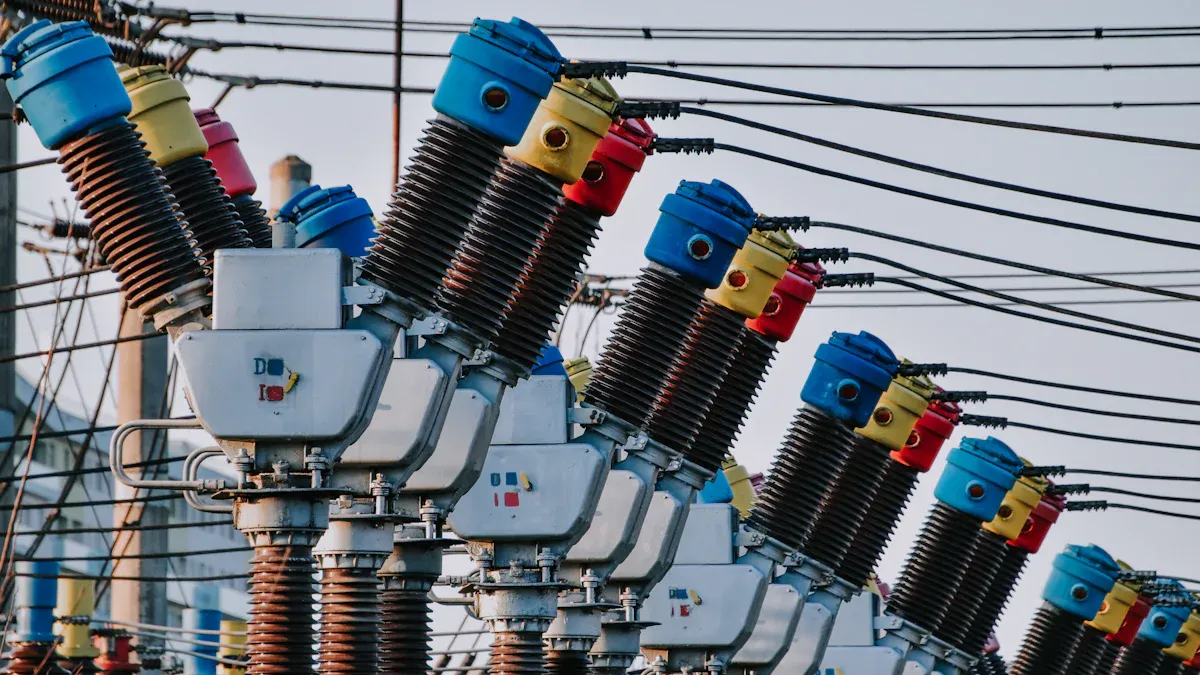
You see power transformers everywhere, from city streets to large power plants. These devices help you get safe and reliable electricity at home, school, and work. Today, the demand for power transformers keeps rising.
- The global market reached USD 40.25 billion in 2023.
- Experts expect it to grow to USD 65.89 billion by 2029, with a CAGR of 8.4%.
Urban growth and higher energy use drive this need. Switching transformer technology also supports efficient power delivery.
Key Takeaways
- Smart power transformers enhance grid reliability with real-time monitoring and predictive maintenance, ensuring efficient energy delivery.
- Distribution transformers are essential for safe electricity use, stepping down high voltages for homes and businesses while supporting urban and rural electrification.
- Eco-friendly transformers use green materials and fluids, reducing environmental impact and promoting sustainability in energy systems.
- Compact and high-capacity transformers save space in urban settings, making them ideal for modern infrastructure and industrial applications.
- Variable-frequency transformers enable power sharing between different grids, ensuring stability and efficiency in diverse energy sources.
Smart Power Transformer
Key Features
You will find that smart power transformers use advanced technology to improve how electricity moves through the grid. These transformers have many features that help you get reliable power. Here is a table that shows some of the most important features:
| Feature | Description |
|---|---|
| Real-time monitoring | Sensors track oil temperature, gas levels, and electrical stress. |
| Communication modules | Devices send data to control centers and cloud platforms. |
| Edge computing | The transformer can make decisions and adjust itself locally. |
| Predictive maintenance | The system finds problems early and helps plan repairs. |
| Eco-efficient designs | Special materials make the transformer more efficient and use less energy. |
These features help you keep the power system safe and efficient.
Applications in Smart Grids
Smart power transformers play a big role in smart grids. You can see how they help in many ways:
- They monitor voltage, current, and temperature in real time. This helps keep the grid stable.
- They talk to grid operators and other devices, so everyone works together.
- They manage voltage and reactive power, which reduces energy loss.
- They fit into digital substations, making the system stronger and easier to fix.
- They use standard communication rules, so they work with many other digital devices.
- Operators can control them from far away, which means faster responses to problems.
- The data they collect helps you understand how the grid works and plan for the future.
Tip: Smart transformers make the grid more reliable and help you save energy.
Role in Renewable Integration
You need smart transformers to connect renewable energy sources like solar and wind to the grid. These sources change their output often. Smart transformers can adjust quickly to these changes. They help balance electricity across the grid, even when the sun or wind changes. You get a steady supply of power because these transformers manage the ups and downs from renewables. They also help keep voltage and frequency stable, which makes the whole system more efficient. Smart transformers turn the variable power from renewables into a form you can use every day.
Distribution Power Transformer
Functions in Power Distribution
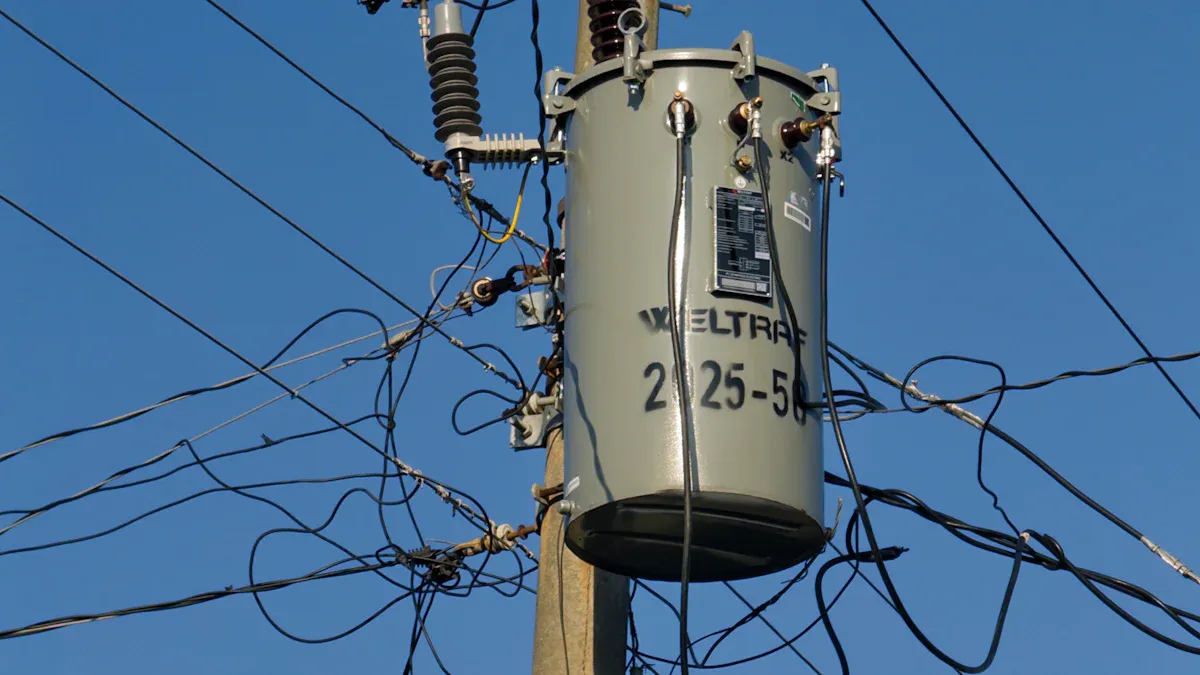
You rely on distribution power transformers every day, even if you do not see them. These transformers play a key role in making electricity safe and usable for homes, schools, and businesses. Here are some main functions:
- They reduce high voltage from power lines to lower levels that you can use safely.
- They provide electrical isolation, which keeps you safe from dangerous high-voltage currents.
- They help deliver reliable power in both cities and rural areas.
Distribution transformers make sure you get the right amount of electricity without risk. They also help keep the power system stable and efficient.
Urban and Rural Infrastructure Uses
Distribution power transformers support both city and countryside life. In cities, they help upgrade old power systems and add smart features. In rural areas, they bring electricity to places that never had it before. You can see how different regions use these transformers in the table below:
| Region | Number of Transformers Installed | Key Highlights |
|---|---|---|
| North America | 910,000 | U.S. led with 780,000 units; focus on upgrading aging infrastructure; 170,000 smart units deployed. |
| Europe | 1.2 million | Germany, France, UK, Italy contributed to 70%; 320,000 low-loss models installed. |
| Asia-Pacific | 5.1 million | China (1.6 million) and India (1.2 million) led rural electrification; 420,000 for renewable energy. |
| Middle East & Africa | 760,000 | Saudi Arabia and UAE led with 350,000 units; Nigeria, Kenya, and Egypt installed over 310,000 units. |
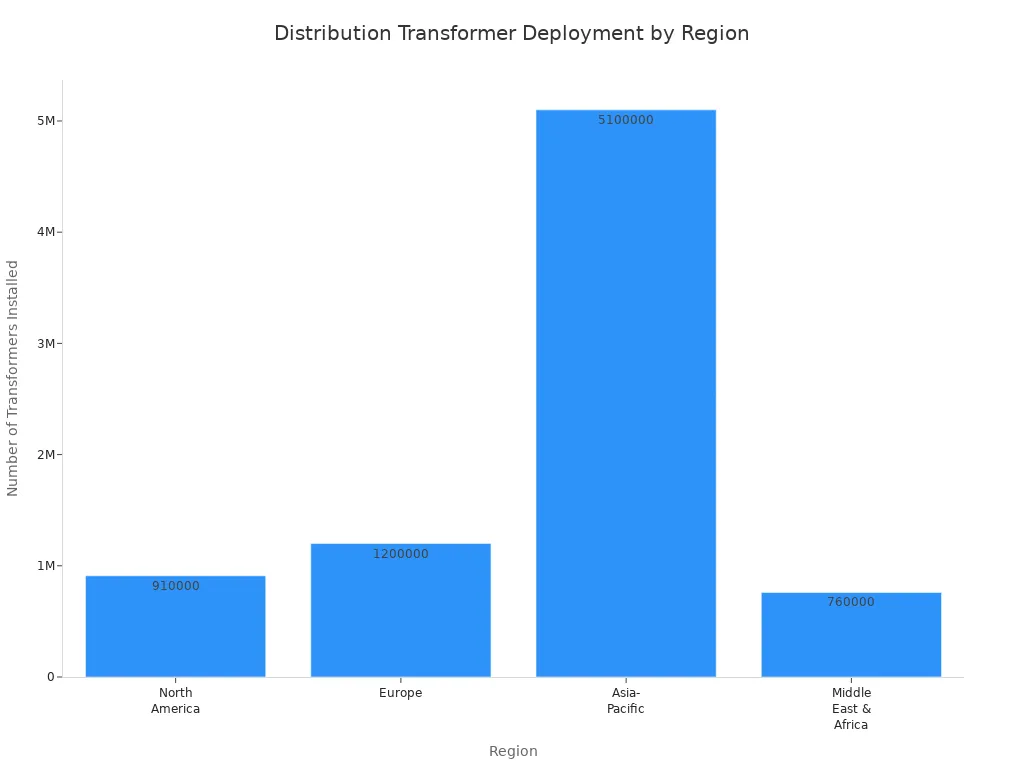
Note: Asia-Pacific leads in installing distribution transformers, especially for rural electrification and renewable energy projects.
Support for Electrification
Distribution power transformers help bring electricity to more people. They step down high voltages from transmission lines to safe levels for your home or business. These transformers also:
- Make sure power moves efficiently from the grid to your neighborhood.
- Support voltage regulation, so your lights and devices work smoothly.
- Help isolate faults and manage loads, which keeps the power on even during problems.
You benefit from these features every day. They help keep your electricity safe, steady, and always available.
Compact and High-Capacity Power Transformer
Space-Saving Designs
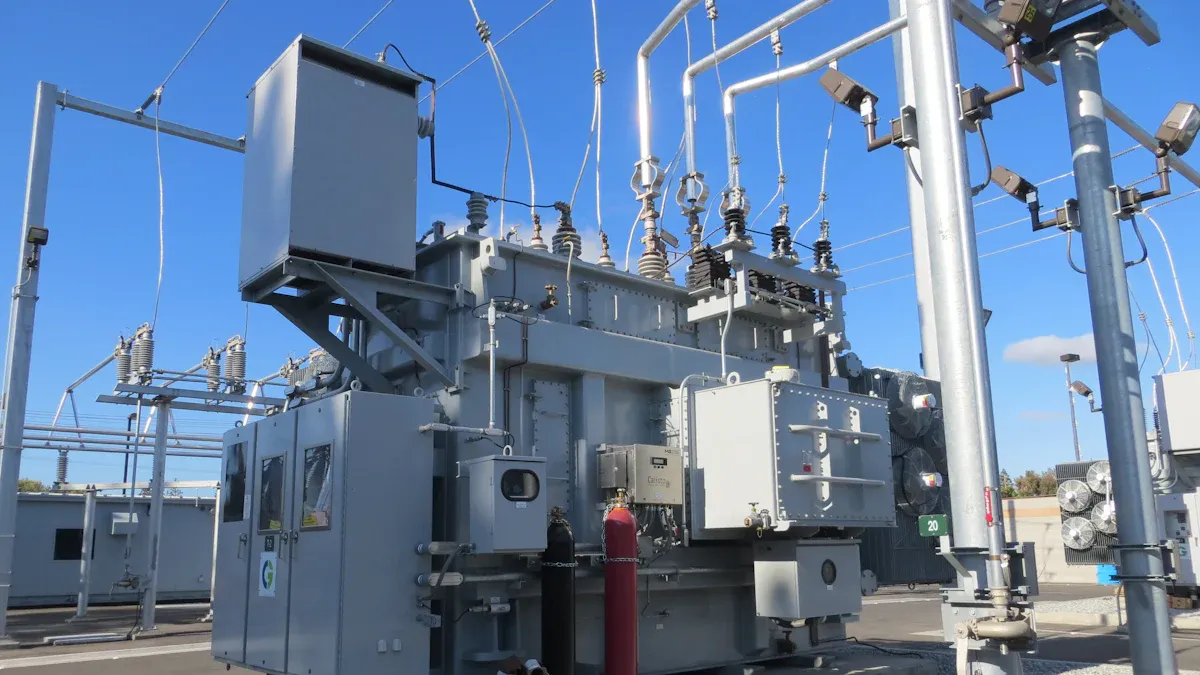
You often see the need for smaller equipment in busy cities and crowded buildings. Compact and high-capacity transformers help you solve space problems without losing power. These transformers fit into places where traditional models cannot go. You can use them in many locations, such as:
- Urban areas with limited room for electrical equipment
- Commercial buildings and residential complexes
- Airports, metro stations, and other transportation hubs
- Data centers and technology parks
Some models, like CompactStar™ transformers, are up to 30% smaller and lighter than regular transformers. You get the same high-capacity output in a much smaller package. This design helps you save space and reduce building costs, especially on offshore platforms. These transformers also work well in extreme environments, so you can rely on them in many situations.
Note: Compact transformers help you use every inch of space wisely, making them perfect for modern cities and advanced industries.
Industrial and Commercial Applications
You see compact and high-capacity transformers used in many industries. Factories, shopping malls, and office towers all need strong and reliable power. These transformers help you handle large amounts of electricity in a small area. They also support the growing use of renewable energy, which often needs special equipment to manage changing power levels.
The market for industrial high voltage transformers is growing fast. Experts predict it will rise from USD 4.3 billion in 2024 to USD 8.8 billion by 2034. This growth shows that more companies want advanced transformers to meet new energy needs. You benefit from these changes because they make power systems safer and more efficient.
Tip: When you choose a compact and high-capacity power transformer, you prepare your business for future energy demands.
Eco-Friendly Power Transformer
Green Materials and Fluids
You can help protect the planet by choosing transformers made with green materials and fluids. Many new designs use natural ester fluids, which come from vegetable oils. These fluids offer better fire safety, higher insulation performance, and break down easily in nature. You also see biodegradable insulating fluids, such as natural esters, that are less toxic than traditional mineral oils. Manufacturers use low-loss magnetic cores made from amorphous metals to cut down on wasted energy.
- Natural ester fluids (from vegetable oils)
- High fire safety
- Strong insulation
- Biodegradable
- Biodegradable insulating fluids
- Less toxic
- Break down quickly in the environment
- Low-loss magnetic cores (amorphous metals)
- Reduce energy losses
Tip: Using these materials makes your transformer safer and better for the environment.
Environmental Impact Reduction
You can lower your carbon footprint by using eco-friendly transformers. Manufacturers now use recyclable metals and low-emission processes. These changes help reduce pollution during production and operation. When you pick a transformer with biodegradable fluids, you avoid toxic spills and lower fire risks. Dry-type transformers use solid insulation like epoxy resin or Nomex® aramid paper, which are safer and recyclable. These designs also improve energy efficiency and cut down on wasted power.
- Recyclable metals and low-emission manufacturing
- Biodegradable fluids with high fire points
- Solid eco-friendly insulation (epoxy resin, Nomex®)
- Improved energy efficiency and lower carbon footprint
Note: Eco-friendly transformers help you meet your energy needs while caring for the planet.
Sustainability Standards Compliance
You want your power transformer to meet strict sustainability standards. Many eco-friendly models use recycled copper and aluminum to reduce waste. Manufacturers also choose insulation materials that are biodegradable or recyclable, such as green thermoplastics. Vegetable oil-based coolants replace mineral oils, making the transformer more sustainable. Some designs use amorphous steel cores to save energy. Others use digital monitoring systems for better maintenance and load control. Most importantly, these transformers often meet Department of Energy (DOE) efficiency standards. Meeting these rules helps you avoid penalties and supports your long-term sustainability goals.
Step-Up and Step-Down Power Transformer
Voltage Management for Transmission
You depend on step-up and step-down transformers every time you use electricity. These devices help move power safely and efficiently from power plants to your home or business. When electricity leaves a power station, it starts at a low voltage. This low voltage cannot travel far without losing energy. A step-up transformer raises the voltage to hundreds of kilovolts. High voltage means lower current, which reduces energy loss during long-distance transmission.
When the electricity reaches a substation near your area, a step-down transformer lowers the voltage. This makes the electricity safe for local distribution. You get the right amount of power for your lights, appliances, and machines. Here is how the process works:
- Electricity starts at a low voltage at the power station.
- A step-up transformer increases the voltage for long-distance travel.
- The electricity moves through transmission lines with less energy loss.
- A step-down transformer reduces the voltage at a substation.
- The electricity is now safe for homes, schools, and businesses.
Tip: Step-up transformers help save energy during transmission, while step-down transformers make electricity safe for everyday use.
Safe Residential and Industrial Use
You want your electricity to be both reliable and safe. Step-down transformers play a key role in this. They lower the voltage to levels that protect your devices and prevent electrical hazards. In factories and large buildings, step-down transformers supply the right voltage for heavy machines and equipment.
Manufacturers must follow strict safety standards for these transformers. You can check the table below to see common certifications:
| Certification | Region |
|---|---|
| UL/CSA | United States and Canada |
| CE/IEC | Europe |
| RoHS/REACH | Environmental compliance |
These certifications make sure your power transformer meets safety and environmental rules. You can trust that certified transformers will protect your home or workplace from electrical risks.
Note: Always look for certified transformers to ensure the highest level of safety and performance.
Dry-Type Power Transformer
Safety and Low Maintenance
You can count on dry-type transformers for safe and easy operation. These transformers do not use oil, so you avoid the risk of leaks and fires. The design includes many safety features that protect both people and equipment. Take a look at the table below to see how these features work:
| Safety Feature | Description |
|---|---|
| Enclosure Protection | Sealed enclosures keep out dust and debris but allow air to flow for cooling. |
| Heat Dissipation | Cooling fins and heat sinks help control temperature and prevent overheating. |
| Grounding and Earth Fault Protection | Proper grounding sends stray currents safely to the ground, lowering shock and fire risks. |
| Lockout/Tagout Mechanisms | These systems stop the transformer from turning on during maintenance, keeping workers safe. |
| Seismic and Mechanical Protection | Bracing and dampers protect against shocks and vibrations. |
| Eco-Friendly Design | Oil-free design cuts fire risk and helps the environment. |
| Fire Protection Features | Fire-rated enclosures and suppression systems add extra safety in risky areas. |
You will find that dry-type transformers need less maintenance than oil-filled models. You can perform routine checks through easy-to-open panels. Lockout/tagout systems keep you safe during repairs. Many units use remote monitoring, so you can spot problems before they cause trouble.
Tip: Dry-type transformers help you save time and money on maintenance while keeping your facility safe.
Indoor and Urban Applications
You often see dry-type transformers in city buildings, hospitals, and shopping malls. Their oil-free design makes them perfect for indoor use. You do not have to worry about oil leaks or soil pollution. In fact, a study showed that after 20 years, dry-type transformers left no soil contamination, unlike traditional units.
Here is a table that shows why these transformers work so well in urban settings:
| Feature | Description |
|---|---|
| Environmental Friendliness | No oil means no risk of pollution. |
| High Safety | Safer in emergencies because there is no oil to catch fire. |
| Easy Maintenance | No oil checks needed, so you spend less time and money on upkeep. |
| Wide Adaptability | Works well in many places, including crowded cities and tall buildings. |
- You will notice that dry-type transformers run quietly. This makes them a good choice for offices and homes where noise matters.
- You can use them in places that need high safety, like hospitals and schools.
- You help protect the environment and save energy by choosing these transformers.
Note: Dry-type transformers give you a safe, clean, and quiet solution for modern city life.
Variable-Frequency Power Transformer
Managing Power Between Grids
You often see different power grids working together to share electricity. Variable-frequency power transformers help you move power between grids that do not use the same frequency. These transformers use special features to handle this job safely and efficiently. Here are some important technical details:
- Presence of harmonics: These transformers deal with non-sinusoidal currents. They need extra cooling to handle the heat from harmonics.
- Winding connections: Different winding setups help cancel out unwanted harmonics and improve how the transformer works.
- Increased insulation level: You get higher insulation to protect against strong voltage spikes and fast voltage changes.
- Electrostatic shield: This shield keeps out sudden voltage surges and reduces electromagnetic noise.
- Short circuit impedance: This feature helps control how much current flows during a short circuit and keeps the grid stable.
With these features, you can connect grids that use different frequencies. You also keep your equipment safe from damage and make sure power flows smoothly.
Tip: Using a variable-frequency transformer lets you balance supply and demand between regions, even if their grids are not the same.
Importance in Modern Power Systems
You live in a world where energy comes from many sources. Wind, solar, and batteries all connect to the grid. Variable-frequency power transformers play a key role in making this possible. They help you manage power that changes in speed and direction. Take a look at the table below to see how these transformers support modern power systems:
| Role of Transformers in Power Systems | Description |
|---|---|
| Managing Variable Power Inputs | Handle fluctuating inputs from renewable sources like wind and solar. |
| Enabling Bidirectional Power Flow | Manage power flowing from distributed generation back to the grid. |
| Maintaining Grid Stability | Provide harmonic filtering and reactive power compensation. |
| Integrating Renewable Energy Sources | Act as interfaces between renewable sources and the main grid. |
| Energy Storage Integration | Manage charge/discharge for battery systems and balance supply and demand. |
You can see that these transformers help you keep the lights on, even when the power comes from many places. They make sure your grid stays stable and safe. You also get more options for using clean energy and storing power for later. When you use a power transformer with variable-frequency features, you prepare your grid for the future.
Technological Advancements in Power Transformer
Digital Twins and Predictive Maintenance
You can now use digital twins to keep your power transformer healthy. A digital twin is a virtual copy of your transformer that tracks its real-world condition. This technology lets you spot problems before they cause failures. You can use predictive maintenance to plan repairs only when needed. This saves you time and money. For example, researchers at the University of Kentucky created a system that checks for faults in solid-state transformers. It helps you find issues like insulation aging or switching faults early.
Here is how digital twins help you:
| Application | Description |
|---|---|
| Condition-Based Maintenance | Connects transformer health to its use, temperature, and switching history. |
| Analytics | Compares expected and real data to find wear or aging. |
| Outage Scheduling | Helps you plan repairs and manage spare parts. |
Tip: Digital twins let you see inside your transformer without opening it.
Enhanced Monitoring and Reliability
You can use new monitoring tools to make your transformer more reliable. Smart sensors and IoT devices watch your transformer all the time. They check for gas build-up, strange sounds, or hot spots. These tools help you catch problems early and avoid big failures.
Some of the best monitoring methods include:
- Dissolved Gas Analysis (DGA) to find faults in the oil
- Acoustic Emission (AE) to listen for cracks or breaks
- Vibration Analysis (VA) to spot loose parts
- Infrared Imaging (IR) to find hot spots
- High-Frequency Current Transformer Testing (HFCT) to detect electrical discharges
You can use these tools to keep your transformer running longer and safer.
Impact on Performance and Lifespan
You get better performance and a longer lifespan from modern transformers. New designs use energy-efficient cores and better insulation. These changes cut down on energy loss and protect against harsh conditions. Advanced cooling systems help your transformer stay at the right temperature, even under heavy loads. Smart transformers with real-time monitoring give you more control and help you avoid costly breakdowns.
- Energy-efficient designs reduce wasted electricity.
- Improved insulation keeps your transformer safe from faults.
- Better cooling means your transformer lasts longer.
Note: When you use the latest technology, your power transformer works better and lasts for many years.
You see how the top power transformer types in 2025 help you get safer, cleaner, and more reliable electricity. New materials and digital technology make these transformers more efficient. Take a look at the table below to see how each type improves performance:
| Transformer Type | Efficiency Improvement Description | Key Features |
|---|---|---|
| Smart Transformers | Digital communication and automation boost efficiency. | Real-time optimization, self-monitoring, overload alerts. |
| Distribution Transformers | Support renewables and keep power quality high. | Voltage regulation, load balancing. |
| Eco-friendly Transformers | Low-loss cores and green fluids save energy and protect nature. | Amorphous metals, recyclable parts. |
You will notice that smart grids, renewable energy, and city growth all depend on these innovations. Asia Pacific leads in adopting advanced transformer technology, showing how fast change can happen.
FAQ
What is the main job of a power transformer?
You use a power transformer to change voltage levels. It helps move electricity safely from power plants to your home or business. This device keeps your lights and machines running smoothly.
How do you keep a power transformer safe?
You should check your transformer often. Look for signs of damage, leaks, or overheating. Use certified models with safety features.
Tip: Always follow the manufacturer’s instructions for safe use.
Can you use eco-friendly transformers in all places?
Yes, you can use eco-friendly transformers in most places. They work well in cities, factories, and even rural areas. These models help you lower your carbon footprint and protect the environment.
How do you pick the right transformer for your needs?
You need to know your voltage and power needs first. Think about where you will use the transformer and what safety rules apply.
- Ask an expert if you feel unsure.
- Choose certified products for best results.
See Also
Essential Tips for Selecting Power Transformers for Beginners
Innovative Solutions for Smart Meter Current Transformers Revealed
Top Five Effective Uses for Rotary Vane Vacuum Pumps
Selecting the Ideal 10KW Diesel Generator for Your Requirements