Cutting-Edge Trends in Laser Pocket Welting Machine Design and Function
You can see big changes happening in the textile industry right now. Factories that use the latest laser pocket welting machine report impressive results. For example, a factory in Vietnam saw a 32% jump in production efficiency and cut delivery cycles by 30%. Machines like these combine pocket opening, folding, and stitch reinforcement into one process. This means you need fewer manual steps, so everything moves faster and smoother. The shift toward automation and energy savings is clear.
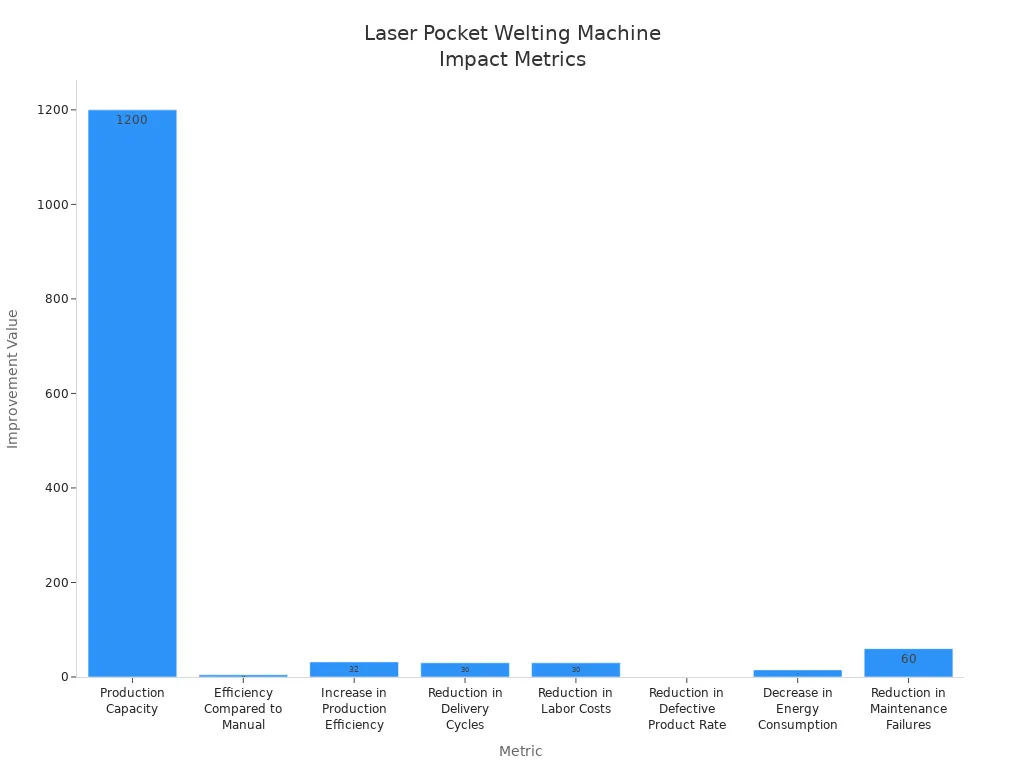
You will notice less waste and fewer mistakes. These improvements set new standards for quality and help protect the environment.
Key Takeaways
- Laser pocket welting machines boost production efficiency by up to 32% and reduce delivery cycles by 30%. This automation leads to faster and smoother operations.
- Advanced fiber lasers offer higher power, better precision, and lower operational costs. They allow for cold processing, minimizing thermal damage to fabrics.
- Robotics in manufacturing enhance efficiency by automating pocket opening, folding, and stitching. This reduces labor costs and increases production speed.
- AI-driven systems optimize production processes, enabling early problem detection and improving overall quality. Cloud-based management helps track performance effectively.
- Eco-friendly designs and energy-saving innovations in machines lead to reduced waste and lower energy consumption, making textile manufacturing more sustainable.
Advanced Laser Technologies in Laser Pocket Welting Machine
Fiber Lasers and Ultra-Fast Laser Sources
You can see big changes in how fiber lasers and ultra-fast laser sources work in today’s laser pocket welting machine. These new lasers give you more power and better results. You get machines that are smaller and easier to use. You can also work with shiny materials like aluminum and copper, which used to be a problem. Ultra-fast lasers help you make very precise cuts and seams. They also keep the fabric cool, so you avoid burning or damaging it.
Here is a table that shows the latest advancements:
| Advancement Type | Description |
|---|---|
| Higher Power Output | Fiber lasers are achieving higher power outputs with improved beam quality. |
| Compact System Designs | New designs are more compact and modular, enhancing usability. |
| Performance on Reflective Materials | Enhanced performance for materials like aluminum and copper. |
| Growth of Ultra-Fast Lasers | Ultra-fast lasers are gaining popularity for precision applications. |
| Minimal Thermal Damage | These lasers allow for cold processing, reducing thermal impact on materials. |
You will also notice that fiber lasers cost less to run than older laser types. They use less energy and last longer. This makes them a smart choice for your factory.
“Fiber lasers…all those types of one-micron wavelength lasers are solid state in nature and that’s really driven the cost down and improved the efficiency of the lasers,” Sharpe said. “Multikilowatt lasers now become more mainstay because they’re affordable—affordable to operate versus CO2 and other methods of lasing and they’re easy to manage because of the fiber delivery, which lends itself to robotics.”
Precision and Speed Enhancements
You want your laser pocket welting machine to work fast and make perfect seams every time. New engineering makes this possible. You get better folding systems that keep fabric steady. Electronic controls help you sew faster and with fewer mistakes. Mold changes are now quick and easy, so you can switch jobs without losing time.
Take a look at these speed improvements:
| Innovation Type | Description |
|---|---|
| Folding System | Updated to enhance stability during operation. |
| Electronic Control System | Upgraded to increase sewing efficiency, leading to faster operation. |
| Mold Optimization | Improved for easier mold changes, contributing to overall speed enhancements in production. |
| Speed of Operation | Capable of sewing 150-180 pieces per hour in single operation and 120 pieces per hour in double operation. |
| Folding Method | Allows for folding pockets in four directions simultaneously, increasing efficiency. |
You can now sew up to 180 pieces per hour. This means you finish orders faster and keep your customers happy. Fiber lasers also help you save money because they use less power and need less maintenance than older machines.
Material Compatibility Improvements
You may have struggled with certain fabrics in the past. Now, advanced laser pocket welting machines let you work with more types of materials. You can process soft silk or thick, multi-layer composites. This opens up new options for your products.
| Material Type | Description |
|---|---|
| Soft Silk | Previously incompatible, now adaptable |
| Thick Multi-layer Composite | New capability for processing complex materials |
Recent improvements mean you can use one machine for many jobs. Here are some benefits you will notice:
- You can handle a wider variety of fabrics, so you can take on more projects.
- Lower wattage lasers (30–60W) work well for thin materials like cotton and silk.
- Higher wattage lasers (80–150W) can cut through dense fabrics such as denim and leather.
- CO₂ lasers are best for organic fibers, while fiber lasers work better with synthetic materials.
- Adjustable power settings let you switch between fabric types quickly.
You get more flexibility and better results with every job. This makes your laser pocket welting machine a valuable tool for any modern textile business.
Automation and Smart Integration in Laser Pocket Welting Machine
Robotics and Automated Handling
You see robotics changing how factories work. Robots now handle pocket opening, folding, and stitching. You get full automation, which boosts production efficiency. One machine can replace five skilled workers. This means you save money and finish jobs faster. Robots support many pocket types and fabrics, so you can meet different production needs.
Here is a table showing the impact of robotics:
| Impact | Description |
|---|---|
| Full Automation | Achieves complete automation of pocket-opening processes, enhancing production efficiency. |
| Flexibility | Supports various pocket types and fabric handling, meeting diverse production needs. |
| Labor Replacement | One machine can replace five skilled workers, significantly boosting productivity. |
| Defect Rate Improvement | Increases defect-free rate from 85% to 99.8%, reducing rework costs. |
Robots also help you make precise cuts. You get 0.1mm accuracy, which means almost every piece passes inspection the first time. Machines now integrate multiple steps in one cycle. You do not need to re-iron pockets, which saves time. Smart programming lets you create different pocket shapes quickly.
| Key Features | Description |
|---|---|
| Ultra-Precision Laser Cutting | Achieves 0.1mm precision, ensuring a 99% first-pass yield on various fabrics. |
| Multi-Process Integration | Automates multiple operations in a single cycle, enhancing efficiency. |
| High-End Servo Motor Drive | Provides accuracy and longevity, improving machine performance. |
| Automatic Non-Iron Folding | Eliminates the need for re-ironing, saving time and labor. |
| Smart Inner Pressure Frame | Allows for versatile pocket designs without stitch limitations. |
| Intuitive Programming | Quickly generates various pocket shapes, reducing setup time. |
| Speed & ROI | Reduces labor needs significantly, achieving ROI in 0.5 years. |
You notice daily capacity increases by 175% with 30 operators. Each pocket takes only 20 to 30 seconds to process. You replace three to five workers per machine and reach return on investment in half a year.
- Robotics enhance efficiency in pocket welting operations.
- You reduce manual labor and lower labor costs.
- Improved precision leads to higher production throughput.
- Automation meets the demand for high-quality, customized products.
AI-Driven Process Optimization
You benefit from AI-driven systems that optimize every step. Machines use visual inspection to check pockets for defects. You get cloud-based data management, which helps you track performance and quality. AI now controls the whole process, not just single steps. This means you get smarter machines that learn and improve over time.
- The Lingfeng Automatic Pocket Welting Sewing Machine uses AI visual inspection.
- Cloud-based data management helps you monitor and improve production.
- You move from single-process optimization to full-process intelligence.
AI helps you spot problems early. You fix issues before they slow down production. You get better quality and faster results.
IoT and Industry 4.0 Connectivity
You see factories using IoT and Industry 4.0 to connect machines. IoT sensors monitor machine health in real time. You get alerts when maintenance is needed, so you prevent downtime. Cloud-based diagnostics let you check machines from anywhere. You keep production running smoothly and avoid costly repairs.
IoT-enabled sensors improve operational efficiency. You use real-time data analytics to optimize performance. Data-driven insights help you customize processes and make continuous improvements.
Tip: Smart manufacturing with IoT and Industry 4.0 is now essential. You gain predictive maintenance, remote monitoring, and quality assurance. These tools help you stay ahead in the competitive textile industry.
You notice that the laser pocket welting machine becomes more reliable and efficient. You spend less time fixing problems and more time producing high-quality garments.
Sustainability and Energy Efficiency in Laser Pocket Welting Machine
Eco-Friendly Machine Designs
You see new eco-friendly designs making a big difference in textile factories. Manufacturers use fully servo motors and intelligent sleep modes to cut energy use. Precision cutting technology helps you use almost all the fabric, so you waste less. An intelligent nesting system reduces scraps and dust pollution. Simplified mechanical structures lower fault rates by 60%. This means you spend less time and money on maintenance.
| Feature | Description |
|---|---|
| Energy Consumption Reduction | Utilizes fully servo motors and an intelligent sleep mode to minimize energy use. |
| Material Savings | Precision cutting technology enhances fabric utilization from 85% to 99.8%, significantly reducing waste. An intelligent nesting system further cuts down on scraps and dust pollution. |
| Maintenance Cost Reduction | Simplified mechanical structures lower fault rates by 60%, extending maintenance intervals and reducing downtime and energy costs. |
Note: Eco-friendly designs help you save resources and protect the environment. You also get machines that last longer and work more reliably.
Energy-Saving Innovations
You benefit from energy-saving innovations in every production cycle. The Automatic Welt Pocket Machine uses advanced motor technology that consumes up to 12% less energy than older models. Intelligent sleep modes turn off the machine when not in use. Mold-free designs eliminate the need for old molds, which reduces waste and saves energy.
| Contribution Type | Description |
|---|---|
| Energy Efficiency | The Automatic Welt Pocket Machine consumes up to 12% less energy than traditional models. |
| Waste Reduction | Mold-free design eliminates the need for old molds, reducing waste significantly. |
Tip: Energy-saving features help you lower your electricity bills and reduce your carbon footprint.
Waste Reduction Strategies
You can improve sustainability by using smart waste reduction strategies. Optimization of process planning reduces material waste and improves part quality. Support structure generation minimizes material inputs and lowers energy consumption. Internal filling strategies save material while keeping mechanical strength. Shorter supply chains also cut down energy use during product delivery.
| Strategy | Impact on Sustainability |
|---|---|
| Optimization of process planning | Reduces material waste and enhances part quality |
| Support structure generation | Minimizes material inputs and reduces energy consumption |
| Internal filling strategies | Saves material while maintaining mechanical strength |
| Shorter supply chains | Lowers overall energy consumption during product use |
- You see less waste in your factory.
- You use fewer resources and get stronger products.
- You help make textile manufacturing more sustainable.
Customization and Application Flexibility of Laser Pocket Welting Machine
Modular Architecture
You want machines that grow with your business. Modular architecture gives you this power. You can swap out parts or add new features without buying a whole new machine. This design makes repairs quick and easy. You spend less time waiting for service and more time making products. You can also upgrade your machine as technology improves. This keeps your factory up-to-date and ready for new challenges.
| Benefit | Description |
|---|---|
| Easy Maintenance | The modular design allows for straightforward maintenance, reducing downtime for manufacturers. |
| Upgrades | Manufacturers can easily upgrade components, ensuring the machines remain up-to-date with technology. |
| Adaptability to Production Needs | The design can be adjusted to meet changing production requirements, enhancing flexibility. |
Tip: Modular machines help you adapt quickly when your customers want something new.
Adaptability for Fabrics and Styles
You need to handle many types of fabrics and pocket styles. Recent advancements let you do this with ease. Intelligent software supports custom pocket patterns and uses 5-axis linkage for more creative designs. You can switch between thick and thin fabrics without making manual changes. The external fold edge structure lets you make smaller pocket openings, which improves seam stability.
| Feature | Description |
|---|---|
| Intelligent Software | Supports custom pocket patterns and 5-axis linkage for enhanced design flexibility. |
| Fabric Thickness Adaptability | Allows for easy switching between different fabric thicknesses without manual adjustments. |
| External Fold Edge Structure | Reduces pocket opening width limit to 0.8 cm, improving seam stability and compatibility with various fabrics. |
- AI technology gives you precise sewing control and predicts faults before they happen.
- Layered bidirectional pressing frames adjust to different fabric types.
You can now create unique products for every customer.
Rapid Changeover Capabilities
You want to switch jobs fast. Modern machines let you change settings in minutes. You do not need to stop production for long periods. Quick-change features help you meet tight deadlines and handle small or large orders with ease. This flexibility means you can take on more projects and satisfy more clients.
Note: Rapid changeover saves you time and helps you stay ahead in a busy market.
The laser pocket welting machine now gives you the tools to customize, adapt, and respond quickly to any production need.
Safety and Compliance in Laser Pocket Welting Machine
Advanced Safety Features
You need to keep safety at the top of your list when you use high-powered machines. Modern designs include safety shields, emergency stop buttons, and automatic shut-off systems. These features protect you from accidental exposure to laser beams. Many machines now use sensors that detect if a cover is open or if your hand gets too close to the work area. The system will stop right away to prevent injury. You also find warning lights and alarms that alert you to any problems during operation. These safety features help you work with confidence every day.
Regulatory Standards and Certification
You must follow strict rules when you use or buy a laser pocket welting machine. These rules make sure the machines are safe and reliable. Different organizations set these standards. The table below shows how these standards affect machine design and operation:
| Evidence Type | Description |
|---|---|
| Overview of Standards | ANSI sets industry consensus standards that influence safety and operational protocols for laser machines. |
| U.S. Federal Laser Product Performance Standard (FLPPS) | Compliance with federal regulations is mandatory for the design and manufacture of laser products in the U.S. |
| CDRH Responsibilities | Medical laser manufacturers must obtain pre-market approval or clearance for their devices, impacting design and operation. |
| Laser Classifications | Classifications are based on ANSI standards and federal regulations, affecting how machines are designed and operated. |
You should always check for labels and certificates before you use a new machine. These show that the machine meets important safety standards.
Operator Training and Ergonomics
Laser safety is the most critical consideration when working with any form of laser equipment—particularly in high-power applications such as laser cutting, laser cleaning, and laser welding. Proper training, protective measures, and responsible equipment design are essential to avoid permanent retinal damage from invisible laser radiation.
You need to know how to use your machine safely. Good training helps you understand the risks and how to avoid them. You should:
- Understand the specific dangers of the laser class and wavelength.
- Ensure equipment is compliant with relevant laser safety standards (e.g., EN 60825, ANSI Z136).
- Receive comprehensive training, follow safe operating procedures, and use appropriate PPE.
Ergonomic designs also help you work longer without feeling tired. Adjustable stands, easy-to-reach controls, and clear displays make your job safer and more comfortable.
Market Impact and Future Outlook for Laser Pocket Welting Machine
Manufacturing Efficiency Gains
You notice big improvements when you use advanced machines in your factory. The laser pocket welting machine helps you save energy and reduce mistakes. Many companies report measurable gains after switching to these machines. For example:
- You can cut energy use by 15% in your production line.
- You achieve almost zero defects, which means fewer returns and less waste.
These changes help you lower costs and boost output. You spend less time fixing errors and more time making quality products.
Industry Adoption and Competitive Edge
You see more factories adopting new machines to stay ahead. The Lingfeng fully Automatic Pocket Welting Machine lets you work faster and produce better garments. You do not need as many skilled workers, so you can train your team quickly. This shift helps you respond to market changes and keep your business strong.
- Ultra-narrow pocket-opening technology inspires other companies to upgrade their equipment.
- Simplified operation allows workers to learn fast, moving the focus to technical management.
- Exporting these machines shows the global influence of 'Made in China' innovations.
You gain a competitive edge by using technology that others want to copy. Your factory becomes more flexible and ready for new challenges.
Future Development Predictions
You will see more smart features in future machines. AI and IoT will help you monitor production and fix problems before they happen. Modular designs will let you upgrade parts easily. Factories will use less energy and create less waste. You can expect machines to handle more fabric types and styles. The industry will keep moving toward automation and sustainability.
Tip: Stay updated with new trends and invest in technology that grows with your business. This approach helps you stay competitive and ready for the future.
You see how new technology transforms the laser pocket welting machine. You gain faster production, higher quality, and safer work environments. Manufacturers benefit from energy savings and flexible designs. The industry moves toward smarter machines and greener factories.
You stay ahead by adopting these innovations. You prepare for a future where machines adapt quickly and help you deliver better products.
- You improve efficiency.
- You reduce waste.
- You meet changing market demands.
FAQ
What fabrics can you use with a laser pocket welting machine?
You can use cotton, silk, denim, leather, and many synthetic materials. Machines adjust power settings for thin or thick fabrics.
Tip: Always check the machine’s compatibility chart before starting a new project.
How does automation improve your production?
Automation lets you finish jobs faster and with fewer mistakes. Robots handle folding and stitching.
- You save money on labor.
- You get more consistent results.
Are laser pocket welting machines safe to use?
Modern machines include safety shields, emergency stops, and sensors.
Always follow training guidelines and wear protective gear when operating the machine.
Can you customize pocket styles with these machines?
Yes, you can create many pocket shapes and sizes. Intelligent software helps you design unique patterns.
| Feature | Benefit |
|---|---|
| Custom software | Easy pattern changes |
| Modular parts | Quick upgrades |
How do you maintain a laser pocket welting machine?
You clean the machine regularly and check for worn parts.
- Follow the maintenance schedule.
- Use recommended tools and supplies.
See Also
Top Folder Gluer Innovations for Carton Lines in 2025
Why Automatic UV Coating Machines Are Crucial for Fast Printing
Benefits of Plate Packs and Their Cost Breakdown for 2025
Enhancing Pharma Efficiency with Advanced Capsule Decapsulation Machines