Key Terms You Need to Know About Hyaluronic Acid
Hyaluronic acid is a non-sulphated glycosaminoglycan that forms stable structures in water, allowing it to retain moisture and support skin hydration. Its cosmetic and medical uses include facial volume restoration, wrinkle reduction, and improving skin radiance.
| Aspect | Findings |
|---|---|
| Skin Hydration | Hyaluronic acid injections improve skin hydration and radiance, reversing skin aging effects. |
| Facial Volume Restoration | HA fillers restore facial volume and fullness, with significant improvements noted. |
- HA’s high viscosity enables effective hydration even at low concentrations.
Essential Hyaluronic Acid Terms
Hyaluronic Acid (HA)
Hyaluronic acid is a natural linear polysaccharide composed of glucuronic acid and N-acetylglucosamine. This molecule appears throughout the human body, especially in the skin, synovial fluid, and eyes. Its high viscoelasticity, biocompatibility, and biodegradability make it a valuable ingredient in both medical and cosmetic applications. Scientists classify it as a glycosaminoglycan, which means it plays a crucial role in maintaining hydration and tissue structure.
Molecular Weight
The molecular weight of hyaluronic acid determines its function and absorption in skincare. Different molecular weights provide unique benefits:
| Molecular Weight Range | Characteristics | Optimal Applications |
|---|---|---|
| High (1,000-2,000+ kDa) | Superior water-binding, forms a surface film, immediate plumping, limited penetration | Instant hydration serums, sheet masks, primers, sensitive skin |
| Medium (100-1,000 kDa) | Balanced penetration, good water retention, moderate film | Most skincare products |
| Low (5-100 kDa) | Enhanced penetration, reduced water-binding, biological activity | Deeper hydration, cellular repair |
| Micro-Fragmented (<5 kDa) | Maximum penetration, cellular signaling | Anti-aging, deep skin benefits |
Sodium Hyaluronate
Sodium hyaluronate is the sodium salt form of hyaluronic acid. It dissolves more easily in water, which creates smoother product textures. This form is ideal for serums and mists where clarity and lightness matter. Sodium hyaluronate has a smaller molecular weight, so it penetrates deeper into the skin and provides hydration below the surface. It also offers greater stability and is less affected by changes in pH or temperature compared to hyaluronic acid.
Note: Sodium hyaluronate is more stable and easier to formulate, making it a preferred choice in many skincare products.
Humectant
A humectant is a substance that attracts and retains moisture from the environment. Hyaluronic acid binds water molecules at a rate much higher than other humectants—up to 1,000 times its own weight. This property helps prevent evaporation and keeps the skin hydrated. By maintaining moisture, it also supports collagen and elastin production, which improves skin plumpness and elasticity.
- Hyaluronic acid attracts moisture and prevents evaporation.
- It boosts hydration and supports skin structure.
Natural Moisturizing Factor (NMF)
Natural Moisturizing Factors (NMFs) are molecules in the skin that attract and retain water. They include amino acids, lactic acid, and urea. Hyaluronic acid is a key component of NMF, helping to keep the skin elastic and hydrated. As people age, the body’s natural levels of hyaluronic acid decrease, which can lead to dryness and reduced skin elasticity.
- NMFs maintain skin hydration and elasticity.
- Hyaluronic acid is safe, effective, and well-tolerated by sensitive skin.
Sources of Hyaluronic Acid
Manufacturers obtain hyaluronic acid from both natural and synthetic sources:
- Plant-based hyaluronic acid comes from fermentation using corn or wheat.
- Synthetic forms are produced through bio-fermentation with lactic acid bacteria.
- After collection, the substance is purified and dehydrated into a powder, then rehydrated for use in gels or creams.
- Natural hyaluronic acid offers antioxidant and anti-inflammatory benefits.
- Both types effectively bind water to the skin for hydration.
Topical Application
Topical hyaluronic acid is applied directly to the skin in serums, creams, or gels. Research shows that it can reduce pain and speed up healing after surgical procedures. It also promotes wound healing and improves color harmony in the skin. Many people use topical products to boost hydration and support the skin’s natural barrier.
Injectable Hyaluronic Acid
Injectable hyaluronic acid is used in aesthetic medicine to enhance facial volume and reduce wrinkles. Clinical studies show that these injections significantly improve skin quality, with a favorable safety profile. Most patients experience no serious adverse events, and any local reactions are usually mild and temporary.
| Parameter | Result |
|---|---|
| Efficacy of cannula vs. needle | Non-inferior based on WSRS score improvements at 12 weeks post-injection |
| Serious adverse events (AEs) | None reported, indicating a favorable safety profile |
| Pain assessment | Assessed using a 100-mm visual analog scale (VAS) immediately and at intervals post-injection |
| Local injection site reactions | Monitored for 28 days, with any persistent reactions considered as adverse events (AEs) |
Cross-linked Hyaluronic Acid
Cross-linking modifies the structure of hyaluronic acid to enhance its properties. There are several methods:
- Physical cross-linking uses non-covalent interactions to change mechanical properties.
- Covalent cross-linking forms stable bonds, increasing structural integrity.
- Combination methods use both strategies for optimal performance.
| Aspect | Effect on Hyaluronic Acid (HA) Properties | Applications |
|---|---|---|
| Mechanical Properties | Increases strength and viscoelasticity, decreases water solubility. | Tissue engineering, drug delivery systems |
| Stability | Enhances stability and slows degradation of HA-based hydrogels. | Wound care, implantable materials |
| Environmental Sensitivity | Cross-link density and properties change with temperature, pH, and ionic strength. | Biomedical applications tailored to specific environments |
- Esterification, grafting, and free radical polymerization further modify hyaluronic acid for specialized uses.
Dehydration and Deficiency
A lack of hyaluronic acid in the skin leads to several noticeable symptoms:
| Symptom | Description |
|---|---|
| Dry Skin & Reduced Elasticity | Insufficient hyaluronic acid causes dryness and loss of firmness. |
| Accelerated Aging | Skin loses plumpness and elasticity, increasing fine lines and wrinkles. |
| Impaired Wound Healing | Low levels delay skin repair and reduce recovery efficiency. |
| Decreased Moisture Retention | The skin cannot hold water, resulting in dryness and a dull appearance. |
Glycosaminoglycan
Glycosaminoglycans (GAGs) are long polysaccharides that play a vital role in skin hydration and structure. Hyaluronic acid stands out among GAGs because it is non-sulfated and has a large molecular size. This allows it to attract and retain large amounts of water, support the skin’s barrier, and protect against environmental stress.
- GAGs maintain hydration and structural integrity.
- Hyaluronic acid helps preserve tissue volume and supports cellular functions.
Synovial Fluid
Synovial fluid contains high concentrations of hyaluronic acid, about 3 g/L, which is much higher than in blood plasma. This molecule acts as an ideal lubricant in joints, forming a film between cartilage surfaces. It protects cartilage from frictional damage, especially under physical stress.
Tip: Healthy synovial fluid ensures smooth joint movement and reduces wear on cartilage.
Articular Cartilage
Hyaluronic acid is a key component of the extracellular matrix in articular cartilage. It enhances lubrication, protects against mechanical stress, and regulates inflammation at cartilage lesions. This molecule also promotes cell adhesion, proliferation, and supports cartilage repair by improving extracellular matrix deposition.
- Hyaluronic acid helps cartilage resist damage and supports regeneration.
Polysaccharide Chain
The structure of hyaluronic acid consists of a linear chain of repeating N-acetyl-D-glucosamine and D-glucuronic acid units. The specific glycosidic bonds in this chain determine its molecular weight, which affects its biological activities. For example, different molecular weights influence wound healing, immune response, and anti-aging effects.
- Low molecular weight (0.4–4.0 kDa): Induces heat shock proteins, non-apoptotic.
- Medium (6–20 kDa): Stimulates immune and blood vessel growth.
- High (>500 kDa): Suppresses angiogenesis, acts as an immunologic depressant.
Using Hyaluronic Acid in Skincare
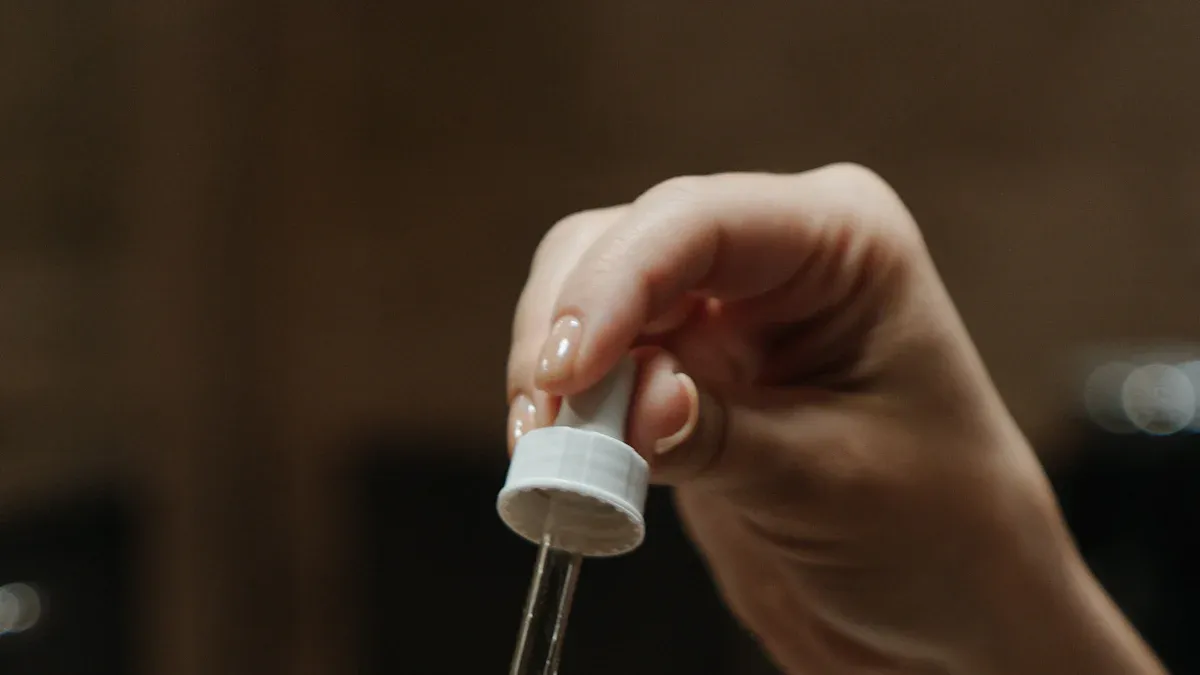
How to Apply Hyaluronic Acid
Proper application maximizes the benefits of hyaluronic acid in any skincare routine. Dermatologists recommend a stepwise approach for optimal results:
| Step | Description |
|---|---|
| 1 | Cleanse your face with a gentle cleanser to remove impurities. |
| 2 | Leave your skin damp; do not towel dry completely to enhance hydration. |
| 3 | Dispense 2-3 drops of hyaluronic acid serum into your palm and press it into your face and neck. |
| 4 | If using an eye serum, apply it now with a cooling applicator. |
| 5 | Immediately apply a moisturizer to lock in the hydration from the hyaluronic acid. |
Applying hyaluronic acid to damp skin helps attract and retain moisture more effectively. Following with a moisturizer seals in hydration and supports the skin barrier.
Compatibility with Other Ingredients
Hyaluronic acid works well with most skincare ingredients. It soothes and hydrates, making it an ideal companion for products that may cause irritation. Many dermatologists recommend pairing it with active ingredients to reduce potential side effects. However, users should avoid combining hyaluronic acid with synthetic retinol or certain acids, as these combinations may increase irritation or reduce effectiveness.
- Compatible with most skincare ingredients, especially those that can be harsh.
- Ideal for mixing with actives to reduce irritation.
- Avoid combining with synthetic retinol and certain acids.
Recommended Frequency of Use
Most people can use hyaluronic acid both in the morning and at night. Dermatologists suggest introducing it gradually into a skincare routine. Start by applying every other day during the first week. If the skin tolerates it well, increase to daily use. This approach minimizes the risk of irritation and allows the skin to adjust.
- Safe for use twice daily.
- Begin with every other day application, then increase frequency as tolerated.
Signs of Hyaluronic Acid Deficiency
Deficiency in hyaluronic acid can lead to noticeable changes in the skin. Common signs include:
- Redness or flushing of the skin
- Itching
- Slight stinging or burning sensation upon application of skincare products
- Minor swelling or bumps
These symptoms may indicate a compromised skin barrier or reduced moisture retention. Individuals experiencing these signs should consider adjusting their skincare routine and consulting a dermatologist.
Benefits for Different Skin Types
Clinical studies show that hyaluronic acid benefits all skin types. The following table summarizes its effects:
| Skin Type | Benefit of Hyaluronic Acid | Source |
|---|---|---|
| Oily | Decreases sebum production, moderating oiliness without causing dryness | Link |
| Dry | Maintains hydration and boosts skin moisture, improving the skin barrier | Link |
| Combination | Promotes overall skin hydration and improves skin tone and thickness | Link |
Hyaluronic acid adapts to the needs of each skin type, providing hydration without clogging pores or causing excess oil.
Precautions and Tips for Use
When using hyaluronic acid, individuals should take several precautions to ensure safety and effectiveness:
- Be aware of potential mild irritation, especially if allergic to the source material or if the product contains irritating ingredients.
- Apply hyaluronic acid to damp skin to prevent it from drawing moisture from the skin in very dry climates.
- Consult with a dermatologist if there is a history of autoimmune conditions or severe allergic reactions.
- Start with lower concentrations (0.5-1%) and gradually increase to minimize irritation.
- Conduct a patch test before full application to check for adverse reactions.
- Follow with a gentle moisturizer to seal in hydration.
Tip: Begin with every other day use and increase frequency as the skin adjusts. Monitor for side effects such as redness, itching, or swelling.
Common side effects include pain, redness, itching, swelling, or bruising. Most reactions are mild and resolve quickly. If symptoms persist, discontinue use and seek medical advice.
- Readers should remember essential terms: hyaluronic acid, molecular weights, and hyaluronate.
- For best results, apply serum to damp skin before moisturizer, both morning and night.
Tip: Choose products with clear molecular weight information and dermatologist validation for optimal skin hydration and safety.
FAQ
What skin types benefit most from hyaluronic acid?
All skin types benefit from hyaluronic acid. Oily, dry, and combination skin show improved hydration and texture after consistent use.
Can hyaluronic acid cause breakouts or irritation?
Hyaluronic acid rarely causes breakouts. Sensitive skin may experience mild irritation. Users should patch test before full application.
How long does it take to see results from hyaluronic acid?
- Most users notice improved hydration within a week.
- Fine lines and texture changes may appear after two to four weeks.
See Also
Understanding the Chemical Composition of 2 5-Furandicarboxylic Acid
Proven Strategies to Enhance Sustainability of 2 5-Furandicarboxylic Acid
Industrial Applications and Solubility of 2 5-Furandicarboxylic Acid
Understanding 60 Percent Nitric Acid and Its Applications
Recent Innovations in Nitric Acid Separation and Purification