What Key Features Define the Best Office Water Dispensers
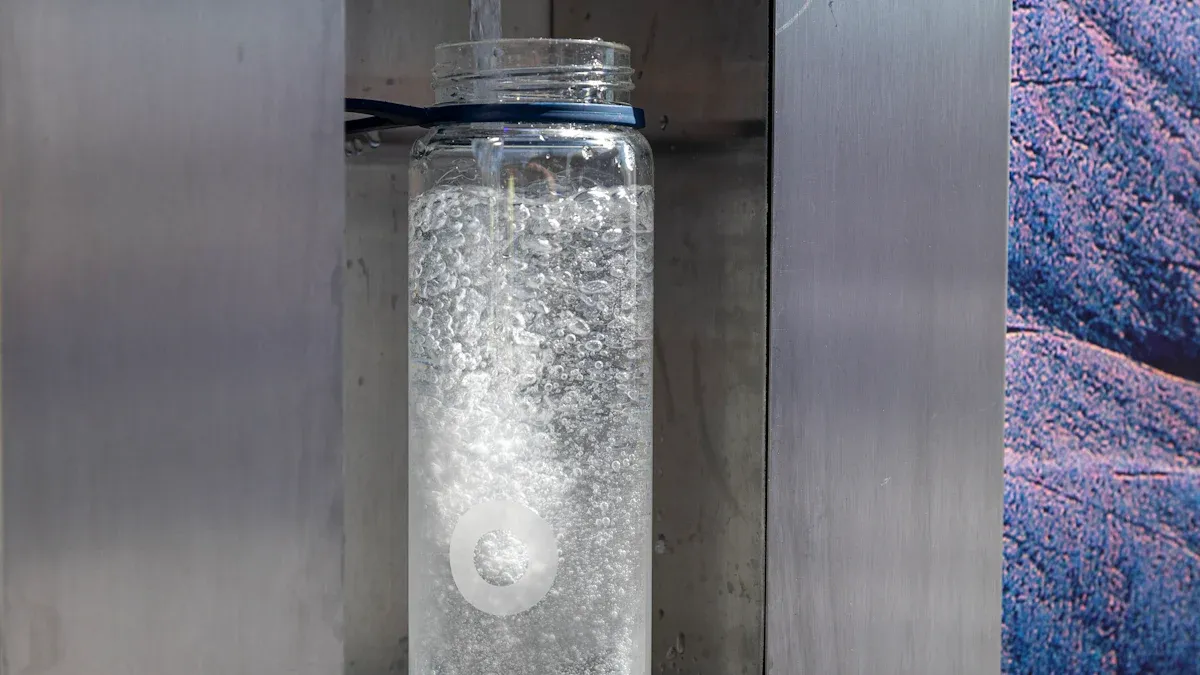
Choosing the right freestanding water dispenser is a smart investment in your team's health and productivity. Even minor dehydration significantly impacts focus and mood. The drop in performance is clear:
| Hydration Drop | Productivity Drop |
|---|---|
| 1% | 12% |
| 3% to 4% | 25% to 50% |
The best models deliver superior water quality, versatile dispensing, and advanced hygiene for a healthier office.
Key Takeaways
- Good office water dispensers make your team healthier and more focused.
- The best dispensers clean water well, offer different water temperatures, and stay very clean.
- Choosing a dispenser connected to your water line saves money and helps the environment.
Core Performance and Quality Features
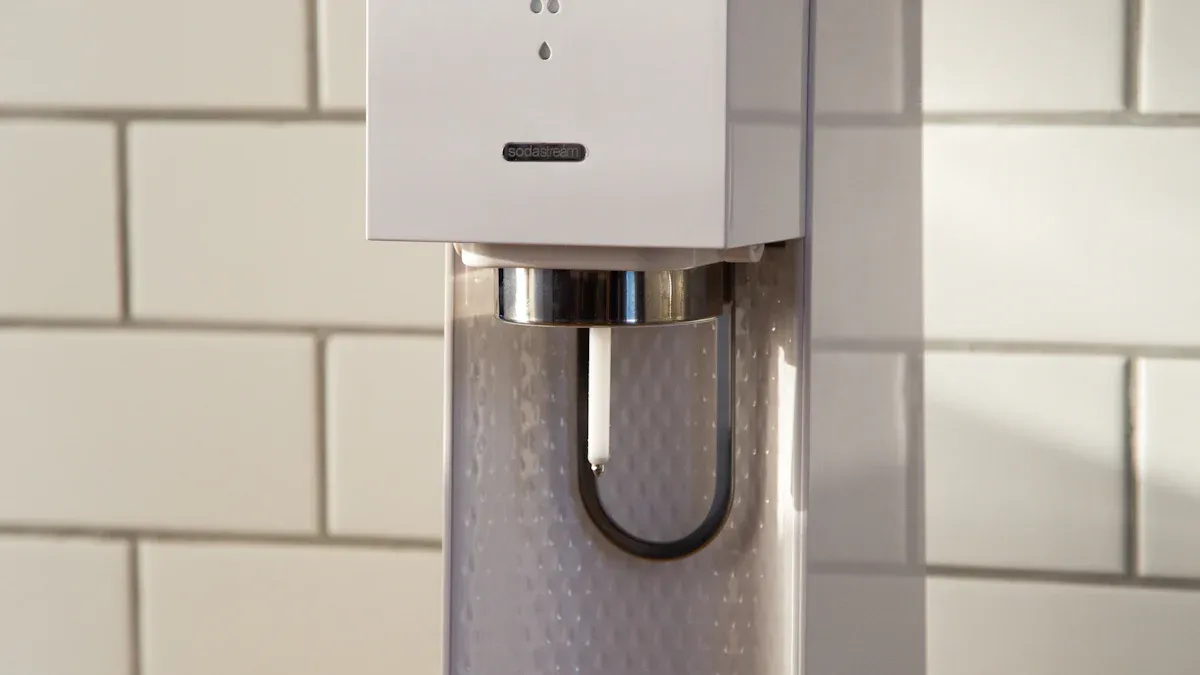
The best water dispensers go beyond simple convenience. You should look for models that deliver exceptional water through advanced technology. These core features ensure every glass is pure, refreshing, and safe for your team.
Advanced Water Filtration Systems
Tap water can contain various impurities that affect its taste, smell, and safety. A high-quality filtration system is your first line of defense. It targets and removes a wide range of contaminants.
Common contaminants found in tap water include:
- Heavy Metals: Lead, mercury, and arsenic can leach from old pipes or industrial pollution.
- Disinfectants: Chlorine and chloramines are used to treat city water but can leave an unpleasant taste and odor.
- Chemicals: Volatile Organic Compounds (VOCs), pesticides, and herbicides can enter the water supply from runoff and industrial discharge.
- Microorganisms: Cysts and other microbial parasites are resistant to standard disinfection.
Top-tier dispensers use multi-stage filtration to purify water. This process ensures maximum purity and a great taste. A typical system works in several steps:
- Sediment Filter: This first stage removes large particles like dirt, rust, and sand. It protects the more sensitive filters that follow.
- Activated Carbon Filter: This filter uses carbon to absorb chemical contaminants. It effectively removes chlorine, bad odors, and VOCs, which greatly improves the water's taste.
- Reverse Osmosis (RO) Membrane: This is the core of the purification process. The RO membrane has microscopic pores that block dissolved salts, heavy metals, and microorganisms, allowing only pure water molecules to pass through.
- UV Purification: Many advanced systems include an ultraviolet (UV) light stage. UV light neutralizes any remaining bacteria and viruses by disrupting their DNA, adding a final layer of safety.
When you evaluate a freestanding water dispenser, look for certifications that prove its effectiveness. These certifications confirm the system performs as advertised.
Tip: Look for NSF/ANSI certifications on any dispenser you consider. Key standards include:
- NSF/ANSI 53: Reduces contaminants with known health effects, like lead and cysts.
- NSF/ANSI 58: Specifically certifies the performance of reverse osmosis systems.
- NSF/ANSI 401: Targets emerging contaminants like pharmaceuticals and pesticides.
Versatile Temperature Options
A modern freestanding water dispenser should cater to everyone's preferences. Offering multiple temperature options makes the dispenser a central hub for all office hydration needs.
Instant hot water is a major productivity booster. Your team can quickly make beverages without waiting for a kettle to boil.
- Coffee & Tea: Perfect for a morning coffee or an afternoon tea break.
- Instant Meals: Convenient for preparing oatmeal or instant soups.
Safety is paramount with hot water. Look for dispensers with a child safety lock on the hot water tap. This feature requires a specific action, like pushing a button while pulling a lever, to prevent accidental burns.
Sparkling water is another feature that elevates the office experience. It provides a healthy alternative to sugary sodas. Offering carbonated water can:
- Boost Morale: Employees see it as a premium perk, showing you care about their well-being.
- Encourage Hydration: The fun factor of bubbles often encourages people to drink more water, improving their focus and energy levels.
Superior Hygiene and Sanitation
In a shared office space, hygiene is non-negotiable. The best water dispensers incorporate advanced features to minimize the spread of germs and keep the water pure.
Many models use antimicrobial surfaces to protect high-touch areas. Silver ion technology is often embedded into touch panels and dispensing areas. This technology actively inhibits the growth of bacteria and biofilm. Some dispensers also use hygienic stainless steel, a non-porous material that prevents germs from getting trapped.
Touchless dispensing is one of the most important hygiene features available. Instead of pushing buttons or levers, you can use an infrared sensor to dispense water.
"Touchless technology is a good idea because hard surfaces are significant transfer points for bacteria and viruses.” — Charles Gerba, Ph.D., Microbiologist, University of Arizona
A touchless freestanding water dispenser offers clear benefits. It eliminates a shared touchpoint, which directly reduces the risk of cross-contamination between users. Studies have shown that people use touchless systems more frequently, promoting better hygiene habits throughout the office. This simple feature creates a cleaner, safer environment for everyone.
Practical and Operational Considerations
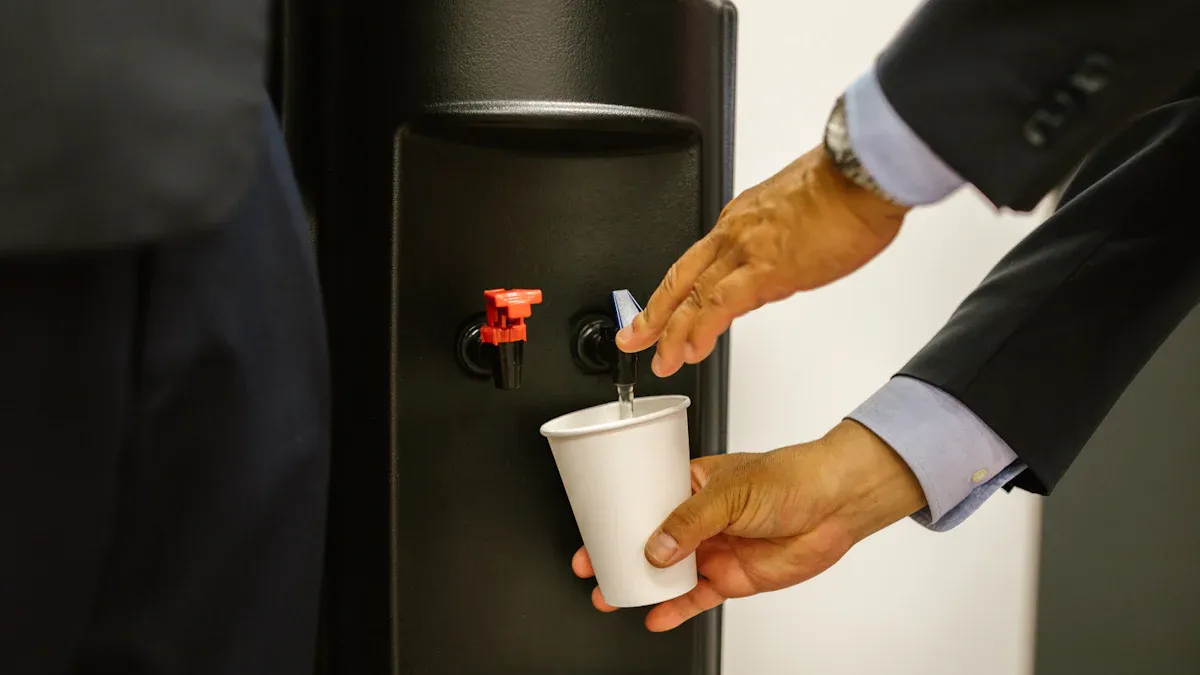
Beyond performance, you must consider how a water dispenser fits into your daily office operations. Practical features determine long-term costs, convenience, and environmental impact.
Point-of-Use (POU) vs. Bottled Dispensers
You have two main choices: bottled dispensers or point-of-use (POU) systems. Bottled dispensers are traditional but come with logistical challenges.
- Heavy Lifting: Replacing heavy water bottles creates a safety risk.
- Storage Management: Storing bulky bottles takes up valuable office space.
- Delivery Scheduling: Coordinating deliveries can be disruptive and time-consuming.
A POU freestanding water dispenser connects directly to your water line, offering a more sustainable solution. These systems reduce your carbon footprint by eliminating plastic bottle production and delivery truck emissions. A POU system requires professional installation to connect to a cold water line, but it provides an endless supply of filtered water.
Capacity and Freestanding Water Dispenser Options
You need to choose a dispenser that can handle your team's daily needs. A good rule is to have at least one dispenser for every 25 employees. For high-demand environments, a direct-chill system is superior to a traditional reservoir tank model.
| Feature | Direct Chill System | Traditional Reservoir Tank |
|---|---|---|
| Hygiene | More hygienic; no stored water | Less hygienic; water sits in a tank |
| Temperature | Stays consistently cold | Can warm up during peak use |
| Performance | Cools about 20 liters per hour | Varies based on tank turnover |
Direct-chill technology cools water instantly, ensuring every user gets a cold, refreshing drink without the risk of bacterial growth found in tanks.
Energy Efficiency and Maintenance
An energy-efficient freestanding water dispenser saves you money on utility bills. Look for models with an ENERGY STAR certification, which use less than 0.16 kWh per day. Features like programmable sleep modes can further reduce electricity consumption by up to 28% by powering down the unit overnight. This efficiency also reduces wear on internal parts. While these models may have a higher initial cost, you can often recover the investment in 18-24 months through lower operational expenses.
You create a healthier workplace with advanced filtration, versatile temperatures, and robust hygiene. A point-of-use (POU) dispenser also delivers major cost savings and supports sustainability. Managers report significant savings after switching from bottles:
- One saved up to $1,000 per month.
- Another saved over $3,000 annually.
Prioritizing these features boosts employee well-being and productivity.
FAQ
How often should I change the water filters?
You should replace filters every 6 to 12 months. This schedule ensures optimal performance and water purity. Regular maintenance keeps your dispenser running efficiently and your water tasting great.
Is a POU dispenser difficult to install?
A professional handles the entire installation for you. They connect the unit directly to your water line. The process is fast and creates very little disruption in your office.
Can a dispenser really save my office money?
Yes, a POU system eliminates bottle delivery fees and storage costs. Many offices save thousands of dollars annually. You pay for the water you use, not for plastic and transport.