Find your best dried apples sorting machine with these tips
The global dried apple market is expanding rapidly, increasing the demand for high-quality products.
| Year | Global Dried Apple Market Sales Revenue |
|---|---|
| 2021 | $1865.26 Million |
| 2025 | $2387 Million |
| 2033 | $3909.12 Million |
A modern dried apples sorting machine depends on a high-resolution imaging system, intelligent software, and gentle handling. Prioritizing these features is fundamental to achieving superior sorting quality and maximizing yield.
Essential Technical Features of a Dried Apples Sorting Machine
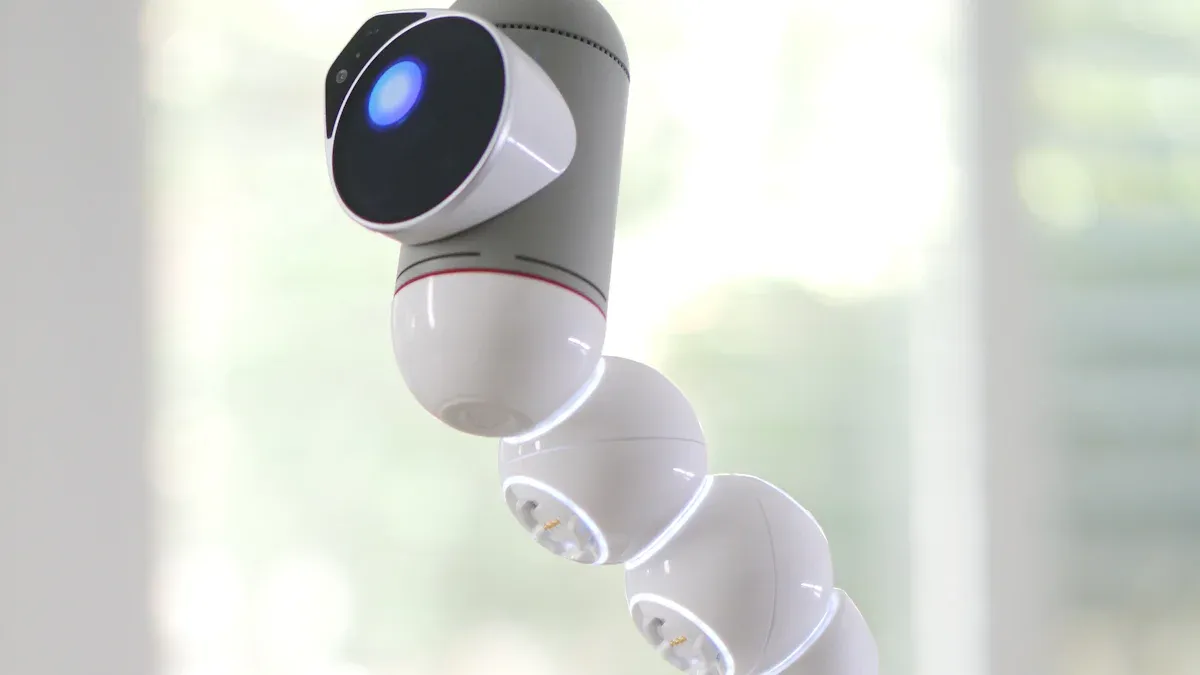
The performance of a modern optical sorter hinges on the synergy between its hardware and software. Processors should evaluate three core technical areas. These areas are the imaging system, the sorting software, and the ejection technology. A superior machine excels in all three, delivering unmatched accuracy and efficiency.
High-Resolution Imaging Systems
The imaging system functions as the eyes of the sorter. It captures detailed images of each piece of dried apple for analysis. Different camera technologies work together to detect a wide spectrum of defects. A capable dried apples sorting machine often combines several camera types for comprehensive inspection.
- RGB (Red, Green, Blue) Cameras: These full-color cameras detect variations in color and shade. They easily identify issues like over-browning, under-dried pieces, or discoloration from rot.
- NIR (Near-Infrared) Cameras: This technology excels at separating foreign materials from the product. It can spot items with similar colors but different compositions, such as stray sticks, stones, or bits of plastic.
- SWIR (Short-Wave Infrared) Cameras: SWIR technology detects defects invisible to the human eye. It uses multiple frequencies to identify moisture-related issues or unhulled core fragments mixed in with the final product.
- UV (Ultraviolet) Cameras: Some systems offer UV cameras as an upgrade. This feature is particularly effective for identifying and removing contaminants like aflatoxins or specific types of mold.
Advanced Sorting Software
The sorting software is the brain of the operation. It processes the data from the imaging system and makes critical sorting decisions in real time. Advanced software uses artificial intelligence (AI) and machine learning to achieve remarkable precision.
AI-Powered Sorting 🧠
AI algorithms enable the machine to analyze materials and recognize complex patterns. This allows the sorter to make autonomous decisions, continuously optimizing its settings. The system learns from the product flow, improving its ability to identify contaminants and ensuring a purer final product without manual configuration.
This intelligent software can identify an extensive list of defects with high accuracy. Common issues it detects include:
- Color inconsistencies and grading errors
- Mold, rot, and fungus
- Foreign objects like glass, plastic, wood, and stones
- Insect or rodent damage
- Bruising and surface damage
- Incorrect shapes or sizes
Operators can also define custom sorting parameters. The software allows users to set specific rules for what constitutes an acceptable product versus a reject. For example, an operator can create a rule to sort dried apples based on multiple criteria, such as assigning a "premium" grade to slices within a specific color range and a "standard" grade to others. This level of control ensures the final product meets exact quality specifications.
Furthermore, modern software generates valuable operational reports. It provides real-time data on production efficiency, material usage, and product quality. Managers can use these insights to:
- Track quality inspections and log defect types
- Monitor machine performance and schedule predictive maintenance
- Identify waste trends to optimize resource use
- Analyze employee productivity and error rates
Precise Ejection Technology
The ejection system is the component that physically removes defective items from the product stream. After the software identifies a reject, the ejector acts instantly to separate it. The speed and accuracy of this mechanism are vital for minimizing the loss of good product. A high-performance dried apples sorting machine will feature an ejection system with a response time measured in milliseconds.
There are two primary types of ejection mechanisms:
- Pneumatic Ejection: This is the most common method. It uses high-speed jets of compressed air to precisely target and deflect a defective piece into a reject chute. This non-contact method is ideal for the high-speed sorting of lightweight items like dried apples.
- Mechanical Ejection: This method uses physical components like paddles, fingers, or robotic arms. It gently diverts larger or more delicate items that could be damaged by air jets.
Thanks to their rapid response times, modern air ejectors achieve exceptional accuracy rates. High-capacity sorters can reach a sorting accuracy of up to 99.99%, ensuring that only the highest quality product proceeds to packaging.
Critical Operational and Design Features
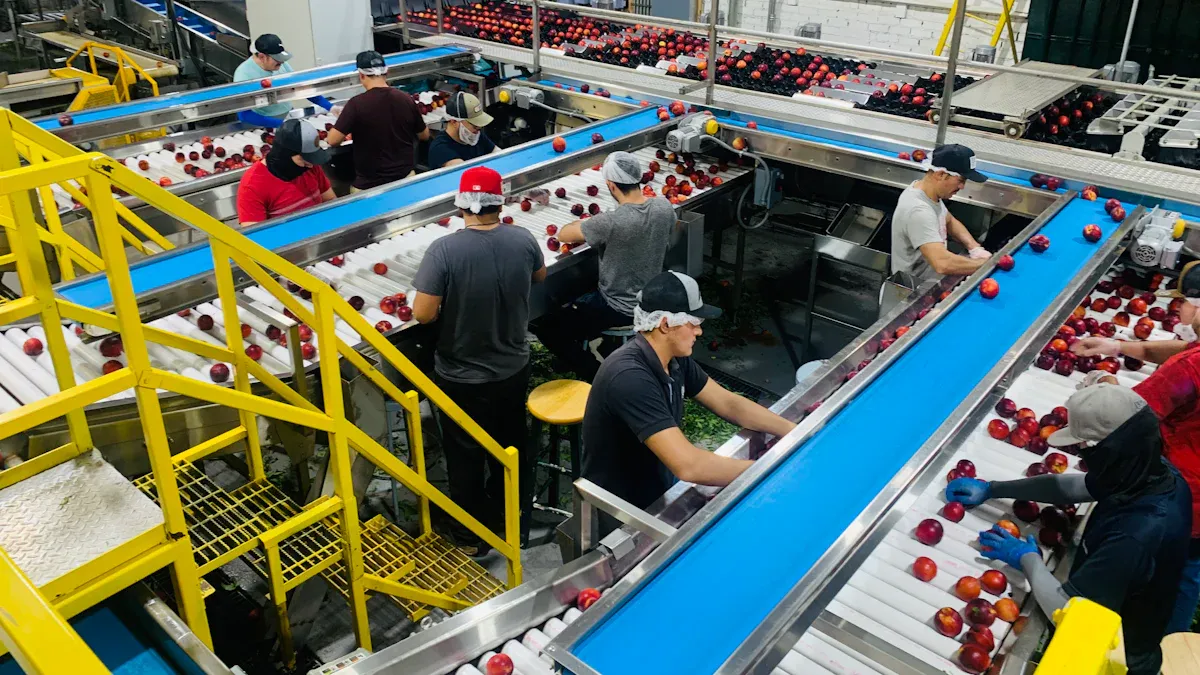
Beyond core technology, the operational and design aspects of a sorter determine its long-term value. A machine must not only be accurate but also protect the product, meet production demands, and be easy for staff to operate and maintain. These practical features directly impact efficiency, food safety, and profitability.
Gentle Product Handling
Dried apples are fragile and can easily break or crumble during processing. Gentle product handling is therefore essential to preserve the final product's integrity and maximize saleable yield. The machine's design should minimize drops, impacts, and friction at every stage of the sorting process.
A key component for achieving this is the vibratory feeder. This device uses controlled vibrations to move and position products with high accuracy. Unlike standard conveyors, vibratory conveying can move sticky or delicate materials without causing damage or agglomeration. This technology is essential in food processing for handling items like dried fruits, ensuring they are not bruised or deformed. The feeder's controlled motion also creates an even, single layer of product, which is critical for the imaging system to inspect each piece effectively.
The materials used to construct the sorter are just as important for product quality and safety. Equipment must comply with strict industry standards for food-contact surfaces.
- Food-Grade Materials: Sorters should be built with materials recognized as safe by regulatory bodies like the FDA. The most common choices are stainless steel alloys.
304 Stainless Steelis a cost-effective option suitable for dry food processing.316 Stainless Steeloffers superior corrosion resistance, making it essential for environments with higher moisture or acidity.
- Sanitary Design: The machine's design must prevent the accumulation of food particles and bacteria. This includes having smooth, polished welds and eliminating crevices where residue can collect. Food-contact surfaces should have a low surface roughness (Ra), typically below 0.8 µm, to ensure they are easy to clean and sanitize effectively.
Production Throughput and Capacity
A sorter's throughput measures the volume of product it can process in a given period. This metric is typically quantified in tons per hour. For example, some systems are designed for high-capacity separation of up to 30 tons per hour, while others may operate efficiently at 4-5 tons per hour. Processors must select a machine with a capacity that matches their current production volume.
Several factors influence a machine's overall throughput:
- Conveyor Belt Width: A wider belt allows a larger volume of material to pass through the sorter, directly increasing its potential tons per hour (TPH).
- Conveyor Belt Speed: The speed of the induction conveyor sets the pace for the entire system. It ensures proper spacing between items for accurate inspection and ejection. Increasing belt speed can raise TPH, but it must be balanced with the system's ability to track and sort effectively.
- Product Characteristics: The size, shape, and density of the dried apples also affect how quickly they can be processed.
Planning for Growth 📈
Businesses should also consider future scalability. A modular dried apples sorting machine allows a company to add capacity as production demands increase. For instance, a business can start with a base system and later integrate additional modules or advanced technologies to handle higher volumes without replacing the entire machine. This approach provides a flexible and cost-effective path for growth.
User Interface and Maintenance
A complex machine is only effective if operators can use it efficiently. Modern sorters feature intuitive, user-friendly interfaces, often with touchscreen controls. These interfaces allow operators to easily select sorting programs, adjust parameters, and monitor performance in real time. A clear and simple UI reduces the training curve for new employees and minimizes the risk of operational errors.
Ease of maintenance is another critical design consideration. Regular cleaning and sanitation are mandatory in food processing, so a sorter must be designed for quick and thorough cleaning.
- IP Ratings: The machine's electrical enclosures should have an appropriate Ingress Protection (IP) rating. An IP65 rating ensures the components are dust-tight and protected from low-pressure water jets, which is often the minimum for industrial use. For environments with high-pressure, high-temperature washdowns, an IP69K rating is essential.
- Tool-less Disassembly: Features like tool-less removal of belts, chutes, and covers significantly reduce downtime for cleaning and maintenance.
Routine maintenance ensures the machine operates reliably and extends its service life. Operators should follow a regular schedule for key tasks.
| Maintenance Task | Frequency | Description |
|---|---|---|
| Inspection | Daily | Check that all components are securely fastened and that the ground wire is functioning. |
| Cleaning | Daily/Post-Production | Thoroughly clean all surfaces, belts, and chutes to remove product residue and prevent contamination. |
| Lubrication | Weekly/Monthly | Lubricate rotating and friction parts according to the manufacturer's recommendations. |
| Component Check | As needed | Inspect belts for wear and tear. Adjust chain tightness and gear speed as required. |
All maintenance work must be performed with the machine powered off to ensure operator safety.
Selecting the right dried apples sorting machine requires focusing on advanced imaging, intelligent software, and gentle handling. Processors should match machine throughput to their operational needs. This investment boosts efficiency and delivers consistent quality, which directly builds brand loyalty and ensures a strong return as AI technology continues to advance.
FAQ
What is the price of a dried apples sorting machine?
The cost of a sorter varies significantly. Price depends on the machine's capacity, camera technology, and software features. Processors receive quotes based on their specific production requirements.
How does AI improve sorting accuracy?
AI algorithms learn from the product stream in real time. The system continuously refines its sorting criteria. This improves its ability to identify complex defects without operator intervention.
Can a sorter handle different types of dried apples?
Yes. Operators can create and save custom sorting programs. This feature allows for quick and easy changeovers between different apple varieties, sizes, or quality grades.
See Also
Essential Industrial Checkweighers: A Must-Have for Every Food Processing Plant
Understanding Tablet Sampling Machines: The Definitive Guide for Lab Selection
Key Capsule Checkweighers for Buyers to Evaluate in the Upcoming Year 2025
Discovering Premier Sources for X-Ray Inspection Machines Across China
Exploring Innovative Folder Gluer Features Revolutionizing 2025 Carton Production Lines