Exploring the Internet of Things and Its Latest Innovations
The Internet of Things (IoT) is a network of physical objects. These objects have sensors and software. They connect and share data online. Their main job is to let everyday items collect data and act on their own. The latest Internet development trend shows massive growth in this area.
| Year | Number of IoT Devices (Statista) |
|---|---|
| 2024 | 24.4 billion |
| 2023 | 19.8 billion |
| 2022 | 16.4 billion |
The market is also expanding quickly, with projections showing it will reach USD 2.72 trillion by 2030.
Key Takeaways
- IoT connects everyday objects to the internet. These objects collect and share data. This helps them do tasks automatically.
- IoT systems use devices, connectivity, data processing, and user interfaces. These parts work together. They make smart homes and connected cars possible.
- AI, edge computing, and 5G are making IoT smarter. These technologies help devices make quick decisions. They also improve speed and security.
IoT in Action: How It Works and Where to Find It
The Internet of Things may seem complex, but its operation breaks down into a few key stages. A complete IoT system gathers information, shares it, processes it, and then acts on it. This four-part process allows digital intelligence to interact with the physical world.
The Core Components of an IoT System
An IoT system functions through four essential components working together. These are the devices (sensors and actuators), connectivity, data processing, and a user interface.
-
Devices (Sensors and Actuators) 🧠 Sensors and actuators are the physical hardware of an IoT system. They interact directly with the environment.
- Sensors act as the 'eyes and ears' of the system. They collect data from the physical world, converting inputs like temperature, motion, or light into electrical signals.
- Actuators serve as the 'arms and legs'. They receive electrical signals and convert them into physical actions, such as turning on a light, adjusting a valve, or sounding an alarm.
Note: Sensors and actuators have a symbiotic relationship. Sensors gather data that informs an actuator's action. The actuator's response then creates new data for the sensors to analyze, forming a continuous feedback loop.
-
Connectivity 🌐 The collected data must travel from the devices to a central processing location. This happens through various communication protocols. The choice of protocol depends on factors like range, power consumption, and the amount of data being sent.
| Protocol | Best For | Common Use Case |
|---|---|---|
| Wi-Fi | High-speed data over short distances | Smart homes, office buildings |
| Bluetooth/BLE | Low-power, short-range connections | Wearables, health monitors |
| MQTT | Low-bandwidth, reliable messaging | Industrial monitoring, home automation |
| LoRaWAN | Long-range, low-power communication | Smart agriculture, asset tracking |
-
Data Processing ☁️ Once the data reaches the cloud, software processes it. This can range from simply checking if a temperature reading is within an acceptable range to using complex algorithms to identify patterns. Cloud platforms like Azure IoT Hub and AWS IoT are central to this stage. They manage device connectivity, process incoming data, and can send commands back to the devices. For example, a cloud service can analyze sensor data, detect an anomaly, and automatically send a command to an actuator to perform a corrective action.
-
User Interface 📱 The user interface is how a person interacts with the IoT system. This is often a mobile app or a web dashboard. It allows users to view the data, monitor device status, and send commands manually. For example, a user can check their home security camera feed or adjust their smart thermostat from their smartphone.
Real-World Applications in Daily Life
IoT technology is no longer just for tech enthusiasts. It is already a part of many people's daily routines, making life more convenient and efficient.
Smart Homes and Wearables
Smart home devices are a popular example of IoT. Thermostats learn a household's schedule to save energy, smart speakers play music on command, and security cameras send alerts when they detect motion. Wearable technology brings IoT even closer to us.
Fitness trackers and smartwatches use advanced sensors to monitor personal health.
- They provide real-time health tracking of metrics like heart rate, ECG, and blood oxygen levels.
- Devices use wireless connectivity like Bluetooth to sync this data with a smartphone, where apps display trends and insights.
- Some wearables offer emergency alerts, automatically notifying contacts if they detect a fall or an abnormal heart rate.
- Advanced sleep tracking monitors sleep cycles and breathing patterns to help users improve their rest.
Connected Vehicles
Modern cars are becoming powerful IoT devices on wheels. Automakers like Tesla, Volvo, and Ford use IoT to enhance safety, maintenance, and the driving experience.
- Advanced Driver-Assistance Systems (ADAS) use sensors and cameras to monitor the car's surroundings, alerting the driver to potential dangers.
- Predictive maintenance systems analyze data from sensors on car parts to predict when a component might fail, allowing owners to schedule repairs proactively.
- Vehicle-to-Everything (V2X) communication enables cars to share real-time information with other vehicles and traffic infrastructure, helping to reduce congestion and prevent accidents.
Transforming Business and Industry (IIoT)
When IoT is applied in an industrial setting, it is called the Industrial Internet of Things (IIoT). IIoT is a major part of the current Internet development trend, revolutionizing sectors like manufacturing, agriculture, and logistics by creating smarter, more efficient operations.
Predictive Maintenance in Manufacturing
In manufacturing, unplanned equipment downtime is extremely costly. IIoT offers a powerful solution through predictive maintenance.
By attaching sensors to critical machinery, factories can continuously monitor conditions like temperature, vibration, and energy use. These sensors detect early signs of wear or malfunction, allowing maintenance to be scheduled before a breakdown occurs. This proactive approach can reduce unplanned downtime by up to 50% and cut maintenance costs significantly.
Smart Agriculture 🌾
IIoT is also transforming farming. Smart agriculture uses sensors to give farmers real-time data about their fields and crops.
- Soil Monitoring: Sensors placed in the ground measure soil moisture, temperature, and nutrient levels. This data helps automate irrigation systems, ensuring water is used only when and where it is needed.
- Crop Health: Drones and sensors can monitor crop growth, detecting early signs of disease or pests. This allows for targeted treatments that reduce chemical use and improve yields.
- Process Automation: IIoT can automate tasks like irrigation and fertilization, which increases efficiency and allows farmers to manage large operations remotely.
Smarter Supply Chains
In logistics, IIoT provides unprecedented visibility into the supply chain. GPS and other sensors on packages and vehicles allow companies to track shipments in real time. For perishable goods, sensors can monitor temperature and humidity inside a container, ensuring products arrive safely. This level of tracking helps optimize routes, manage inventory, and improve delivery times. The growth of IIoT shows that this Internet development trend is reshaping industries from the ground up.
The Future of IoT and the Latest Internet Development Trend
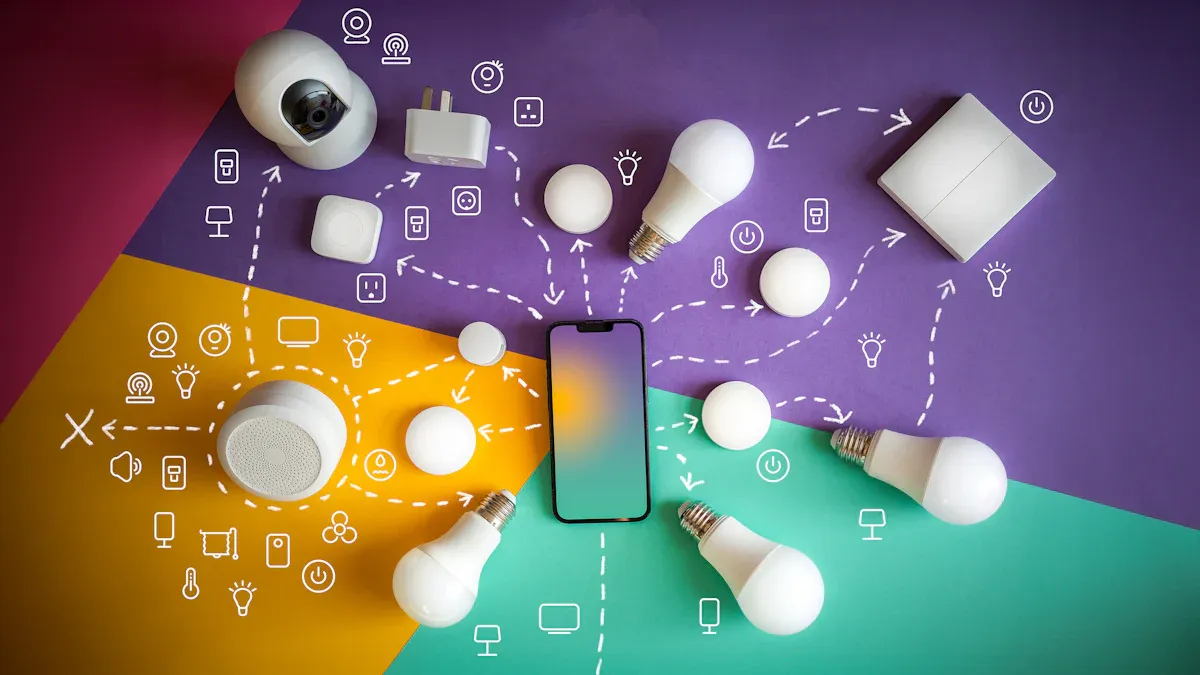
The Internet of Things is evolving rapidly. It is no longer just about connecting devices. The future of IoT involves making these connections intelligent, responsive, and powerful. Three key technologies are driving this transformation: Artificial Intelligence (AI), edge computing, and 5G connectivity. This Internet development trend is creating a new generation of smart systems that will redefine our world.
AI and Machine Learning Integration
Artificial Intelligence (AI) and Machine Learning (ML) are the brains behind a smarter IoT. These technologies allow IoT systems to move beyond simple data collection. They can now analyze information, learn from it, and make autonomous decisions. This integration is a core part of the modern Internet development trend.
ML enhances the automation capabilities of IoT systems in several ways:
- Real-time Decisions: ML algorithms process sensor data instantly. This allows devices to make smart choices without human help. In agriculture, for example, IoT systems with ML can optimize irrigation and fertilizer use, which reduces waste and increases crop yields.
- Cost Reduction: ML models can predict when a machine needs maintenance. This predictive ability achieves over 90% accuracy in industrial settings, saving companies significant money on unexpected repairs.
- Better Data Analysis: IoT devices produce enormous amounts of data. ML algorithms sift through this data to find valuable patterns and insights that help businesses make better decisions.
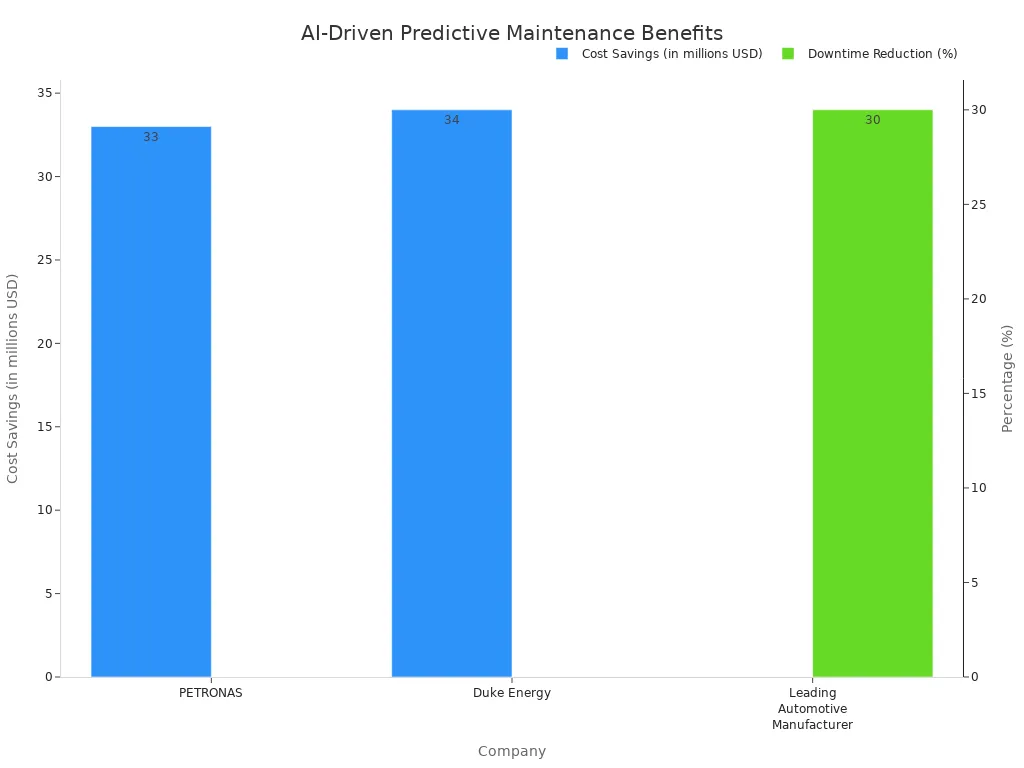
Companies are already seeing massive returns by combining AI with IoT for predictive maintenance. AI algorithms analyze sensor data like vibration and temperature to forecast equipment failures before they happen.
| Company | AI Application | Predictive Insight/Benefit |
|---|---|---|
| PETRONAS | AI-powered analytics program | Saved $33 million and issued 51 warnings for high-risk assets |
| Duke Energy | No-code AI solution | Saved over $34 million in a single event |
| Leading Automotive Manufacturer | AI-driven predictive maintenance | Reduced unplanned downtime by 30% |
| Airbus | Real-time monitoring with sensors | Reduced errors and improved safety in production facilities |
These successes show the powerful financial and operational benefits of this technology.
Leading tech companies like PTC and SoluLab are pioneering these AI-powered IoT solutions, pushing the boundaries of what connected devices can achieve.
The Rise of Edge Computing
Traditionally, IoT devices sent all their data to the cloud for processing. This process can be slow and costly. Edge computing offers a new solution.
Edge computing is a computing infrastructure that processes data at the "edge" of the network. This means the analysis happens closer to the devices themselves, either on the device or on a nearby server. It brings computation and data storage closer to the source of data generation.
This approach provides several key advantages over relying solely on the cloud:
- Reduced Latency: Processing data locally eliminates the delay of sending it to a distant cloud server. This enables near-instantaneous responses, which is critical for applications like autonomous vehicles and factory automation.
- Lower Costs: Sending less data to the cloud reduces communication and storage costs.
- Improved Security: Sensitive information can be processed and stored locally. This lowers the risk of data breaches during transmission.
- Business Continuity: Critical operations can continue running on edge devices even if the connection to the cloud is lost.
Edge computing is essential for many modern IoT applications. In manufacturing, it allows for low-latency responses to production line issues, improving quality and efficiency. Autonomous vehicles rely on edge computing to process sensor data in real time for navigation and safety. This shift toward local processing is a significant Internet development trend that enables faster and more reliable systems.
The Impact of 5G Connectivity
5G is the fifth generation of wireless technology. It provides the speed and capacity needed to support the massive growth of IoT. Its impact is transformative, unlocking new capabilities that were not possible with previous networks.
5G offers three main improvements for IoT:
- Higher Speed: 5G is up to 10 times faster than 4G. This allows massive amounts of data from sensors to be transferred and processed almost instantly.
- Lower Latency: Latency is the delay before a data transfer begins. 5G reduces this delay to under 10 milliseconds, compared to 20-30 milliseconds for 4G. This near-real-time communication is vital for critical applications like remote surgery and vehicle-to-vehicle communication.
- Massive Capacity: 5G networks can support up to 1 million connected devices per square kilometer. This incredible density is necessary to connect the billions of IoT devices expected in smart cities and large-scale industrial deployments.
This enhanced connectivity makes entirely new IoT applications possible.
- Healthcare 🩺: Doctors can perform remote surgeries using robotic arms controlled over a 5G network, where every millisecond counts.
- Smart Cities 🏙️: 5G connects everything from traffic lights to environmental sensors, allowing city managers to respond to issues in real time.
- Manufacturing 🏭: Private 5G networks in smart factories enable seamless communication between thousands of machines and robots, leading to advanced automation.
The rollout of 5G is a crucial Internet development trend that provides the foundation for a truly connected world.
Benefits vs. Challenges
While the future of IoT is bright, it is important to understand both its advantages and its potential drawbacks. The technology offers immense benefits but also presents significant challenges that must be addressed.
| Benefits (Pros) ✅ | Challenges (Cons) ❌ |
|---|---|
| Increased Efficiency: Businesses can automate processes, track assets in real time, and use predictive maintenance to reduce downtime and save money. | Security Risks: Every connected device is a potential entry point for hackers. The Ring camera breach showed how weak credentials can expose users' private lives. |
| Improved Quality of Life: Consumers enjoy greater convenience with smart homes, better health monitoring with wearables, and enhanced safety with connected security systems. | Privacy Concerns: IoT devices collect vast amounts of personal data. There are ethical concerns about how this data is used, stored, and shared, often without clear user consent. |
| New Economic Opportunities: IoT creates new business models and services, driving innovation and economic growth across industries. | Lack of Interoperability: Devices from different manufacturers often cannot communicate with each other. This lack of a common standard makes creating a seamless IoT ecosystem difficult. |
| Enhanced Sustainability: Smart energy management in buildings and precision agriculture help conserve resources like electricity and water, leading to a more sustainable future. | Data Management: The sheer volume of data generated by billions of devices is a major challenge to store, manage, and analyze effectively. |
Successfully navigating these challenges is the next great hurdle in the ongoing Internet development trend. As organizations and regulators work to create stronger security standards and privacy rules, the full potential of a safe and efficient Internet of Things can be realized.
The Internet of Things is a transformative technology. It rapidly connects our physical and digital worlds, reshaping how people live and work. Innovations like AI, edge computing, and 5G drive this evolution, promising even greater intelligence.
The future of IoT points toward seamless integration into our environments. This convergence will revolutionize industries from healthcare to manufacturing and create smarter, more efficient daily lives.
FAQ
What is the main goal of IoT?
The Internet of Things connects physical objects to the internet. These devices collect and share data. This process allows them to perform tasks automatically without human help.
Is my smart device safe from hackers?
IoT security presents a significant challenge. Hackers can target devices with weak passwords or outdated software. Users must use strong security measures to protect their personal information.
How does IoT help in everyday life?
IoT makes daily life more convenient. Smart home devices automate household tasks. Wearable technology monitors personal health metrics. These systems create smarter and more efficient living environments.