Complete Process for Installing and Operating a Sewage Treatment Plant in 2026
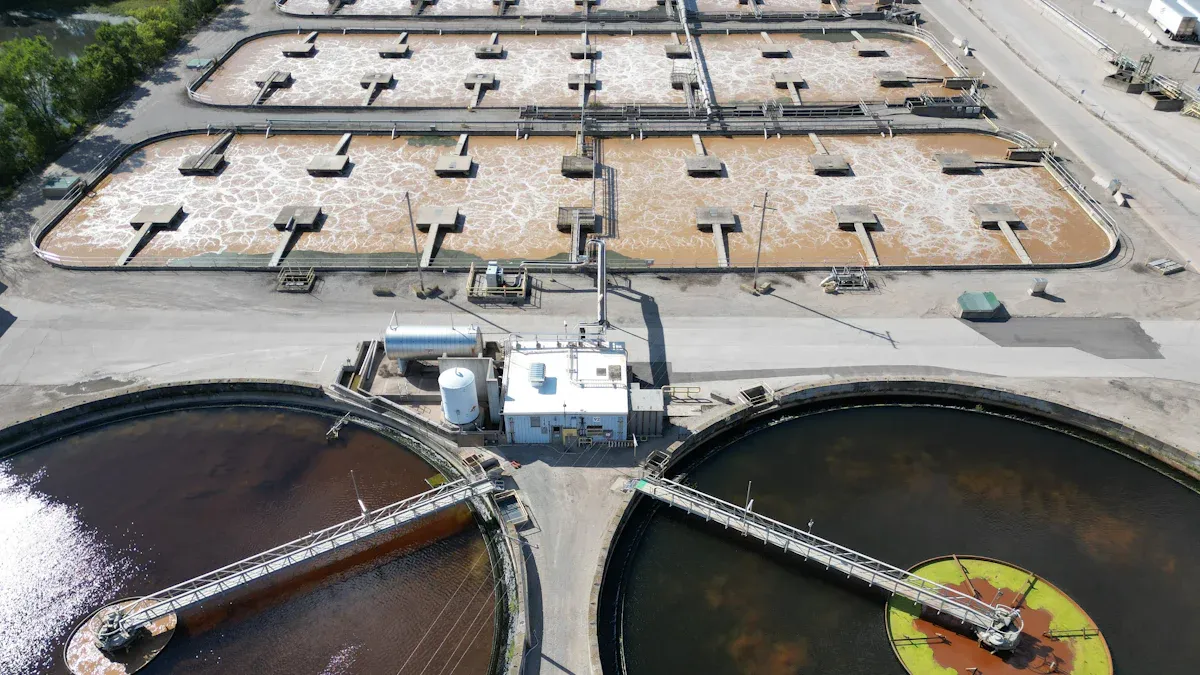
You must follow each step carefully when you install and operate a stp sewage treatment plant in 2026. Common challenges include managing high maintenance costs, handling new pollutants, and keeping up with more wastewater from growing cities. Advanced plants now use biological methods to cut environmental impacts and support sustainable energy.
Key Takeaways
- Follow strict regulations and obtain necessary permits before installing a sewage treatment plant to avoid fines and legal issues.
- Conduct thorough site assessments to ensure proper installation and compliance with environmental standards.
- Establish a regular maintenance schedule to prevent equipment failures and ensure efficient operation of the sewage treatment plant.
Legal and Site Requirements for STP Sewage Treatment Plant
2026 Regulations and Permit Checklist
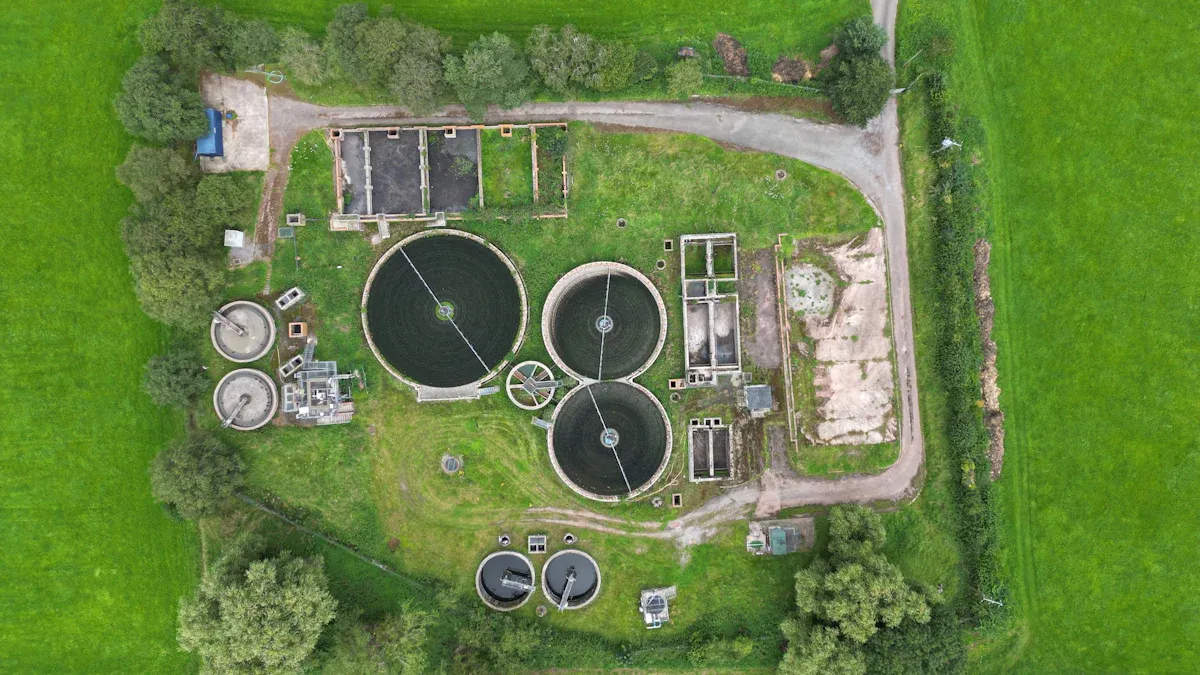
You must follow strict rules when you install a stp sewage treatment plant in 2026. New federal standards focus on stopping pollution and protecting water sources. The NPDES program controls what you can discharge into U.S. waters. States may run parts of this program. You need several permits before you start. These include operating permits, annual renewals for residential and commercial systems, and septic permits for new or repaired tanks.
| Permit Type | Description | Application Link |
|---|---|---|
| Operating Permit | Needed for monitoring and running Type IV or V systems. | Initial Application 2026 |
| Annual Residential Renewal | Needed for renewing residential system permits. | Renewal Application 2026 |
| Annual Commercial Renewal | Needed for renewing commercial system permits. | Renewal Application 2026 |
| Septic Permit | Needed for new tanks, repairs, or changing the facility served. | N/A |
You must also meet deadlines for compliance. The chart below shows how large and medium plants must meet new rules over time.
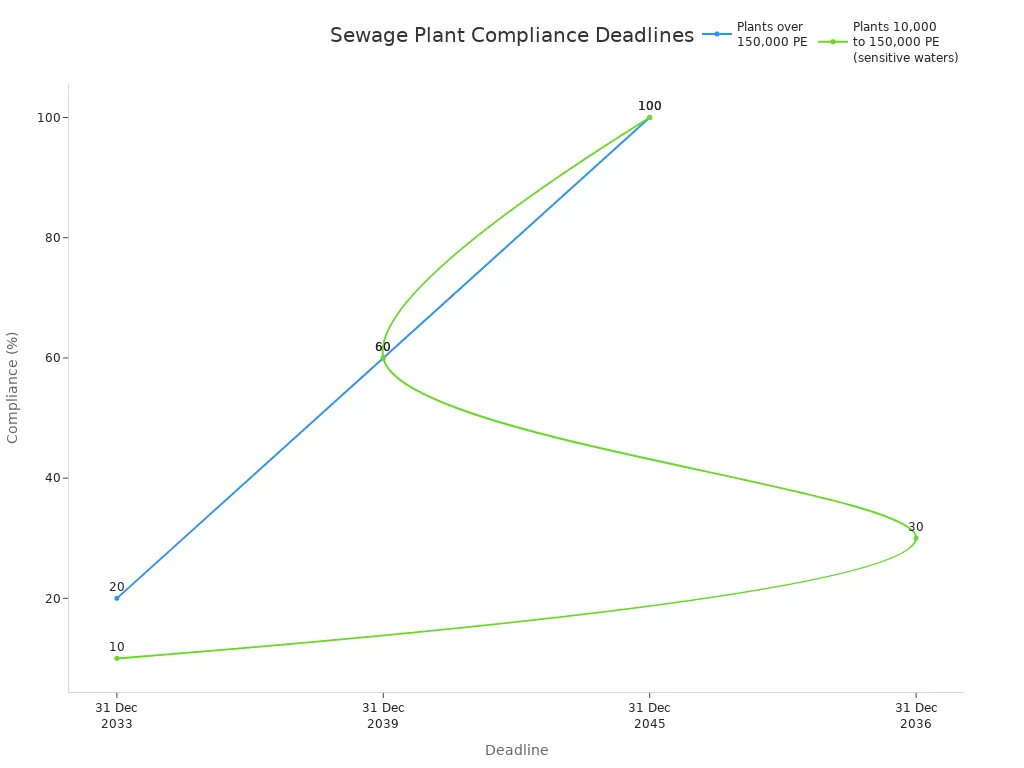
Tip: If you miss deadlines or fail to follow rules, you may face fines, lawsuits, or even shutdowns.
Site Assessment and Preparation
You need to check your site before you install a stp sewage treatment plant. Look at the land area, soil type, and how close you are to water sources. You must collect data about possible emissions and pollutants. If your site is near sensitive communities, you may need extra documentation. Permits can be denied if your project adds stress to the environment or public health.
- Check daily wastewater volume.
- Review land area limits.
- Make sure you can reuse treated water if needed.
- Plan for power supply and budget.
Selecting the Right STP Sewage Treatment Plant
You must choose a plant that fits your needs. Think about the type of property, wastewater volume, and your budget. Some popular models in 2026 include:
| Manufacturer Name | Key Features | Advantages |
|---|---|---|
| Mejec | Johkasou-SB with AAO + MBBR process | Good for small to medium projects |
| Veolia Water Technologies | Advanced filtration | High-quality treated water |
| HUBER Technology | Stainless steel construction | Durable and easy to install |
| Fluence | Membrane Aerated Biofilm Reactors | Energy-efficient, high nutrient removal |
| OriginClear | Modular wastewater system | Fast construction, cost-effective |
You should compare treatment processes, installation costs, and long-term maintenance needs. Advanced systems may cost more at first but save money over time.
Installation and Operation Steps for STP Sewage Treatment Plant
Excavation and Tank Placement
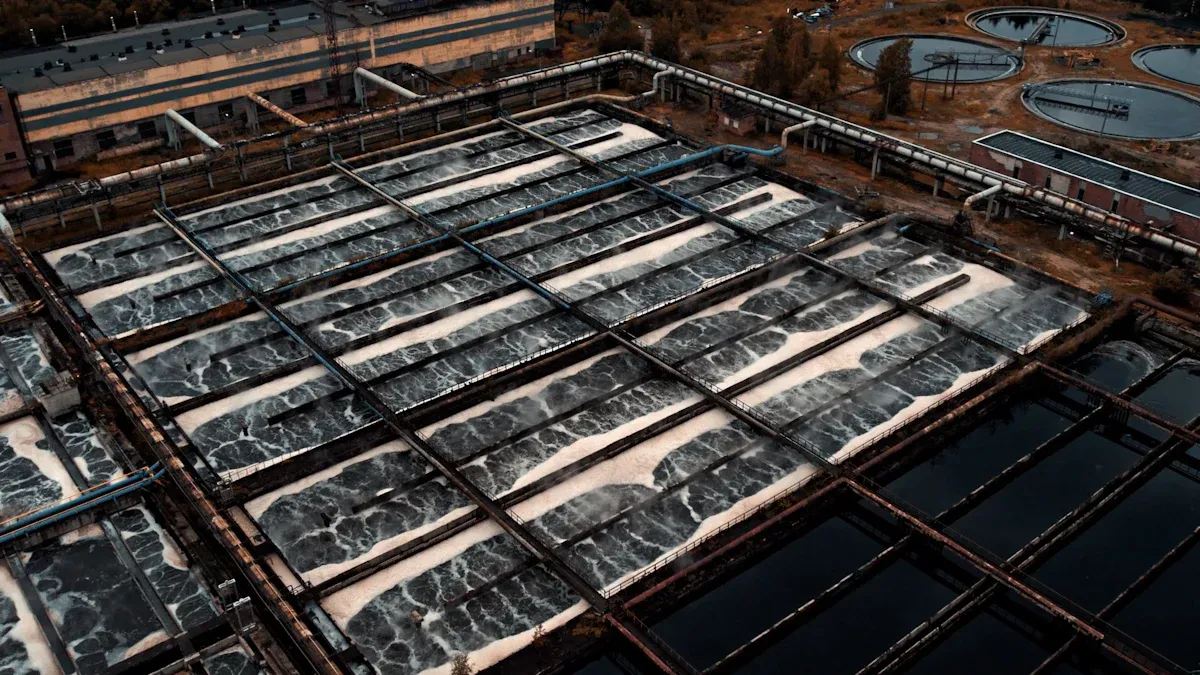
You need to follow a clear process when you install the tank for your stp sewage treatment plant. Start by checking the installation site. Make sure it meets the manufacturer's guidelines for distance and ground conditions. Next, dig a hole large enough for the tank and the backfill. Always follow health and safety rules during excavation.
After you dig the hole, create a solid base. Most manufacturers recommend using concrete. Lower the tank into the hole. Make sure it sits level and faces the right direction. Secure the tank with the right backfill material. If your system needs a drainage field, install it according to the guide.
Here is a step-by-step list for best practices in 2026:
- Check the location and guidelines.
- Excavate the hole.
- Install a solid base.
- Lower and position the tank.
- Backfill around the tank.
- Install a drainage field if needed.
- Connect inlet and outlet pipes.
- Connect electrical systems.
- Fit manhole covers.
You may face some challenges during excavation and placement. You might find unexpected rocks or soil conditions. These can delay your project and increase costs. Traffic management is important if you work in busy areas. You must also keep existing systems running if you upgrade or add new structures.
Tip: Always plan for surprises underground. Good planning helps you avoid delays and extra costs.
Pipe and Electrical Connections
You must connect pipes and electrical systems carefully to ensure your stp sewage treatment plant works well. The 10 States Standards give you a technical framework for wastewater treatment facilities. These standards help you design, review, and approve public wastewater systems. They use engineering principles to make sure your plant runs efficiently and meets all rules.
When you connect pipes, label each one clearly. This makes future maintenance easier. For electrical connections, hire a qualified electrician. Label all electrical systems and keep them organized.
Safety is very important. Use fall protection if you work above ground or in unguarded areas. Follow OSHA rules for confined spaces. Put up warnings and barricades. Follow NFPA 820 guidelines for fire and explosion safety. Make sure you have good ventilation and gas detection.
- Use flow sensors in supply and exhaust systems to check equipment.
- Install permanent gas detection systems with backup power.
- Set up local alarms that are easy to see and hear.
If you have problems with pipes or electrical systems, check for clogs caused by rags, wipes, or grease. Install grinders upstream and teach people about proper disposal. Look for uneven flow or pressure changes. Fix these by adding pulsation dampeners or bleeding air from lines. For motors, test windings and connections. Make sure everything is grounded. Inspect wiring and control panels for overheating or corrosion. Use flow meters and pressure gauges to check pump performance. Thermographic inspections help you find hot spots that may signal trouble.
System Commissioning and Initial Testing
You must commission your stp sewage treatment plant before you start regular operations. Begin with the initial design and construction. Assemble all parts and perform Factory Acceptance Testing (FAT). After that, do Site Acceptance Testing (SAT) to make sure everything works on site. Optimize settings to help biomass grow and treat wastewater effectively.
A dedicated team should handle commissioning. Include construction workers, process engineers, and water specialists. A detailed plan helps you avoid problems later. Train your operators well so they can handle maintenance and troubleshooting.
"Proper commissioning is not just about following procedures but involves a dedicated project team, including construction firms, process design engineers, and water specialists. A detailed plan significantly reduces future problems, ensuring equipment functions as intended and operators are well-trained for future maintenance."
During initial testing, you may find issues like aging infrastructure or equipment breakdowns. Sometimes, old systems cannot remove toxins well. You may also face problems meeting new regulations. Fix these by upgrading equipment and improving maintenance.
| Issue | Description |
|---|---|
| Aging Infrastructure | Old equipment may not remove toxins from water. |
| Equipment Breakdowns | Secondary treatment equipment can fail, causing poor pollutant removal. |
| Non-compliance with Regulations | Outdated processes may not meet new effluent toxicity rules. |
You should track performance indicators during commissioning. These include processing capacity, solids recovery rate, dry solids content, energy efficiency, system availability, centrate quality, and chemical optimization.
| Performance Indicator | Value/Description |
|---|---|
| Processing Capacity | 18m³/h, within design range for reliable daily treatment |
| Solids Recovery Rate | 93-95% solids capture efficiency |
| Cake Dry Solids Content | 22-26% dry solids, reducing disposal volume by 35% |
| Energy Efficiency | 3.6-4.2 kWh/m³, expected range for municipal applications |
| System Availability | 94% uptime over the first year |
| Centrate Quality | Suspended solids below 150mg/L, meeting internal standards |
| Chemical Optimization | 15% reduction in polymer consumption |
Maintenance Essentials and Common Mistakes
You must set a regular maintenance schedule for your stp sewage treatment plant. Regular checks prevent equipment breakdowns and extend the life of your system. Maintenance also reduces repair costs and improves performance. Always follow safety standards.
- Plan maintenance activities and keep records.
- Use advanced tools to check equipment.
- Train operators to spot problems early.
Common mistakes can cause big problems. Skipping pretreatment leads to equipment failure and pollution. Failing to do preventive maintenance makes your plant inefficient and increases energy use. If you dose chemicals incorrectly, you may not treat water properly. Neglecting operator training causes mistakes and inefficiencies. Ignoring small issues can lead to major failures and pollution. Not removing solids upfront cripples downstream processes and raises costs. Poor system integration and overloading with sludge or organics compromise treatment and increase regulatory risks.
| Maintenance Mistake | Consequence |
|---|---|
| Skipping pretreatment | Equipment failure, regulatory non-compliance, environmental pollution |
| Failing to carry out preventive maintenance | Inefficiency, increased energy use, equipment failure |
| Inaccurately dosing chemicals | Ineffective treatment, potential regulatory issues |
| Neglecting operator training | Incompetence, operational inefficiencies |
| Ignoring minor issues | Equipment failure, regulatory non-compliance, environmental pollution |
| Failing to remove solids upfront | Crippling of downstream processes, increased operational costs |
| Poor system integration | Inefficiencies, potential for equipment failure |
| Undermining sludge or organic overloading | Compromised treatment processes, increased risk of regulatory violations |
You should never believe that your stp sewage treatment plant runs automatically without maintenance. Always check MLSS (Mixed Liquor Suspended Solids), DO (Dissolved Oxygen), and sludge age. If you ignore these, you risk biological collapse. Low DO causes odor problems and poor water quality. Overloading leads to incomplete treatment and sludge washout. Do not rely on chemicals to mask symptoms. Solve the root problems instead.
Note: Good maintenance keeps your plant running smoothly and helps you meet all regulations.
You follow these key steps for installing and operating a sewage treatment plant in 2026:
- Conduct pre-checks.
- Order the plant.
- Excavate and place the tank.
- Backfill and connect pipes.
- Wire up and commission.
- Maintain regularly.
Sticking to regulations protects the environment, supports public health, and builds community trust. Regular maintenance keeps your system reliable and efficient.
FAQ
What is the main benefit of installing an STP sewage treatment plant?
You protect water sources and improve public health. You also meet legal requirements and reduce pollution.
How often should you check and maintain your STP sewage treatment plant?
You should inspect your plant every month. You must clean filters, check pumps, and record performance.
What happens if you ignore regular maintenance?
You risk equipment failure, pollution, and fines. You may also face shutdowns and higher repair costs.
See Also
A Comprehensive 2025 Overview of Semi-Welded Heat Exchangers
Three Key Benefits of PHE Plates for Enhanced Performance
Crucial Steps for Attaining PED 2014/68/EU Compliance
Best Precoating Options for Filtration Systems This Year
Understanding the Advantages of Commercial Heat Exchangers in 2025