Cheap Water Dispenser The Good The Bad and The Ugly
An inexpensive water dispenser might seem like a great deal. You need a simple way to get water. Your budget is very tight. This choice can work for a short time. However, it is often a poor long-term investment. You usually get what you pay for with these models.
Key Takeaways
- Cheap water dispensers save money at first. They give you water easily and help you drink more.
- Cheap dispensers often break fast. They may not cool or heat water well. They are hard to clean and can cause health risks or fires.
- If you buy a cheap dispenser, check for BPA-free plastic. Look for good energy use and a warranty. Saving for a better model is often smarter.
The Good: The Obvious Upsides
Let's look at the clear advantages of buying an inexpensive water dispenser. These benefits make them a popular choice for many people, especially those with a tight budget.
Low Upfront Cost
The biggest draw is the price. You can bring home a water dispenser without spending a lot of money. This low initial cost makes hydration accessible to almost everyone. A quick comparison shows just how much you can save at the start.
| Category | Price Range |
|---|---|
| Low-cost | $80–$200 |
| Mid-range | $200–$500 |
This price difference allows you to get the core function of a dispenser for a fraction of the cost of a premium model.
Simple, Immediate Convenience
You get instant access to water. You no longer need to keep heavy pitchers or bottles in your refrigerator. A dispenser puts cold or room-temperature water just a button-press away.
Tip: Placing a dispenser in a high-traffic area like your kitchen or home office makes grabbing a glass of water effortless. This simple change can make a big difference in your daily routine.
Helps You Drink More Water
Having water readily available encourages you to drink more. When getting water is easy, you are more likely to stay hydrated throughout the day. Studies show that increased access to water dispensers leads to positive changes.
- One school study found that placing dispensers in cafeterias increased the amount of water students drank.
- Another study showed that installing water jets led to students choosing water over other drinks.
These findings suggest that easy access to water can help you and your family build healthier habits.
The Bad: The Common Annoyances
While the low price is tempting, you often trade that initial savings for daily frustrations. These common annoyances can quickly turn your great deal into a source of regret. Let's explore the bad side of cheap water dispensers.
Flimsy Build and Short Lifespan
You often get what you pay for, and this is very true with budget dispensers. The first thing you will likely notice is the build quality. These units feel light and fragile because they are made from less durable materials. While expensive models use stainless steel for a sturdy and attractive finish, cheaper ones rely on thin plastic. 👎
This difference in materials directly impacts how long your dispenser will last.
| Feature | Cheap Water Dispensers | Expensive Water Dispensers |
|---|---|---|
| Exterior Material | Plastic | Chrome or Stainless Steel |
| Durability (Exterior) | May not be as durable as stainless steel | More durable than plastic |
| Aesthetics (Exterior) | Clinical and practical | Natural and attractive |
| Internal Components | Stainless steel, often with food-grade plastic | Stainless steel, often with food-grade plastic |
The plastic exterior is prone to cracking, and the internal components, while often made of similar materials to pricier models, are assembled with less care. Taps can become loose, buttons may stop working, and seams can separate. This means you might be shopping for a replacement much sooner than you expected.
Underwhelming Performance
An inexpensive water dispenser might not perform its main jobs very well. You may find that the "cold" water is barely cool or the "hot" water is just lukewarm. The unit might also be surprisingly loud, with the compressor or fan creating a constant humming or buzzing noise in your kitchen.
Worse yet, these models are known for frequent failures. A simple problem can have many different causes, making it difficult for you to diagnose and fix.
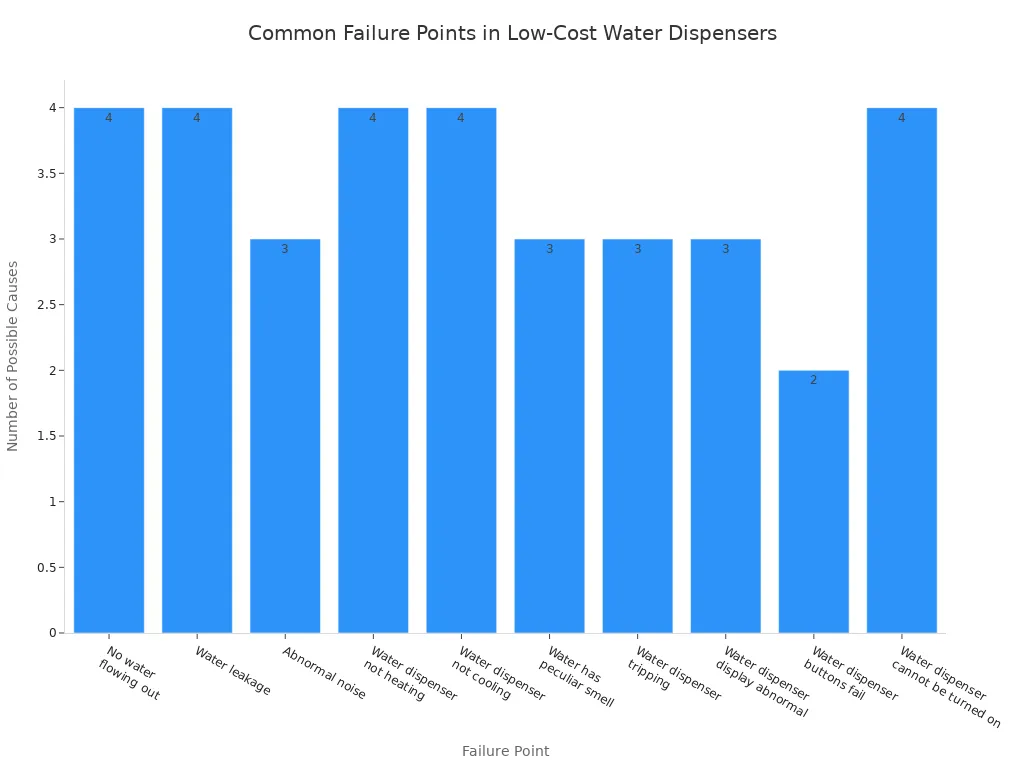
Common Headaches to Expect Problems like water leakage or the dispenser not cooling can stem from several issues. A leak could be a loose faucet, a damaged tank, or a bad sealing ring. If it stops cooling, the cause could be a damaged compressor, a refrigerant leak, or a broken fan. Trying to fix these issues yourself can be a frustrating guessing game.
Many repairs, like replacing a compressor or a main control board, can cost nearly as much as a new unit. This leaves you with a tough choice: spend more money fixing a cheap product or just throw it away and start over.
A Chore to Clean
Every water dispenser needs regular cleaning to prevent the growth of bacteria and mold. However, cleaning a budget model can be a real chore. Their design often overlooks ease of maintenance. You may find they have tight corners, fixed internal parts, and spouts that are difficult to reach and scrub properly.
Health experts recommend a strict cleaning schedule to keep your water safe.
Note: For any water dispenser, you should wipe down high-touch areas daily, flush the system monthly, and perform a deep, sanitizing clean every 3 to 6 months.
Following this schedule on a poorly designed unit is time-consuming. A deep clean is a multi-step process that requires your full attention.
- Unplug and Disassemble: You must disconnect the power, remove the bottle, and take off any removable parts like the drip tray and baffle.
- Prepare a Solution: You need to mix a cleaning solution, typically vinegar and water or a diluted bleach solution.
- Scrub and Soak: You have to pour the solution into the reservoir, scrub all inside surfaces, and let it sit for at least 10 minutes.
- Rinse Repeatedly: You must drain the solution and then rinse the reservoir with fresh water at least two or three times to remove any leftover cleaner taste or smell.
- Reassemble: Finally, you wash the removable parts, wipe down the exterior, and put everything back together.
Skipping this routine allows biofilm—a slimy layer of bacteria—to build up inside the machine. This can give your water a strange taste and pose a health risk to your family.
The Ugly: The Serious Hidden Dangers

Beyond daily annoyances, cheap water dispensers can introduce serious risks into your home. These are the ugly truths that manufacturers of budget models do not advertise. You trade a low price for potential dangers to your health, safety, and finances.
Potential Health and Safety Risks
The most alarming issues involve your well-being. A poorly made dispenser can become a breeding ground for contaminants or even a fire hazard.
First, you face biological threats. Inadequate cleaning and cheap materials create an ideal environment for biofilm to grow. This slimy layer can host dangerous germs. Studies show that poorly maintained dispensers can harbor many harmful organisms.
- Legionella bacteria: This can cause serious lung infections.
- Pseudomonas aeruginosa bacteria: This is linked to blood and lung infections.
- Naegleria fowleri ameba: This can lead to rare but deadly brain infections.
Fungi also pose a risk, especially to children, the elderly, or anyone with a weak immune system. Research has found opportunistic fungi in bottled water dispensers in homes and even healthcare facilities.
Second, you must consider chemical contamination. To cut costs, manufacturers often use low-grade plastics. These materials may not be BPA-free and can leach harmful chemicals into your drinking water.
Chemicals to Watch For
- Bisphenol A (BPA): This chemical disrupts hormones and is linked to health problems.
- Phthalates: These also interfere with hormones and can affect fertility.
- Bisphenol S (BPS): Often used as a BPA substitute, BPS carries similar health risks.
Heat and time make this problem worse. A dispenser sitting in a sunny spot or simply holding water for a long time can increase the rate at which these chemicals enter your water.
Finally, you have a potential fire hazard in your home. An inexpensive water dispenser may use substandard electrical parts. Faulty wiring, overheating components, and poor insulation can lead to sparks or fire. Product recalls have been issued for dispensers where heating elements overheated or wiring frayed, creating significant fire risks.
Hidden Costs That Add Up
Your initial savings can quickly disappear. The sticker price is just the beginning of what you will spend. These hidden costs make a cheap dispenser a poor financial choice over time.
You will likely spend more on electricity. Budget models often have inefficient cooling compressors and heating elements. They must run longer and harder to keep water cold or hot. This constant operation drives up your monthly energy bill.
You also face the cost of frequent replacement. The flimsy build means the unit will not last long. When a key part like the compressor or control board fails, the repair can cost almost as much as a new unit. You will find yourself buying a replacement dispenser much sooner than you would with a quality model. This cycle of buying, breaking, and replacing adds up.
The Risk of Leaks and Water Damage
Perhaps the ugliest risk of all is a catastrophic leak. The weak plastic parts, brittle seals, and poorly fitted hoses on a cheap dispenser are accidents waiting to happen. A small crack in the reservoir or a loose faucet can slowly drip, but a complete failure can release gallons of water onto your floor.
A leak can cause devastating and expensive damage to your home. The cost to repair water damage is not cheap. Professional restoration services are often necessary to prevent mold and structural issues.
| Damage Severity | Average Cost Range |
|---|---|
| Minor Water Damage | $450–$1,500 |
| Moderate Water Damage | $1,500–$7,500 |
| Severe Water Damage | $7,500–$20,000+ |
Most homeowners spend an average of $3,300 on water damage repairs. A major flood in your kitchen or basement could easily cost you over $10,000. Suddenly, the $150 you saved on a budget dispenser seems insignificant compared to a five-figure repair bill. This financial gamble is a serious risk you take with a low-quality appliance.
Key Factors for an Inexpensive Water Dispenser
If you decide an inexpensive water dispenser is right for you, you must choose carefully. You can avoid many common problems by checking a few key factors before you buy. Paying attention to these details helps you find a safer and more reliable option.
Material Quality (BPA-Free)
You should always check the materials that touch your water. Many cheap plastics contain a chemical called Bisphenol-A, or BPA. This chemical can leak into your water. BPA acts like a hormone in your body and can disrupt your health, especially for children and pregnant individuals.
How to Check for Safe Plastics Look for a "BPA-Free" label on the product. You can also check the recycling code, which is a number inside a triangle.
- Safe Codes: Plastics with codes #2, #4, and #5 are generally safe.
- Avoid Codes: Stay away from plastics with codes #3, #6, and #7, as they may contain BPA.
Energy Consumption
Your dispenser will use electricity every day. Some models use much more power than others. This difference affects your monthly utility bill. There are two main types of cooling systems.
| Cooler Type | Energy Use |
|---|---|
| Compressor | Cycles on and off, uses less power |
| Thermoelectric | Runs constantly, uses more power |
A compressor model often costs less to operate over time. It cools water efficiently and then shuts off until needed again.
Warranty and Customer Support
A good warranty protects you if your dispenser breaks. Budget models have a higher risk of failure, so a one-year warranty is very important. You should also look at customer reviews for the brand. Some budget brands like Avalon are known for solid value. Others, like Costway or Igloo, get complaints about poor build quality and performance. Good customer support can make a big difference when you need help or a replacement part.
A cheap dispenser can be a good stopgap solution for short-term needs, like in a dorm room. You will find it is a mistake for families or offices that need a reliable, safe hydration source.
Your best bet is to save for a mid-range model. It is a smarter choice for your wallet and your health in the long run.
FAQ
How often should I clean my water dispenser?
You should perform a light cleaning every month. A deep, sanitizing clean is needed every 3 to 6 months to prevent harmful bacteria from growing inside the unit.
How long does a cheap water dispenser last?
A cheap water dispenser typically lasts one to two years. The low-quality parts often break down quickly, requiring you to buy a replacement much sooner than you might expect.
Are cheap water dispensers safe to use?
They carry risks. Cheap plastics can leach chemicals like BPA into your water. Poorly made electrical parts can be a fire hazard. Regular cleaning is essential for safety.