Silver Nitrate Secrets Every Industry Should Know
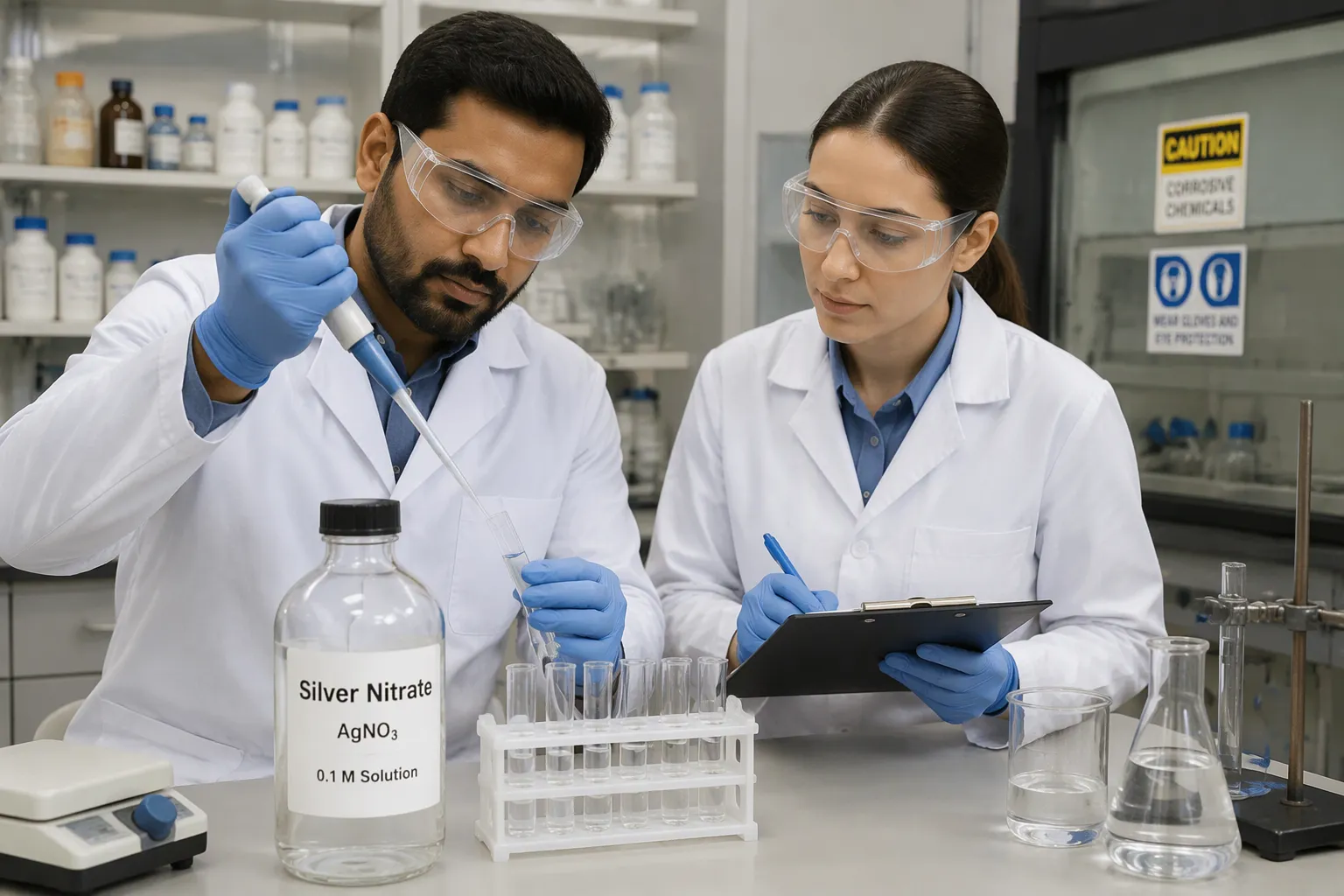
Five industries rely on silver nitrate: photography and imaging, electronics and conductive materials, medical devices and antimicrobial applications, chemical manufacturing and catalysis, and mirror production. This compound delivers ionic silver in a highly soluble, reactive form, decomposes cleanly to pure silver metal, and performs at low concentrations. Each use exploits a specific property—light sensitivity, conductivity, antimicrobial action, or controlled reduction to metallic silver.
Key Takeaways
- Silver nitrate helps make light-sensitive films for photography and X-rays.
- It also creates conductive inks and silver coatings for electronics.
- Medical uses include wound care and antimicrobial coatings for devices.
Silver Nitrate in Imaging and Electronics

Photography and Light-Sensitive Emulsions
Silver nitrate serves as the starting point for nearly every light-sensitive emulsion in modern imaging. Manufacturers dissolve the compound in water and combine it with halide salts, such as potassium bromide or sodium chloride. This reaction produces silver halide crystals, the active ingredient in photographic film and paper. The size and distribution of these crystals determine the film's sensitivity to light and its resolution.
X-ray films rely on this same chemistry. Medical imaging demands high sensitivity to low-dose radiation, and silver halide emulsions deliver that performance. Industrial radiography uses similar films to inspect welds, pipelines, and aircraft components for internal flaws. The compound's high solubility in water makes it easy to distribute evenly through the emulsion layer. Even minor variations in concentration affect crystal formation, so manufacturers require consistent purity. Zoran's Silver Nitrate, with a minimum purity of 99.8%, meets these demanding specifications for photosensitive applications.
The process continues with coating the emulsion onto a film base, drying it under controlled conditions, and cutting the final product. Each step demands careful handling because light exposure ruins the emulsion before it reaches the customer. Silver nitrate's clean decomposition to metallic silver during development gives photographers and radiographers the sharp, permanent images they need.
Conductive Inks and Electronic Components
Electronics manufacturers use silver nitrate to produce conductive inks and pastes. These materials form the electrical pathways in printed circuit boards, membrane switches, and radio-frequency identification tags. The compound converts to pure silver metal through a controlled reduction process. This metallic silver provides excellent electrical conductivity and resists oxidation over time.
The plating industry also depends on silver nitrate for silver plating electronic components. Connectors, terminals, and contact points receive a thin silver layer to improve conductivity and reduce contact resistance. Silver-plated protective gear for electrical work uses the same process. The plating bath contains silver nitrate along with complexing agents and brighteners. Operators control temperature, current density, and bath concentration to achieve uniform deposits.
Beyond plating, silver nitrate contributes to gas cleaning agents and molecular sieves. These products remove impurities from gas streams in semiconductor manufacturing and other precision processes. The compound's reactivity allows it to capture specific contaminants at low concentrations. Conductive adhesives represent another growing application. These adhesives replace solder in heat-sensitive assemblies and flexible circuits. Silver nitrate provides the silver particles that carry electrical current through the adhesive matrix.
Why Silver Nitrate Wins Here
Silver nitrate offers distinct advantages for imaging and electronics applications. The compound dissolves completely in water and other solvents, which allows manufacturers to prepare solutions with precise concentrations. This solubility ensures uniform distribution of silver throughout emulsions, inks, and plating baths. No other silver source matches this level of control.
The compound also decomposes cleanly to pure silver metal. Thermal or chemical reduction leaves behind no unwanted residues that could interfere with electrical performance or image quality. Electronics manufacturers value this cleanliness because even trace impurities cause failures in fine-pitch circuitry. Photographic applications benefit from the same purity because contaminants create fog or reduce image contrast.
Low-concentration performance rounds out the list of advantages. Silver nitrate delivers effective results at concentrations that keep material costs manageable. The compound's high silver content—at least 63.5% by weight—means manufacturers use less material to achieve the same silver loading. This efficiency matters in high-volume production environments where every gram counts. For imaging and electronics, silver nitrate provides the right combination of solubility, purity, and cost-effective performance.
Silver Nitrate in Medical and Antimicrobial Applications
Wound Care and Medical Device Coatings
Silver ions kill bacteria, fungi, and other microorganisms through a well-understood mechanism. The ions disrupt microbial cell membranes, interfere with enzyme function, and bind to DNA. Microbes rarely develop resistance to silver because the metal attacks multiple targets at once. This broad-spectrum action makes silver nitrate a valuable tool in wound care and medical device manufacturing.
Historically, surgeons applied silver nitrate solutions to wounds to prevent infection. Modern wound care products still use this chemistry. Silver-impregnated dressings release silver ions slowly into the wound bed. The ions control bacterial growth and reduce inflammation. Burn treatment represents a major application. Silver nitrate solutions help prevent infection in burn wounds until new skin forms. The compound also acts as a fungicide and mordant in medical preparations, according to Zoran's product documentation.
Medical device coatings represent another growing use. Catheters, sutures, and orthopedic implants receive silver-based coatings to reduce device-related infections. The coating releases silver ions at the device surface. This local release protects the device from bacterial colonization. Manufacturers choose silver nitrate as the precursor because it converts to metallic silver or silver compounds through simple chemical steps. The resulting coating adheres well to polymer and metal surfaces.
Concentration Requirements and Process Conditions
Effective antimicrobial action depends on precise control of silver ion concentration. Too little silver fails to inhibit microbial growth. Too much silver can irritate tissue or discolor the skin. Medical manufacturers therefore validate every formulation against established performance standards.
| Application | Typical Silver Concentration | Key Process Conditions |
|---|---|---|
| Wound dressings | 10–100 ppm silver ions released over time | Controlled moisture, neutral pH, sterile packaging |
| Burn treatment solutions | 0.5% silver nitrate solution | Fresh preparation, light protection, isotonic balance |
| Device coatings | 0.1–1% silver by weight at surface | Clean substrate, uniform deposition, curing temperature control |
| Antiseptic preparations | 0.1–1% silver nitrate | Stability testing, light-resistant containers |
Process conditions matter as much as concentration. Silver ions react with chloride, proteins, and other compounds in biological fluids. Formulators must account for these interactions. They adjust the delivery system so that effective silver levels persist at the treatment site. Light exposure degrades silver nitrate solutions, so manufacturers package products in opaque containers. Zoran supplies its Silver Nitrate in 1kg black bottles to protect the material from light and moisture during storage.
Temperature and pH also influence performance. Silver ions remain stable in slightly acidic to neutral solutions. Alkaline conditions can precipitate silver oxide and reduce effectiveness. Sterilization methods require careful selection because heat and radiation can alter silver chemistry. Manufacturers test each sterilization cycle to confirm that antimicrobial activity survives the process.
Regulatory Standards and Cost Fit
Medical applications face strict regulatory oversight. In the United States, the Food and Drug Administration reviews wound care products and device coatings before market approval. Manufacturers must demonstrate safety, efficacy, and consistent quality. The European Union applies similar requirements through its medical device regulations. These rules cover material characterization, biocompatibility testing, and manufacturing controls.
Pharmacopeial monographs set purity limits for silver nitrate used in medicine, including limits on heavy metals such as copper, lead, and bismuth.
Zoran's medicine-grade Silver Nitrate meets these expectations. The product carries a minimum purity of 99.8% and low levels of water-insoluble matter, chloride, sulfate, and heavy metals. These specifications matter because impurities can trigger adverse reactions or reduce antimicrobial performance. Documentation of purity and traceability supports regulatory submissions.
Cost fit varies by application. High-value uses such as implant coatings tolerate higher material costs because the silver loading per device is small. Wound dressings compete on price, so manufacturers optimize silver content to balance efficacy against cost. Silver nitrate offers an advantage here. Its high silver content—at least 63.5% by weight—means formulators use less raw material to reach a target silver dose. The compound's complete solubility in water also simplifies solution preparation and reduces waste. For medical manufacturers, the combination of documented purity, reliable antimicrobial performance, and efficient silver delivery makes silver nitrate a practical choice.
Silver Nitrate in Chemical Manufacturing and Mirrors
Catalyst and Reagent Roles in Chemical Synthesis
Chemical manufacturers use silver nitrate as a reagent and catalyst in many reactions. The compound helps determine aldehydes, sugars, and manganese catalysts in analytical work. It also precipitates chloride ions, which makes it a reference standard for calibrating sodium chloride solutions. In the inorganic industry, producers rely on it to make other silver salts. Silver nitrate reacts readily with halides, cyanides, and other anions. These reactions proceed quickly at room temperature. The high solubility of the compound allows chemists to work with concentrated solutions and short reaction times.
Silvering for Mirrors and Reflective Coatings
Mirror production depends on a controlled reduction reaction. Manufacturers treat glass with a silver nitrate solution and a reducing agent. The silver ions gain electrons and deposit as a thin, reflective metal film. This classic silvering process creates the bright, uniform surface found in household mirrors, telescope optics, and decorative glass. Plating shops also use the compound for silver plating insulating containers and electronic components. The coating adheres tightly to the substrate and resists tarnish when properly sealed.
Performance, Compliance, and Where It Fits Best
Silver nitrate performs best when manufacturers control concentration, temperature, and light exposure. The compound decomposes cleanly to pure silver metal, so reflective films and reaction products stay free of residues. Purity matters for compliance. Zoran's Silver Nitrate meets a minimum purity of 99.8% with low heavy-metal content. This grade suits chemical synthesis and mirror production alike. The compound fits best in applications that value fast reactions, complete solubility, and a clean path to metallic silver.
Photography and imaging, electronics, medical devices, chemical manufacturing, and mirrors all depend on silver nitrate. Its solubility, reactivity, and clean conversion to metallic silver explain that broad value.
The right grade, concentration, and process conditions make the compound effective. Regulatory limits define the boundaries for safe use.
FAQ
Which grade should a manufacturer choose?
The application decides the grade. Photosensitive work needs electron grade. Medical uses require medicine grade. General industrial processes work well with industrial grade.
How should teams store the compound?
Store the material in a cool, dry, dark place. Black bottles protect it from light and moisture. Proper storage keeps the compound stable and effective.
Why does concentration control matter so much?
Small concentration changes alter crystal size, coating thickness, and antimicrobial strength. Precise control keeps results consistent across production batches.
See Also
Essential Safety Measures You Must Follow for Storing Nitric Acid
New Scientific Breakthroughs in Separating and Purifying Nitric Acid Effectively
Current Synthesis Methods for Aminoguanidine Bicarbonate and Their Key Industrial Uses
Understanding 60 Percent Nitric Acid and Its Common Practical Applications
Key Indicators That Show You Have High-Quality Bovine Gelatin Powder