How the Latest Industrial Dust Filter Bag Technologies Work in Modern Industry
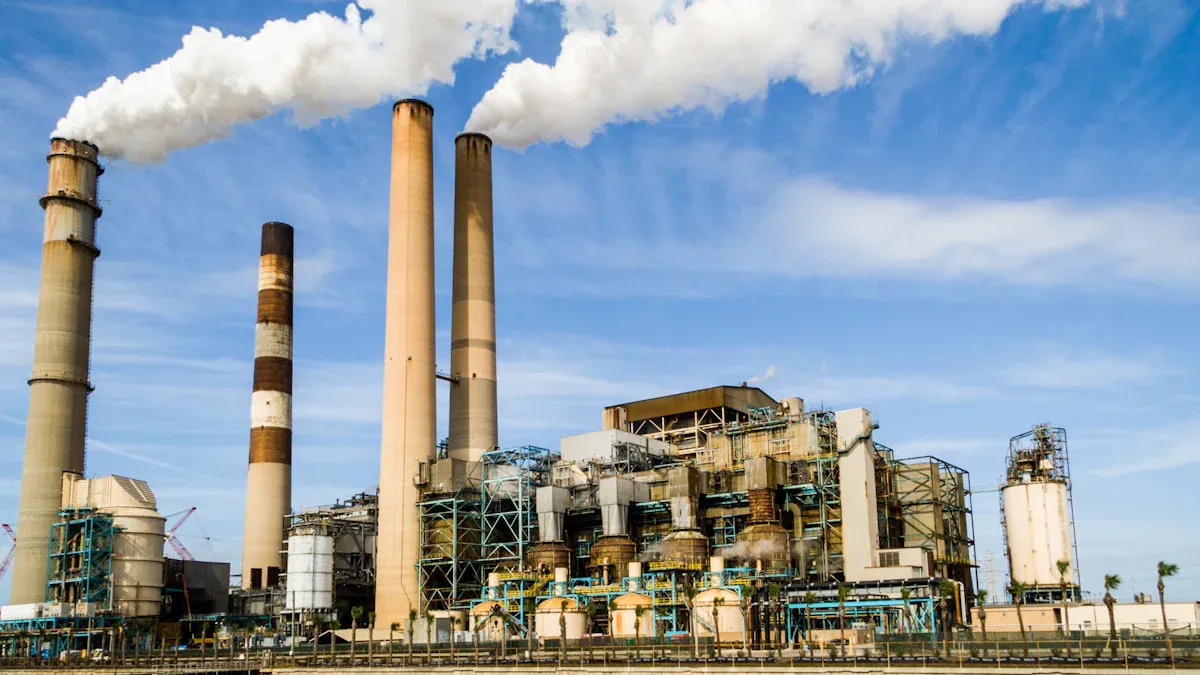
You rely on advanced industrial dust filter bag technologies to capture up to 99% of airborne particles in your facility. These systems boost air quality and equipment performance.
- You control dust emissions to meet safety regulations.
- You protect health and avoid penalties for non-compliance.
Key Takeaways
- Advanced industrial dust filter bags capture up to 99% of airborne particles, improving air quality and equipment performance.
- Choosing the right filtration mechanism—surface or depth—depends on the type of dust in your facility. Depth filtration is best for fine dust, while surface filtration suits larger particles.
- Regularly monitor your dust collection system's pressure drop to maintain efficiency and prevent operational issues.
Working Principles of Industrial Dust Filter Bag Technologies
Filtration Mechanisms: Surface vs. Depth Filtration
You need to understand how filtration mechanisms work to select the right industrial dust filter bag for your facility. Two main types exist: surface filtration and depth filtration. Each offers unique advantages for different dust collection needs.
| Feature | Depth Filtration | Surface Filtration |
|---|---|---|
| Mechanism | Captures particles within the thickness of the media | Captures particles primarily on the surface |
| Dust Holding Capacity | High, can hold more dust before cleaning | Limited, requires more frequent cleaning |
| Filter Life | Longer due to distributed particle capture | Shorter, as particles accumulate on the surface |
| Effectiveness for Fine Particles | Very effective for fine particles | Less effective, may allow fine particles to pass |
| Initial Pressure Drop | Lower initial pressure drop | Higher initial pressure drop |
| Cleaning Difficulty | Harder to clean, may require more maintenance | Easier to clean, can use pulse jet methods |
| Reusability | Limited due to cleaning difficulty | More reusable, especially with durable materials |
- Surface filtration works best for larger particles.
- Depth filtration captures both large and small particles, especially fine dust.
- Depth filtration maintains steady efficiency because it holds more dust before cleaning.
- Surface filtration’s efficiency can change as dust builds up on the surface.
When you choose an industrial dust filter bag, you must consider the type of dust in your process. Fine dusts often require depth filtration, while larger particles may suit surface filtration.
Airflow and Pressure Dynamics in Dust Collection
You must manage airflow and pressure to keep your dust collection system running efficiently. Most industrial dust filter bag systems operate with pressure drops between 1 and 6 inches of water column (in. WC). This range keeps airflow steady and ensures proper dust capture.
- A pressure drop of 6 inches W.C. means your system has enough airflow for good operation.
- If the pressure drop goes above 6 inches W.C., airflow drops and dust collection suffers.
- Factors like dust load, air-to-cloth ratio, and cleaning system efficiency can change these values.
| Key Findings | Description |
|---|---|
| Pressure Drop | Higher pressure drops increase energy use by the suction fan. Lower pressure drops save energy. |
| Cleaning Efficiency | Fast dust cake buildup means you need to clean more often. Airflow changes can speed up this process. |
| Filtration Performance | The way dust cakes form depends on how particles stick together. Wet or sticky dust can change how well your filter works. |
| Dust Concentration | More dust in the air means more particles get through if your filter media cannot keep up. |
| Energy Consumption | High pressure drops mean your system uses more energy. Managing airflow helps control costs. |
Tip: Monitor your system’s pressure drop regularly. This helps you spot problems early and keep your industrial dust filter bag working at peak performance.
Cleaning and Maintenance: Pulse-Jet, Shaker, and Reverse Air Systems
You rely on cleaning systems to keep your industrial dust filter bag effective. The three main cleaning methods are pulse-jet, shaker, and reverse air. Each method suits different dust types and system designs.
| System Type | Cleaning Efficiency Description |
|---|---|
| Pulse-Jet | Superior cleaning effectiveness, ideal for high dust loading and sticky dusts, allows online cleaning during operation. |
| Reverse Air | More effective than shaker systems, uniform cleaning action, suitable for fine dusts, and does not require compressed air. |
| Shaker | Limited cleaning effectiveness, particularly with sticky or fine dusts, may lead to pressure buildup over time. |
- Pulse-jet systems clean your filters while the system runs. You get continuous operation and strong cleaning, even with sticky dust.
- Reverse air systems use gentle airflow to clean bags. These work well for fine dust and do not need compressed air.
- Shaker systems shake the bags to remove dust. These may struggle with sticky or fine dust, which can cause pressure to build up.
You should match your cleaning system to your dust type and production needs. This ensures your industrial dust filter bag lasts longer and keeps your air clean.
Types and Advancements in Industrial Dust Filter Bag Design
Material Types: Polyester, Polypropylene, Aramid, PTFE
You must choose the right material for your industrial dust filter bag to ensure reliable performance. Each material offers unique strengths for specific environments.
| Material | Filtration Efficiency | Notes |
|---|---|---|
| Polyester | N/A | General performance characteristics noted. |
| Polypropylene | N/A | Minimal performance degradation after 5000 hours. |
| Aramid | 99.7% | Maintains efficiency at 400°F. |
| PTFE | N/A | Superior longevity in corrosive environments. |
- Polypropylene filter bags resist chemicals and moisture, making them ideal for corrosive or wet dust particles.
- Aramid filter bags maintain high filtration efficiency even at elevated temperatures.
- PTFE filter bags excel in harsh, corrosive environments and offer long service life.
Tip: Always match the filter bag material to your process fluids and operating conditions. This step prevents premature degradation and ensures optimal filtration.
Design Variations: Felted vs. Woven, Size, Shape, Construction
You can select from felted or woven filter bag designs, each with distinct advantages.
| Filter Type | Dust Capture Efficiency | Durability |
|---|---|---|
| Felted | High - captures a wide range of dust particle sizes through impact and interception | Generally more durable due to effective particle trapping |
| Woven | Moderate - filters out larger particles, suitable for mechanical cleaning | Less durable, as it relies on mechanical methods for cleaning |
- Felted bags trap a broad spectrum of dust sizes and last longer in demanding applications.
- Woven bags suit processes with larger particles and frequent mechanical cleaning.
You also need to consider size, shape, and construction. The air-to-cloth ratio, filter media type, and bag design all influence dust capture efficiency and lifespan. Proper selection enhances system performance and reduces maintenance.
Application-Specific Choices for Industry Needs
You must tailor your industrial dust filter bag choice to your industry’s requirements. Key factors include:
- Material Compatibility: Ensure the filter material matches your process fluids and operating conditions.
- Micron Rating: Select the right micron rating for your required filtration precision and acceptable pressure drop.
- System Configuration: Confirm the bag fits your housing, flow rate, and pressure demands.
| Industry | Key Factors Influencing Choices |
|---|---|
| Steel | Material compatibility, micron rating, system config. |
| Power | Material compatibility, specific application requirements |
| Oil and Gas | Micron rating, system configuration |
| Food | Material compatibility, specific application requirements |
| Spices | Micron rating, system configuration |
| Pharmaceuticals | Material compatibility, specific application requirements |
- The operational conditions—such as temperature, pressure, and chemical exposure—determine the best filter bag for your process.
- High-temperature applications require materials that withstand extreme heat.
- Processes with aggressive solvents or corrosive substances need chemical-resistant filter bags.
Note: Analyze your dust characteristics, temperature, humidity, and chemical exposure before selecting a filter bag. This approach ensures long-term reliability.
Innovations in Filter Media: Nanofiber, Membrane Coatings, Anti-Static Treatments
You benefit from recent innovations in filter media that boost efficiency and safety.
- Nanofiber technology removes particulate matter, viruses, and bacteria from the air. It offers high filtration efficiency and low pressure drop.
- Membrane-coated filter bags allow for easier cleaning and reduced operating pressure drop. You can use smaller, more efficient dust collectors and lower your energy costs.
- Anti-static treatments reduce the risk of dust explosions. These filter bags use carbon fibers for static dissipation and flame retardant properties, making them essential in explosive dust environments.
| Improvement Type | Description |
|---|---|
| Easier Cleaning | Surface loading of dust allows for easier and faster cleaning, reducing operating pressure drop. |
| Smaller Dust Collectors | More airflow per cartridge leads to smaller, more efficient dust collectors. |
| Energy Reduction | Lower pressure drop across the filter saves energy, reducing operating costs. |
| Reduced Maintenance | Longer-lasting filters and less frequent changes lead to lower maintenance costs. |
- For fire risks, always use flame-retardant or anti-static filter media to meet safety standards.
Smart Monitoring and Automation in Dust Filter Bag Systems
You can now leverage smart monitoring and automation to optimize your dust collection system.
| Key Feature | Description |
|---|---|
| Integrated IoT connectivity | Enables continuous performance monitoring |
| AI-driven predictive algorithms | Facilitates maintenance and optimization |
| Automated compliance reporting | Ensures regulatory assurance |
| Energy optimization tools | Aids in meeting sustainability goals |
- Smart collectors equipped with connected filtration technology monitor your equipment and provide operational insights.
- Automated alerts and dashboards help you track system health from any device.
- Preventive and predictive maintenance schedules reduce unexpected shutdowns and operational downtime.
- Automated bag changeout systems streamline maintenance and keep your facility running smoothly.
Callout: Use smart monitoring to anticipate filter bag changeouts and plan maintenance before problems arise.
Environmental and Regulatory Benefits of Advanced Filter Bags
You help protect the environment and meet regulations by using advanced industrial dust filter bags.
- These filter bags capture up to 99.9% of particulates, significantly reducing air pollution.
- They help you comply with strict environmental standards such as NESHAP and MACT.
- ePTFE membrane laminates enhance emissions control and lower energy costs for filter cleaning.
- Advanced filter bags improve filtration efficiency and reduce operational costs, supporting compliance with air quality regulations.
- Continuous innovation in filter media and cleaning systems ensures your dust collection system remains effective in capturing harmful particulates.
Note: By choosing advanced filter bags, you support cleaner air, safer workplaces, and regulatory compliance.
You improve workplace air quality and protect employee health when you use advanced Industrial Dust Filter Bag systems. Selecting the right filter bag boosts operational efficiency and lowers costs. New materials and smart technology drive innovation, helping you meet regulations and create a safer, more productive environment.
FAQ
What is the typical lifespan of an industrial dust filter bag?
You can expect most filter bags to last from 1 to 5 years. Lifespan depends on dust type, cleaning method, and operating conditions.
How do you know when to replace a dust filter bag?
You should monitor pressure drop and visual inspections. Replace the bag when you see excessive wear, holes, or a significant drop in filtration efficiency.
Can you wash and reuse industrial dust filter bags?
You can sometimes wash and reuse certain filter bags. Always check the manufacturer’s guidelines. Some materials may degrade or lose efficiency after washing.