Individual Sewage Treatment Plant Pros and Cons for Rural Properties
Are you thinking about handling your own wastewater on a rural property? You’re not alone. Nearly one in four households in the United States use an individual sewage treatment plant or similar system. Here’s a quick look at the upsides and downsides:
- 👍 More control, possible savings, eco-friendly options
- 👎 Initial cost, maintenance, space needed
Key Takeaways
- Individual sewage treatment plants offer independence from municipal systems, allowing homeowners to manage their own wastewater effectively.
- Long-term cost savings can be achieved by avoiding monthly sewer bills and controlling maintenance expenses with regular care.
- Environmental benefits include cleaner water and reduced pollution, as many systems use natural processes to treat wastewater.
Individual Sewage Treatment Plant Overview
What Is an Individual Sewage Treatment Plant
When you live on a rural property, you might not have access to a city sewer system. An individual sewage treatment plant gives you a way to handle your own wastewater right on your land. These systems come in different types, so you can pick one that fits your needs. Here are some common options:
- Integrated sewage treatment plants
- Bio-contact oxidation units
- Anaerobic organism membrane units
- Biological treatment units
- Natural biological treatment processes, like constructed wetlands
Some systems work for just one home, while others can handle a few houses or even a small village. Bio-contact oxidation units and anaerobic organism membrane units focus on removing organic matter. Biological treatment units help get rid of things like nitrogen and phosphorus.
You might wonder how these systems compare to a regular septic tank. Take a look at this table to see the main differences:
| Feature | Traditional Septic Systems | Alternative Treatment Systems |
|---|---|---|
| Treatment Method | Treats sewage for one household | Pre-treats water before soil dispersal |
| Soil Requirement | Needs good soil | Works in poor soil |
| Nitrate Removal | May leave nitrates | Removes more nitrates |
| Space Requirement | Needs less space | Often needs more space |
| Maintenance | Basic upkeep | Needs more attention |
| Permitting | Standard permits | May need special permits |
| Effluent Dispersal Methods | Drainfield or mound | Drip or spray irrigation, composting |
| Water Recycling | Not common | Can recycle water for irrigation |
How Individual Sewage Treatment Plants Work
An individual sewage treatment plant cleans your wastewater in several steps. Here’s how the process usually goes:
- Primary Treatment: The system removes large items and solids by screening and letting them settle.
- Secondary Treatment: Microbes break down the remaining waste and clean the water even more.
- Tertiary Treatment: The plant gives the water a final polish, making sure it meets safety standards before it goes back into the environment.
Tip: Each stage helps protect your land and local water from pollution. Keeping your system in good shape means cleaner water for everyone.
Pros of Individual Sewage Treatment Plant Systems
Independence from Municipal Sewage
When you live in a rural area, you might not have access to a city sewer system. An individual sewage treatment plant gives you the freedom to manage your own wastewater. You do not have to depend on a municipal service or worry about city sewer outages. Here are some ways this independence can benefit you:
- You avoid the hassle of unreliable septic systems that often need repairs.
- Decentralized wastewater treatment systems offer a steady and sustainable solution.
- You can support an off-grid lifestyle, which is great if you want to live more eco-friendly.
- You may save money over time because you control your own system.
Tip: If you want more control over your property and how you handle waste, an individual sewage treatment plant can help you achieve that goal.
Long-Term Cost Savings
You might wonder if installing your own system will save you money. The answer is often yes, especially over the long run. While you pay upfront for installation, you can avoid monthly sewer bills. Maintenance costs can be lower than you think, especially if you keep up with regular care.
Here’s a quick look at how costs compare:
| System Type | Maintenance Costs | Operational Costs | Long-term Financial Implications |
|---|---|---|---|
| Septic System | Lower ongoing costs but higher potential for major repairs | Varies based on usage and maintenance | Lower risk of contamination with regular maintenance |
| Sewer System | Managed by municipalities, ensuring consistent maintenance | Higher monthly bills | Lower risk of unexpected repair expenses |
- Septic systems usually have lower ongoing costs, but you need to handle more maintenance yourself.
- Sewer systems come with higher monthly fees, but you do not have to worry about surprise repairs.
If you want to avoid monthly bills and take charge of your own maintenance, an individual sewage treatment plant can be a smart investment.
Environmental Advantages
You can help protect the environment by choosing an individual sewage treatment plant. These systems clean wastewater before it returns to the ground or local waterways. Cleaner water means less pollution and healthier land for you and your neighbors.
Many systems use natural processes, like microbes or plants, to break down waste. This reduces the need for harsh chemicals. Some systems even let you recycle water for irrigation, which saves resources and supports a greener lifestyle.
Note: Keeping your system in good shape helps keep your soil and water clean. You play a big part in protecting your local environment.
Flexibility for Remote Rural Properties
Not every rural property is the same. You might have a small cabin or a growing family home. An individual sewage treatment plant can fit many different situations. These systems work for both domestic and even some light industrial wastewater. You can scale the system up or down if your needs change.
- Decentralized systems treat many types of wastewater.
- You can adjust the size if your household grows or shrinks.
- You can install the system in stages, which helps with budgeting.
If you have a remote property, you need to follow certain rules for where you place your system. Check out this chart to see the minimum distances you need to keep from wells, water lines, and property lines:
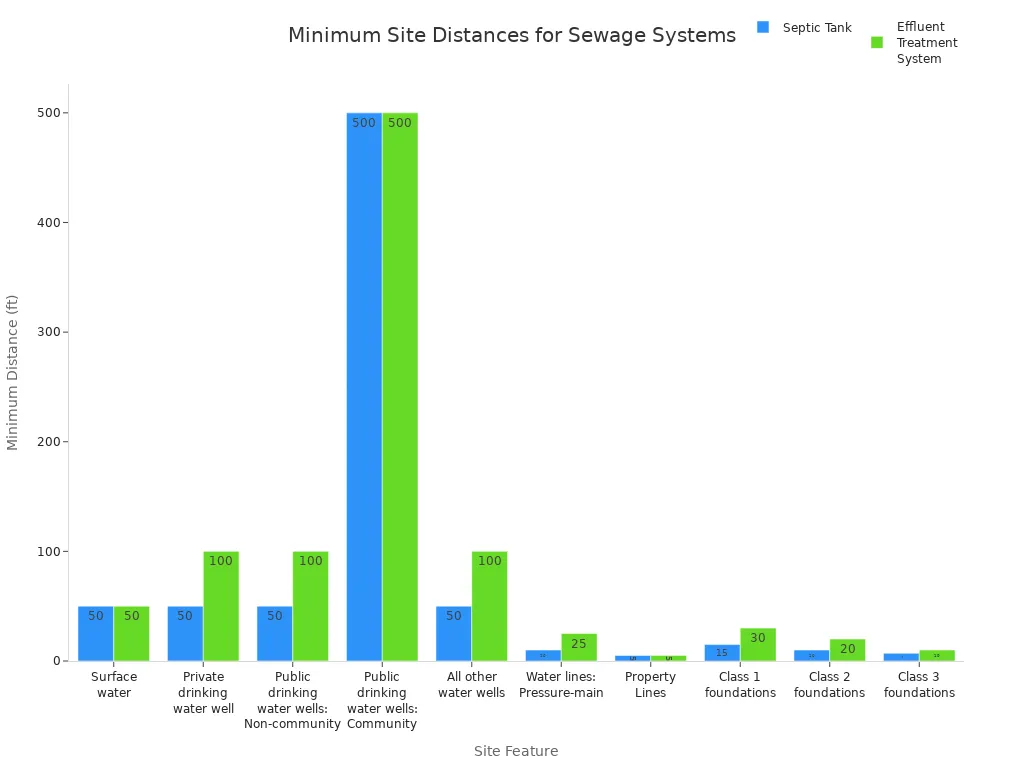
This flexibility makes an individual sewage treatment plant a great choice for many rural properties, no matter how far you are from town.
Cons of Individual Sewage Treatment Plant Systems
Upfront Installation Costs
You might feel excited about the benefits, but the price tag can surprise you. Setting up an individual sewage treatment plant often costs more than you expect. Here’s what most homeowners pay:
- The average installation cost for a septic tank is $8,000.
- Most people spend between $4,000 and $12,000.
- In tricky situations, costs can go over $20,000.
The price depends on where you live and the type of system you choose. Take a look at this table to see how costs compare:
| Factor | Septic System | Sewer System |
|---|---|---|
| Location | Rural areas | Urban areas |
| Initial Installation | $3,000 to $10,000+ | $500 to $5,000 |
| Monthly Costs | No monthly fee | $20-$100+ monthly |
| Maintenance | Regular pumping needed | Minimal for homeowners |
| Lifespan | 20-40 years | Unlimited, city managed |
| Environmental Impact | On-site, can vary | Centralized, less personal |
You may need to budget for extra work if your land has tough soil or a high water table. Some rural properties need special designs, which can push costs even higher.
💡 Tip: Always get a few quotes before you start. Ask about hidden fees, permits, and any extra work your site might need.
Ongoing Maintenance Needs
Once your system is in the ground, you can’t just forget about it. You need to keep up with regular care to avoid problems. Here’s what you should expect:
| Maintenance Requirement | Description |
|---|---|
| Inspect and Pump Frequently | Inspect every three years; pump every three to five years. Some systems need yearly checks. |
| Use Water Efficiently | Save water to help your system work better and last longer. |
| Properly Dispose of Waste | Don’t flush things that can clog or damage your system. |
| Maintain Your Drainfield | Check and care for your drainfield so it keeps working right. |
If you skip maintenance, you could face big repair bills or even system failure. You might also need to call in a pro for inspections or repairs, which adds to your costs.
Note: Staying on top of maintenance keeps your system running smoothly and protects your property.
Space and Site Limitations
Not every property can handle an individual sewage treatment plant. You need enough space and the right kind of soil. Here are some common roadblocks:
- Poor or wet soil can make it hard for your system to work.
- Small lots might not have enough room for a drainfield.
- Local rules can limit where and how you install your system.
If your land has rocky ground, steep slopes, or sits near water, you may need a special design. That can mean more money and more paperwork.
🚩 Always check your local rules before you start planning. Some areas have strict laws about where you can put your system.
Reliability and Performance Issues
You want your system to work well all year, but that doesn’t always happen. Some systems show ups and downs in how well they clean water. Older systems can have bigger swings in performance. You might see changes in how well your system removes things like BOD, COD, and TSS. These are all signs of how clean your water is after treatment.
- Some systems need extra treatment steps to work their best.
- Problems can pop up in the main treatment tanks or filters.
- If you have an older system, you might see more ups and downs in water quality.
Weather can also play a role. Cold winters can change how your system works. Warmer water from your system can affect local streams, especially if they usually freeze in winter. This can change the balance for fish and plants nearby.
Tip: Regular checkups and upgrades can help your system stay reliable, even as it gets older.
Key Factors for Rural Property Owners
Household Size and Water Usage
Your household size and daily water habits play a big role in choosing the right system. Here’s how you can figure out what you need:
- Count everyone living in your home. A family of four usually uses 300–400 gallons of water each day.
- Check standard tank sizing based on the number of bedrooms in your house.
- Make sure your tank can hold at least twice your daily water use. This helps the system treat water properly.
- Look at local rules and site needs. Some places require special tests or designs.
- Talk to a licensed septic professional. They can help you pick the best size for your property.
Soil and Site Suitability
The land under your feet matters just as much as what’s above it. Take a look at this table to see what your site needs:
| Characteristic | Requirement |
|---|---|
| Soil Area | Enough space for treatment |
| Soil Conditions | Unsaturated soil is a must |
| Separation from Bedrock | At least two to three feet of unsaturated soil below the system |
| Saturation | Soil should not stay wet for long periods |
| Treatment Area Size | Bigger homes or clay soil need larger areas |
If your soil stays wet or you have a small lot, you may need a special design.
Local Regulations and Permits
You can’t skip the paperwork. Local rules set the standards for where and how you install your system. You’ll need to get a permit before you start. This usually means:
- Submitting a site plan and system design
- Passing a soil or percolation test
- Paying fees that can range from $500 to $1,000 or more
Most places require your system to sit at least 100 feet from water wells. The whole process can take a month or more, so plan ahead.
Maintenance Commitment
Owning an individual sewage treatment plant means you need to stay on top of care. Here’s what you should expect:
- Follow the operation and maintenance steps for your system.
- If your setup is complex, you might need a pro to manage it.
- Traditional systems are easier for homeowners to handle, but you’ll still need help sometimes.
- Make a plan for who does what and when.
- The more complex your system, the more time and money you’ll spend on upkeep.
Tip: A good maintenance plan keeps your system running and protects your property.
Deciding If an Individual Sewage Treatment Plant Is Right for You
Matching System to Your Property
Choosing the right system for your land takes more than just picking the cheapest option. You need to look at your property’s unique features and local rules. Here are some things you should check before you decide:
- Make sure your system meets local technical and regulatory requirements, like nitrogen discharge standards.
- Think about your budget. Advanced systems can cost a lot, even if you get some financial help.
- Check your lot size and layout. Small lots or land near wetlands may need special designs.
- Look at your soil type. Rocky ground or soil that does not drain well can make installation harder and more expensive.
- Try to balance the upfront cost with long-term environmental impact. A good system can help you avoid future cleanup costs and protect groundwater.
Tip: Investing in an efficient system now can save you money and trouble later.
Comparing Alternatives
You have more than one way to handle wastewater on your rural property. Each option comes with its own pros and cons. Here’s a quick look at how they stack up:
- Composting toilets cost much less than traditional septic systems, often under a thousand dollars.
- Installing a composting toilet is simple. You do not need the complex setup that septic tanks require.
- Composting toilets use less water and are eco-friendly, which works well for off-grid living.
- Septic systems need regular maintenance and have high installation costs, which can affect their performance over time.
If you want more control and flexibility, an individual sewage treatment plant might fit your needs best. Always compare your options and think about what works for your land, budget, and lifestyle.
You now know the main pros—independence, cost savings, and flexibility—and the cons—upfront costs, maintenance, and site limits. To choose wisely, try these tips:
- Schedule regular inspections and pumping.
- Think about your local climate.
- Weigh costs against reliability.
- Explore new treatment options.
- Conserve water daily.
FAQ
How often should you pump your sewage treatment plant?
You should pump your system every three to five years. If you have a big family or use lots of water, check it more often.
Can you install a sewage treatment plant yourself?
You should hire a licensed professional. Local rules often require expert installation. This keeps your system safe and working right.
What can you flush into your system?
Only flush toilet paper and human waste. Avoid wipes, grease, and chemicals. These can clog or damage your system.
See Also
Benefits of Using Self-Priming Water Pumps in Systems
Ways to Reduce Environmental Impact with Heat Exchangers
Comparing EHEDG and 3A SSI Standards for Hygiene