Inconel 718 Bars vs 625 Key Differences for Engineers
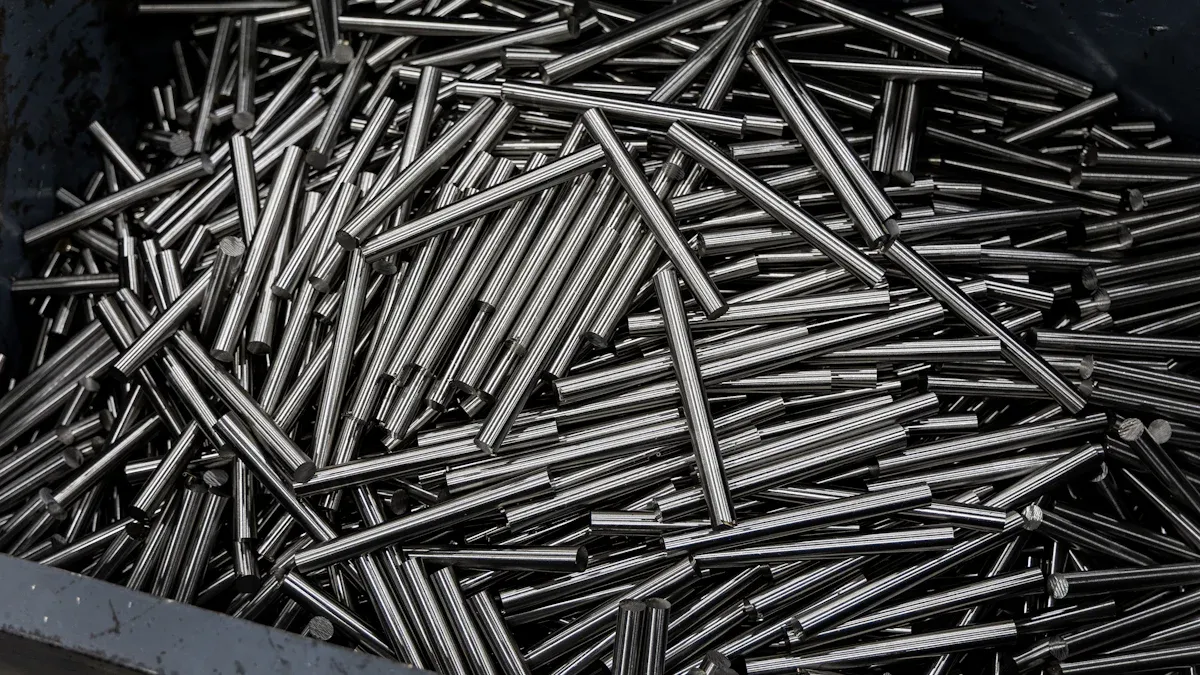
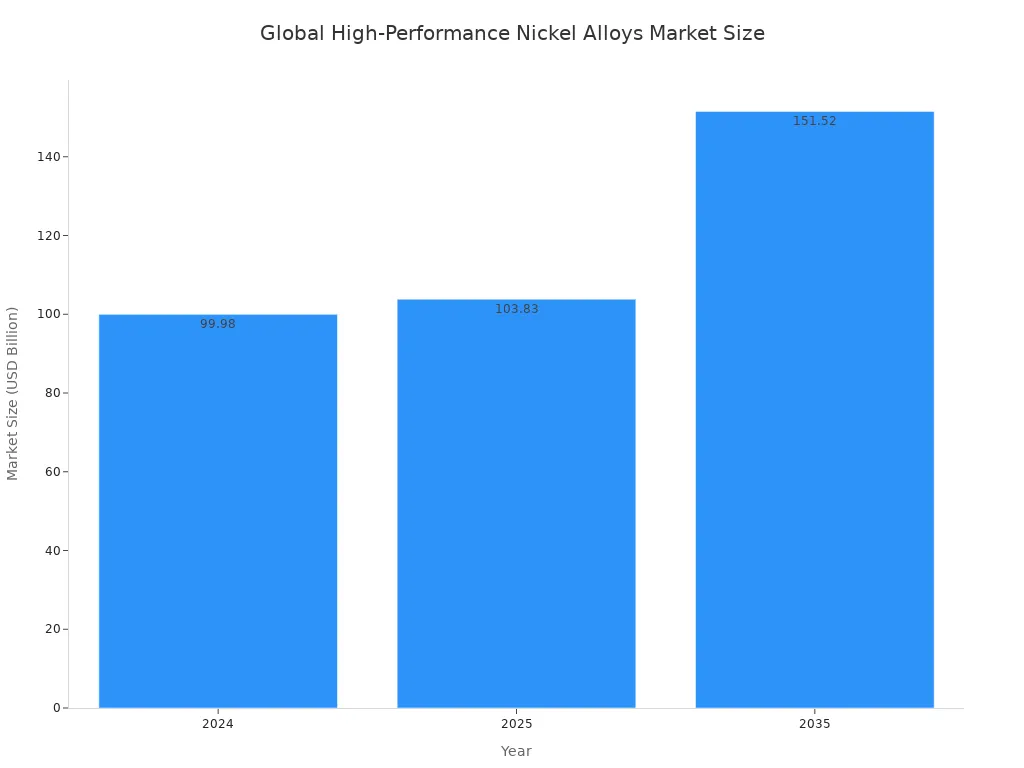
Engineers face a critical decision when selecting high-performance nickel alloys. The choice often comes down to two primary options. For applications demanding superior mechanical strength and hardness up to 1300°F (700°C), Inconel 718 Bars are the optimal solution. Conversely, an Inconel 625 Bar provides superior corrosion resistance and weldability, excelling in harsh chemical or marine environments. The demand for these advanced materials continues to grow within the aerospace sector.
An Inconel 718 bar is a precipitation-hardened alloy, making it exceptionally strong. This guide details the key trade-offs between these two leading alloys.
Key Takeaways
- Inconel 718 is very strong. It works best for parts needing high strength up to 1300°F.
- Inconel 625 fights rust well. It is easy to weld and works in harsh places or hotter temperatures.
- Engineers pick Inconel 718 for strong engine parts. They use Inconel 625 for exhaust systems and ducts.
- Inconel 718 gets strong from special heat. Inconel 625 is strong from its mix of metals.
- Both metals are hard to cut. Inconel 718 is harder to weld than Inconel 625.
At-a-Glance: Head-to-Head Comparison
Engineers must evaluate several key material properties before selecting an alloy. Inconel 718 and Inconel 625 present a classic trade-off between mechanical strength and fabrication flexibility. A direct comparison reveals distinct advantages for each material, guiding the selection process for specific aerospace applications.
Key Takeaway for Engineers: The primary decision hinges on a single question. Does the application demand maximum strength at high temperatures, or does it require superior corrosion resistance and weldability? The answer directly points to either Inconel 718 or 625.
Comparison Table: Inconel 718 vs. 625 Properties
The following table summarizes the essential differences between the two superalloys. The values represent typical properties that engineers encounter. Inconel 718's strength is shown in its age-hardened condition, while Inconel 625 is shown in its annealed state, reflecting their most common forms for engineering use.
| Property | Inconel 718 (Age-Hardened) | Inconel 625 (Annealed) |
|---|---|---|
| Primary Advantage | 🚀 High Strength & Hardness | 🛡️ Corrosion Resistance & Weldability |
| Ultimate Tensile Strength | ~185 ksi (1275 MPa) | ~130 ksi (896 MPa) |
| Yield Strength (0.2% Offset) | ~165 ksi (1140 MPa) | ~67 ksi (462 MPa) |
| Hardness (Rockwell) | ~C36 | ~B98 |
| Ductility (Elongation) | Lower (~12-25%) | Higher (Up to 42.5%) |
| Density | 8.19 g/cm³ (0.296 lb/in³) | 8.44 g/cm³ (0.305 lb/in³) |
| Melting Point | 2300–2437°F (1260–1336°C) | 2350–2460°F (1288–1349°C) |
The data clearly shows Inconel 718's significant lead in strength. Its yield strength in the age-hardened condition is more than double that of annealed Inconel 625. This strength advantage makes it the default choice for structural components that bear heavy loads. In contrast, Inconel 625 demonstrates superior ductility, which contributes to its excellent formability and resistance to cracking during welding.
The chart below illustrates the consistent mechanical properties of annealed Inconel 625 across various thicknesses. This predictability is a valuable asset during the design and fabrication phases.

Mechanical Properties: Strength and Hardness

The remarkable difference in strength between Inconel 718 and 625 originates from their distinct metallurgical strengthening mechanisms. Engineers select Inconel 718 for its high strength, a direct result of a specialized heat treatment process. In contrast, Inconel 625 derives its properties from a simpler, yet effective, strengthening method. Understanding these foundational differences is crucial for proper material selection in demanding aerospace applications.
Why Inconel 718 is Stronger: Age-Hardening
Inconel 718 achieves its exceptional strength and hardness through a process called precipitation hardening, or age-hardening. This multi-step heat treatment transforms the alloy's internal structure. The process begins with a solution anneal, which creates a uniform chemical composition. It is followed by an aging cycle at a lower temperature. During this aging phase, microscopic secondary phases precipitate within the alloy's metallic matrix.
These precipitates act as powerful obstacles, impeding the movement of dislocations and making the material significantly harder and stronger. Inconel 718 is primarily strengthened by gamma double prime (γ’’) precipitates. These nanometer-scale discs have a unique Ni₃Nb composition and an ordered DO₂₂ crystal structure. The alloy's strength is further enhanced by a secondary precipitate, gamma prime (γ’), which has a Ni₃(Ti,Al) composition. This dual-phase precipitation gives Inconel 718 Bars their signature high tensile and yield strength, making them ideal for load-bearing components.
Inconel 625's Solid-Solution Strength
Inconel 625 relies on a different mechanism known as solid-solution strengthening. This method is simpler and inherent to the alloy's chemical makeup. Large atoms of molybdenum (Mo) and niobium (Nb) are dissolved directly into the nickel-chromium (Ni-Cr) matrix. These larger atoms distort the crystal lattice structure. This distortion creates internal strain fields that hinder dislocation movement, thereby increasing the alloy's strength and hardness.
Unlike the complex heat treatment required for 718, Inconel 625 achieves its optimal properties through a standard solution treatment (annealing). This process relieves internal stresses and ensures the strengthening elements are properly dissolved in the matrix.
Engineer's Note: The fundamental difference lies in their heat treatment philosophy. Inconel 625 is a solid-solution strengthened alloy, achieving its best performance after a simple annealing treatment. In contrast, Inconel 718 is a precipitation-strengthened alloy. It requires an additional aging treatment after the solution anneal to fully precipitate its strengthening phases and maximize its mechanical strength.
This distinction explains why annealed Inconel 625 has a lower yield strength than age-hardened Inconel 718. The solid-solution method provides good baseline strength and excellent ductility, but it cannot match the peak strength achieved through precipitation hardening.
High-Temperature Performance and Corrosion Resistance
An alloy's performance in extreme environments depends heavily on its chemical makeup. Inconel 718 and 625 have distinct compositions that dictate their suitability for high-temperature service and corrosive conditions. Engineers must analyze these differences to prevent material failure in critical aerospace systems.
The Role of Chemical Composition
The chemical recipe of each alloy defines its core strengths. Inconel 625 contains high levels of chromium (Cr) and molybdenum (Mo). These elements provide exceptional resistance to a wide range of corrosive media, from acidic chemicals to saltwater. The molybdenum, in particular, makes it highly resistant to pitting and crevice corrosion.
Inconel 718, on the other hand, owes its unique properties to a significant amount of niobium (Nb), also known as columbium. The high niobium content is crucial for its age-hardenability. During heat treatment, niobium combines with nickel to form the gamma double prime (γ″) phase. This microscopic precipitate is the primary strengthening mechanism in the alloy. The discovery of this powerful aging response was a pivotal moment, shifting research toward developing this new, high-strength material.
Temperature Limits and Creep Resistance
While both are high-temperature alloys, they have different operational ceilings. Inconel 718 excels in applications where high strength is required up to a specific thermal limit.
- Inconel 718: Maintains its superior strength up to approximately 1300°F (700°C). Prolonged exposure above this temperature can cause its vital γ'' strengthening phase to become unstable, leading to a significant loss of mechanical properties.
- Inconel 625: Demonstrates effective strength and creep resistance at much higher temperatures. It performs well in continuous service up to 1800°F (982°C), making it suitable for applications like exhaust systems and ducting.
Engineer's Tip: The choice is clear based on the operating environment. For strength-critical parts below 1300°F (700°C), Inconel 718 is the superior choice. For components exposed to temperatures above this threshold, Inconel 625 offers better stability and creep resistance, even though its baseline strength is lower.
At elevated temperatures, Inconel 718's strength advantage diminishes rapidly. Inconel 625's solid-solution strengthened matrix provides more reliable performance and resistance to deformation over time (creep) in these hotter conditions.
Fabrication and Practical Considerations
An alloy's theoretical properties mean little without practical fabrication methods. Engineers must consider how easily a material can be welded and machined into a final component. In this regard, Inconel 625 and 718 present a significant trade-off between weldability and post-weld processing requirements.
Weldability: The Clear Advantage of 625
Inconel 625 holds a distinct advantage in weldability. Its solid-solution strengthened nature makes it highly resistant to cracking during and after welding. The alloy’s forgiving characteristics allow for more straightforward fabrication of complex assemblies, such as exhaust ducting and bellows.
Inconel 718, conversely, presents a significant challenge due to its susceptibility to strain-age cracking. This phenomenon occurs because the material hardens rapidly during post-weld heat treatment, preventing the relief of internal stresses.
- This type of cracking typically forms in the heat-affected zone (HAZ) of the weld.
- The alloy's high strength and lower ductility contribute to its vulnerability.
- Engineers can prevent this issue by strictly following recommended heat treatment procedures and avoiding high restraint on the component as it cools.
Engineer's Note: Welding Inconel 718 often requires a solution anneal before welding, followed by a full post-weld aging treatment to restore its mechanical properties. This adds complexity and cost to the manufacturing process.
Machinability Challenges for Both Alloys
Both superalloys are notoriously difficult to machine. Their high strength, rapid work-hardening, and poor thermal conductivity generate extreme heat at the cutting tool, leading to rapid tool wear. Successful machining requires rigid setups, low cutting speeds, and high-power equipment.
Specialized tooling is essential for achieving desired results.
- Advanced Ceramics (SiAlONs): These tools are recommended for high-speed roughing operations. They maintain their hardness and strength at the high temperatures generated during cutting.
- Polycrystalline Cubic Boron Nitride (PCBN): As the second-hardest material known, PCBN is the ultimate choice for finishing operations. It delivers exceptional dimensional accuracy and smooth surface finishes (Ra 0.2–0.4 µm) due to its chemical stability at high temperatures.
While specific parameters vary, roughing speeds for Inconel 625 often fall in the 100-120 sfm range. Careful management of speeds, feeds, and tooling is critical to control costs and ensure component quality for both alloys.
Common Aerospace Applications for Inconel 718 Bars and 625
The distinct properties of Inconel 718 and 625 lead engineers to select them for very different roles within an aircraft. Inconel 718's strength makes it a structural champion, while Inconel 625's resilience makes it a master of harsh environments. This targeted application strategy ensures optimal performance and safety in demanding aerospace systems.
Strength-Critical Components: Inconel 718
Engineers specify Inconel 718 for components where mechanical failure is not an option. Its exceptional yield strength and creep resistance at temperatures up to 1300°F (700°C) make it indispensable for the hot section of jet engines. The material's ability to withstand immense stress ensures the integrity of critical rotating parts. High-quality Inconel 718 Bars are machined into these essential components.
Common applications where strength is the primary driver include:
- Turbine Disks and Blades: These parts must resist deformation and cracking under extreme rotational forces and high heat.
- Compressor Rotors and Shafts: Provide long-lasting, reliable performance at the core of the engine.
- Fasteners, Bolts, and Washers: High-stress fasteners made from Inconel 718 Bars maintain clamping force and resist failure in high-temperature environments.
- Structural Casings and Seals: Offer robust containment and pressure sealing for engine modules.
Corrosion-Resistant Components: Inconel 625
Inconel 625 excels in applications demanding superior corrosion resistance and fabricability. Its chemical composition provides robust defense against oxidation and acidic exhaust gases. The alloy's excellent weldability allows for the creation of complex, leak-proof assemblies that would be challenging to produce with other high-strength materials.
Application Insight: Inconel 625 is the go-to material for systems that manage hot gases and fluids. Its combination of temperature stability and corrosion resistance ensures long service life for non-structural components exposed to harsh conditions.
Engineers frequently use Inconel 625 for:
- Aircraft Exhaust Systems: Including tailpipes and hush kits that must endure corrosive fumes and high temperatures.
- Ducting Systems: Safely channel hot bleed air from the engine to other parts of the aircraft.
- Bellows and Expansion Joints: The material's formability and weldability are perfect for creating flexible components that absorb vibration and thermal expansion.
Material Specifications and Standards
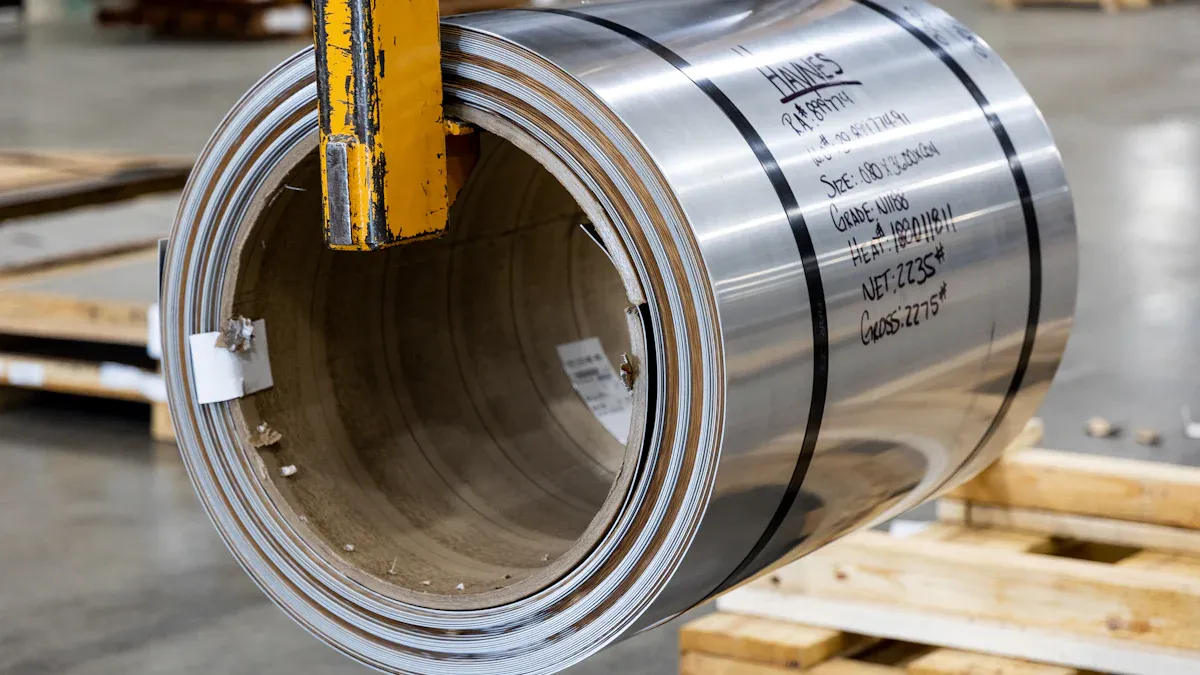
Engineers rely on material specifications to guarantee quality, consistency, and performance. Aerospace Material Specifications (AMS) are the definitive standards for high-performance alloys, defining everything from chemical composition to final mechanical properties. Understanding these standards is essential for proper material procurement and application.
Inconel 718 Standards (AMS 5662, 5663)
Two primary standards govern Inconel 718: AMS 5662 and AMS 5663. The key difference lies in the material's heat-treated condition.
- AMS 5662 specifies the alloy in its solution-annealed condition. This softer state is ideal for extensive machining or forming before the final hardening process.
- AMS 5663 covers the alloy in its fully solution-treated and precipitation-hardened (aged) condition. This delivers the high strength required for finished components.
Engineer's Note: Choose AMS 5662 for raw material that will be machined and then heat-treated. Specify AMS 5663 for material that must meet final strength requirements upon delivery, avoiding complex post-machining heat treatments.
The transformation from the AMS 5662 to the AMS 5663 condition involves a precise aging process:
- Solution Treatment: Heat to 1725–1850°F (941–1010°C) and cool rapidly.
- Precipitation Hardening: Hold at 1325°F (718°C) for 8 hours, furnace cool to 1150°F (621°C), and hold for a total aging time of 18 hours.
This process ensures Inconel 718 Bars achieve their minimum tensile strength of 185 ksi and hardness of 331 HBW.
Inconel 625 Standards (AMS 5666)
AMS 5666 is the governing specification for Inconel 625 bars, forgings, and rings. It defines the material in its solution-annealed condition, which optimizes its corrosion resistance and fabricability. The standard tightly controls the chemical composition to ensure reliable performance. The high chromium and molybdenum content provides its signature resistance to harsh environments.

Under AMS 5666, the alloy exhibits excellent ductility with elongation values up to 55%. Its typical tensile strength ranges from 100–136 ksi. These properties make it a predictable and reliable choice for components like welded ducting and exhaust systems.
Cost and Availability Analysis
Beyond technical performance, engineers must weigh the economic factors of material selection. The total cost of a component extends past the raw material price, encompassing complex fabrication and processing expenses. A thorough cost analysis reveals the true investment required for using these advanced superalloys.
Raw Material Cost Comparison
The raw material cost for Inconel 718 and 625 is influenced by market dynamics and alloying elements. Inconel 718 often carries a higher price tag, typically ranging from $40 to $90 per kilogram for industrial-grade material. Aerospace-certified lots can command even higher prices, sometimes exceeding $100 per kilogram. In comparison, Inconel 625 generally costs between $40 and $80 per kilogram.
Cost Driver Insight: The price difference is partly driven by Inconel 718's reliance on niobium (Nb). This element is essential for its precipitation-strengthening mechanism, which gives the alloy its superior strength. While both alloys contain expensive elements, the specific formulation and processing for 718 contribute to its higher base cost.
The following table provides an indicative price comparison for industrial-grade bar stock:
| Alloy | Indicative Price (per kg) | Key Cost Driver |
|---|---|---|
| Inconel 718 | ~$40 – $90 | Niobium content & heat treatment |
| Inconel 625 | ~$40 – $80 | Molybdenum & Chromium content |
Impact of Fabrication on Total Cost
Fabrication expenses, particularly machining, represent a substantial portion of the final component cost. Both alloys are difficult to machine, but the process can be significantly more expensive than working with common metals.
- Machining Costs: Machining Inconel can be 4 to 8 times more expensive than machining stainless steel. This is due to rapid tool wear and the need for specialized equipment and slower cutting speeds.
- Welding and Heat Treatment: Inconel 718 adds another layer of cost due to its complex post-weld heat treatment requirements. The necessary solution annealing and aging cycles increase processing time and expense, a factor not typically required for the more weldable Inconel 625.
Ultimately, the simpler fabrication of Inconel 625 can sometimes offset its raw material cost, making it a more economical choice for complex welded assemblies.
Engineers must weigh a clear trade-off between mechanical strength and fabrication ease. The final material selection hinges on the primary operational demand of the component.
- Inconel 718 Bars are the definitive choice for strength-critical parts operating below 1300°F (700°C).
- Inconel 625 provides the superior solution for components requiring excellent corrosion resistance and weldability.
A careful evaluation of performance needs against fabrication complexity and total project cost will guide engineers to the correct alloy for their specific aerospace application.
FAQ
Which alloy is better, Inconel 718 or 625?
Neither alloy is universally "better." Engineers choose Inconel 718 for high-strength applications below 1300°F (700°C). They select Inconel 625 for superior corrosion resistance and weldability, especially at higher temperatures. The best choice depends entirely on the specific application's primary demand.
What makes Inconel 718 so strong?
Inconel 718 achieves its high strength from a precipitation-hardening heat treatment. This process creates microscopic Ni₃Nb precipitates (gamma double prime) within the alloy's structure. These particles effectively block internal movement, making the material exceptionally strong and hard.
Can Inconel 625 be used at higher temperatures than 718?
Yes. Inconel 625 maintains its structural integrity at temperatures up to 1800°F (982°C). Inconel 718 loses significant strength above 1300°F (700°C). This makes Inconel 625 the superior choice for applications like high-temperature exhaust ducting and furnace components.
Why is Inconel 718 difficult to weld?
Inconel 718 is susceptible to strain-age cracking after welding. The alloy hardens during post-weld heat treatment, which can trap internal stresses and cause fractures.
Welding Tip: Proper pre-weld annealing and post-weld aging procedures are critical to prevent cracking and ensure a successful weld for Inconel 718.
See Also
Mastering Pass Partition Plate Welding: Expert Guidance for 2025 Success
Optimizing Heat Exchanger Performance: The Power of Advanced Steel Processing
Enhancing TIG Welding: Essential Facts About WT20 Thoriated Tungsten Electrodes
Assessing Molybdenum Plugs: Seamless Steel Pipe Production Innovations for 2025
Choosing Pressure Vessel Materials: Adhering to ASME BPVC Section VIII Guidelines