Hydroponic Strawberry Cultivation in Greenhouses and Vertical Farms Using Rock Wool Substrates
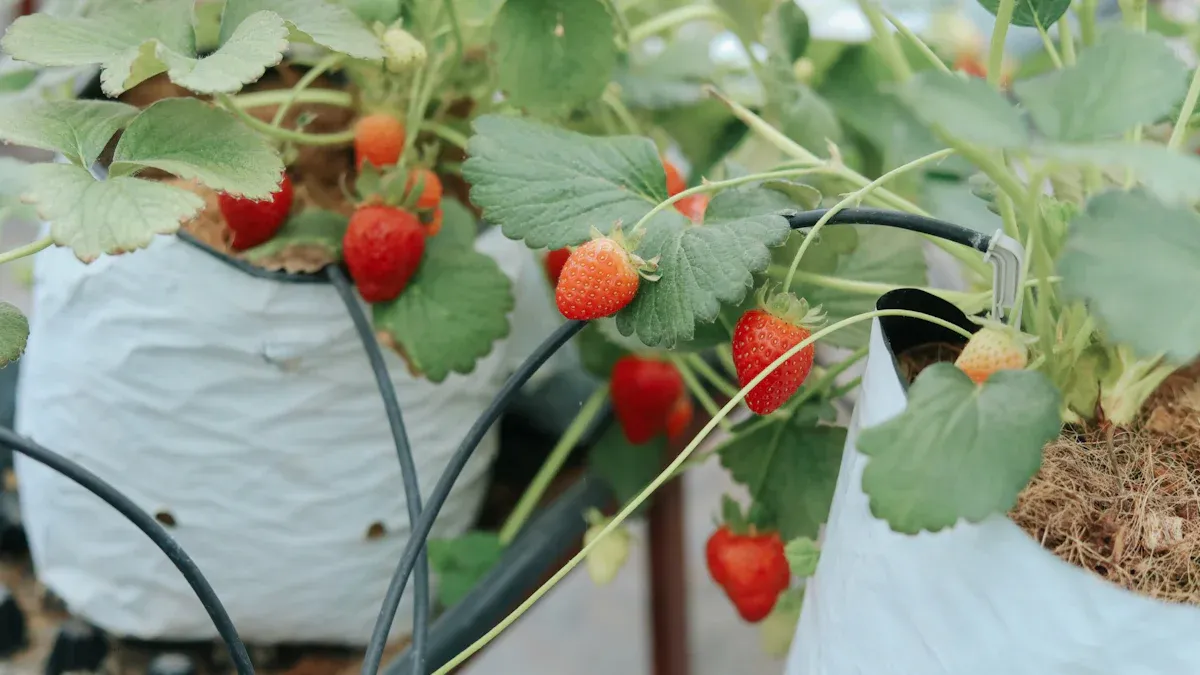
Growers achieve consistent strawberry production by selecting day-neutral cultivars like Albion, valued for their extended harvest and high yield potential. This controlled-environment method supports a rapidly growing global market.
| Metric | Value |
|---|---|
| Market Size (2024) | USD 150 million |
| Forecast (2033) | USD 384.87 million |
| CAGR (2024-2033) | 12.5% |
Key Practice: Success hinges on preparing the Rock Wool Substrate by pre-soaking it in pH-adjusted water (5.5-6.0) and using drip or NFT systems for precise nutrient delivery.
Key Takeaways
- Rock wool is a good choice for growing strawberries. It holds water well and gives roots air. It is also clean and stops plant diseases.
- Prepare rock wool carefully. Soak it in water with the right pH (5.5-6.0). Do not squeeze it. This helps strawberry roots grow strong.
- Choose the right watering system. Drip systems give plants exact water. NFT systems use a thin stream of water. Both work well for strawberries.
- Control the plant's food and environment. Give strawberries the right nutrients and keep the temperature, light, and humidity correct. This helps them grow big and tasty.
- Manage pests and pick berries at the right time. Use good bugs to fight bad bugs. Harvest strawberries when they are fully red for the best taste.
Why Choose Rock Wool for Hydroponic Strawberries?
Growers select rock wool for its unique combination of properties that directly support the demanding needs of strawberry plants. The material’s structure provides a stable and highly controlled environment for root development, which is fundamental to achieving high-yield, high-quality harvests in hydroponic systems.
Superior Water Retention and Aeration
A Rock Wool Substrate offers an exceptional balance between water retention and aeration. The fibrous material holds significant moisture, making it ideal for thirsty plants like strawberries. This high water-holding capacity ensures roots have consistent access to the nutrient solution. At the same time, the structure maintains excellent porosity.
Did You Know? 💡 Even after full saturation and drainage, horticultural-grade rock wool retains approximately 15% air pore space. This critical feature supplies oxygen directly to the root zone, preventing suffocation and promoting vigorous, healthy root growth.
Sterile and Inert Properties
Rock wool is a manufactured product, making it sterile and free of pathogens upon arrival. Soilless cultivation was developed primarily to protect crops from diseases found in traditional soil. Using a sterile Rock Wool Substrate gives growers a clean start, eliminating the risk of introducing harmful microbes from the beginning. This practice helps prevent common root diseases caused by fungi and bacteria.
Common pathogens avoided by using sterile media include:
- Fungi: Pythium, Fusarium, and Rhizoctonia are notorious for causing destructive root rot.
- Bacteria: Harmful bacterial strains that can compromise plant health are not present in new rock wool.
Benefits for Strawberry Root Health
The combined characteristics of rock wool create an optimal environment for the delicate root systems of strawberry plants. Its inert nature means it does not alter the pH or nutrient composition of the hydroponic solution, giving growers complete control over plant nutrition. The sterile starting point minimizes disease pressure on the roots. This controlled, clean, and well-aerated environment reduces plant stress, allowing strawberries to dedicate their energy toward producing abundant, flavorful fruit.
Preparing the Rock Wool Substrate
Proper preparation of the Rock Wool Substrate is a non-negotiable first step for successful hydroponic cultivation. This process conditions the material, making it a stable and welcoming environment for strawberry roots from the moment of transplant. Growers who master this stage set their crops up for vigorous growth and optimal nutrient uptake.
Pre-Soaking and Conditioning Rock Wool
New rock wool is delivered dry and contains fine dust particles from the manufacturing process. Growers must fully saturate the material before use. This initial soak prepares the fibers to hold water and nutrients effectively. The process involves completely submerging the rock wool cubes or slabs in water. To achieve full saturation, growers allow the material to soak for a significant duration, typically ranging from several hours to an entire day. Some protocols recommend a full 24-hour soak to guarantee the core is completely wet.
Balancing the pH Level
Rock wool naturally has a high, alkaline pH, often around 7.0 or higher. This level is unsuitable for strawberries, which thrive in a slightly acidic environment. An incorrect pH can cause nutrient lockout, preventing roots from absorbing essential minerals. Growers correct this by conditioning the rock wool during the pre-soak.
Pro Tip 📝 Growers add a pH-down solution to the soaking water, targeting a final pH of 5.5 to 6.0. They use a pH meter to confirm the water's stability before adding the rock wool. This step stabilizes the root zone environment from the start.
Handling and Placement of Cubes or Slabs
Once fully soaked and conditioned, the rock wool is ready for placement. Growers handle the saturated material gently. They never squeeze or compress the cubes, as this action destroys the fibrous structure and eliminates the vital air pore space needed for root respiration.
- Lift the cubes or slabs from the solution.
- Allow them to drain naturally under gravity.
- Place them directly into the hydroponic system, such as in gutters or NFT channels.
- Cut a small hole or slit for inserting the strawberry plant plug.
This careful handling preserves the ideal balance of water and oxygen within the medium.
Designing Your Hydroponic System
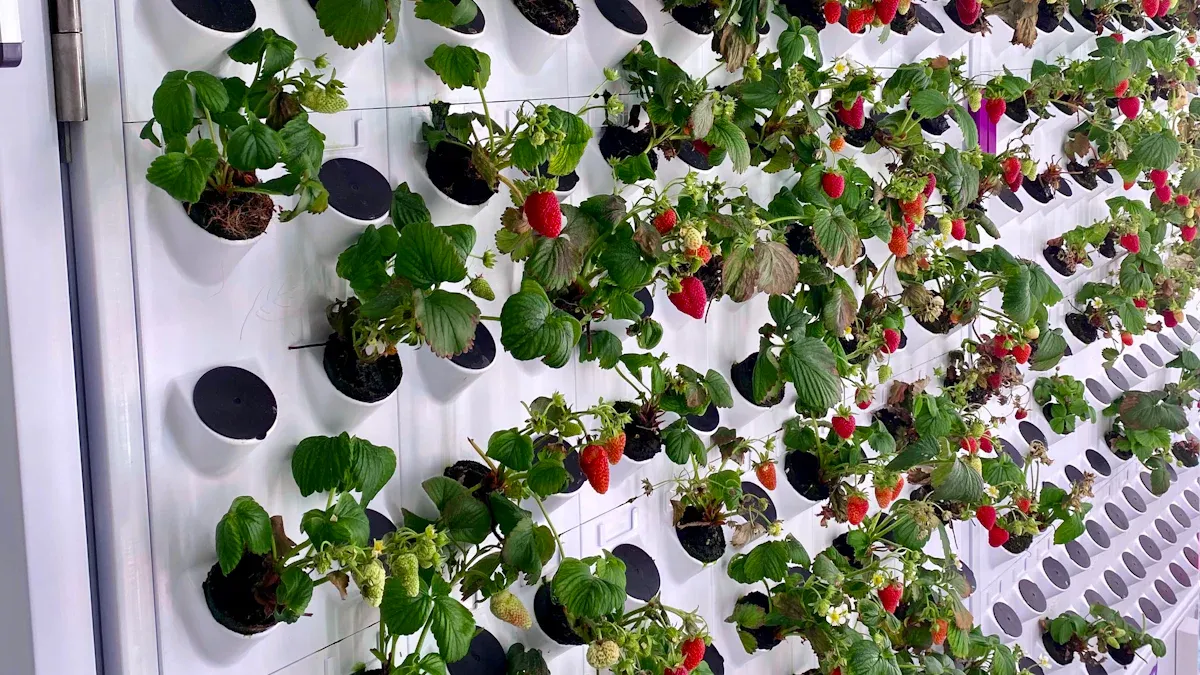
Selecting the right hydroponic system is a critical decision that influences efficiency, scalability, and operational workflow. Growers choose between several designs, with Drip Irrigation and Nutrient Film Technique (NFT) being the most prominent for strawberry cultivation in rock wool. The final choice often depends on the facility's layout, whether it is a sprawling greenhouse or a compact vertical farm.
Drip Irrigation Systems
Drip irrigation is a highly precise method for delivering water and nutrients directly to the root zone of each plant. In this setup, a network of tubing and emitters delivers a controlled nutrient solution to the rock wool substrate. This precision minimizes water waste and ensures each strawberry plant receives a consistent nutrient supply. The system's automation complexity is high, requiring pumps, timers, and sensors to manage irrigation cycles effectively.
Growers must select the correct emitter flow rate to match the water-holding capacity of rock wool. A lower flow rate prevents oversaturation and runoff.
| Media Type | Recommended Emitter GPH (Gallons Per Hour) |
|---|---|
| Rock Wool Cubes or Slabs | 0.3 or 0.5 |
Note: Many commercial growers prefer a 0.5 GPH emitter. However, some drip tubing options offer rates as low as 0.26 GPH for even finer control.
While drip systems offer unparalleled precision, they are often more expensive and labor-intensive to install. Regular maintenance is necessary to prevent clogged emitters, which can starve plants of nutrients. This makes drip systems a powerful choice for commercial-scale operations where scalability and precise control justify the initial investment.
Nutrient Film Technique (NFT)
Nutrient Film Technique (NFT) is another popular hydroponic method. It involves a continuous, shallow stream of nutrient solution flowing through enclosed channels or gutters. Strawberry plants in rock wool cubes are placed in openings along the top of these channels, allowing their roots to grow down into the nutrient film. This constant flow ensures roots have access to water, nutrients, and oxygen simultaneously.
The success of an NFT system heavily relies on the slope of the channels.
- Experts recommend a slope between 1:30 and 1:40.
- A minimum slope of 2% is essential to maintain flow and prevent pooling.
An incorrect slope can be detrimental. If it is too steep, the solution flows past the roots too quickly. If it is too shallow, the solution stagnates, leading to oxygen deprivation and root disease.
NFT systems generally have a lower setup complexity than drip systems and can be a cost-effective entry point. However, they are extremely vulnerable to power outages or pump failures. Any interruption to the nutrient flow can cause roots to dry out and die within hours.
System Layouts for Greenhouses vs. Vertical Farms
The physical layout of the growing space dictates the system design. Greenhouses and vertical farms present different opportunities and challenges for maximizing plant density and managing environmental conditions.
Vertical farms prioritize maximizing output per square meter. Growers achieve this using specialized layouts:
- Tiered Shelving: Stacking multiple horizontal growing layers is the most common way to increase plant density.
- A-Frame Racks: These triangular structures allow for cultivation on angled surfaces, fitting more plants into a limited footprint while ensuring good light exposure.
In these multi-level systems, environmental control is paramount.
- Airflow: A minimum vertical clearance of 60 cm between tiers is crucial for air circulation and preventing disease. Narrow gutters that allow fruit to hang freely also improve airflow and reduce rot.
- Lighting: Vertical farms rely entirely on artificial lighting. LED fixtures are typically lower wattage (200W–400W) due to their proximity to the plants. They often use a higher percentage of blue light (~25%) to keep strawberry plants compact and prevent stretching.
Greenhouses, by contrast, typically use single-level layouts to take advantage of natural sunlight. These layouts often consist of long rows of gutters or benches. While plant density per square meter is lower than in vertical farms, the overall scale can be massive. Lighting is supplemental, with higher-power LEDs (600W–800W) used to extend daylight hours or provide light on cloudy days. Airflow is managed with large fans and ventilation systems, but overcrowding can still lead to poor circulation and disease pressure.
Managing Nutrients and Environment
Precise management of the nutrient solution and the growing environment is the engine that drives a successful hydroponic strawberry operation. Growers must create a stable, optimized setting that meets the crop's demands through every growth stage. This control allows plants to reach their full genetic potential for yield and quality.
Nutrient Solution Recipe and EC Targets
The nutrient solution is the sole source of nutrition for hydroponic strawberries. Growers manage its concentration using Electrical Conductivity (EC), a measure of the total dissolved salts. The ideal EC and pH levels change as the plants move from vegetative growth to flowering and fruiting. Maintaining these targets is critical for preventing nutrient deficiencies or toxicities.
A balanced recipe provides essential macronutrients (Nitrogen, Phosphorus, Potassium, Calcium, Magnesium) and micronutrients (Iron, Manganese, Zinc). Growers adjust these elements based on the plant's developmental stage.
| Growth Stage | Target EC (mS/cm) | Target pH |
|---|---|---|
| Vegetative | 1.4 – 1.8 | 5.5 – 6.0 |
| Flowering | 1.8 – 2.0 | 5.5 – 6.0 |
| Fruiting | 1.8 – 2.2 | 5.5 – 6.0 |
Pro Tip 📝 Growers should test and adjust their nutrient solution daily. Regular monitoring ensures the plants receive a consistent diet, preventing stress and promoting vigorous fruit development.
Ideal Light, Temperature, and Humidity
Controlled environments allow growers to fine-tune climatic conditions for maximum productivity. Light, temperature, and humidity work together to influence photosynthesis, plant structure, and fruit quality.
Light Light is the primary driver of photosynthesis. Growers measure light using the Daily Light Integral (DLI), which represents the total amount of photosynthetically active radiation a plant receives in one day.
- A minimum DLI of 12 mol/m²/day is necessary for good productivity.
- The optimal DLI for maximizing fruit production is between 20-25 mol/m²/day. For everbearing varieties, an ideal DLI range between 15 and 25 mols per day supports strong growth and consistent fruiting.
Temperature and Humidity Temperature directly impacts the rate of plant development and fruit sugar accumulation. Growers often use a day/night temperature differential to encourage high-quality fruit. Humidity, measured as Relative Humidity (RH), affects transpiration and nutrient uptake.
| Parameter | Ideal Range | Notes |
|---|---|---|
| Daytime Temperature | 20–25°C (68–77°F) | Promotes active photosynthesis. |
| Nighttime Temperature | 10–12°C (50–54°F) | Encourages sugar storage in fruit. |
| Relative Humidity (RH) | 60–75% | Balances transpiration and disease prevention. |
Cultivars like Albion and Seascape are quite resilient. They can tolerate daytime temperatures up to 32.2°C (90°F), making them well-suited for controlled environments where heat can sometimes build up.
Irrigation Scheduling for Rock Wool
Effective irrigation in a Rock Wool Substrate involves maintaining optimal moisture levels without causing waterlogging. The goal is to provide consistent access to water and nutrients while allowing enough air to reach the roots. Growers achieve this through carefully timed irrigation cycles. Many professionals use a "pulse" strategy, delivering short, frequent bursts of nutrient solution throughout the day.
This approach prevents the substrate from becoming oversaturated and encourages a slight "dry-back" between cycles. This periodic drying stimulates root growth and can improve fruit flavor. The frequency and duration of these pulses depend on factors like plant size, DLI, temperature, and humidity.
Growers can use technology to perfect their irrigation strategy. While tensiometers are effective in media like peat, they are often less suitable for rock wool due to its unique fibrous structure. Instead, many commercial growers rely on weighing the slabs to determine water content or use moisture sensors specifically designed for soilless media. These tools provide precise data, allowing growers to automate irrigation based on the plant's actual water use rather than a fixed schedule.
Crop Care from Flower to Harvest
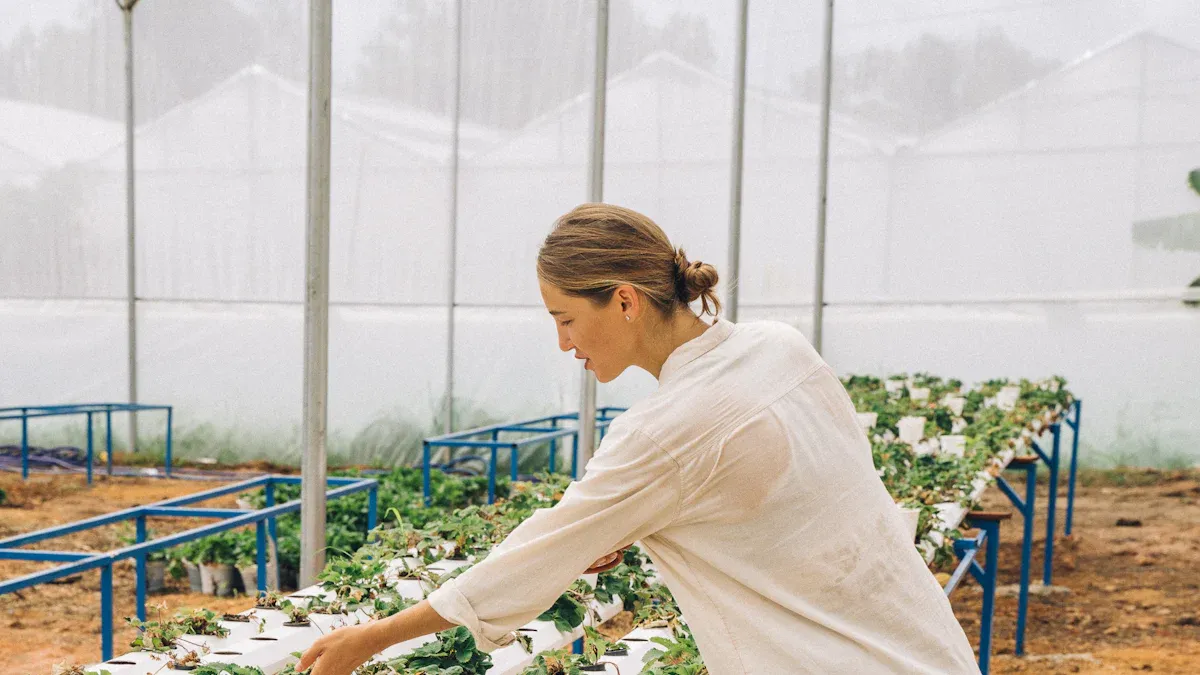
Diligent crop care during the final stages of development ensures a high-quality, marketable harvest. Growers must manage pollination, pest pressure, and harvesting protocols with precision to transform healthy plants into profitable fruit.
Pollination in Controlled Environments
Successful fruit set depends on effective pollination. In large greenhouses, growers often introduce commercially reared bumblebee hives. The bees efficiently transfer pollen between flowers, leading to well-formed, sizable berries. For smaller vertical farms or isolated environments, manual pollination is a practical alternative. Growers can use a small, soft-bristled brush or an electric pollinator to gently transfer pollen from one flower to another, mimicking the action of natural pollinators.
Integrated Pest Management (IPM)
An Integrated Pest Management (IPM) program is essential for protecting crops in a controlled environment. This strategy prioritizes prevention and biological controls over chemical intervention. Common pests in hydroponic systems include spider mites, thrips, and whiteflies. Growers can introduce beneficial organisms to manage these threats.
- Predatory Mites: Releases of Phytoseiulus persimilis or Neoseiulus californicus effectively control spider mite populations.
- Beneficial Insects: Green lacewings (Chrysopa spp.) and minute pirate bugs (Orius tristicolor) are generalist predators that consume a variety of small pests.
When pest pressure requires intervention, growers can use OMRI-listed products. BioCeres WP is one such option.
- Type: Biological Mycoinsecticide
- Active Ingredient: Beauveria bassiana fungus
- Safety: Features a 0-day Pre-Harvest Interval, making it safe to use right up to harvest.
The FIFRA 2(ee) label for BioCeres WP specifically lists 'Bushberry/Strawberry/Tomato', indicating its approved use for strawberry cultivation.
Harvesting for Peak Flavor and Quality
Harvesting strawberries at their peak ensures optimal flavor, sweetness, and shelf life. Growers identify ripeness through visual and physical cues, which vary by cultivar.
| Characteristic | Albion Strawberry | Seascape Strawberry |
|---|---|---|
| Primary Color | Dark red | Cherry red |
| Shape | Long conical | Flattened cone |
| Firmness | Very firm | Firm |
| Surface | Matte-gloss throughout | Very shiny/metallic |
Proper post-harvest handling is critical for preserving quality. Growers must maintain the cold chain from the moment of picking.
- Move harvested berries to a cooler within one hour.
- Store strawberries at an optimal temperature of 32°F (0°C).
- Maintain a high relative humidity of 90-95% in storage.
- Use vented clam-shell containers to facilitate cooling and prevent moisture buildup.
Growers achieve success by maintaining precise control over the root zone and nutrient delivery. This mastery relies on several key practices for optimal plant health and productivity.
- Meticulous preparation of the Rock Wool Substrate.
- Consistent management of nutrient solution pH and EC.
- Proactive and integrated pest management strategies.
This cultivation method provides a reliable pathway for achieving consistent, high-quality strawberry yields in any season. It empowers producers to meet market demand with a superior product.
FAQ
Can growers reuse rock wool for a second crop?
Professionals advise against reusing rock wool. The substrate accumulates salts and can harbor root disease pathogens from the previous crop. Starting with fresh, sterile media is a best practice. It protects new plants from contamination and ensures a clean growing environment.
What are other good strawberry cultivars for this system?
Growers have several excellent choices beyond Albion and Seascape. Day-neutral cultivars like Monterey and San Andreas are also popular for controlled environments. These varieties offer high yields and robust flavor profiles, making them suitable for year-round hydroponic production.
What is the most common mistake when using rock wool?
A common mistake is improper rock wool preparation. Growers must fully soak and condition the substrate to a pH of 5.5-6.0. Another error is compressing the saturated cubes. This action destroys vital air pockets, which suffocates roots and hinders healthy plant growth.
How long does it take to get a harvest?
Growers can typically expect the first harvest approximately 8 to 10 weeks after transplanting young strawberry plugs. Day-neutral varieties will then continue to flower and produce fruit in cycles. Consistent environmental control ensures a steady, year-round harvest.
See Also
Eco-Friendly Plate Heat Exchangers: Minimizing Environmental Harm and Maximizing Efficiency
Versatile Nozzle Solutions: Guiding Gardeners, Bioprinters, and Lubrication Professionals
Cutting-Edge Materials: Revolutionizing the Future of Heat Exchanger Supply Chains
Hygienic Design Standards: Comparing EHEDG Guidelines and 3A SSI Requirements
Boosting 2,5-Furandicarboxylic Acid Sustainability: Data-Driven Strategies and Innovations