Comparing Hydrolyzed Bovine Collagen and Marine Collagen
Marine collagen demonstrates higher and faster bioavailability than hydrolyzed bovine collagen, making it more effective for skin regeneration and joint health. The table below highlights these distinctions:
| Feature | Marine Collagen | Hydrolyzed Bovine Collagen |
|---|---|---|
| Absorption Rate | Higher, faster | Moderate |
| Skin Retention | Over two weeks | Shorter duration |
| Joint Distribution | Excellent | Good |
Hydrolyzed Bovine Collagen Overview
Source and Extraction
Hydrolyzed bovine collagen comes from specific parts of cows. Manufacturers typically use cow hides, bones, and tendons as primary sources. The extraction process involves several steps:
- Pretreatment: Enzymatic, acid, or alkaline hydrolysis prepares the animal tissues.
- Extraction: Boiling the treated materials dissolves the collagen.
- Purification: Filtration removes impurities from the solution.
- Drying: Spray drying or freeze drying converts the purified collagen into a powder.
These steps ensure that the final product contains high-quality hydrolyzed bovine collagen suitable for supplements and other applications.
Key Features
Hydrolyzed bovine collagen stands out due to its low molecular weight, usually between 3 and 6 kilodaltons. This feature allows for improved absorption in the body. The production process uses enzymatic activity in either acidic or basic environments, which helps create collagen with specific beneficial properties. Many industries use hydrolyzed bovine collagen. The food industry values it for enhancing texture and sensory qualities. Cosmetic companies include it in products for its moisturizing effects. Healthcare professionals recognize its therapeutic benefits, especially for bone health. Studies show that hydrolyzed bovine collagen can support individuals with osteoporosis and osteoarthritis by increasing bone mineral density and improving joint function.
Marine Collagen Overview
Source and Extraction
Marine collagen originates from fish by-products, including skins, scales, and bones. Manufacturers select these materials for their high collagen content and sustainability. The extraction process begins with pretreatment, which enhances the efficiency of collagen release. Acid-soluble extraction uses acidic solutions to break down the collagen cross-links. Pepsin-soluble extraction employs the enzyme pepsin to further isolate collagen molecules. Some producers use advanced techniques such as ultrasound-assisted extraction and supercritical fluid extraction to improve yield and purity. The process follows several steps: preparation, extraction, precipitation, and recovery. Each stage aims to maximize the quality and quantity of the final collagen product.
Key Features
Marine collagen offers several unique characteristics that distinguish it from bovine collagen:
- Marine collagen contains primarily Type I collagen, which supports skin structure and elasticity. Type I collagen levels decrease with age, leading to wrinkles and fine lines.
- The particle size of marine collagen is smaller than that of bovine collagen. This feature allows for faster and more efficient absorption in the body. Studies show that marine collagen can have up to 1.5 times greater bioavailability.
- Many consumers choose marine collagen for its benefits in skincare, haircare, and nail health. It helps improve skin hydration, elasticity, and reduces visible signs of aging.
- Marine collagen appeals to individuals who seek to enhance their appearance and prefer fish-derived supplements over animal-based alternatives.
Note: Marine collagen’s high absorption rate and focus on Type I collagen make it a preferred choice for those targeting skin and beauty benefits.
Source and Extraction Comparison
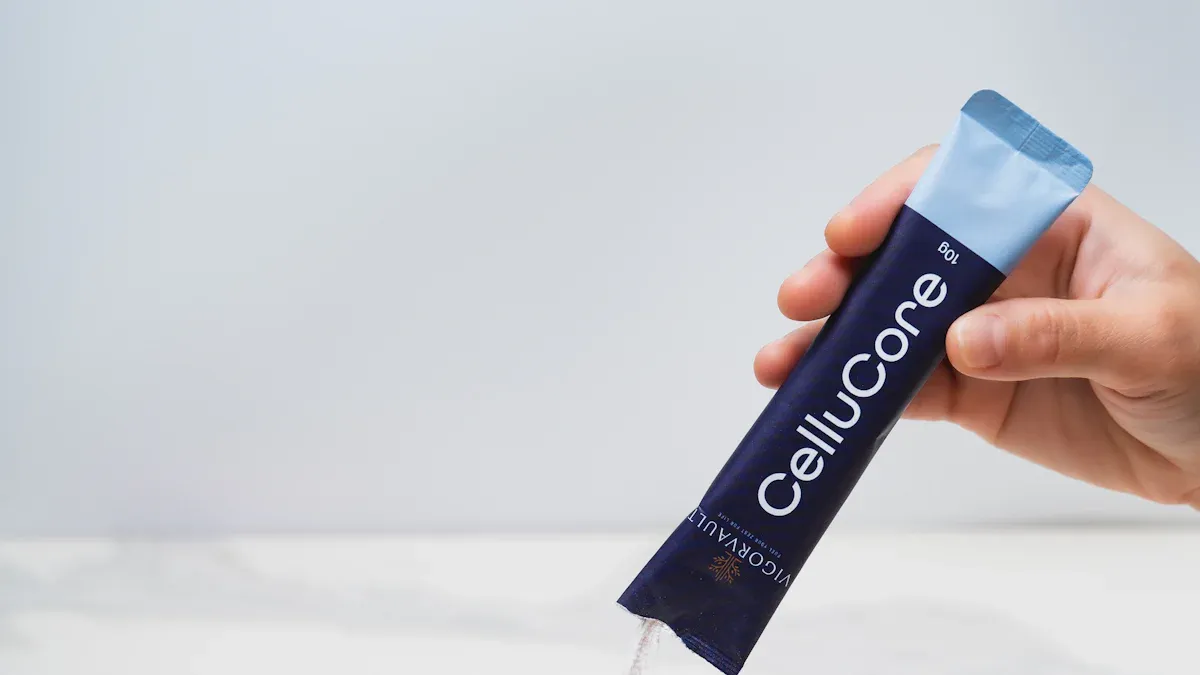
Animal vs. Fish Origins
Collagen supplements come from two main sources: land animals and marine life. Hydrolyzed bovine collagen is produced from cows, using hides, bones, and tendons. Marine collagen is extracted from fish, mainly from skins, scales, and bones. The origin of each type impacts its quality and effectiveness in several ways:
- Marine collagen has a lower molecular weight, which allows for easier absorption in the body.
- Fish-derived collagen carries a lower risk of disease transmission and contamination compared to animal-based sources.
- Marine collagen is associated with fewer inflammatory reactions.
- Hydrolyzed bovine collagen contains both Type I and Type III collagen, which support skin, bones, and tendons.
- Marine collagen provides mostly Type I collagen, which is important for skin health and cartilage.
Note: Marine collagen’s high bioavailability makes it a preferred choice for those seeking rapid results in skin and joint health.
Extraction Methods
Manufacturers use different extraction methods for each collagen type. These methods affect the purity, potency, and absorption of the final product.
| Type of Collagen | Source | Extraction Method | Molecular Weight | Purity and Potency Implications |
|---|---|---|---|---|
| Hydrolyzed Bovine | Cow (bovine) | Enzymatic action in acid/alkaline media | 3–6 KDa | Quality depends on source; some health limits. |
| Hydrolyzed Marine | Fish (marine) | Enzymatic action; skin, scale, bones | Smaller size | Higher bioavailability; better absorption rates. |
Hydrolyzed bovine collagen uses enzymatic hydrolysis in acidic or alkaline environments. Marine collagen extraction often involves enzymes and advanced techniques to achieve a smaller particle size. This difference in extraction leads to higher bioavailability for marine collagen, making it more effective for certain health benefits.
Molecular Structure and Absorption

Hydrolyzed Collagen Explained
Hydrolyzed collagen refers to collagen that has undergone a process of enzymatic or chemical hydrolysis. This process breaks down the collagen into smaller peptides, which increases its bioavailability. Manufacturers produce collagen hydrolysate using acids, alkalis, or enzymes. They start with size reduction and removal of non-collagenous proteins, pigments, and fats. Sequential treatments extract and denature collagen, enhancing its bioactive properties. Hydrolyzed bovine collagen typically exhibits a molecular weight around 300 kDa, formed from 2-3 macromolecules. This structure is more complex compared to marine collagen, which features a simpler helix and lower polydispersity coefficients. Conventional collagen has a molecular weight of 360,000 daltons, but hydrolyzed collagen averages about 4,000 daltons due to enzymatic degradation. The low molecular weight of fish collagen type I peptides (2-4 kDa) allows for optimal absorption and high bioavailability.
Bioavailability Differences
Bioavailability describes how efficiently the body absorbs and utilizes collagen peptides. Marine collagen, derived from cold-water fish, demonstrates superior bioavailability compared to hydrolyzed bovine collagen. Research shows marine collagen achieves an absorption rate of approximately 90%, which surpasses bovine collagen. The smaller molecular structure of marine collagen enables quicker and more efficient absorption into the bloodstream. Clinical studies confirm that marine collagen is the purest form and leads to faster results. The table below summarizes these differences:
| Type of Collagen | Bioavailability | Absorption Speed |
|---|---|---|
| Marine Collagen | Higher | Quicker |
| Bovine Collagen | Lower | Slower |
Tip: Individuals seeking rapid improvements in skin and joint health may benefit from marine collagen due to its high absorption rate.
Health Benefits and Efficacy
Skin Health
Both hydrolyzed bovine collagen and marine collagen play important roles in supporting skin health. Clinical studies have shown that oral supplementation with collagen peptides can enhance facial skin moisture, improve elasticity, and reduce visible signs of aging. The following table summarizes findings from randomized, double-blind, placebo-controlled trials:
| Study Description | Findings |
|---|---|
| Randomised double-blind placebo-controlled study | Ingestion of bioactive collagen hydrolysates enhances facial skin moisture and elasticity, and reduces signs of aging. |
| Randomised double-blind clinical study | Oral supplements with collagen peptides rich in X-Hyp or X-Hyp-Gly significantly improve skin elasticity and collagen synthesis compared to normal collagen hydrolysates. |
Hydrolyzed bovine collagen has demonstrated measurable improvements in skin hydration, elasticity, and wrinkle reduction. Results often appear after four weeks of consistent use. The table below highlights these outcomes:
| Outcome | Hydrolyzed Bovine Collagen | Marine Collagen (not provided) |
|---|---|---|
| Improved skin hydration | Yes, from 4 weeks | N/A |
| Increased skin elasticity | Yes, via fibroblast stimulation | N/A |
| Reduction in wrinkle depth | Yes, after 1 month | N/A |
Marine collagen, which consists mainly of Type I collagen, absorbs quickly and supports the skin’s structural integrity. Many users report enhanced skin hydration and elasticity, as well as a reduction in fine lines. Marine collagen also contains antioxidant properties that help protect skin cells from oxidative stress, a key factor in skin aging.
Note: Individuals seeking visible improvements in skin texture, hydration, and elasticity may benefit from regular supplementation with either hydrolyzed bovine collagen or marine collagen.
Joint Support
Collagen supplementation supports joint health by reducing pain and improving mobility, especially in individuals with osteoarthritis or joint discomfort. Multiple clinical trials have evaluated the effects of hydrolyzed bovine collagen on joint pain, inflammation, and function. The following table presents key findings:
| Study Design | Participants | Intervention | Outcome Measures | Results |
|---|---|---|---|---|
| Randomized, double-blind, placebo-controlled | Adults aged 30–81 with knee OA | 10 g of hydrolyzed collagen vs placebo | VAS pain scores, Lequesne index, CRP, ESR | Significant reductions in pain and inflammation in the collagen group (p < 0.001) |
Additional studies have confirmed improvements in joint pain and function with daily supplementation. The table below summarizes several published trials:
| Study | Source of Collagen | Dose | Duration | Outcome |
|---|---|---|---|---|
| Bernardo et al. | Hydrolyzed collagen | 1.2 g/day | 6 months | Improvements in joint pain and function |
| Benito-Ruiz et al. | Hydrolyzed collagen | 10 g/day | 6 months | Improvements in joint pain and function |
| Trč and Bohmová | Hydrolyzed collagen | 10 g/day | 3 months | Improvements in joint pain and function |
| Kilinc et al. | Hydrolyzed collagen | 720 mg/day (2 weeks) + 360 mg/day (2 weeks) | 4 weeks | Symptomatic improvements |
| McAlindon et al. | Specific hydrolyzed collagen | 10 g/day | 24 weeks | Increase in proteoglycan content in knee cartilage |
| Study with bovine collagen | Bovine origin | 10 g/day | 3 months | No differences in joint pain and function |
Marine collagen also contributes to joint health by supporting cartilage regeneration and reducing inflammation. Its high absorption rate allows for rapid delivery of peptides to joint tissues. Many individuals experience less joint stiffness and improved mobility after consistent use.
Tip: People with active lifestyles or age-related joint discomfort may find collagen supplementation beneficial for maintaining joint flexibility and reducing pain.
Other Wellness Uses
Collagen peptides offer a range of additional wellness benefits beyond skin and joint health. Marine collagen, in particular, has been linked to several positive outcomes:
- Enhanced wound healing through increased fibroblast and keratinocyte migration.
- Anti-aging effects, including reduced wrinkles and improved skin elasticity.
- Bone regeneration, with increased bone mineral density and osteoblastic activity, especially in menopausal osteoporosis models.
- Cartilage regeneration, which supports individuals with osteoarthritis by promoting chondrogenic differentiation.
- Antioxidant properties that protect skin cells from oxidative stress.
Hydrolyzed bovine collagen provides support for muscles, gut health, and overall tissue repair. It contains both Type I and Type III collagen, which are ideal for cartilage support, digestion, and maintaining healthy connective tissues. Marine collagen, composed mostly of Type I collagen, absorbs quickly and is especially effective for improving bone strength, hair, and nail health.
| Collagen Type | Composition | Health Benefits |
|---|---|---|
| Bovine Collagen | Type I and Type III collagen | Supports skin, joints, muscles, and gut health |
| Marine Collagen | Mostly Type I collagen | Better for skin, hair, nails, and bone strength |
Callout: Individuals seeking comprehensive wellness support, including digestive health and tissue repair, may prefer hydrolyzed bovine collagen. Those focused on beauty, bone strength, and rapid absorption may choose marine collagen.
Safety, Allergens, and Sustainability
Allergen Risks
Hydrolyzed bovine collagen and marine collagen both present potential allergen risks, though the frequency remains relatively low. Individuals should consider the following points:
- Hydrolyzed bovine collagen may cause reactions in people with red meat allergies or gelatin sensitivity.
- Marine collagen, especially from fish, has been linked to allergic responses, including severe cases such as anaphylaxis.
- Allergic reactions to these collagens occur in approximately 1–4% of the population.
- Bovine collagen reactions are rare but can affect those with specific sensitivities or a history of allergies.
- Fish collagen stands out as a significant allergen for some, with documented cases of anaphylaxis.
- Estimates suggest that 2–4% of individuals may have sensitivity to bovine collagen, with about 1% experiencing actual reactions.
Tip: Anyone with known food allergies should consult a healthcare provider before starting collagen supplements.
Environmental Impact
Marine collagen production generally demonstrates a lower environmental footprint compared to hydrolyzed bovine collagen. Marine collagen often utilizes fishery byproducts, which reduces waste and maximizes resource efficiency. In contrast, bovine collagen production requires more land and water and generates higher greenhouse gas emissions. Life cycle assessments show that producing one kilogram of bovine collagen emits about 3.7 times more greenhouse gases than marine collagen from fish byproducts. Additionally, beef production demands around 15,400 liters of water per kilogram, highlighting the significant resource consumption associated with bovine collagen.
Many marine collagen manufacturers meet strict sustainability standards. Certifications such as the Marine Stewardship Council (MSC), Marine Conservation Alliance (MCA), and Friend of the Sea (FOS) ensure responsible sourcing and traceability in marine collagen production.
Choosing marine collagen supports more sustainable practices and helps reduce environmental impact.
Choosing the Right Collagen for Your Needs
Health Goals
Selecting the right collagen depends on individual health objectives. Each type offers unique advantages. Consider the following factors when making a decision:
- Source: Marine collagen often benefits those seeking improved skin hydration and elasticity. Bovine collagen supports joint health and hair growth.
- Type of Collagen: Type I and III collagen, found in both marine and bovine sources, enhance skin and hair. Type II collagen, more common in other sources, benefits joint support.
- Purity and Quality: High-quality products should remain free from additives and undergo third-party testing for safety.
- Bioavailability: Collagen with smaller peptide sizes, typically between 2,000 and 5,000 daltons, absorbs more efficiently. Marine collagen usually offers a higher absorption rate, around 90%.
- Certifications: Products with certifications such as NSF Certified for Sport provide additional assurance of quality.
- Taste and Mixability: Some users prefer flavorless collagen for easy mixing, while others may choose flavored options.
The table below summarizes key benefits and absorption rates:
| Collagen Type | Key Benefits | Absorption Rate |
|---|---|---|
| Marine Collagen | Enhances skin hydration, elasticity, reduces wrinkles | ~90% |
| Bovine Collagen | Supports hair growth, nail strength, joint health | Lower than marine |
Tip: Individuals focused on beauty and rapid results may prefer marine collagen. Those seeking joint or overall wellness support may benefit from bovine collagen.
Dietary Preferences
Dietary choices and restrictions play a significant role in collagen selection. The following tables outline how each type aligns with various preferences and religious considerations:
| Collagen Type | Dietary Preference Impact |
|---|---|
| Marine Collagen | Preferred by those avoiding beef for ethical or dietary reasons, including vegetarians and pescatarians. |
| Bovine Collagen | Suitable for those with fish allergies or who do not consume fish for dietary reasons. |
| Collagen Type | Religious Dietary Restrictions Impact |
|---|---|
| Marine Collagen | Acceptable for individuals whose religions prohibit beef consumption. |
| Bovine Collagen | Not suitable for those whose religions restrict cow consumption. |
Note: Individuals with shellfish allergies should avoid marine collagen. Those with beef restrictions should choose marine collagen for compatibility with their dietary needs.
| Collagen Type | Best For |
|---|---|
| Hydrolyzed Bovine | Joint comfort, bone strength, overall support |
| Marine | Skin elasticity, hydration, hair growth |
Individuals should select collagen based on health priorities. Marine collagen absorbs quickly and benefits skin, while bovine collagen supports joints and connective tissue. Research continues to evolve, so users should consider dosage and consult professionals for personalized advice.
FAQ
What is the main difference between hydrolyzed bovine collagen and marine collagen?
Hydrolyzed bovine collagen comes from cows and contains Type I and III collagen. Marine collagen comes from fish and contains mostly Type I collagen.
Can people with fish allergies use marine collagen?
People with fish allergies should avoid marine collagen. They may experience allergic reactions, including severe symptoms.
How long does it take to see results from collagen supplements?
Most individuals notice improvements in skin or joint health after four to eight weeks of consistent collagen supplementation.
See Also
Comparing Bovine Gelatin Powder With Fish And Pork Varieties
Understanding The Composition And Production Of Bovine Gelatin
Reasons Bovine Gelatin Powder Is An Effective Health Booster
10 Creative Methods To Incorporate Bovine Gelatin Into Dishes
Key Indicators Of High-Quality Bovine Gelatin Powder To Recognize