Are Hydraulic Impact Hammers Worth the Cost?
For businesses handling frequent, heavy-duty applications, the investment is often worthwhile. This value is reflected in a global market projected to reach $2.5 billion by 2028.
A powerful Hydraulic Pile Driving Rig, like the SPR 165K Hydraulic Pile Driving Rig, exemplifies the efficiency gains possible on major projects.
However, smaller operations with infrequent needs may find the significant upfront and ongoing costs financially prohibitive.
The Financial Upside: Boosting Your Bottom Line
Investing in a hydraulic impact hammer can significantly improve a company's financial performance. The initial expense is substantial. However, the returns in productivity, project scope, and long-term value often justify the cost for businesses with consistent heavy-duty needs.
Unmatched Power and Efficiency
Hydraulic hammers deliver exceptional breaking force. This power comes from their high impact energy, measured in joules or foot-pounds. The most powerful hammers generate over 10,000 joules of energy. This force allows them to break through extremely tough materials with ease. The classification of hammers by impact energy shows this power spectrum clearly.
| Hammer Size | Impact Energy (ft.lbs.) | Impact Energy (Joules) |
|---|---|---|
| Small | Up to 1200 | Up to 1627 |
| Medium | 1200 – 4000 | 1627 – 5423 |
| Large | Over 4000 | Over 5423 |
Efficiency is not just about raw power. It also involves speed, which is determined by the blow frequency, or blows per minute (BPM).
- A high BPM is extremely effective for softer materials like asphalt or brick. The rapid impacts quickly pulverize the material.
- Operators must match the BPM to the material for optimal performance.
- There is an inverse relationship between impact energy and BPM. Hammers with high joule ratings often have a lower BPM, delivering fewer but more powerful blows.
Note: Choosing the right combination of impact energy and BPM is critical. A high BPM with low energy may be ineffective on hard rock, while a low BPM on soft material can slow down the job.
The following table illustrates how different settings contribute to job completion speed.
| Job Type | Material Type | Recommended BPM | Impact Energy (Joules) | Rationale for BPM's Contribution to Speed |
|---|---|---|---|---|
| Job A: Concrete Driveway Removal | Hard, dense concrete | Lower (e.g., 900-1400 BPM) | High (e.g., 25-40 Joules) | Each powerful blow creates and expands cracks. Speed comes from effective fracturing per blow. |
| Job B: Asphalt Roadway Trenching | Softer, more viscous asphalt | Much Higher (e.g., 1800-2500 BPM) | Moderate (e.g., 15-25 Joules) | Rapid impacts quickly shatter and displace asphalt. High BPM is key for removal speed in this material. |
Versatility Across Job Sites
A key financial benefit of hydraulic hammers is their incredible versatility. One tool can handle numerous tasks across different industries, maximizing its utilization. This adaptability allows contractors to take on a wider range of projects without needing multiple specialized machines. A powerful Hydraulic Pile Driving Rig, for instance, can be adapted for various large-scale foundation and construction tasks.
Common applications include:
- Demolition: They are essential for breaking down reinforced concrete in buildings, roads, and bridges. They offer a more controlled and efficient alternative to blasting.
- Mining and Quarrying: These hammers break apart massive rock formations and ore deposits. This simplifies the extraction of minerals and stones.
- Construction and Trenching: They excel at excavating trenches for utilities, breaking frost in cold climates, and preparing sites for new construction.
These hammers can effectively break a wide variety of dense and rigid materials, including:
- Reinforced concrete with rebar
- Bedrock and other hard rock formations
- Heavy boulders and oversized rocks
- Asphalt and frozen ground
Long-Term Durability and Value
Hydraulic impact hammers are built for demanding environments. Their robust construction ensures a long service life, making them a durable long-term asset. While the initial purchase is a major capital expenditure, the tool's longevity translates into a lower total cost of ownership over time. Manufacturers demonstrate confidence in their products through solid warranties. The typical warranty period for a new hydraulic hammer ranges from one to three years, depending on the model and sales agreement.
A well-maintained hydraulic hammer is more than just a tool; it is a long-term investment in productivity. Its durability ensures it retains value and continues to generate revenue for years, making the upfront cost a strategic financial move for growing businesses.
The Financial Downside: Understanding the Full Cost
While hydraulic hammers offer significant advantages, a comprehensive financial analysis must also consider the substantial costs involved. Businesses need to look beyond the initial sticker price to understand the full investment required for ownership. These expenses include the purchase, ongoing upkeep, and specialized labor needed to operate the equipment effectively.
The High Initial Purchase Price
The most immediate financial hurdle is the high initial purchase price. A new hydraulic impact hammer represents a major capital expenditure. The cost varies significantly based on the hammer's size, power, and brand. Larger, more powerful models designed for heavy-duty carriers command a premium price.
The following table provides a clear example of how prices scale with hammer size and model.
| Model | Price (USD) |
|---|---|
| R12P | $20,499.00 |
| R16P | $30,999.00 |
| R18P | $36,999.00 |
| R25P | $44,499.00 |
| R35P | $51,999.00 |
| R45P | $72,199.00 |
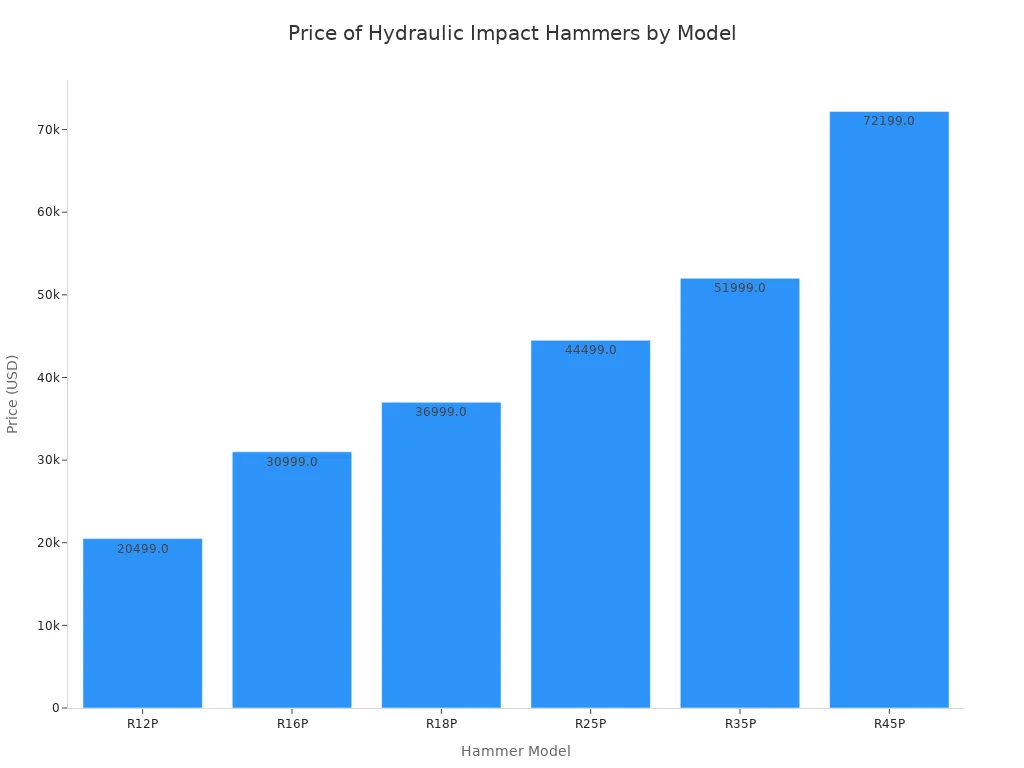
Note: These figures illustrate that acquiring a powerful hammer can easily cost tens of thousands of dollars, making it a decision that requires careful financial planning.
Fortunately, various financing solutions can make this investment more manageable. Businesses can explore several options to acquire equipment without a massive upfront cash outlay.
- Equipment Leasing (including lease-to-own options)
- Financing for Used Equipment or Private Sales
- Sale Leaseback programs to generate working capital
- Small Business Loans
These financing avenues, often available for both new and used equipment, provide flexibility for companies to obtain the tools they need to grow.
Ongoing Maintenance and Repair Costs
The costs of ownership do not end after the initial purchase. Hydraulic hammers are high-impact tools that require consistent maintenance to ensure performance and longevity. Neglecting this upkeep can lead to costly breakdowns and significant project delays. A disciplined maintenance schedule is essential.
Operators and technicians should follow a structured inspection routine:
- Daily Inspections: Before each use, operators must check for hydraulic leaks, damaged parts, and loose fasteners.
- Weekly Checks: Technicians should inspect tool retainers and bushings for wear and grind any burrs off the tool steel. This process typically takes 15-30 minutes.
- Regular Greasing: Manual greasing is necessary every two hours of operation to prevent friction and wear.
- Bushing Replacement: Operators must replace tool bushings once the grease grooves wear out to protect the hammer's core components.
- Technician Inspection: A qualified technician should perform a thorough inspection every 11-15 months, depending on usage, to reseal the hammer and replace wear items.
Beyond routine maintenance, parts will eventually need replacement. The cost of these components adds to the total cost of ownership. Common replacement parts and their potential costs include:
- Hydraulic Seal Kits: ~$80 - $260
- Hammer Pins: ~$50
- Hammer Frame Assemblies: ~$700+
- Full Hammer Drill Units: ~$4,000+
Budgeting for these inevitable repairs is a critical part of a realistic financial plan.
The Need for Skilled Operators
A hydraulic hammer is only as effective as the person operating it. Improper use not only reduces productivity but also poses serious safety risks and can cause premature damage to the hammer and the carrier machine. Therefore, companies must invest in hiring or training skilled operators.
Only trained and certified personnel should operate a Hydraulic Pile Driving Rig or a carrier-mounted hammer. Proper training ensures operators understand the equipment's capabilities, limitations, and safety protocols. Key areas covered in comprehensive training programs include:
- Equipment Overview: Understanding the hammer's components, functions, and safety features.
- Tool Selection: Choosing the right tool for the material and job conditions.
- Operating Techniques: Learning correct positioning, impact force control, and how to avoid common errors like blank firing.
- Maintenance and Troubleshooting: Knowing how to perform daily checks, lubrication, and basic problem-solving.
- Safety Procedures: Following protocols for personal protective equipment (PPE) and hazard identification.
Businesses can access training through manufacturer programs, third-party certification courses, or structured on-the-job training with experienced supervisors. The cost of this training, along with the higher wages that skilled operators command, is another essential financial consideration.
Comparing Hammers: Hydraulic Pile Driving Rig vs. Other Methods
Choosing the right equipment involves comparing performance, safety, and environmental impact. Hydraulic hammers present distinct advantages over older technologies and manual labor.
Performance Against Diesel Hammers
Hydraulic hammers offer superior energy transfer. They convert 70% to 95% of their energy into impact force. Diesel hammers, in contrast, only achieve 20% to 30% efficiency. While some diesel hammers provide a high blow rate in dense soil, a Hydraulic Pile Driving Rig allows operators to adjust the impact energy. This control makes them versatile for different ground conditions. Single-acting hydraulic models use a heavy hammer for greater penetration, while double-acting models use higher speed for driving steel piles effectively.
Advantages Over Traditional Breaking
Hydraulic hammers significantly improve worksite safety compared to manual methods. Traditional tools often cause repetitive strain injuries and physical ailments from prolonged use.
- The hydraulic system reduces the physical strain on workers.
- Operators can work longer without fatigue.
- Mounting the hammer on an excavator eliminates the intense manual labor of demolition, decreasing injury risks.
This shift from manual effort to machine power creates a safer and more productive environment.
Environmental and Noise Considerations
A modern Hydraulic Pile Driving Rig is engineered for work in sensitive areas. These machines comply with strict environmental regulations. They produce less noise and vibration than older equipment. Many rigs also use Tier 4 engines to reduce harmful emissions, a crucial feature for urban projects.
| Feature | Hydraulic Hammer |
|---|---|
| Noise | Low noise |
| Emissions | No black smoke, low emissions |
| Vibration | Low vibration |
| Environmental Impact | Environmentally friendly |
Many systems can also operate with biodegradable fluids. This feature minimizes soil and water contamination in case of a leak.
Calculating Your Return on Investment (ROI)
A hydraulic hammer's true value emerges when businesses analyze its return on investment. The high initial cost is offset by significant gains in speed, cost reduction, and the ability to secure more lucrative contracts. A careful assessment reveals how this equipment can drive profitability.
Faster Job Completion
Speed is a primary driver of ROI. Hydraulic hammers dramatically accelerate project timelines compared to traditional methods. This efficiency allows companies to complete more jobs in less time.
- Industry reports show that hydraulic breakers can speed up excavation tasks by 25% to 30%.
- Some infrastructure and mining projects have seen productivity increases of 40% to 50%, leading to early completion.
The productivity difference is stark when compared to manual labor.
| Demolition Method | Productivity (cubic yards per hour) |
|---|---|
| Hydraulic Breaker | 15-25 |
| Manual Tools | 2-4 |
Reduced Labor and Equipment Costs
Owning a hydraulic hammer reduces ongoing operational expenses. It eliminates the recurring costs and logistical headaches of renting specialized equipment. Ownership guarantees the tool is always available, preventing costly delays while waiting for rental deliveries. This constant readiness keeps crews productive and on schedule. Over time, the savings from avoided rental fees make the initial purchase a more economical choice for businesses with frequent demolition or excavation needs.
Taking on More Profitable Projects
Acquiring a powerful hydraulic hammer opens the door to larger, more profitable projects. Companies can expand their service offerings and compete for high-value contracts that were previously out of reach. This capability allows businesses to take on specialized work, including:
- Foundation construction for high-rise buildings and industrial sites.
- Bridge and road infrastructure development.
- Marine and harbor construction for docks and offshore platforms.
- Large-scale energy projects like wind farms.
This expanded scope directly translates to increased revenue and business growth.
A hydraulic impact hammer is a powerful investment for high-volume work, delivering returns through superior productivity. For sporadic or light-duty tasks, renting offers a more cost-effective strategy. Ultimately, a business must evaluate its project frequency, scale, and long-term goals to determine if the purchase is a smart financial move.