Solving Metal-Rubber Bonding Issues with HTPB
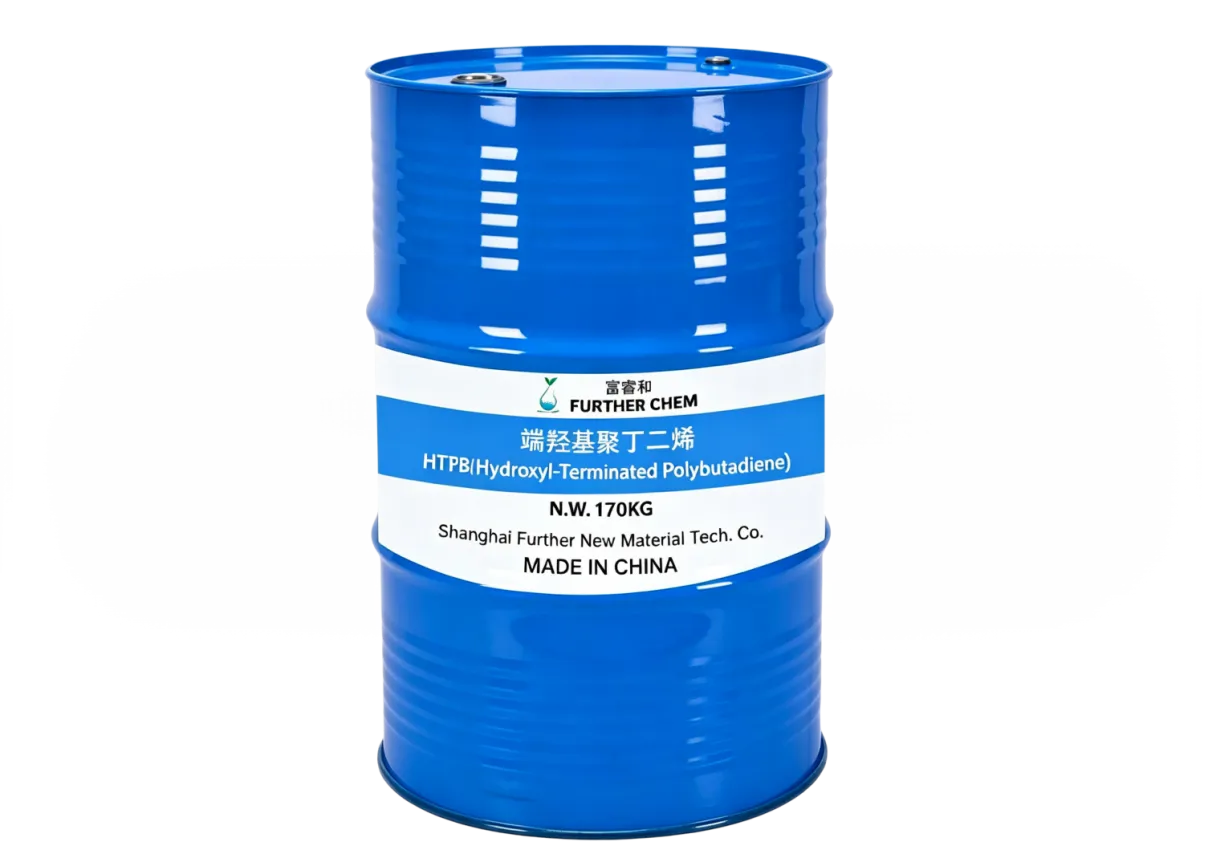
You can eliminate rubber delamination from metal with HTPB-based adhesives. The root cause: high-surface-energy metals and low-surface-energy elastomers do not wet or bond chemically. HTPB forms a chemical bridge. It creates covalent bonds with metal and interpenetrating networks in rubber. Application of Hydroxyl‑Terminated Polybutadiene (HTPB) solves the fundamental chemistry, not just surface treatment.
Key Takeaways
- HTPB creates a chemical bridge between metal and rubber. It solves the surface energy mismatch with covalent bonds.
- Surface preparation, correct mixing, and controlled curing unlock HTPB's full bonding power.
- HTPB bonds resist moisture, heat, and thermal cycling. They outlast conventional adhesives.
Why Metal-Rubber Bonds Fail and How HTPB Fixes the Chemistry
The Surface Energy Mismatch Problem
You face a fundamental physics problem when you bond rubber to metal. Metals possess high surface energy. Rubber possesses low surface energy. These two materials repel each other at the molecular level. Think of water on a waxed car hood. The water beads up instead of spreading. That same phenomenon occurs when you try to bond rubber to metal. The rubber cannot wet the metal surface. Without wetting, you get no intimate contact. Without intimate contact, you get no adhesion.
Surface energy determines how well a liquid spreads across a solid. High-energy surfaces attract liquids. Low-energy surfaces reject them. Your metal substrate, whether steel, aluminum, or titanium, has high surface energy. Your rubber compound has low surface energy. This mismatch creates a thermodynamic barrier. The rubber molecules simply do not want to interact with the metal atoms. You can clean the metal perfectly. You can roughen it with abrasives. You can apply primers and adhesion promoters. The fundamental mismatch remains. Any bond you achieve relies on weak secondary forces. These forces fail under mechanical stress, heat, or moisture.
The surface energy mismatch is not a surface problem. It is a chemistry problem. You cannot solve it with surface preparation alone.
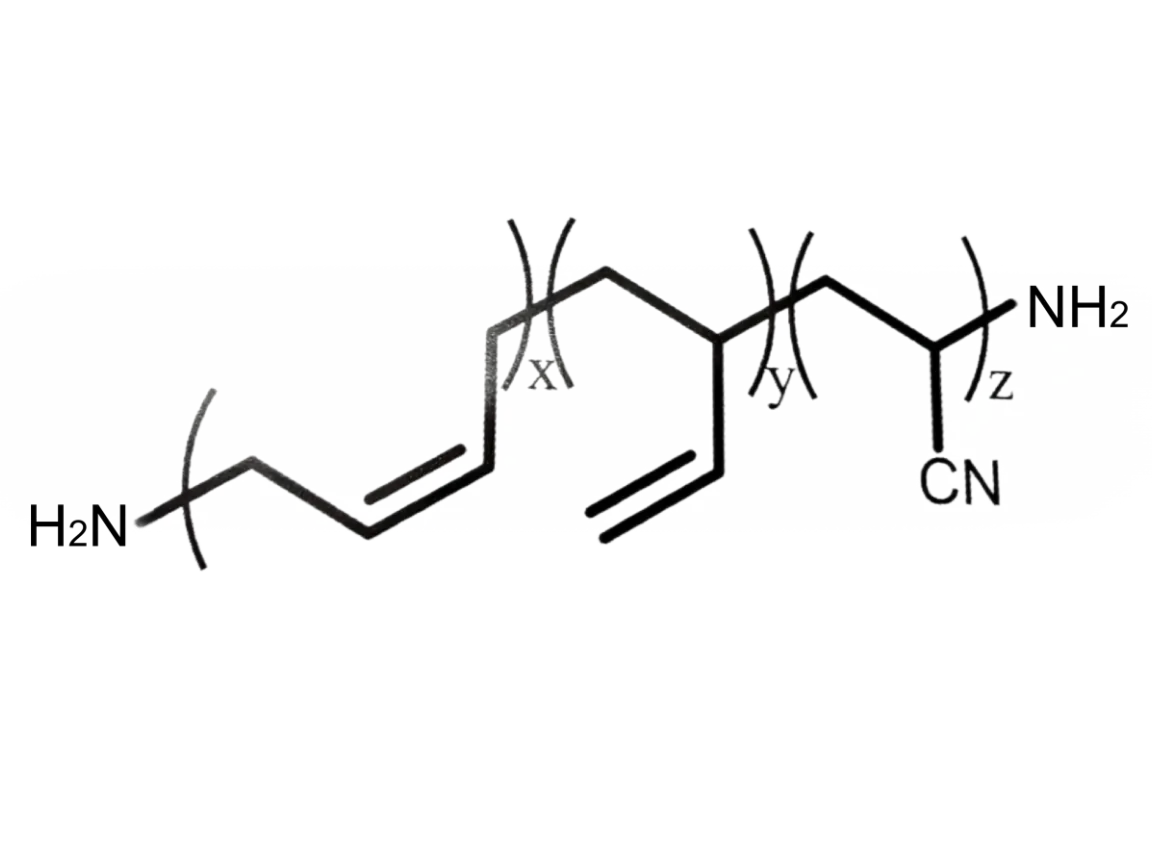
HTPB's Dual-Functionality: Hydroxyl Groups and Olefinic Backbone
HTPB solves this mismatch because it speaks both chemical languages. The molecule contains two distinct functional regions. Each region targets one side of the bond. This dual-functionality makes HTPB a true chemical bridge.
The hydroxyl groups (-OH) sit at both ends of the HTPB chain. These groups react readily with metal surfaces. They form strong covalent bonds with metal oxides and hydroxides. You get a chemical attachment, not just physical contact. The hydroxyl groups react with isocyanates too. This reaction forms urethane linkages. These linkages anchor the adhesive layer firmly to the metal substrate.
The olefinic backbone forms the second functional region. This polybutadiene chain contains carbon-carbon double bonds throughout its length. These double bonds interact strongly with unsaturated rubber compounds. The rubber matrix and the HTPB backbone co-vulcanize during curing. They form a crosslinked network. This network creates an interpenetrating polymer structure. The rubber molecules thread through the HTPB network. The HTPB molecules thread through the rubber network. You cannot separate them without breaking chemical bonds.
Creating a Chemical Interphase, Not Just a Mechanical Lock
Traditional bonding methods rely on mechanical interlocking. You roughen the metal surface. The rubber flows into the microscopic valleys. The rubber solidifies and locks into place. This approach works initially. It fails over time. Thermal cycling causes differential expansion. The metal expands at one rate. The rubber expands at another rate. The mechanical lock loosens. Moisture penetrates the interface. Corrosion begins. The bond deteriorates.
HTPB creates something different. It forms a chemical interphase. This interphase is a distinct region between the metal and the rubber. It has its own properties. It absorbs mechanical stress. It distributes load across a wider area. It accommodates differential thermal expansion without failure.
The chemical interphase performs three critical functions. First, it provides primary chemical bonds to the metal surface. These bonds resist hydrolysis and corrosion. Second, it provides covalent crosslinks into the rubber matrix. These crosslinks transfer stress effectively. Third, it acts as a stress-relief layer. This layer has intermediate modulus between metal and rubber. It smooths the transition from rigid metal to flexible rubber.
You get a graded interface instead of a sharp boundary. The properties change gradually from metal-like to rubber-like. This gradient eliminates stress concentrations. Stress concentrations cause crack initiation. Crack initiation causes bond failure. The chemical interphase prevents this failure mechanism entirely.
The result is a bond that survives what destroys conventional adhesives. You get peel strength that exceeds the tear strength of the rubber itself. You get resistance to hot water, steam, and chemical attack. You get low-temperature flexibility down to -60°C without embrittlement. The bond does not just stick. It becomes part of the material system.
Application of Hydroxyl‑Terminated Polybutadiene (HTPB) in Metal-Rubber Bonding
You now understand the chemistry behind HTPB. The next step is putting that chemistry to work. The Application of Hydroxyl‑Terminated Polybutadiene (HTPB in metal-rubber bonding requires a systematic approach. You must prepare the surface, mix the adhesive correctly, and control the curing process. Each step affects the final bond strength. Skipping any step leads to failure.
Surface Preparation: The Non-Negotiable First Step
You cannot skip surface preparation. The metal surface must be clean and chemically active. Dirt, oil, and oxide layers block the hydroxyl groups from reaching the metal atoms. Without direct contact, no covalent bonds form.
Start with degreasing. Use a solvent like acetone or isopropyl alcohol. Wipe the metal surface until no residue remains. Next, remove the existing oxide layer. You can do this with mechanical abrasion. Grit blasting with aluminum oxide works well. The abrasion creates a fresh, active surface. It also increases surface area. More surface area means more bonding sites for the HTPB molecules.
You may also use chemical etching. Acid etchants remove stubborn oxides and create a uniform surface chemistry. This step is especially important for aluminum and titanium alloys. Follow the etching with a thorough water rinse. Dry the metal immediately. Do not let the surface reoxidize or collect moisture.
The Application of Hydroxyl‑Terminated Polybutadiene (HTPB in metal-rubber bonding demands a surface that is both clean and reactive. You cannot achieve this with wiping alone. You must remove the passive layer. Once prepared, apply the adhesive within a few hours. Delay allows contamination to rebuild.
Mixing and Applying HTPB-Based Adhesives
You must mix the HTPB adhesive correctly. The formulation includes several components. Each component serves a specific purpose. The table below shows the recommended procedures for industrial bonding.
| Aspect | Recommendation |
|---|---|
| Viscosity selection | Lower viscosity grades ease mixing and spreading. Higher viscosity grades increase bond strength. |
| Mixing procedure | Mix HTPB with plasticizer and catalyst in a planetary or sigma-blade mixer at about 60°C. Add fillers slowly over 2 to 4 hours under vacuum. |
| Curing agent addition | Add isophorone diisocyanate (IPDI) at 50 to 60°C. Mix for 15 to 30 minutes. |
| Curing conditions | Cast into molds and cure at 60°C for 5 to 7 days. |
| Post-curing | Maintain at 50°C for an additional 1 to 2 weeks. This completes cross-linking and relieves internal stress. |
Start with a lower viscosity grade of HTPB if you need to coat complex shapes. The lower viscosity spreads easily into corners and crevices. Use a higher viscosity grade when you need maximum peel strength. You can blend grades to achieve the right balance.
Mix the components under vacuum. This removes trapped air bubbles. Air bubbles create weak points in the adhesive layer. Use a planetary mixer for small batches. Use a sigma-blade mixer for larger quantities. Keep the temperature at 60°C during mixing. Higher temperatures speed up the reaction too early. Lower temperatures make the mixture too thick.
Add the curing agent last. Isophorone diisocyanate (IPDI) reacts with the hydroxyl groups. Mix for 15 to 30 minutes. You should see a uniform, bubble-free mixture. Apply the adhesive immediately after mixing. Use a brush, roller, or spray gun. The Application of Hydroxyl‑Terminated Polybutadiene (HTPB in metal-rubber bonding works best with a thin, even coat. Apply the rubber compound before the adhesive gels.
Curing Dynamics and Bond Strength Development
Curing is the most critical step. The chemical reactions between HTPB, the curing agent, and the rubber matrix determine the final bond strength. The curing temperature and time directly control the reaction rate.
The table below shows how temperature affects curing time.
| Curing Temperature (K) | Curing Time (min) |
|---|---|
| 323.15 | 3618 |
| 333.15 | 1243 |
| 348.15 | 473 |
Raising the temperature from 323.15 K to 348.15 K reduces the curing time by about 87 percent. The reaction completes in under 8 hours at the higher temperature. A more complete cure leads to stronger bonds. You must balance speed with control. Too high a temperature can cause the reaction to run away. The adhesive may cure before the rubber compound contacts the metal.
The curing process follows a two-stage mechanism. Understanding this mechanism helps you control the outcome.
- The curing reaction begins with a rapid viscosity increase. This stage builds the initial network structure.
- The final stage completes cross-linking. The viscosity rises sharply at the end. This sharp rise contributes to a tougher and stronger final adhesive product.
You can adjust the curing time and temperature by changing the type and amount of curing agent. A faster curing agent reduces process time. A slower curing agent gives you more working time. The Application of Hydroxyl‑Terminated Polybutadiene (HTPB in metal-rubber bonding requires you to match the curing schedule to your production line.
Post-curing is equally important. After the main cure, keep the bonded assembly at 50°C for one to two weeks. This step completes the cross-linking reactions. It also relieves internal stresses. Internal stresses can weaken the bond over time. A proper post-cure ensures the bond reaches its full strength.
The Application of Hydroxyl‑Terminated Polybutadiene (HTPB in metal-rubber bonding gives you control over the final properties. You can tailor the cure schedule to your specific metal and rubber combination. The result is a bond that withstands mechanical stress, thermal cycling, and environmental exposure.
Troubleshooting Common Bond Failures with HTPB Systems
Diagnosing Adhesion Failures: Cohesive vs. Adhesive Breaks
You inspect a failed bond. The first question you ask: where did the break occur? An adhesive break means the bond separated cleanly from the metal surface. The rubber pulled away completely. A cohesive break means the rubber tore within itself. You see rubber residue left on the metal. Cohesive failure indicates your HTPB system worked correctly. The bond held stronger than the rubber material itself. Adhesive failure points to a problem at the interface.
You need proper diagnostic tools to identify the root cause. Visual inspection reveals fish-eyes or trapped air bubbles. These circular patterns show where the adhesive pulled away. FTIR spectroscopy detects microscopic contaminants like silicones or oils on the failure surface. SEM/EDX analysis identifies the elemental composition of those contaminants. For thermal-cure systems, thermocouple verification confirms the bond line reached the required temperature. The table below summarizes these techniques.
| Diagnostic Technique | Purpose | Specific Indicators Detected |
|---|---|---|
| Visual & Microscopic Inspection | Initial examination of failed surfaces | Fish-eyes, trapped air bubbles |
| FTIR Spectroscopy | Identify microscopic contaminants | Silicones, oils, oxidation |
| SEM/EDX Analysis | Identify contaminant composition | Elemental makeup of residues |
| Thermocouple Verification | Confirm bond line temperature | Temperature profile at bond line |
Environmental Stress Factors and HTPB's Resistance Profile
You expose bonded assemblies to harsh conditions. Moisture attacks the interface. Heat accelerates chemical degradation. HTPB resists hydrolysis exceptionally well. Its polybutadiene backbone contains no ester or ether linkages. These groups typically break down in water. HTPB's double bonds remain stable in humid environments. You get reliable performance in hot water, steam, and chemical exposure.
Temperature extremes test your bond. HTPB maintains flexibility down to -60°C. It does not embrittle or crack. At high temperatures, the crosslinked network holds its integrity. You avoid the differential expansion problems that destroy mechanical locks. The chemical interphase absorbs thermal stress. Your bond survives thermal cycling without delamination.
Optimizing HTPB Formulations for Specific Metal-Rubber Combinations
You match your HTPB formulation to your specific materials. Different metals present different surface chemistries. Steel requires a different approach than aluminum or titanium. Your rubber compound's polarity and unsaturation level also matter. Higher unsaturation in the rubber means better co-vulcanization with HTPB's olefinic backbone.
You adjust hydroxyl value and molecular weight to fine-tune performance. Lower molecular weight grades penetrate porous surfaces better. Higher molecular weight grades deliver greater peel strength. You can blend grades to balance processability and bond strength. You also select the appropriate curing agent. IPDI offers good pot life. TDI reacts faster. DDI provides superior flexibility. Theorem Chem offers six standard grades plus custom options. You can request mono-functional, hydrogenated, or epoxidized variants. Consult with their specialists to formulate the optimal system for your production line.
HTPB creates a chemically compatible interphase that absorbs stress, resists hydrolysis, and maintains bond integrity. You gain superior peel strength, heat and moisture resistance, and low-temperature flexibility. This system reduces scrap rates, extends product life, and lowers manufacturing costs. Consult Theorem Chem's adhesive specialists to formulate a customized HTPB system for your specific metal and rubber requirements.
FAQ
How long does an HTPB bond last in outdoor applications?
HTPB bonds resist hydrolysis, UV exposure, and temperature swings. You can expect reliable performance for 10 to 15 years in most outdoor environments. Proper surface preparation extends this lifespan further.
Can I apply HTPB adhesive to already-vulcanized rubber?
Yes. You can bond HTPB to cured rubber surfaces. Roughen the rubber surface first. Clean it thoroughly. Then apply the HTPB adhesive and cure at elevated temperature for maximum bond strength.
What is the maximum service temperature for HTPB bonds?
HTPB bonds maintain integrity up to 120°C continuously. Short-term exposure to 150°C is acceptable. Beyond these limits, you should consider alternative adhesive systems for your application.
See Also
Discover How WT20 Thoriated Tungsten Electrodes Enhance TIG Welding
Unexpected Methods For Fixing Sulfur Recovery Catalyst Issues
Micro-Channel Tech Boosts Hydrogen Fuel Cell Heat Exchangers
Steel Processing For Heat Exchangers Consistently Yields Positive Outcomes