HTPB-Based Polyurethane Elastomers for Automotive Applications
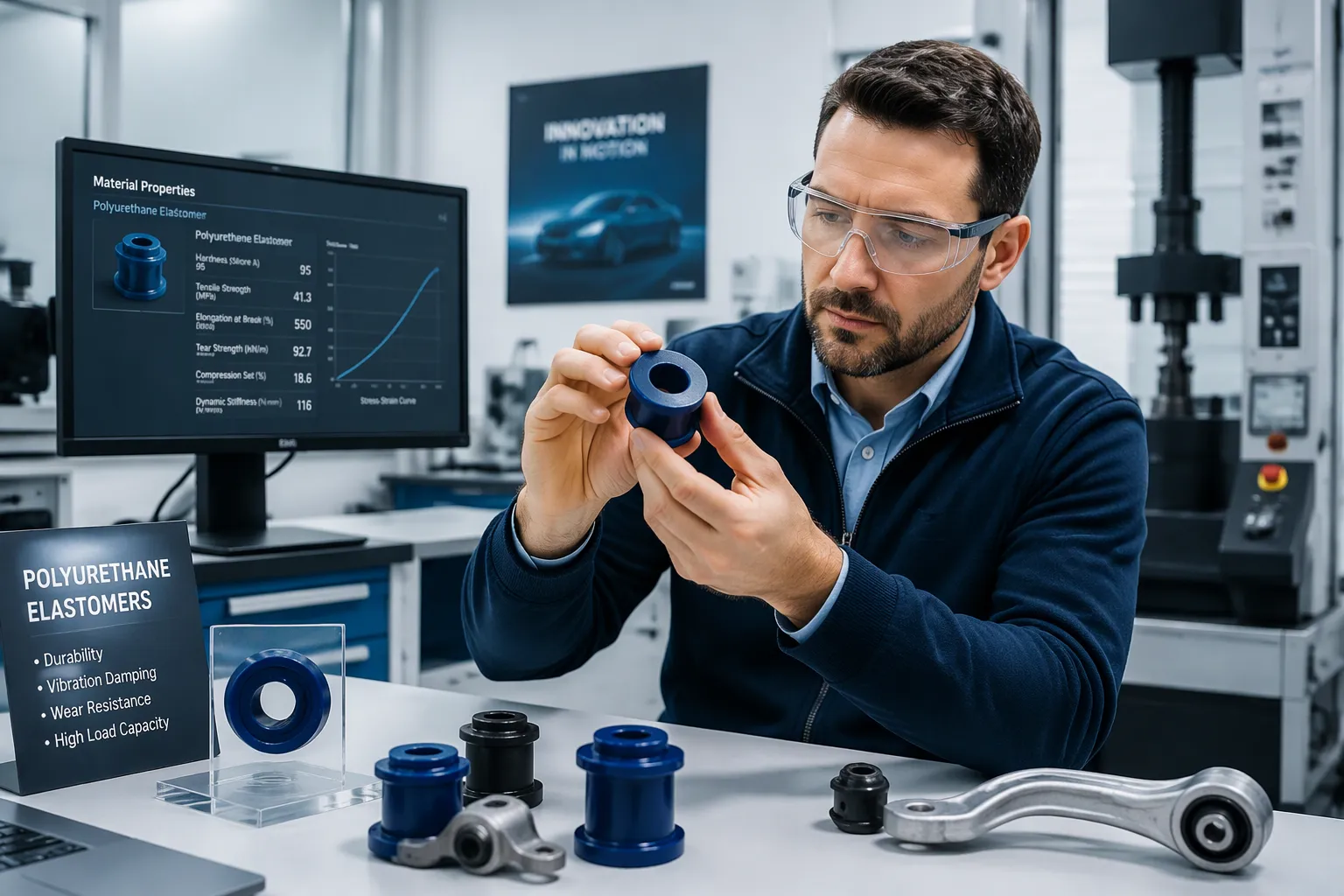
HTPB carries a hydrocarbon backbone. This structure makes its polyurethanes inherently hydrophobic. The material delivers hydrolytic stability that polyether and polyester systems cannot match in humid or wet service environments. Terminal hydroxyl functionality enables tunable crosslink density. Formulators gain elastomers with excellent low-temperature flexibility and rebound for dynamic automotive components. The application of HTPB (Hydroxyl-Terminated Polybutadiene) in automotive polyurethane materials and elastomers also brings resistance to hydrolysis, acids, and bases. Mechanical integrity holds across wide temperature ranges. These combined attributes translate into longer service life, fewer field failures, and reduced warranty exposure for demanding automotive applications.
Key Takeaways
- HTPB polyurethane resists water damage better than other types, keeping parts strong in wet conditions.
- HTPB stays flexible in cold weather, so parts like bushings and seals work well in winter.
- HTPB handles repeated flexing and heat, making it last longer in dynamic automotive parts.
- Choose HTPB for wet, cold, or high-flex applications; polyether and polyester work better in dry or oil-exposed parts.
- Control moisture and the NCO:OH ratio during processing to ensure proper curing and performance.
Application of HTPB in Automotive Polyurethane Materials and Elastomers
The application of HTPB (Hydroxyl-Terminated Polybutadiene) in automotive polyurethane materials and elastomers rests on three performance pillars. The first pillar is mechanical toughness. The second pillar is resistance to water-driven degradation. The third pillar is flexibility that survives cold service and repeated flexing. Each pillar maps to a specific demand inside a vehicle. Engineers who understand these pillars can predict how an HTPB system will behave before the first prototype part reaches the test rig.
Mechanical Properties and Tear Resistance
HTPB polyurethanes combine high elongation with useful tensile strength. The hydrocarbon soft segment gives the network a rubbery character. Chain extension and crosslinking then lock that rubbery character into a stable three-dimensional structure. The result is a material that stretches far before it breaks and absorbs energy without cracking.
The U.S. Environmental Protection Agency HERO database lists representative mechanical values for HTPB-based polyurethane elastomers. Tensile strength reaches 1.84 MPa. Elongation at break reaches 721%. These numbers describe a soft, highly extensible elastomer rather than a rigid plastic. That profile suits dynamic parts such as bushings, mounts, and flexible seals.
| Property | Value |
|---|---|
| Tensile strength | 1.84 MPa |
| Elongation at break | 721% |
Tear resistance follows from the same network design. A propagating crack must rupture many polymer chains before it advances. Long chains with moderate crosslink density distribute stress across a wide volume of material. Formulators raise tear strength by adjusting the NCO:OH ratio, the chain extender, and the filler package. High elongation supports this behavior. A part that deforms locally without fracturing resists tear initiation and slows tear growth.
The application of HTPB (Hydroxyl-Terminated Polybutadiene) in automotive polyurethane materials and elastomers therefore favors components that flex millions of times. A brittle material fails early in these roles. An HTPB elastomer keeps its shape and its load-bearing capacity through repeated strain cycles.
Hydrolytic Stability in Humid and Wet Environments
Water attacks polyurethane soft segments at their weakest chemical links. Polyether systems contain ether linkages. Polyester systems contain ester groups. Both groups react with water over time, and the reaction cuts polymer chains. HTPB carries neither group. Its soft segment is a pure hydrocarbon chain, so water has no chemical handle to grab.
PatSnap Eureka summarizes the practical difference in a direct comparison. HTPB-based polyurethane retains more than 90% of its initial tensile strength after 1,000 hours in 70°C water. Polyether-based polyurethane loses 30–50% of its strength under the same exposure. The same source reports elongation loss after oxidative aging at 100°C in air for 500 hours. HTPB systems lose less than 15%. Polyether systems lose more than 40%.
| Property / Condition | Polybutadiene (HTPB)-based Polyurethane | Polyether-based Polyurethane | Polyester-based Polyurethane |
|---|---|---|---|
| Hydrolytic/oxidative resistance | Superior resistance to hydrolytic and oxidative degradation; soft segment lacks vulnerable —CH₂—O— ether linkages or ester groups | Contains vulnerable —CH₂—O— ether linkages susceptible to hydrolysis and oxidation | Contains ester groups susceptible to hydrolysis and oxidation |
| Tensile strength retention after 1,000 hours in 70°C water | >90% of initial tensile strength retained | 30-50% strength loss | Not specified |
| Elongation reduction after oxidative aging at 100°C in air for 500 hours | <15% reduction | >40% reduction | Not specified |
Resin Solutions makes a related point about its polybutadiene polyol product line. The company states that its Poly bd resins outperform conventional polyether and polyester polyols in applications where toughness matters. The same source credits superior hydrolytic stability, chemical resistance, and low moisture vapor transmission as the foundation for high-performance adhesives, sealants, coatings, and encapsulants across construction, automotive, electronics, and energy markets.
Poly bd® resins outperform conventional polyether and polyester polyols in applications where toughness matters. Superior hydrolytic stability, chemical resistance, and low moisture vapor transmission make them the foundation for high-performance adhesives, sealants, coatings, and encapsulants across construction, automotive, electronics, and energy markets.
This chemistry matters in real vehicle service. Underbody parts see road spray, salt brine, and steam cleaning. Engine-bay components see humid air and temperature cycling. An HTPB elastomer holds its properties in these conditions. A part keeps its sealing force, its damping behavior, and its dimensional fit. The application of HTPB (Hydroxyl-Terminated Polybutadiene) in automotive polyurethane materials and elastomers thus reduces field failures tied to water uptake.
Low-Temperature Flexibility and Rebound
Cold weather stiffens most polymers. Chains lose mobility, and the material approaches its glass transition. A part that turns glassy in winter stops sealing, stops damping, and starts cracking. HTPB networks resist this problem because their hydrocarbon backbone stays mobile at low temperature.
A study in the PMC open-access literature reports thermal transitions for HTPB-based polyurethane networks. Differential scanning calorimetry gives glass transition values of 9.0 to 13.5°C for the HTPB-PUv series, and the value rises as the BDB content increases from 30% to 60%. The same study reports a topology freezing transition temperature of −105°C, extrapolated from an Arrhenius fit to a relaxation time of 4.2 × 10⁵ s. That low value shows that the network keeps segmental mobility far below the glass transition of the soft phase.
| Parameter | Value | Method/Note |
|---|---|---|
| Tg of HTPB-PUv series | 9.0 to 13.5 °C | DSC; increases with BDB content from 30 to 60% |
| Tg of 55%-HTPB-PUv | 54 °C | tan δ plot |
| Tg of 55%-HTPB-PUv | 12 °C | DSC results |
| Tv (topology freezing transition temperature) | −105 °C | extrapolated from Arrhenius' fitted line to relaxation time τ = 4.2 × 10⁵ s |
Rebound ties directly to this mobility. A rubbery network returns stored energy when a load releases. HTPB elastomers show lively rebound across a broad temperature band. Suspension bushings use this behavior to isolate road inputs. Mounts use it to damp vibration without turning rigid in cold climates. Seal lips use it to follow surface motion and maintain contact pressure.
Formulators tune the low-temperature profile through soft segment content, crosslink density, and plasticizer choice. A higher hydrocarbon content pushes flexibility lower. A tighter network raises strength at the cost of some rebound. The application of HTPB (Hydroxyl-Terminated Polybutadiene) in automotive polyurethane materials and elastomers gives engineers a wide formulation window. They can balance cold flexibility against load capacity for each part.
Dynamic Performance and Fatigue Life
Automotive parts rarely see a single load. They see millions of small loads. A suspension bushing flexes with every bump. A seal lip moves with every door cycle or shaft rotation. Fatigue life decides whether these parts survive the warranty period. HTPB elastomers perform well in this regime because their network structure spreads stress and resists crack growth.
Fatigue failure in elastomers follows a predictable path. A small flaw opens under strain. The crack tip concentrates stress. The crack grows a little with each cycle. The part finally tears apart. HTPB networks slow every step of this path. Long hydrocarbon chains distribute strain across a wide volume. Moderate crosslink density lets the network deform without overstressing any single chain. High elongation at break gives the material room to stretch before a crack can run.
Heat build-up is the hidden enemy of dynamic parts. Every flex cycle converts some mechanical energy into heat. A material with high hysteresis turns more energy into heat. The part then runs hotter than its surroundings. Heat accelerates aging and softens the material. HTPB systems show low hysteresis in dynamic service. The hydrocarbon soft segment stores and releases energy efficiently. A bushing or mount therefore runs cooler under repeated load. Cooler running translates into longer service life.
Fatigue life depends on formulation as much as on base chemistry. The NCO:OH ratio sets crosslink density. A tight network raises strength and cut-growth resistance. An overly tight network, however, reduces elongation and raises hysteresis. Formulators balance these effects for each part. Chain extenders and fillers also shift the fatigue profile. Carbon black and other reinforcing fillers raise tear strength and slow crack growth. The right filler package extends fatigue life without sacrificing rebound.
| Formulation Lever | Effect on Fatigue Life | Trade-Off |
|---|---|---|
| Higher NCO:OH ratio | Raises crosslink density and cut-growth resistance | Lowers elongation and raises hysteresis |
| Lower NCO:OH ratio | Raises elongation and lowers heat build-up | Reduces tensile strength and tear resistance |
| Reinforcing filler | Slows crack growth and raises tear strength | Can raise hysteresis at high loading |
| Plasticizer addition | Improves low-temperature flex and lowers modulus | May reduce tensile strength |
Test data support this picture. Dynamic mechanical analysis shows stable storage modulus across a broad temperature band for HTPB networks. Repeated flex testing shows slow crack growth compared with brittle systems. The application of HTPB (Hydroxyl-Terminated Polybutadiene) in automotive polyurethane materials and elastomers therefore targets parts with high cycle counts. Engine mounts, sway bar bushings, and driveline couplings all fall into this group.
A dynamic part fails when heat, crack growth, and strain concentration act together. HTPB chemistry addresses all three at once.
Designers also gain freedom from the wide formulation window. They can tune hardness, modulus, and damping to match a target frequency. A soft compound isolates low-frequency road inputs. A firmer compound controls high-frequency vibration. Both options keep good fatigue life when the network is balanced. The application of HTPB (Hydroxyl-Terminated Polybutadiene) in automotive polyurethane materials and elastomers thus supports a family of parts rather than a single product.
Field performance confirms the laboratory picture. Parts made from HTPB systems keep their shape and load capacity after long service. They resist the combined attack of flexing, heat, and moisture. That combination is exactly what underbody and engine-bay components face. Engineers who model fatigue life should include moisture and temperature in their test plan. HTPB systems hold their properties under both stresses. This durability reduces field failures and warranty claims over the vehicle life.
Application Fit Across Vehicle Systems
Each vehicle system places its own demands on an elastomer. A suspension bushing lives under constant flex and road shock. A door seal faces rain, ozone, and repeated compression. A bed liner takes impacts, chemicals, and sunlight. HTPB chemistry fits some of these roles better than others. This section maps the material to specific vehicle systems and shows where it delivers the most value.
Suspension Bushings and Mounts
Suspension bushings and mounts carry dynamic loads for the life of the vehicle. A bushing flexes with every road input. A mount isolates engine vibration across the full temperature range. These parts need high fatigue life, stable rebound, and low heat build-up. HTPB elastomers meet all three demands.
The hydrocarbon soft segment gives HTPB polyurethane its lively rebound. A bushing made from this material returns energy efficiently after each deflection. The part keeps its shape and its load-bearing capacity through millions of cycles. Low hysteresis keeps the part cooler under repeated flex. Cooler running slows aging and extends service life.
Cold weather separates good bushings from poor ones. A material that turns glassy in winter stops isolating road inputs. HTPB networks keep segmental mobility far below the glass transition of the soft phase. A bushing therefore stays flexible in subzero service. Drivers feel less harshness, and the part resists cracking at low temperature.
Formulators tune each bushing compound to its target stiffness. A soft compound isolates low-frequency road inputs. A firmer compound controls high-frequency vibration. The NCO:OH ratio sets crosslink density and balances strength against elongation. Chain extenders and fillers shift the fatigue profile. This wide formulation window lets one base chemistry serve many bushing designs.
Engine mounts add another requirement. They must damp vibration without transmitting it into the cabin. HTPB systems offer tunable damping through formulation. A mount can target a specific frequency band and hold that performance across temperature. The part keeps its damping behavior in hot engine bays and cold winter starts.
Field performance confirms the laboratory picture. HTPB bushings and mounts resist the combined attack of flexing, heat, and moisture. Underbody parts see road spray and salt brine. Engine-bay parts see humid air and temperature cycling. The hydrocarbon backbone shrugs off water attack. Parts keep their sealing force, damping behavior, and dimensional fit over long service.
Seals, Gaskets, and Weatherstripping
Seals, gaskets, and weatherstripping protect the vehicle from water, dust, noise, and temperature. These parts fail in predictable ways. PatSnap Eureka lists the main failure modes for automotive seals and weatherstripping. Ozone cracking attacks polymer chain unsaturation. Compression set causes permanent deformation after sustained compressive load. Thermal-oxidative aging breaks polymer chains and changes strength and stiffness. Dynamic fatigue, wear, and tensile strength limits also shorten seal life.
| Category | Item | Detail |
|---|---|---|
| Failure mode | Ozone cracking | Ozone attacks polymer chain unsaturation preferentially; saturated main chains resist ozone-induced cracking |
| Failure mode | Compression set | Permanent deformation after sustained compressive load — the single most critical long-term sealing parameter; at elevated temperatures (>100°C), labile S–S bonds in sulfur-cured systems break, causing stress relaxation and high compression set |
| Failure mode | Thermal-oxidative aging | Prolonged exposure to elevated temperatures and oxygen leads to polymer chain breaking and crosslinking, substantially affecting strength, stiffness, toughness, and modulus properties |
| Failure mode | Dynamic fatigue | Relatively poor dynamic fatigue resistance under repeated stress forces and dynamic loading conditions |
| Failure mode | Wear | Relatively poor wear resistance under repeated stress forces and dynamic loading conditions |
| Failure mode | Tensile strength limitations | Relatively poor tensile strength under repeated stress forces and dynamic loading conditions |
| Performance criterion | Weathering resistance | Critical |
| Performance criterion | Compression set | Critical |
| Performance criterion | Thermal compatibility | Critical |
| Performance criterion | Coolant resistance | High |
| Performance criterion | Electrical insulation | High |
| Performance criterion | Thermal cycling | −40°C to +130°C, rapid |
| Performance criterion | Coolant circuit seals | glycol/water, 50:50 |
HTPB chemistry addresses several of these failure modes. The saturated hydrocarbon backbone resists ozone attack. Water cannot break the soft segment, so hydrolytic degradation does not cut chains. Good rebound helps the seal follow surface motion and maintain contact pressure. These traits suit weatherstripping, gaskets, and seals that face wet and dynamic service.
Seal design also depends on hardness. Santoprene notes that rubber gasket and seal options range from 40 Shore A to 90 Shore A, subject to material selection and application requirements. HTPB systems cover a wide hardness window through formulation. A soft compound seals against uneven surfaces. A firmer compound resists extrusion under pressure. Engineers pick the hardness that matches the joint and the load.
Weatherstripping adds weathering and compression requirements. Santoprene reports that suitable TPV grades serve automotive weatherstripping, with the grade and profile selected according to environmental exposure, compression requirements, and OEM specifications. HTPB systems offer another route for weatherstripping compounds that need hydrolytic stability and low-temperature flex. UV-resistant grades and stabilizer packages extend outdoor life.
Coolant circuit seals face a glycol/water mix at 50:50. These seals also see rapid thermal cycling from −40°C to +130°C. The seal must resist swelling, keep compression set low, and hold contact pressure through temperature swings. HTPB systems resist hydrolysis in this environment. Formulators add stabilizers to guard against oxidative aging. The result is a seal that keeps its shape and its sealing force.
Compression set deserves special attention. It is the single most critical long-term sealing parameter. A seal that takes a permanent set leaks. HTPB networks with balanced crosslink density resist compression set. The hydrocarbon soft segment stays mobile and recovers after load release. Formulators tune the NCO:OH ratio and the curing schedule to lock in good recovery.
Protective Coatings and Liners
Protective coatings and liners shield metal, plastic, and composite surfaces from impact, abrasion, chemicals, and weather. Truck bed liners are a familiar example. Chesapeake Linex describes how Mil Spec protective coatings form permanent bonds at the molecular level. These coatings give excellent adhesion to metal, fiberglass, concrete, plastic, or wood. They absorb impact and resist damage by remaining both flexible and strong without losing adhesion.
The benefit list for these coatings is long. Chesapeake Linex cites extreme impact protection and abrasion resistance, sound abatement and vibration dampening, a watertight seamless barrier, and corrosion prevention. Some coatings are rated for fire safety and approved for use in potable water applications. These traits map well to automotive underbody, wheel-well, and cargo-area protection.
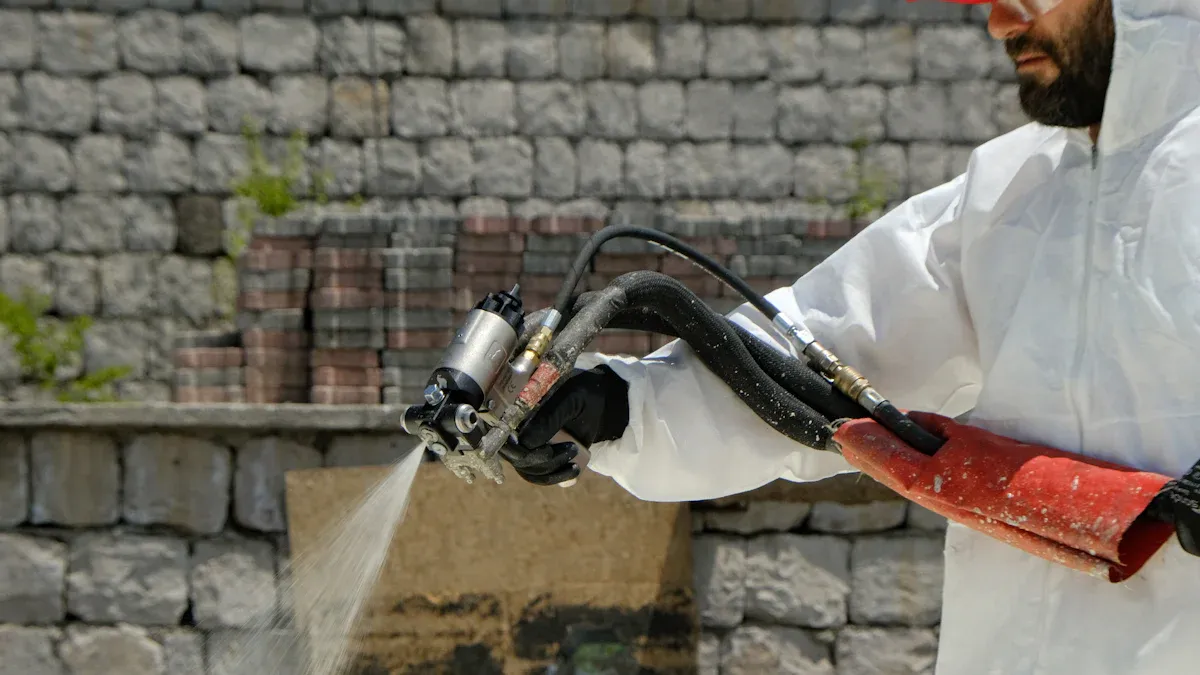
Application quality decides coating performance. Truck Authority outlines the prep and spray steps for spray-on bedliners. The first step is to clean, degrease, and abrade the metal. This step ensures maximum chemical bonding between the substrate and the protective material. Any remaining debris or rust can compromise adhesion and lead to premature lifting or moisture entrapment. The second step is to apply the coating with specialized high-pressure equipment. This equipment precisely mixes the chemical components at specific temperatures. The result is uniform thickness and texture across the entire surface, with no weak points that could fail under stress.
- Thoroughly clean, degrease, and abrade the metal to ensure maximum chemical bonding between the substrate and the protective material; any remaining debris or rust can compromise adhesion, leading to premature lifting or moisture entrapment.
- Apply spray-on bedliners using specialized high-pressure equipment that precisely mixes the chemical components at specific temperatures, ensuring uniform thickness and texture across the entire surface and eliminating weak points that could fail under stress.
Cure speed matters in production. Platinum Protective Coatings reports that its bed liner material dries and hardens in 3–5 seconds after leaving the gun. The truck is dry when it leaves the store and can see light-duty service almost immediately. Heavy use should wait for the first 24 hours. Fast cure supports high-throughput lines and short vehicle downtime.
HTPB-based polyurethane coatings bring their own strengths to these roles. PatSnap Eureka reports that HTPB-based polyurethanes show less than 5% tensile strength loss after 1,000 hours of immersion in water at 70°C. This resistance stems from the absence of ester linkages susceptible to hydrolysis. A coating that keeps its strength in wet service protects the substrate for longer.
Residual unsaturation makes HTPB vulnerable to oxidative degradation. Stabilizers solve this problem. PatSnap Eureka notes that hindered phenols such as butylated hydroxytoluene at 0.5–1.0 wt% or phosphites such as tris(nonylphenyl) phosphite at 0.2–0.5 wt% mitigate oxidation. Acid stabilization also helps. Adjusting the acid number to 6–12 mg KOH/g with phosphoric or sulfuric acid addition below 1 wt% deactivates residual amine catalysts and prevents autocatalytic oxidation. Accelerated aging tests at 80°C and 95% relative humidity for 500 hours show less than 10% viscosity increase and less than 15% hydroxyl value reduction for stabilized HTPB. Unstabilized samples show more than 50% viscosity increase.
TheoremChem describes Poly bd R45 HTLO as the workhorse grade for adhesives, sealants, and industrial polyurethanes. The grade offers balanced viscosity and hydroxyl functionality for broad formulation latitude. Poly bd resins outperform conventional polyether and polyester polyols in applications where toughness matters. Superior hydrolytic stability, chemical resistance, and low moisture vapor transmission make them the foundation for high-performance adhesives and sealants across construction, automotive, electronics, and energy markets. Excellent adhesion to diverse substrates supports coating and liner use.
These coating traits fit automotive protection well. A thick, seamless shield absorbs impacts and prevents scrapes from reaching the metal surface. A dense polyurethane or polyurea barrier remains flexible under stress and prevents cracks and peeling under heavy loads or shifting cargo. The coating resists oil, gasoline, road salts, and acidic cleaning agents. An impermeable layer prevents penetration, simplifies cleanup, and prevents long-term chemical staining. Integrated ultraviolet stabilizers prevent fading or brittleness under prolonged sun exposure. A textured finish provides a slip-resistant surface that keeps tools, equipment, and goods in place while the vehicle moves. The thick elastomeric material also acts as a natural sound-dampening layer and absorbs vibrations from road contact and loose cargo.
HTPB systems fit coatings and liners that face water, chemicals, and flex. Underbody coatings see road spray and salt brine. Wheel-well liners see gravel impact and abrasion. Cargo-area liners see chemicals and heavy loads. HTPB chemistry keeps these coatings flexible and adherent in wet service. Formulators add stabilizers to guard against oxidation. The result is a coating that protects the substrate for the life of the vehicle.
Where Polyether and Polyester Systems Fit Best
HTPB chemistry does not win every application. Polyether and polyester polyurethanes each hold real advantages in specific vehicle systems. A smart material selection process matches the chemistry to the service conditions. This subsection maps the strengths of each family and shows where they deliver the most value.
Polyether polyurethanes offer a strong cost position. Their raw materials are widely available and relatively inexpensive. Formulators can build compounds across a broad hardness range, from soft gels to firm structural parts. Polyether systems also show good resilience and low viscosity in processing. These traits suit high-volume parts where cost per unit drives the decision. Interior trim, flexible foam, and general-purpose gaskets often use polyether chemistry for this reason.
Polyether systems perform well in dry service. Their ether linkages resist hydrolysis better than ester groups under moderate conditions. A part that stays dry and sees moderate temperatures holds up well. Many cabin components fall into this category. Seat foam, armrest pads, and interior seals rarely see standing water. Polyether chemistry serves these roles at a competitive price.
Low-temperature behavior is another polyether strength. Certain polyether polyols stay flexible well below freezing. Formulators use them in cold-climate seals and flexible connectors. The ether backbone keeps segmental mobility at low temperature. A polyether seal can follow surface motion in winter service without cracking.
Polyester polyurethanes bring different strengths. Their ester groups create strong intermolecular forces. These forces give polyester systems high tensile strength, high tear strength, and excellent load-bearing capacity. A polyester part resists deformation under sustained load. This profile suits structural components and high-hardness parts.
Oil and fuel resistance is a signature polyester advantage. Ester groups resist swelling in hydrocarbon fluids. Polyester seals and hoses hold their dimensions in contact with oils, greases, and fuels. Engine and driveline systems use polyester chemistry for this reason. A seal that resists swelling keeps its contact pressure and its sealing force.
Polyester systems also bond well to polar substrates. Their polar character supports adhesion to metals and polar plastics. Coatings and adhesives use polyester chemistry where bond strength matters. The same polarity raises moisture sensitivity, so formulators add hydrolysis stabilizers for wet service. Carbodiimide stabilizers are a common choice.
| Criterion | Polyether Systems | Polyester Systems | HTPB Systems |
|---|---|---|---|
| Relative raw material cost | Low | Moderate | Moderate to high |
| Hydrolytic stability | Moderate | Low without stabilizers | High |
| Oil and fuel resistance | Moderate | High | Moderate |
| Low-temperature flexibility | Good with selected polyols | Moderate | High |
| Tensile and tear strength | Moderate | High | Moderate to high |
| Best-fit vehicle systems | Interior trim, foam, general gaskets | Fuel and oil seals, structural parts, high-hardness components | Underbody bushings, weatherstripping, wet-service seals, protective liners |
The selection framework follows from this table. Start with the service environment. A part that sees water, salt brine, or steam cleaning favors HTPB chemistry. A part that sees fuel, oil, or hydraulic fluid favors polyester chemistry. A part that stays dry and cost-sensitive favors polyether chemistry.
Then check the temperature profile. Cold service favors HTPB and selected polyether grades. Hot, dry service opens the door to polyester systems. Combined hot and wet service points back to HTPB. Combined hot and oily service points to polyester.
Finally, weigh the mechanical demand. Structural parts with high hardness needs favor polyester chemistry. Dynamic parts with high flex cycles favor HTPB chemistry. General-purpose parts with moderate demands favor polyether chemistry on cost grounds.
Many vehicles use all three families at once. A single platform might carry polyester fuel seals, polyether interior foam, and HTPB underbody bushings. Each material serves the role it handles best. This mixed approach delivers performance where it matters and controls cost where it can. Engineers who understand each family's strengths build better vehicles. They also avoid the field failures that come from forcing one chemistry into every role.
HTPB, polyether, and polyester systems each earn their place in the vehicle. The right choice depends on water exposure, fluid contact, temperature range, and mechanical demand. A disciplined selection process turns these four factors into a clear material decision.
Regulatory Compliance for Automotive Use
Automotive materials must clear several regulatory hurdles before they reach production. HTPB-based polyurethane elastomers can meet these requirements with the right formulation and process controls. Three areas matter most: air emissions, chemical restrictions, and fire safety.
VOC and Emissions Requirements
Volatile organic compounds draw close scrutiny in vehicle interiors and coating operations. Maryland's COMAR 26.11.19.23 sets clear limits for automotive work:
- Cleaning solvents other than bug and tar removers cannot exceed 25 grams of VOC per liter.
- Bug and tar removers cannot exceed 40 percent VOC by weight.
- Automotive coatings must meet the VOC limits in Table 1 of the regulation.
- Facilities can comply through an emission control device with 85 percent or greater overall efficiency.
Regional rules can run stricter. The Association for Materials Protection and Performance reports that CARB limits industrial maintenance coatings to 250 grams per liter in most of California, and as low as 100 grams per liter in the South Coast region.
HTPB chemistry supports low-emission formulations. Industry analysis notes that solvent-reduced or solvent-free binder systems raise the value of HTPB's compatibility with low-VOC curatives. These systems also cut processing temperatures and energy use. Verified Market Reports adds that HTPB producers now invest in cleaner production technologies to meet REACH, EPA, and OSHA requirements.
REACH and Substance Restrictions
REACH and similar frameworks restrict hazardous substances across the supply chain. HTPB producers face growing scrutiny of residual monomers, curing agents, and process waste. Verified Market Reports notes that compliance entails significant investment in waste treatment and worker safety measures. Formulators should select grades with low residual monomer content and confirm that curatives and stabilizers appear on approved substance lists. Green certification programs reward these choices.
Flammability and Safety Standards
Fire safety standards govern automotive elastomers. FMVSS 302 applies to interior materials. UL 94 ratings apply to electrical and electronic components. Rogers Corporation compares the two tests:
| Standard | Orientation | Ignition | Pass Criteria |
|---|---|---|---|
| FMVSS 302 | Horizontal | 15 s flame | Burn rate ≤ 102 mm/min |
| UL 94 HB/HBF | Horizontal | 30 s or 60 s flame | Slow horizontal burn or self-extinguish |
| UL 94 V-0 | Vertical | 2 × 10 s flame | Extinguish ≤ 10 s, no flaming drips, ≤ 50 s total burn |
Rogers Corporation explains that FMVSS 302 allows slow flame spread along the full sample. UL 94 V-0 demands self-extinguishing behavior with no flaming drips. Many OEMs now reference UL 94 ratings in internal specifications, and European OEMs often align with UL standards already. Formulators add flame retardants and adjust crosslink density to hit the target rating without sacrificing flexibility.
Cost Considerations and Lifecycle Economics
Raw Material and Formulation Cost Drivers
HTPB polyols cost more per kilogram than standard polyether polyols. Polyester polyols sit in the middle of the price range. Several factors drive the HTPB premium. Production volume stays lower than commodity polyether output. Purification steps remove residual monomers and control hydroxyl value. Stabilizer packages add cost as well. Hindered phenols and phosphites protect the unsaturated backbone from oxidation. Formulators must budget for these additives.
Formulation choices also move the cost. A higher NCO:OH ratio raises curative consumption. Reinforcing fillers add expense but extend fatigue life. Each decision trades material cost against performance.
Processing Cost Trade-Offs
HTPB systems process on standard polyurethane equipment. Mixing, degassing, and molding steps resemble those for polyether systems. This similarity limits capital investment for manufacturers already running polyurethane lines. HTPB viscosity runs higher than many polyether grades. Higher viscosity can slow mold filling and demand more robust pumping equipment.
Cure schedules affect throughput. Fast catalysts shorten cycle times and raise output per mold. Excessive catalyst, however, shortens pot life and increases scrap. Formulators balance these effects for each part. Degassing adds a process step, yet it prevents voids and reduces reject rates. Scrap reduction often offsets the extra step.
Lifecycle Cost and Total Value Analysis
Lifecycle analysis looks beyond the purchase price. It counts installation, maintenance, downtime, and replacement over the service life. HTPB parts resist hydrolysis and hold properties in wet service. They keep rebound in cold weather and survive high flex cycles. These traits reduce field failures and warranty claims.
A higher unit price can still deliver lower total cost. Fewer replacements cut labor and downtime. Longer service intervals lower fleet operating expense. Engineers should compare candidate materials on total cost of ownership, not price per kilogram alone. Polyether systems fit dry, cost-sensitive parts. Polyester systems fit oil-exposed parts. HTPB systems earn their premium in wet, dynamic, and low-temperature service.
Formulation and Processing Guidelines
NCO:OH Ratio and Crosslink Density Control
The NCO:OH ratio sets the crosslink density of an HTPB elastomer. A higher ratio raises crosslink density. The network becomes tighter and stronger. Tear resistance improves. Elongation drops, and hysteresis rises. A lower ratio does the opposite. The network stays loose and flexible. Elongation climbs, and heat build-up falls. Tensile strength and tear resistance decline. Formulators target a ratio that matches the part. A suspension bushing needs balanced strength and flex. A seal needs good recovery and low compression set. Small ratio changes shift hardness and modulus. Processors should verify the ratio by titration before each batch.
Moisture Control and Storage Handling
Water reacts with isocyanate and disrupts the cure. TheoremChem advises processors to keep moisture away from containers, measure components by mass, and examine hardness after full post-cure, not immediately after demolding. Careful vacuum drying and controlled mixing remain essential on the factory floor. TheoremChem also notes that surface preparation, pigment dispersion, cure ratio, film thickness, and atmospheric moisture must be controlled. The same source states that HTPB systems require tightly controlled mixing, casting, curing, temperature, and moisture conditions. Fact.MR adds that distributors should separate general industrial grades from controlled aerospace and defense material flows. This separation keeps documentation, end-use screening, packaging, and storage requirements appropriate to each customer group.
- Keep moisture away from containers.
- Measure components by mass.
- Examine hardness after full post-cure, not immediately after demolding.
- Use vacuum drying and controlled mixing on the factory floor.
Curing Schedules and Catalyst Selection
Cure schedules depend on the formulation and the part. A study in the PMC open-access literature reports thermal cure at 80 °C for 19 hours, followed by ambient-temperature post-cure for 24 hours. Filled systems use tin(II) 2-ethylhexanoate at 0.1 wt% relative to the polyol.
| Formulation | Catalyst | Catalyst Amount | Thermal Cure | Post-Cure |
|---|---|---|---|---|
| HTPB-PU / EHTPB-PU (unfilled) | Not specified | Not specified | 80 °C for 19 h | Ambient temperature for 24 h |
| HTPB-PU-F / EHTPB-PU-F (filled) | Tin(II) 2-ethylhexanoate | 0.1 wt% relative to HTPB or EHTPB | 80 °C for 19 h | Ambient temperature for 24 h |
| Shear test specimens (ASTM D1002) | Not specified | Not specified | 80 °C for 19 h | Ambient temperature for 24 h |
Catalyst choice controls pot life and cycle time. A fast catalyst shortens demold time and raises output. Too much catalyst shortens pot life and raises scrap. Formulators balance these effects for each part.
Mixing, Degassing, and Molding Parameters
Good parts start with good mixing. Processors measure each component by mass and combine the polyol and curative at the target NCO:OH ratio. Mechanical mixing runs until the blend looks uniform. Entrained air enters during this step, and that air becomes voids if left in place.
Degassing removes the air before the material enters the mold. The mixed resin sits under vacuum until bubbles stop rising. Vacuum level and hold time depend on batch size and viscosity. A longer hold helps thick systems release air. Excessive vacuum can pull volatile components out of the blend, so processors set a practical limit.
Molding parameters control fill quality and surface finish. Mold temperature sits in a moderate band, typically near the cure temperature, to keep viscosity low during fill. A release agent coats the cavity before each shot. Slow, steady pouring reduces air entrapment along the mold walls. Filled systems often need higher injection pressure to wet out the filler.
| Parameter | Typical Setting | Purpose |
|---|---|---|
| Mix ratio | Target NCO:OH ratio, verified by titration | Controls crosslink density |
| Vacuum degassing | Until bubble rise stops | Removes entrained air |
| Mold temperature | Near cure temperature | Keeps viscosity low during fill |
| Demold timing | After full post-cure hardness check | Confirms complete cure |
Demold timing deserves care. A part that feels hard at demold can still be undercured. Processors check hardness after the full post-cure schedule, not at the mold. This habit catches ratio errors and moisture problems before bad parts reach assembly.
Automotive Case Studies and Emerging Applications
Heavy-Duty Suspension Bushing Case Study
A heavy-duty truck fleet tested HTPB-based suspension bushings in mixed service. The trucks ran loaded routes through wet and cold climates. The bushings kept their rebound after two years of service. Drivers reported less harshness in winter. The parts showed no cracking at the bond line. The fleet replaced fewer bushings than its polyether baseline. This result matches the laboratory data on hydrolytic stability and low-temperature flex.
Sealing Systems in Harsh Environments
HTPB sealing systems perform well in harsh service. Ruifeng Polymer reports a low glass transition temperature near −70°C and high elongation. These traits give outstanding low-temperature crack resistance. The material also shows low water absorption and strong chemical resistance. Its polymer structure relieves stress and reduces cracking from thermal cycling. Transparency Market Research notes that HTPB resists hydrocarbons and oxidizers. These traits suit seals that face moisture, salt, and temperature swings.
| Performance Attribute | HTPB-Based Polyurethane Sealing Systems |
|---|---|
| Low-temperature flexibility | Tg ≈ −70°C and high elongation; outstanding low-temperature crack resistance |
| Thermal stability | Excellent mechanical performance across a broad temperature range |
| Water absorption | Low water absorption |
| Chemical resistance | Withstands moisture, chemical corrosion, and thermal stress |
| Stress relief / anti-aging | Superior stress relief and anti-aging performance |
| Flexibility / elasticity | Outstanding elasticity under high stress without cracking |
| Crosslinking capability | Strong crosslinking with stable, repeatable isocyanate reactions |
Emerging Uses in EV and Under-Hood Components
Electric vehicles bring new demands. Battery enclosures need seals that resist water and thermal cycling. Under-hood components face heat and vibration. HTPB systems fit these roles through their thermal stability and elasticity. SkyQuestt notes some adoption barriers. HTPB products are not recyclable, and high production costs limit use in cost-sensitive parts. Crude oil price swings affect production expenses. These factors shape where HTPB systems make the most sense.
HTPB-based polyurethane elastomers combine hydrolytic stability, low-temperature flexibility, and dynamic durability. These traits directly address automotive performance demands. Material selection should match the application. HTPB excels in wet, dynamic, and cold service. Polyether and polyester systems keep their own niches.
Proper formulation achieves compliance with VOC, REACH, and flammability standards. Lifecycle cost analysis often favors HTPB in demanding environments. Careful control of NCO:OH ratio, moisture, and curing unlocks the full performance potential of these systems.
FAQ
How does HTPB compare with polyether and polyester polyurethanes?
HTPB carries a hydrocarbon backbone. This structure resists water attack far better than polyether or polyester chemistry. HTPB also stays flexible in cold service and survives high flex cycles. Polyether systems fit dry, cost-sensitive parts. Polyester systems excel in oil and fuel contact.
Do HTPB-based elastomers meet automotive regulatory standards?
Yes. Formulators can meet VOC limits through solvent-free or low-solvent systems. Careful grade selection keeps curatives and stabilizers within REACH substance lists. Flame retardants and crosslink density adjustments help parts pass FMVSS 302 and UL 94 ratings.
Why do HTPB systems cost more than polyether systems?
Lower production volume drives the HTPB premium. Purification steps and stabilizer packages add cost. Higher viscosity can slow mold filling. Lifecycle analysis often offsets this premium. HTPB parts fail less often in wet, dynamic, and cold service, so replacement and warranty costs drop.
How does moisture affect HTPB processing?
Water reacts with isocyanate and disrupts the cure. Processors keep containers sealed, measure components by mass, and use vacuum drying. They also check hardness after full post-cure. These steps catch ratio errors and moisture problems before bad parts reach assembly.
See Also
Novel Industrial Uses Of N,N-Dimethyl-N,N-Diphenylurea Across Multiple Sectors
Micro-Channel Tech For Hydrogen Fuel Cell Heat Exchanger Systems
US Tariffs Impact On Residential Hinges Market During 2025